Seatbelt cleaning
Seatbelt cleaning is the careful technique used to remove dirt, sweat, and surface stains from seatbelt webbing without compromising its strength or restraint function.

What it means
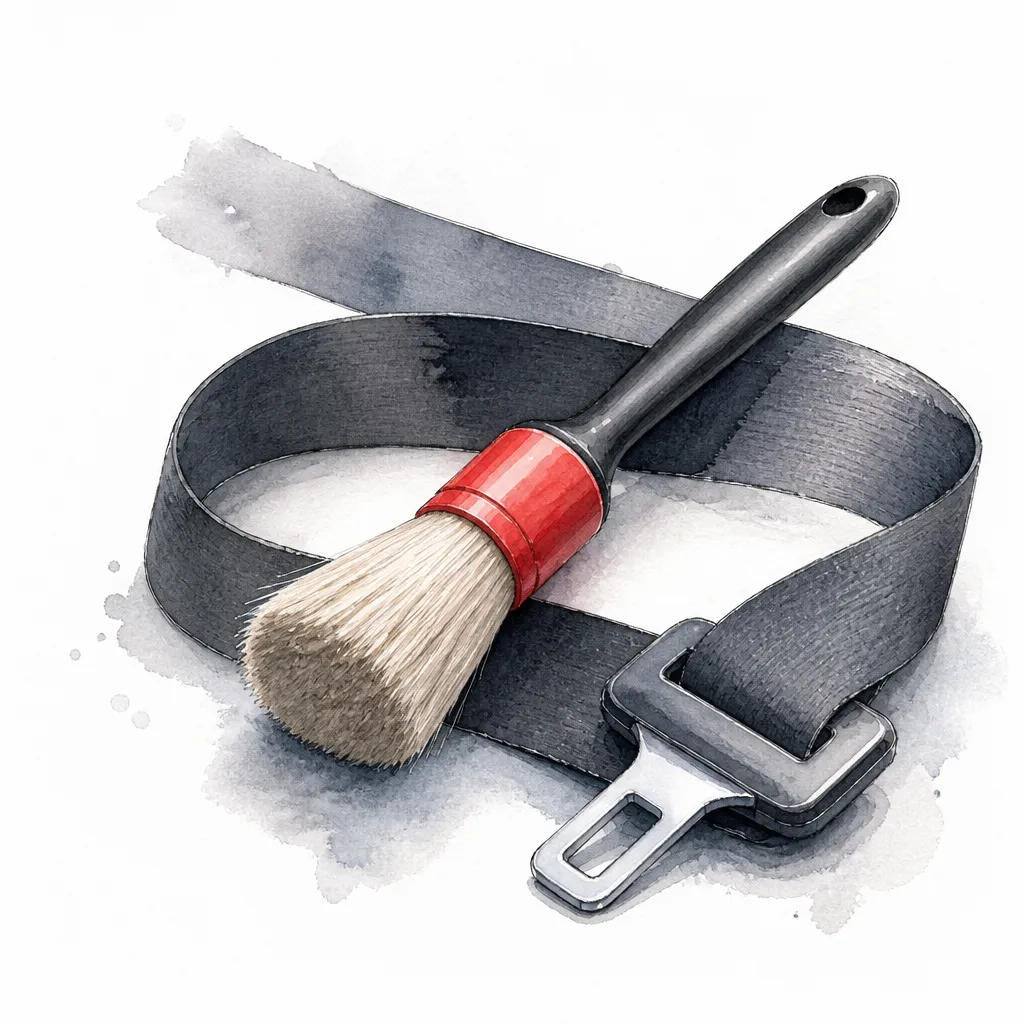
Seatbelt webbing is engineered to specific tensile-strength specs, and the polyester or nylon fibres are heat-treated and dyed under controlled conditions. Aggressive cleaning chemistries (bleach, strong solvents, harsh degreasers) can weaken the fibres in ways that are not visible but compromise the belt's safety performance. Heat from steam cleaners or hairdryers can also damage the webbing structure. The right approach is mild: an extension of the seatbelt out of the retractor, light brushing with a soft brush and a mild interior cleaner, blotting with a damp microfibre, and air drying flat (never wound back into the retractor wet, which can damage the spring mechanism). The belt should be left fully extended until completely dry. The resulting cleaning is cosmetic rather than restorative, but on heavily soiled belts (food spills, drink stains) it makes a visible difference. Seatbelts that are seriously damaged or worn should be replaced with OEM parts, not cleaned and continued in service.
Why it matters in Singapore
Singapore family cars accumulate seatbelt soiling fast: kids in car seats, drink spills, sweat from tropical drives. Cleaning seatbelts properly is the difference between a fresh-looking interior and one that visibly shows its age every time someone reaches for the buckle.

How Revol Carz handles this
Revol Carz extends and cleans seatbelts with mild interior cleaner and soft brushing, air-dries them flat, and never uses bleach or solvents on webbing.