The brief
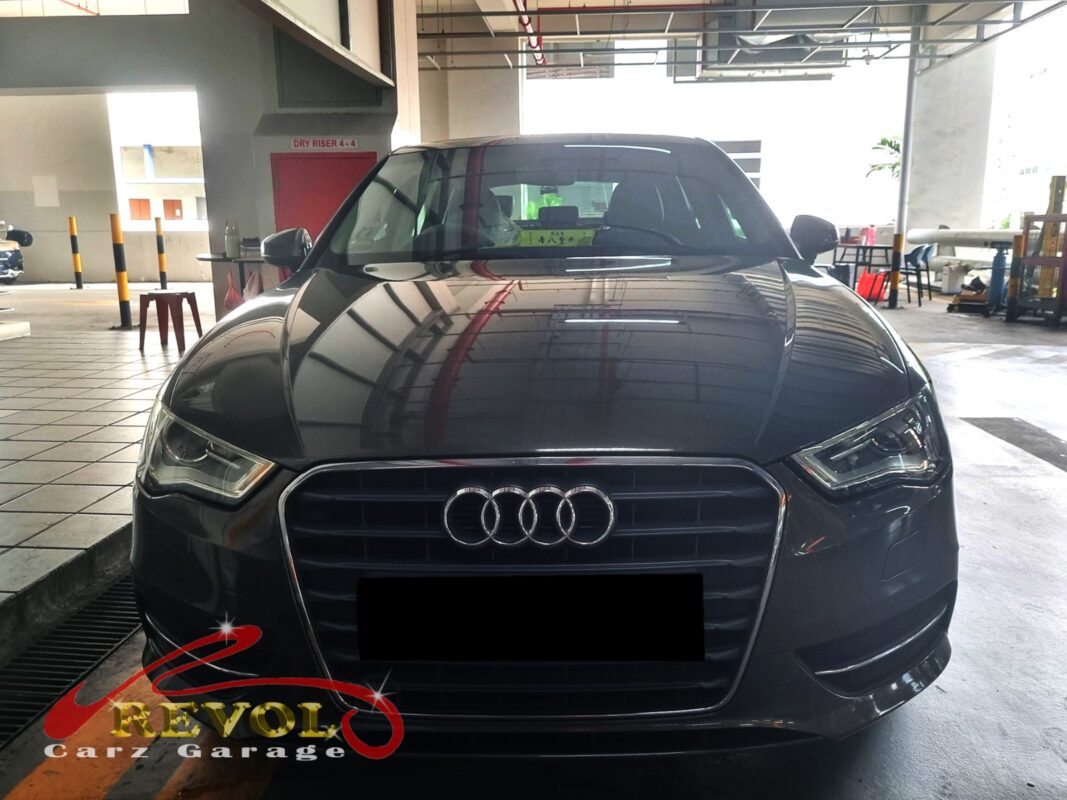
The A3 was using oil, and the owner had spotted three signs that something was off.
The exhaust was puffing a light blue tint of smoke under harder throttle. The engine was rough at idle. And there was a fresh oil weep at the front of the engine that had not been there before.
Light blue smoke means engine oil is finding its way somewhere it should not be, and getting burnt off when the catalyst hits temperature.
For this engine, that points at one specific part: the oil separator cover, which sits up top and manages the crankcase ventilation. When its internal diaphragm tears, oil mist gets pulled into the intake and burnt with the fuel, and at the same time the crankcase pressure is no longer being managed properly, which explains the rough idle and the weep at the front of the engine.
The diagnosis
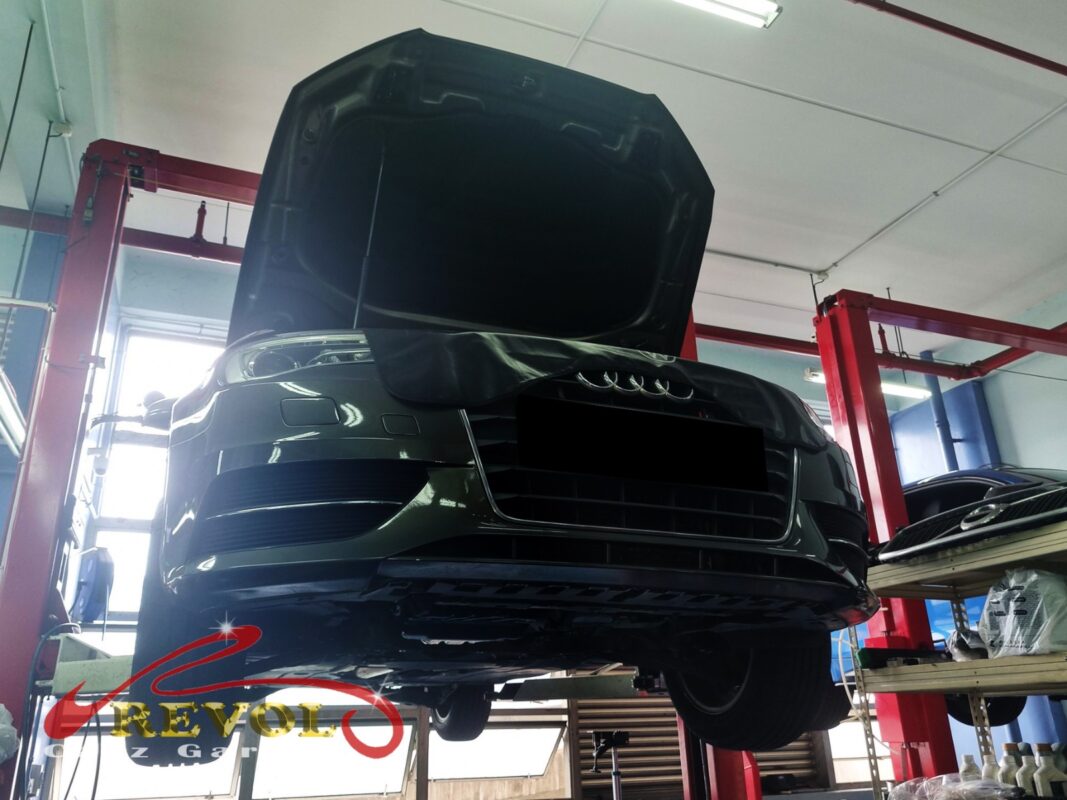
The way to confirm a failed oil separator diaphragm is a vacuum test on the crankcase ventilation. We hooked up the gauge and watched the reading.
The diaphragm was pulling well past its proper range, which is the signature of a failed separator. Once that diaphragm cannot hold the right vacuum, every related symptom is explained at once: the oil getting into the intake, the rough idle from the vacuum leak path, and the oil weep at the front of the engine from the pressure not being controlled.
This is a known failure on this engine family, especially after several years. The plastic diaphragm material ages and tears. There is no fix short of replacing the whole separator cover.
So the call was clear: separator cover replacement, fresh gasket, and a check that the rest of the crankcase ventilation system was clean.
The work
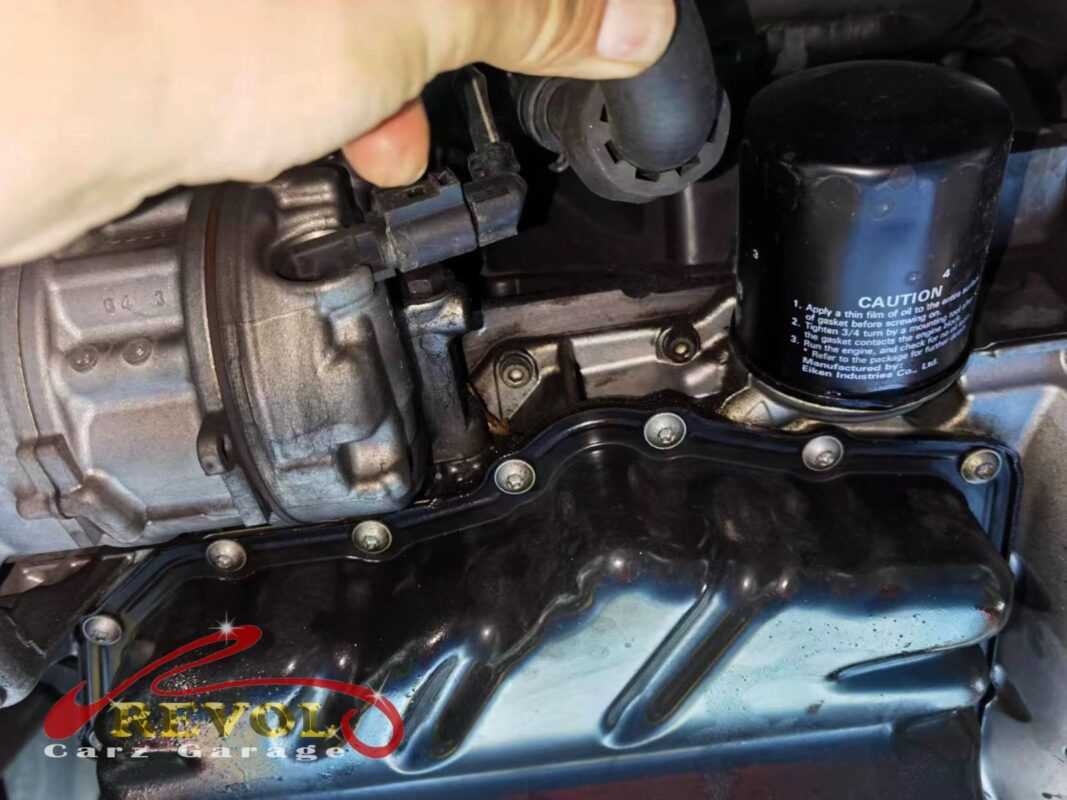
Engine cover off first. The oil separator sits where you can see it, which is helpful because it gives you a chance to spot the weep on the way in.
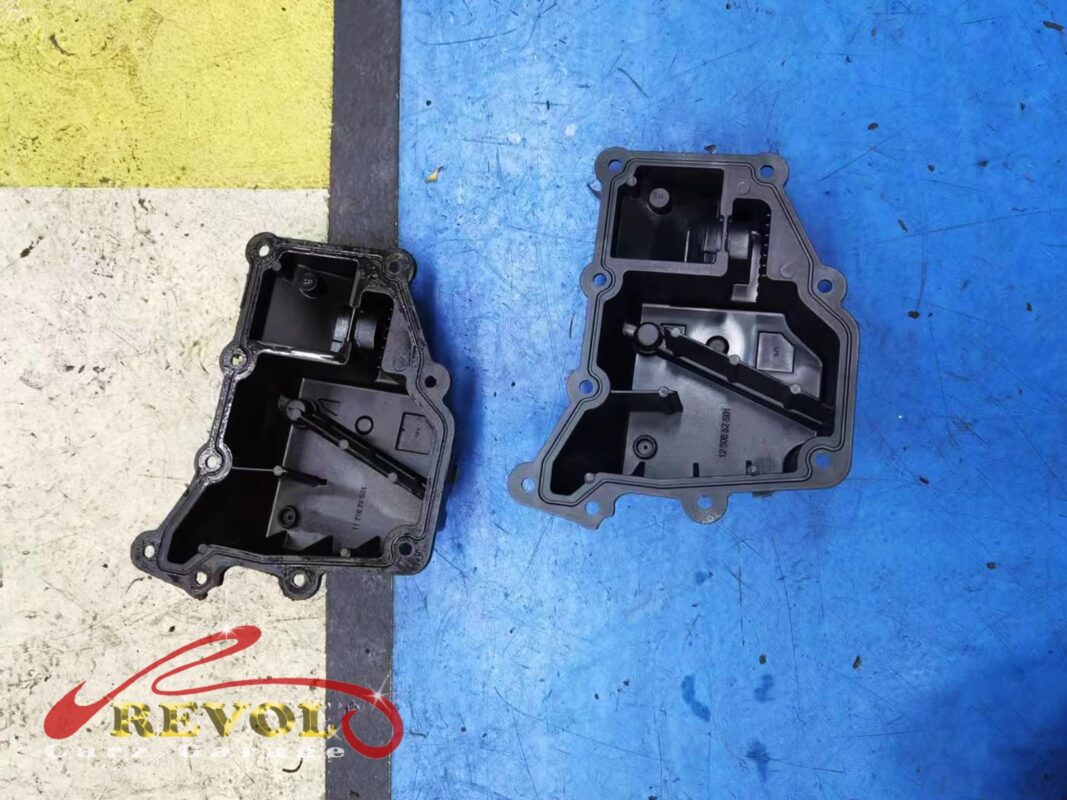
We disconnected the breather lines that run into the separator, then dropped the failed cover off the engine. The diaphragm damage was visible once it was out: a clean tear across the membrane that you could see by holding it up to the light.
The mating face on the engine block got cleaned of old gasket material. That part matters, because any leftover gasket on the face will stop the new one from sealing properly and you end up back inside the engine bay a few weeks later.
In went a new Audi-spec oil separator cover with its fresh gasket, torqued to spec in the correct sequence. Breather lines reseated.
Last step was clearing the stored fault on the scan tool and watching the crankcase vacuum reading climb back into spec on the live data.
The outcome
No blue smoke at the exhaust under any throttle position. Idle smoothed out within the first few minutes of running. No more weep at the front of the engine over a 30-minute road test that included full warm-up.
The crankcase ventilation was reading clean on the scan tool, which means the new separator is doing its job and the engine's internal pressures are being managed properly again.
For the owner, the A3 should now stop drinking oil between services, which is the practical thing they were noticing. And the engine cover and front bay stay clean rather than collecting oil mist that would otherwise need a wipe-down at every service.