The brief
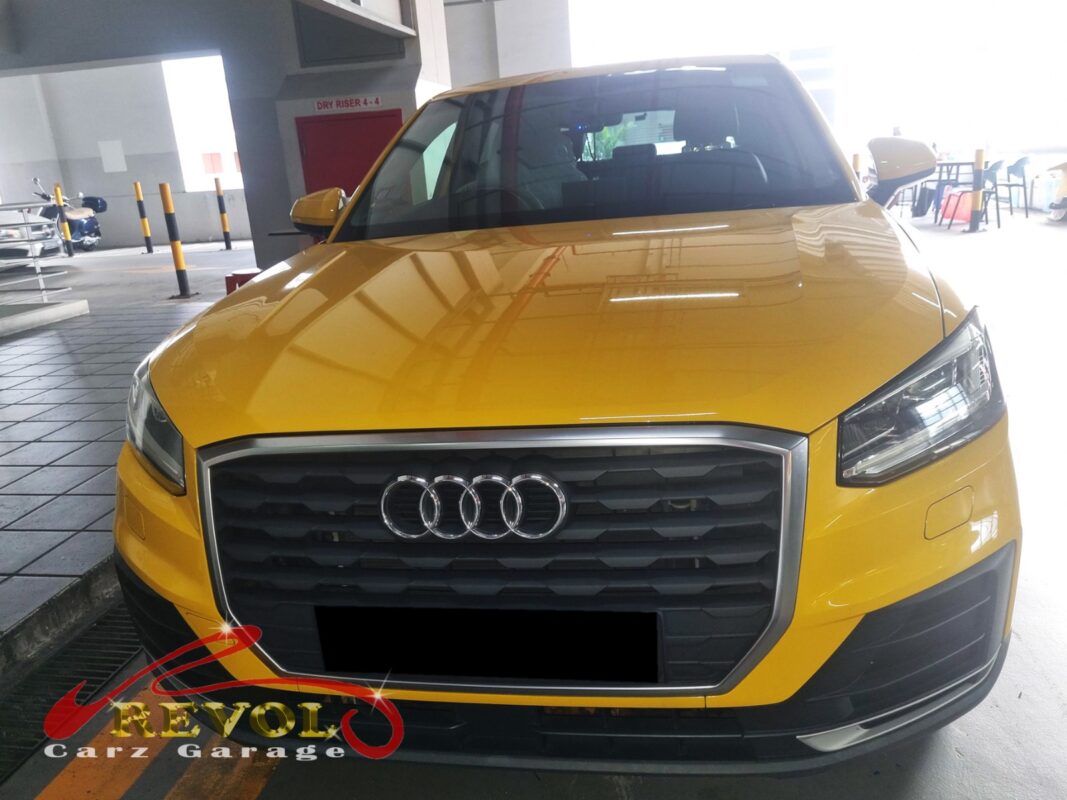
The Q2 had developed a clunk from the front whenever it went over a bump. Not just sharp potholes either: even rolling over a speed table or a joint in the road was setting it off.
The steering had also gone vague on-centre. The kind of vague where you find yourself making small constant corrections on a straight road, without really thinking about it.
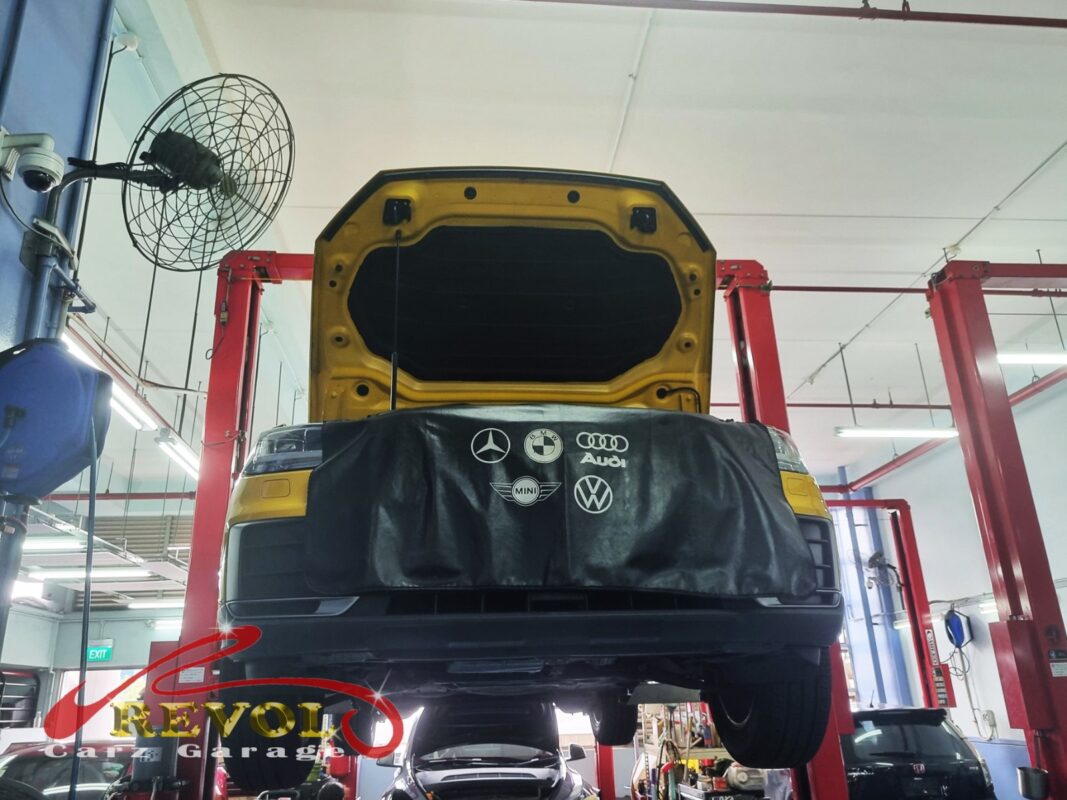
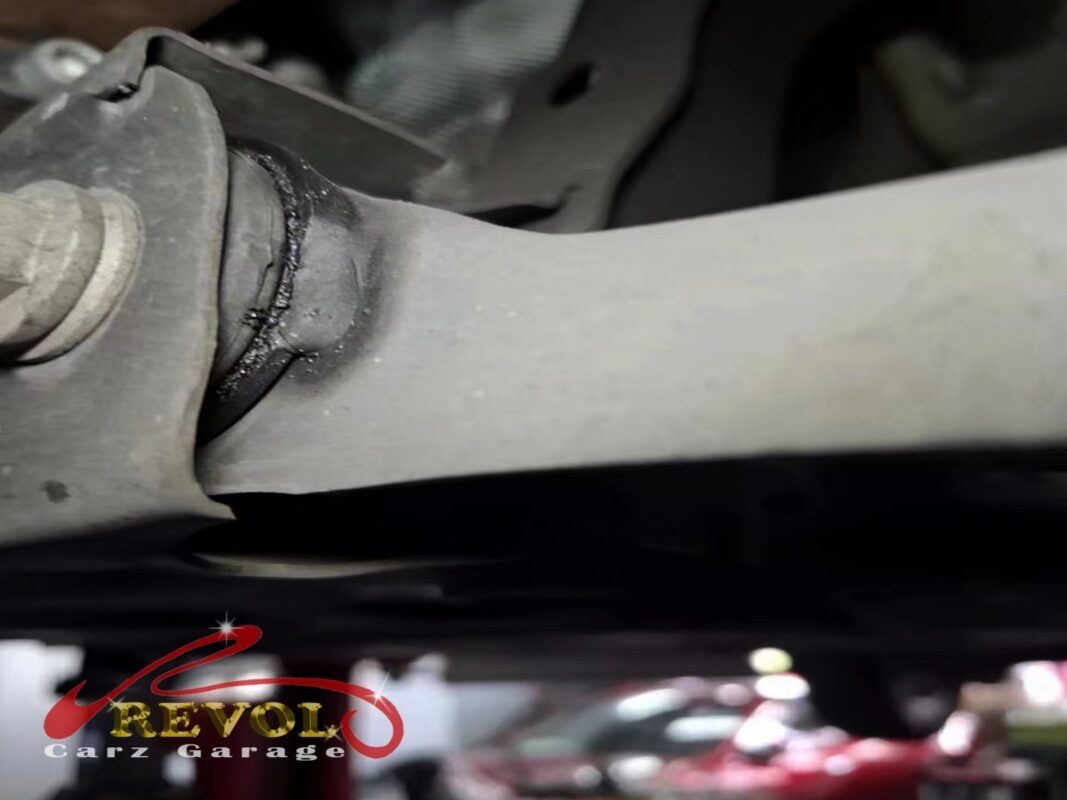
Up on the lift, the cause was visible. Both lower control arms had bushing cracks at the rubber, the kind of cracking that comes from years of road use and Singapore's heat cycling.
A worn lower arm gives you both symptoms at once. The bushing flex causes the clunk over bumps. And the slack in the joint means the front geometry is no longer being held precisely, which is why the steering feels vague.
The diagnosis
Visual inspection first. Both lower arms showed cracked bushings, visible by eye. One side also had measurable play at the ball joint when we levered it.
The tyre wear pattern matched. Slight inner-edge wear on the front tyres, which is what you get when the slack in worn arms is letting camber and toe drift out of factory spec.
The right call was a pair replacement, not single-side. Replacing only one worn arm on the front axle leaves the other side ageing at its own pace, and within a few months you are back doing the same job on the opposite side. Worse, mismatched arm condition can introduce a slight pull or steering imbalance.
And because the geometry will have drifted, the job has to include a four-wheel alignment afterwards. Without the alignment, the new arms inherit whatever drift the old ones had baked in, and the tyres carry on wearing unevenly.
The work
Up on the lift, both front wheels off. The ball joints disconnected from the knuckles at both sides, which gives enough swing to drop the arms.
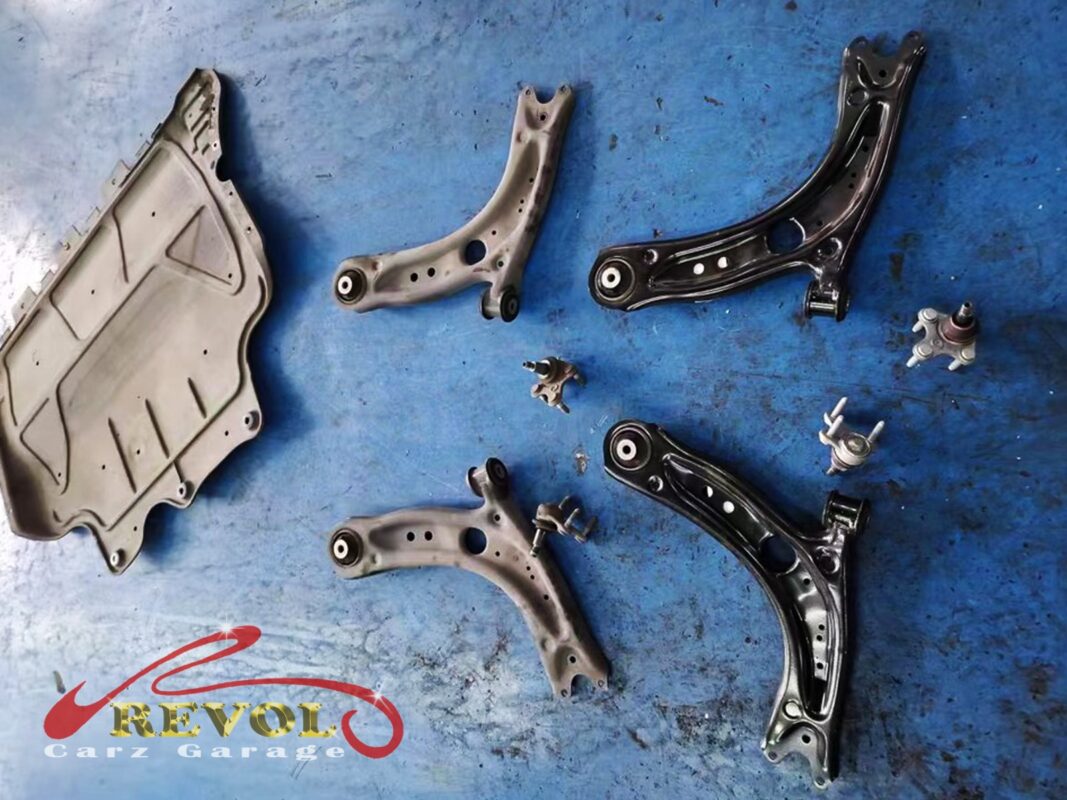
Out came both old lower arms. The cracked bushings were obvious by the time they were out, the kind of damage that would have only gotten worse from here.
In went new Audi-spec lower arms, each with fresh bushings and fresh ball joints already pressed in. The chassis bolts got torqued to spec, in the right order, with the suspension at ride height. That last detail matters: if you torque the bushings while the wheels are hanging, the rubber sits in the wrong rotational position once the car is back on the ground, and the bushings wear out fast.
Last step was the four-wheel alignment. Camber and toe brought back to factory spec across all four corners. We print the before-and-after readings out, so the customer can see what was off and what got corrected.
The outcome
No clunk over bumps, not on speed tables, not on road joints, not anywhere we drove it. Steering tight on-centre, with the car tracking straight on a flat road without those small constant corrections.
The front end felt solid again, the way it does on a new car.
For the owner, the practical win comes in two parts. First, the ride and handling are back to what they should be. Second, the tyres will now wear evenly across their tread, which means more kilometres out of each set.
A worn arm left to keep going eats tyres prematurely. Catching it at this stage, before the wear got severe, kept the same tyres useful for another full service interval.