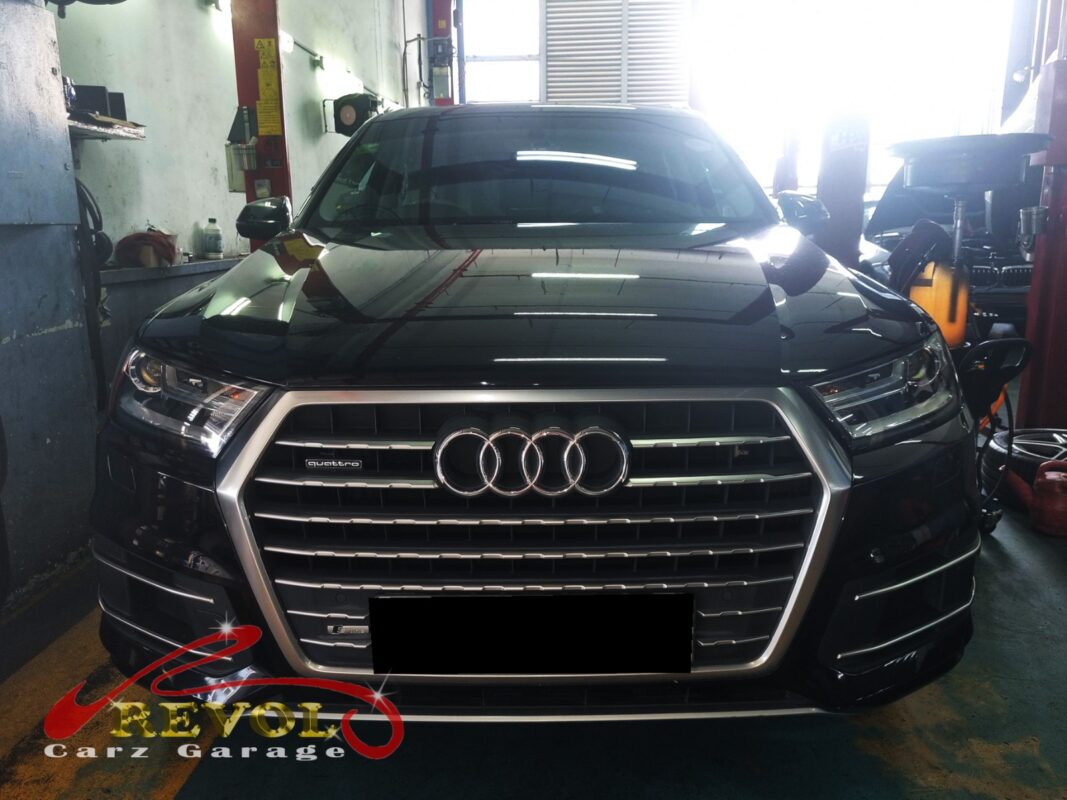
The brief
The Q7 had grown unsettled in a way the owner could feel.
At highway speed, the body kept moving for a moment longer than it used to after each bump, which is the giveaway that the dampers were no longer doing their job properly.
Over rougher surfaces, especially at the back of the car, there was a knocking sound. And the rear tyres were wearing faster on the inner edges than the rest of the tread.
A worn rear shock causes all three at once. The body floats after bumps because the damping is gone. The knock is the shock's internal valves no longer controlling the rebound. And the uneven tyre wear is the rear axle bouncing rather than staying planted, which puts uneven load on the contact patch.
On a heavy SUV like the Q7, rear damping matters more than on a small car. The body has more mass to control, so when the shocks give up, the car notices fast.
The diagnosis
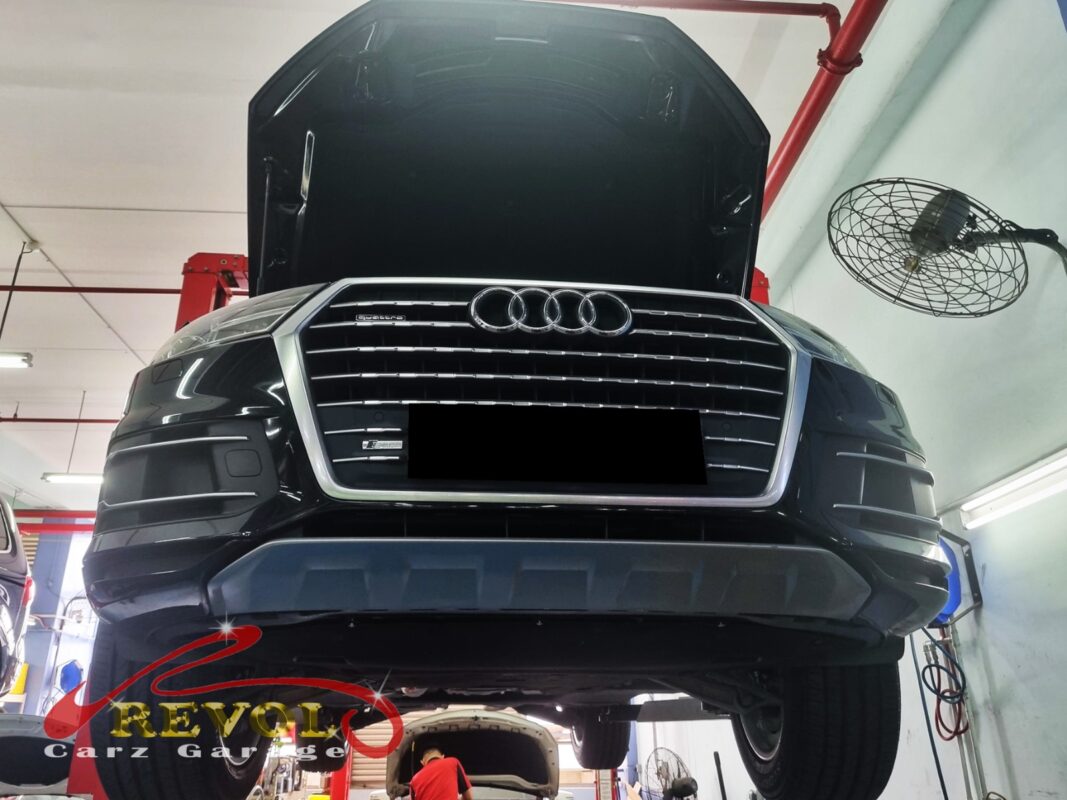
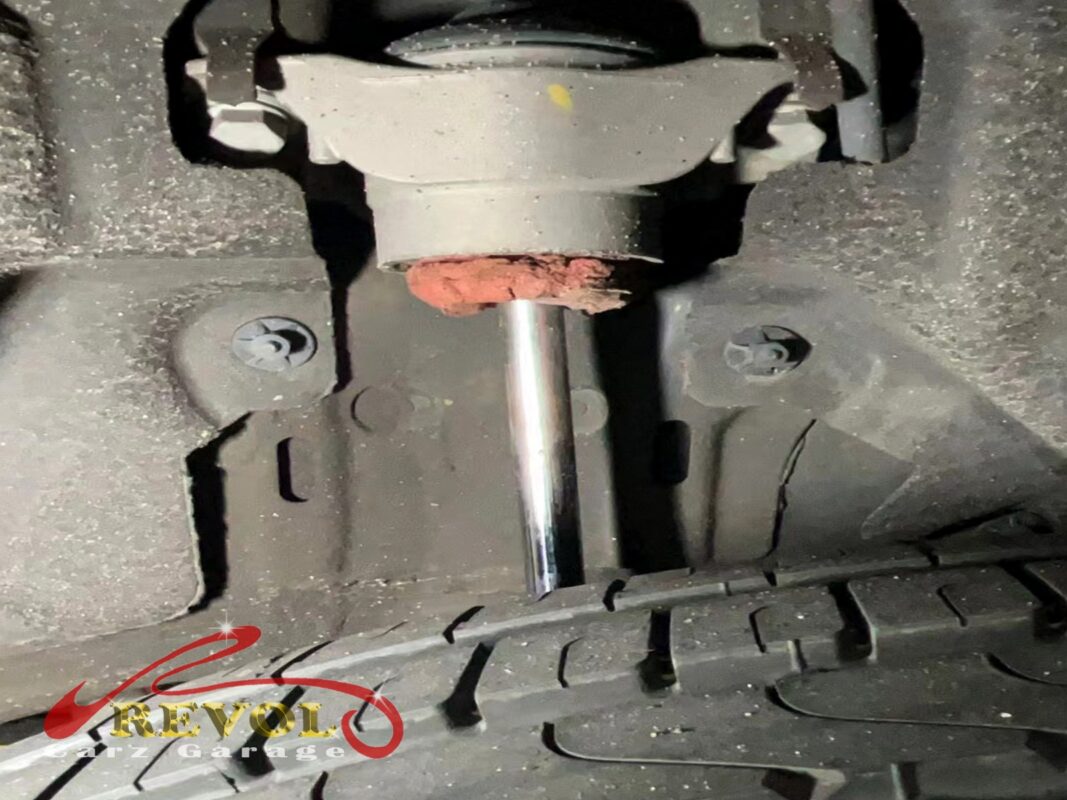
Underbody first. One of the rear absorbers had oil weeping down the body, which is the visual confirmation of an internal seal failure inside the shock. Once the seal goes, the damping fluid leaks out, and the shock stops working.
We also did a bounce test on both rear corners. The weeping side rebounded multiple times instead of damping cleanly. The other side did the same, which told us the second shock was also past its service life even though it had not started leaking yet.
A pair replacement is non-negotiable on something like this. If we replaced only the weeping side, the rear axle would have one fresh shock with full damping and one tired shock with half damping, which makes the car drive worse, not better. The two sides need to match.
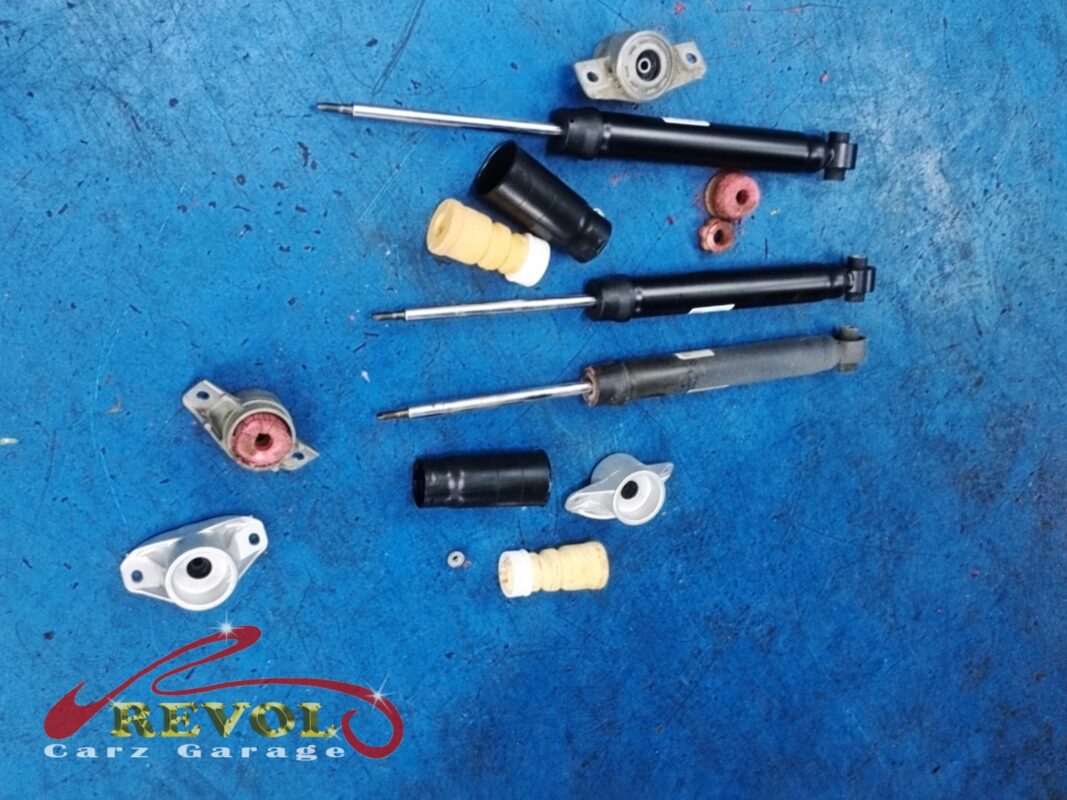
New top mount bushings go in with the new shocks as a matter of course, since they get torn apart for the swap anyway.
The work
Lifted the car, both rear wheels off. The lower shock mounts came off first, then the top mount nuts, and both rear shocks dropped out.
New Audi-spec absorbers next, each with a fresh top mount bushing. They got bolted in with the right torque sequence, lower mounts last so the bushings would seat at ride height rather than at full extension.
The bounce-and-settle test is one we do before the road test. We push down hard on each rear corner and watch how the body returns. With healthy shocks, it should return once to ride height and stop there, not bounce three or four times. Both corners passed cleanly.
Then the road test, which is where you really verify rear damping. We took the Q7 over a stretch of rough road and a few expansion joints at highway speed. The body settled properly after each bump.
The outcome
Body settled cleanly after every bump on a mixed road test, no float, no extra rebounds. The rear knock over rough surfaces was gone. The Q7 felt composed at highway speed, the way a big SUV should: planted, not jittery.
For the owner, this is one of those repairs where the difference is obvious from the first drive. A car with fresh rear dampers feels noticeably more controlled than one with tired ones, especially loaded up with passengers or luggage.
The rear tyre wear should also even out now that the rear is staying planted instead of bouncing through its contact patch. We will check tyre condition again at the next service interval, but the underlying cause is fixed.