The brief
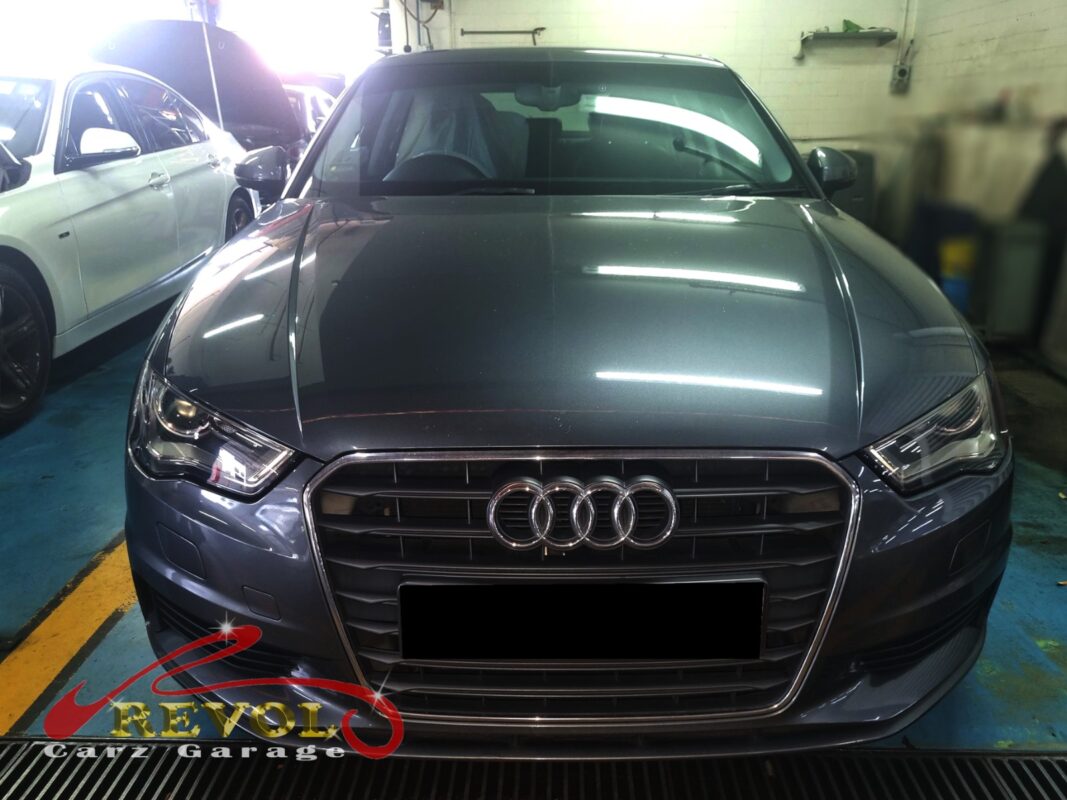
The A3 was losing coolant slowly, and the owner had picked up on a few clues.
First, a faint sweet smell after long drives. Coolant has a distinct smell when it has been on hot engine parts. If you have been driving a while and you smell something a bit syrupy when you step out of the car, it usually means coolant is reaching something hot.
Second, the expansion tank was needing top-ups between services, which it should not.
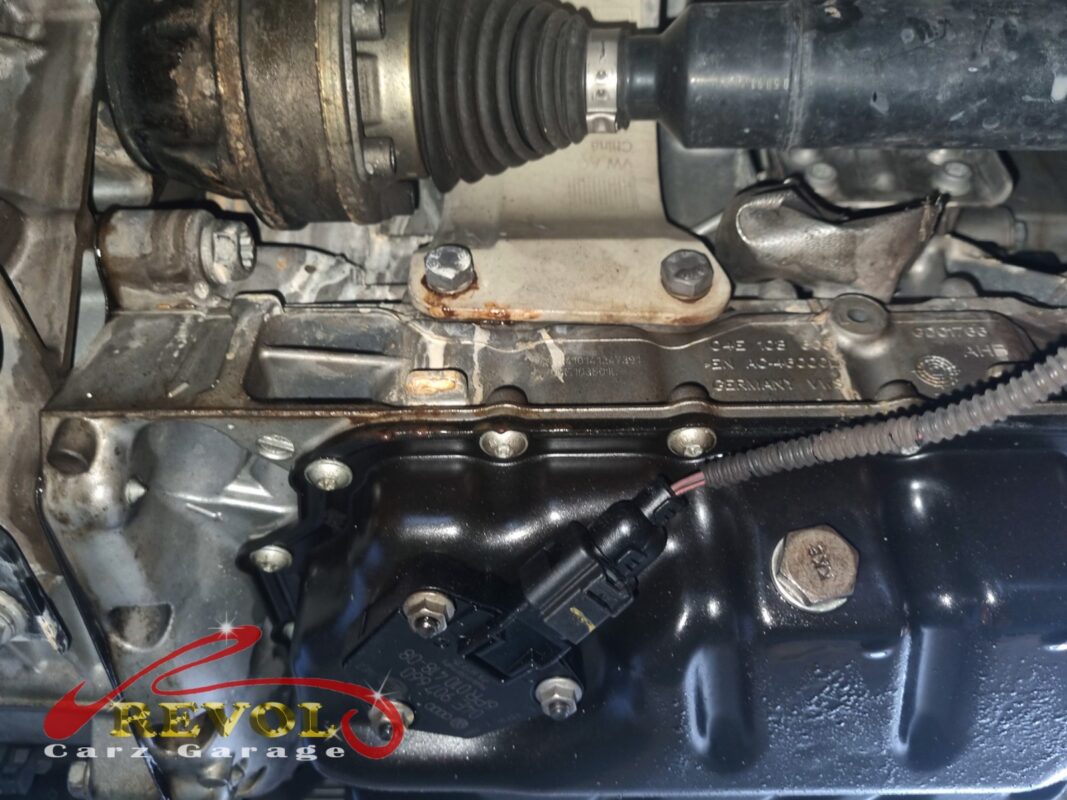
A closer look in the engine bay showed a wet streak running down from the water pump area. The streak had crystallised in places, which is what coolant residue does when it has dried and re-dried on hot metal.
All three signs pointed at the water pump's shaft seal weeping. Not a leak that drops a puddle on the floor, but the kind of slow weep that costs you coolant over weeks.
The diagnosis
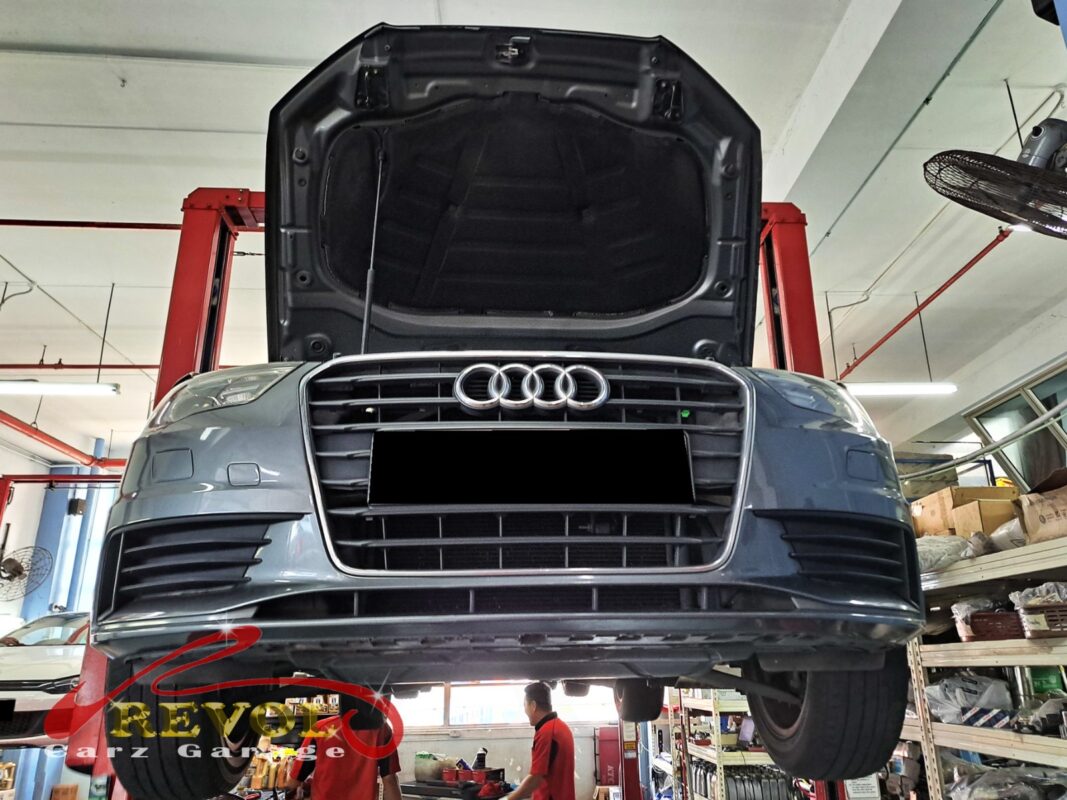
We pressure-tested the cooling system to localise the leak. The weep showed itself at the water pump shaft seal under pressure, which is exactly where the wet streak had suggested.
The crystallised residue on the housing confirmed it had been weeping for some time, not just started.
With the pump already coming off, we made a small but important call: replace the thermostat at the same time. The thermostat sits right next to the pump, comes off when the pump comes off, and is the kind of part you should never put back in once you have already removed it. If it fails six months later, you are pulling the whole assembly apart again.
That principle, replace adjacent wear items when the access is already paid for, saves the customer money over the long run even though the parts list looks slightly longer today.
The work
System pressure released first, then the coolant drained into a clean catch. A clean catch matters because you want to inspect the old coolant for signs of contamination, and because used coolant gets disposed of properly, not poured down a drain.
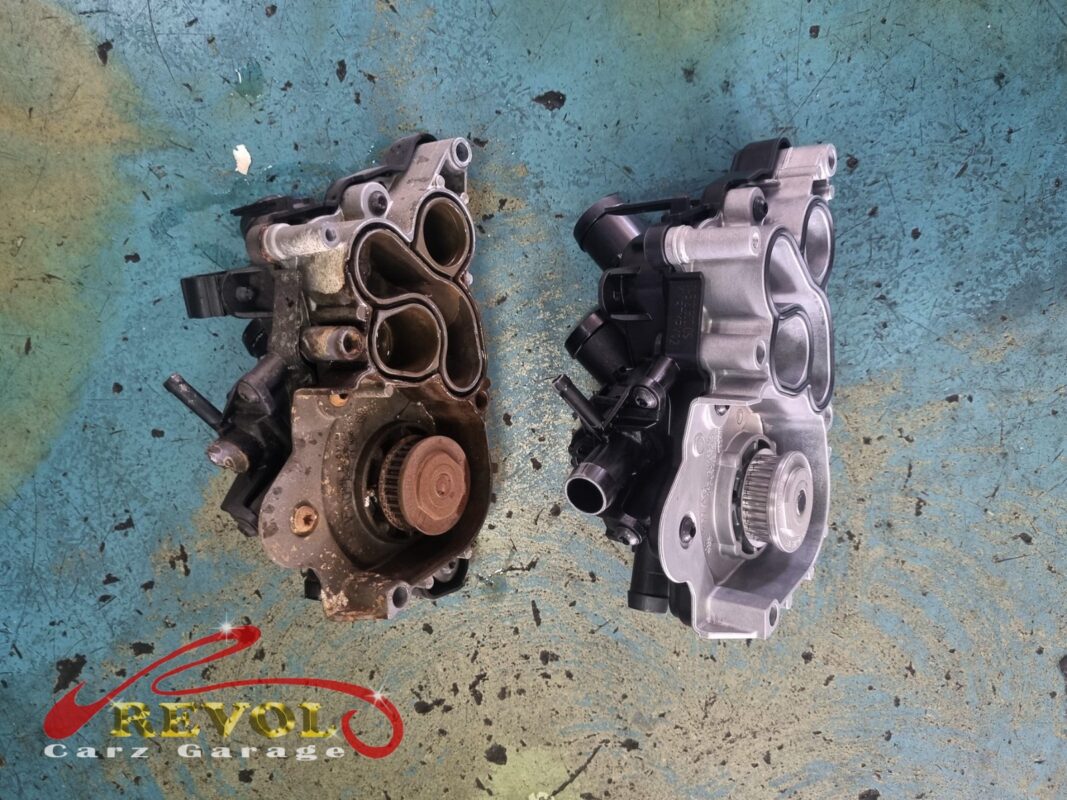
The auxiliary belt came off to clear access to the pump. Then the failed water pump came out, with the shaft seal weep visible on the housing.
In went a new Audi-spec water pump with a fresh gasket. Same procedure for the thermostat: new unit, fresh seal, fitted in the correct orientation.
We refilled the system with the right coolant mix at the right ratio, since wrong coolant or wrong ratio causes its own set of problems down the line.
Then the bleed cycle, which runs on the scan tool. Modern cooling systems trap air in pockets that you cannot remove just by topping up. The bleed cycle runs the electric water pump and watches the temperature behaviour to confirm the system is fully purged of air.
The outcome
No weep at the pump housing over the test cycle. No coolant loss in the expansion tank over several days of normal driving. Temperature gauge steady at normal across idle, expressway, and stop-start traffic.
No sweet smell after a long drive, which is the practical thing the owner had been noticing.
For an Audi at this kind of mileage, doing the pump and thermostat together is the cleanest outcome. The cooling system is now sealed, the new thermostat will hold the engine at the right operating temperature, and the next pump-related job is not on the horizon for a long time.
Left for another six months, a slow weep like this can turn into a full failure that strands the car. Catching it at this stage was the right move.