The brief
The A3 had been misfiring under load, idling rough, occasionally stalling at a stop, and the owner had noticed his usual routes costing more fuel than they used to.
Rather than start swapping parts on a hunch, he brought it in for a proper scan first.
That is the right call on a misfire. The symptoms can come from coils, plugs, fuel delivery, sensors, or a mix of all of them, and the only way to avoid throwing money at the wrong part is to read the car's own fault memory and work from there.
The diagnosis
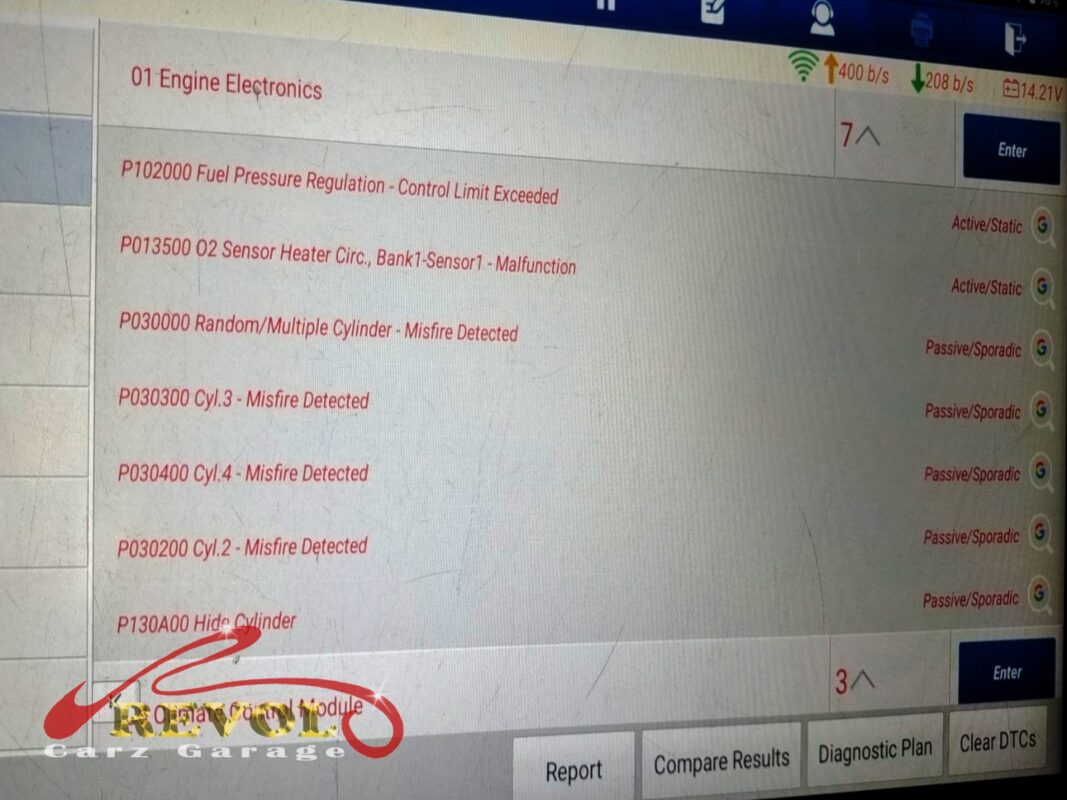
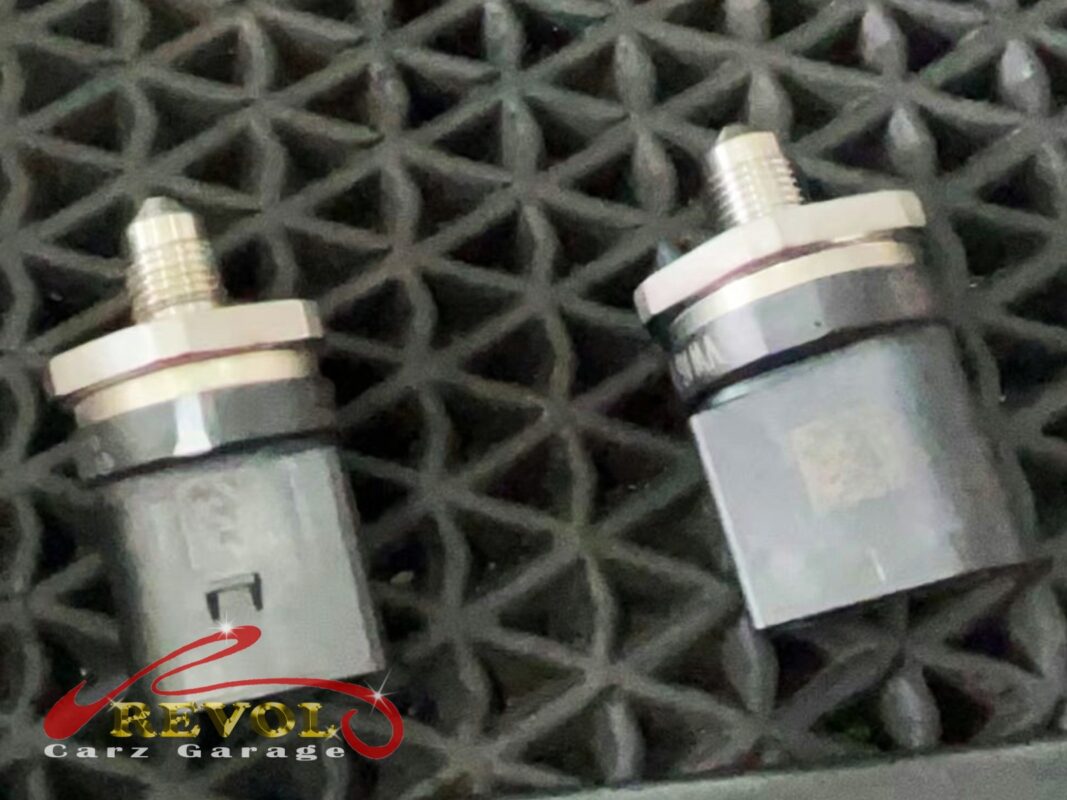
The scan came back with a cluster of codes. Misfires flagged across several cylinders, an oxygen sensor heater circuit fault, and a note on fuel pressure regulation. The misfire codes were sporadic; the O2 fault was active and constant.
When misfires show up across multiple cylinders at once on an engine of this age, it usually means the ignition components have aged out as a set rather than one part failing on its own. A coil swap-test confirmed weak spark on the affected cylinders.
The oxygen sensor fault was a separate, real failure, and it explained the fuel economy drop: a lazy O2 sensor feeds the engine bad mixture data, so the engine runs richer than it should.
So the scope was clear. Refresh the ignition side as a set, and replace the failed oxygen sensor.
The work
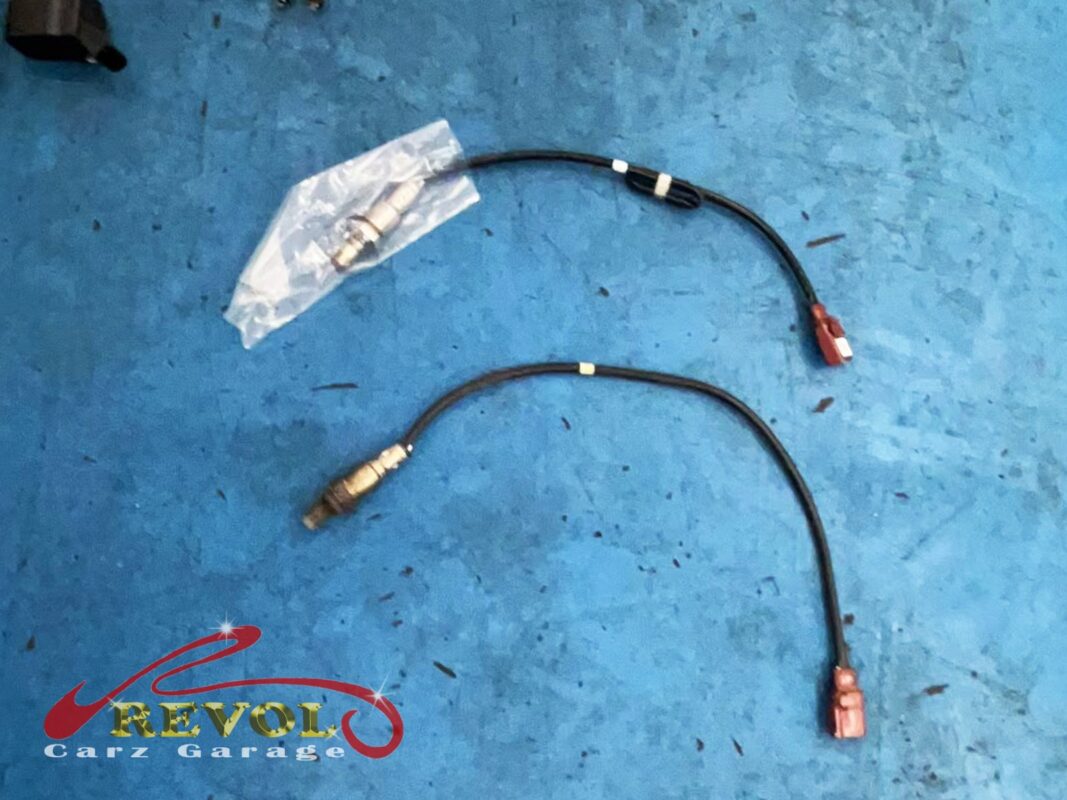
Started with the front oxygen sensor, out and replaced with a new VAG-spec unit.
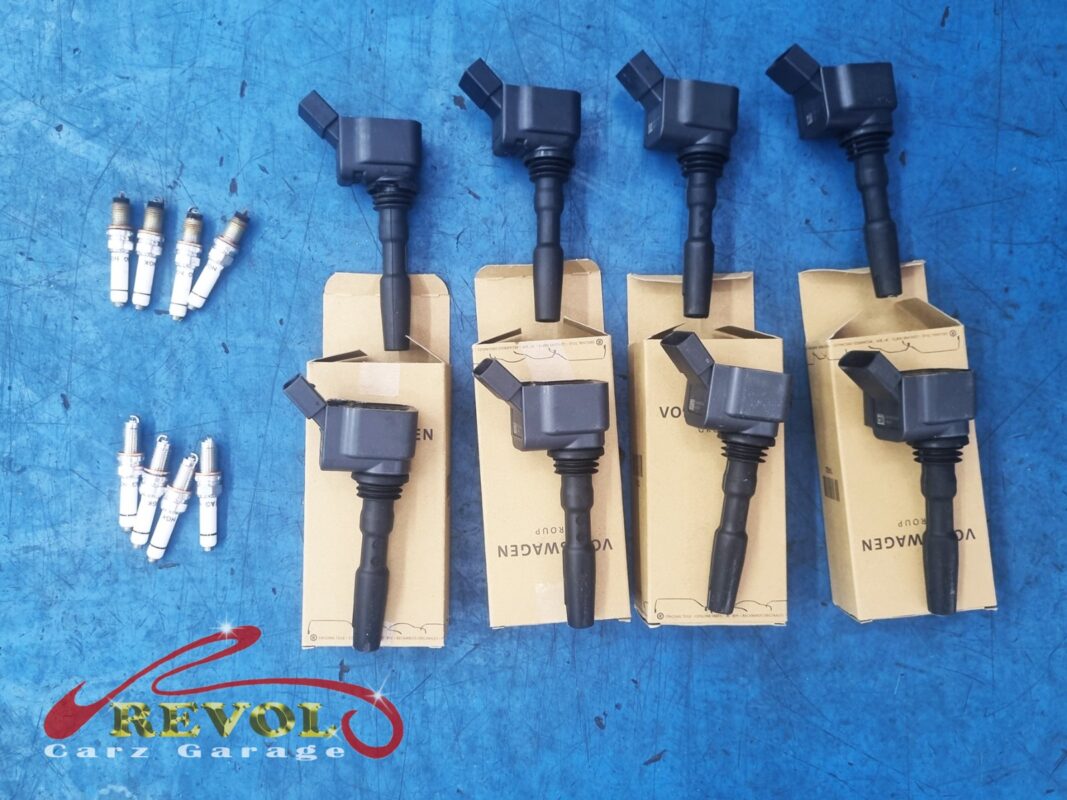
Then the ignition side: a full set of new VAG-spec ignition coils and a full set of new spark plugs, the plugs gapped to the workshop manual figure. Chasing misfires one cylinder at a time on a tired set just means coming back next month for the next one, so on an engine showing multi-cylinder misfire codes the whole set goes in together.
Every harness clip reseated properly, since a connector that is not fully home will mimic a failing coil and send you back round in circles.
Then we cleared the stored fault codes on the scanner and took the car out for a road test through a full drive cycle, watching the live misfire counters.
The outcome
Idle steady, no misfire counts on the scanner across the road test, and the check engine light cleared and stayed off. The fuel economy came back to normal over the next tank, which is the confirmation the oxygen sensor swap did its job.
The A3 went home running cleanly. For the owner, the practical wins are a smooth engine that does not stumble under load and a fuel bill back where it should be.
Doing the ignition side as a complete set, rather than picking off cylinders one at a time, means that whole failure mode is settled for a long stretch instead of being a recurring visit.