The brief
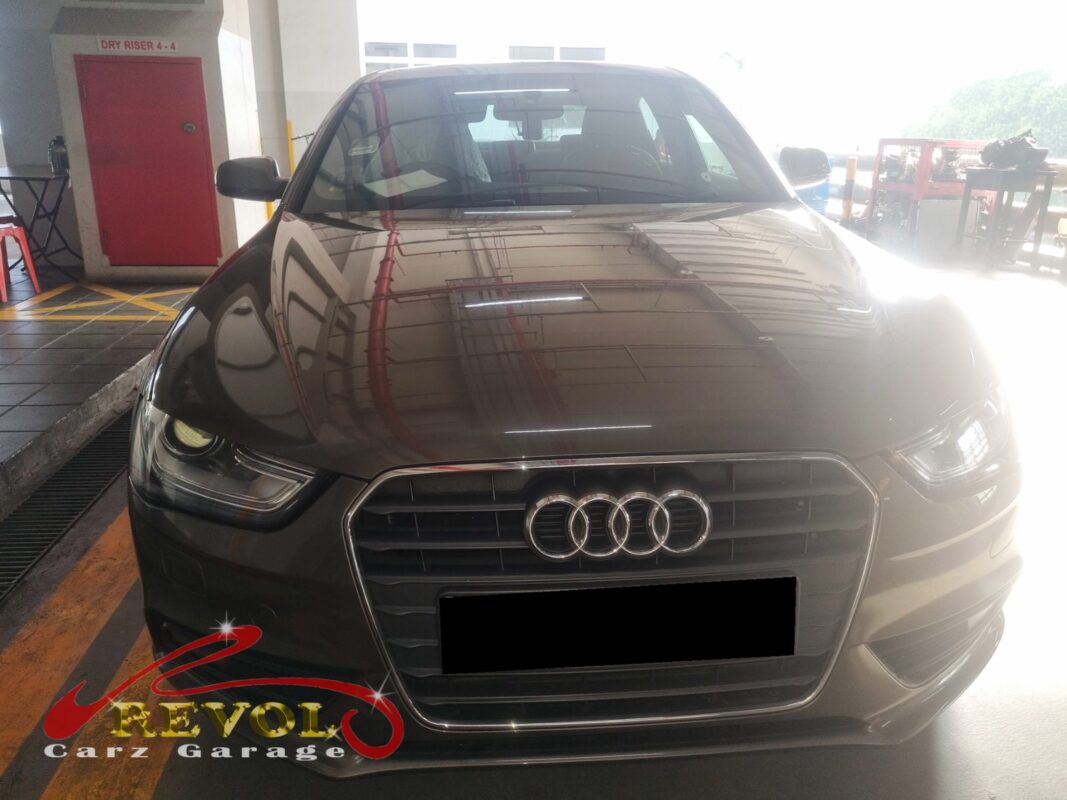
The A4's aircon had been losing its bite, worst at idle. The owner could also catch a faint hiss from the front of the engine bay when the AC compressor engaged, and the system was cycling on and off more often than it should.
A hiss from the front, weaker cooling, and the compressor cycling more often: that pattern points at refrigerant escaping from the front of the loop, which is where the condenser lives. The condenser sits right behind the front grille, in the airflow, taking everything the road throws at it, which makes it one of the more common places for a slow refrigerant leak to develop.
The diagnosis
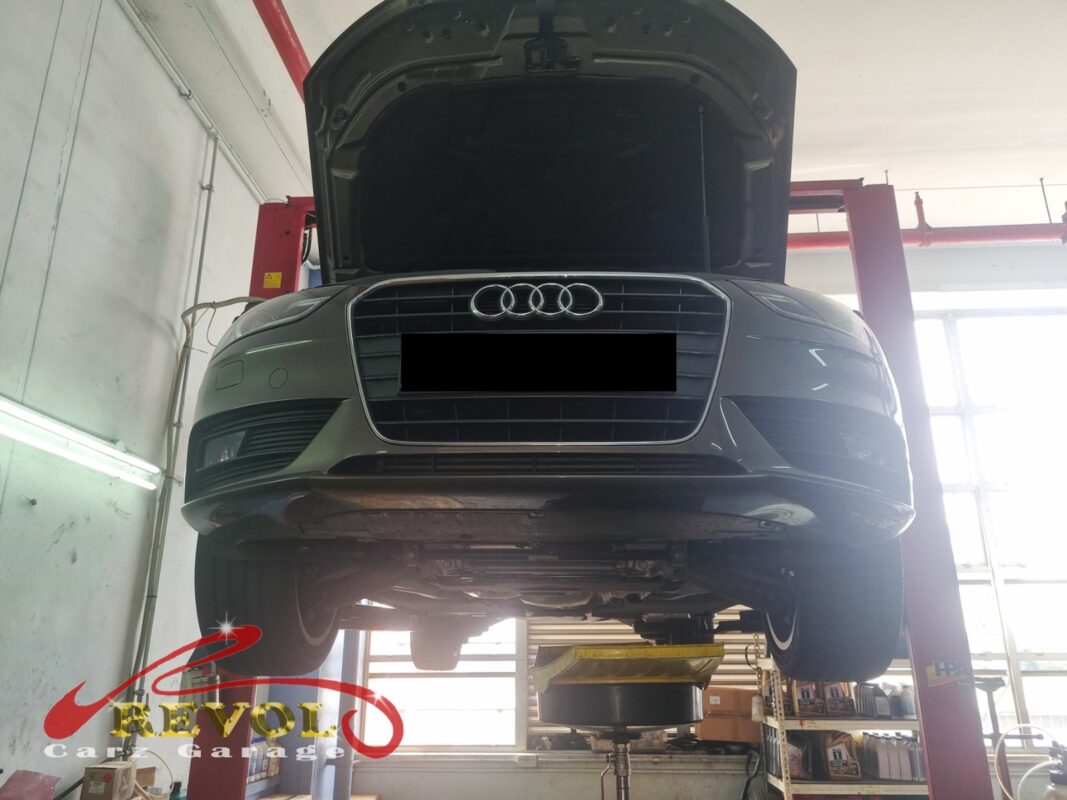
A pressure check showed the AC system undercharged, confirming it was losing refrigerant. Then a visual inspection of the condenser at the front of the engine bay turned up the source: a small corrosion leak at one of the tubes.
That is typical ageing for a condenser that has spent years in Singapore's humidity, with road salt and grit working at the thin aluminium. Once a condenser tube corrodes through there is no repair worth doing; the fix is a new condenser. The rest of the loop checked clean, so the condenser was the only failed part.
The work
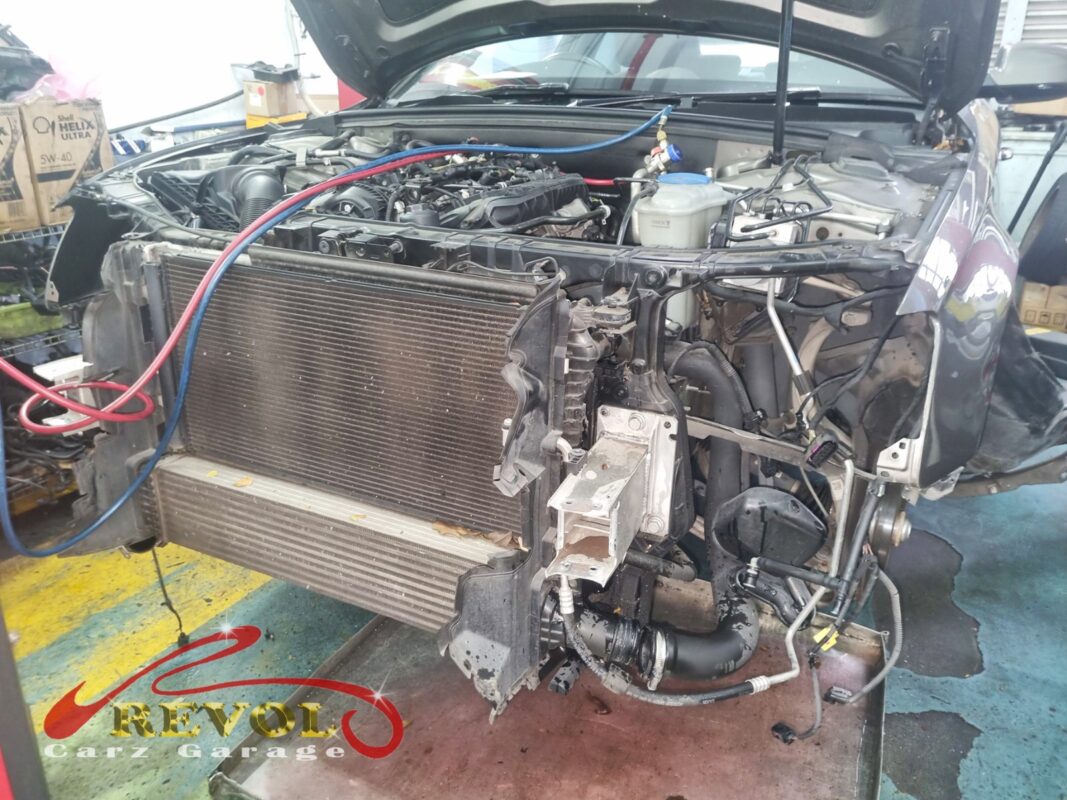
Recovered the remaining refrigerant into the reclaim machine first. Then removed enough of the front bumper to get at the condenser, which on this car means a fair bit of front-end strip-down since the condenser sits ahead of the radiator.
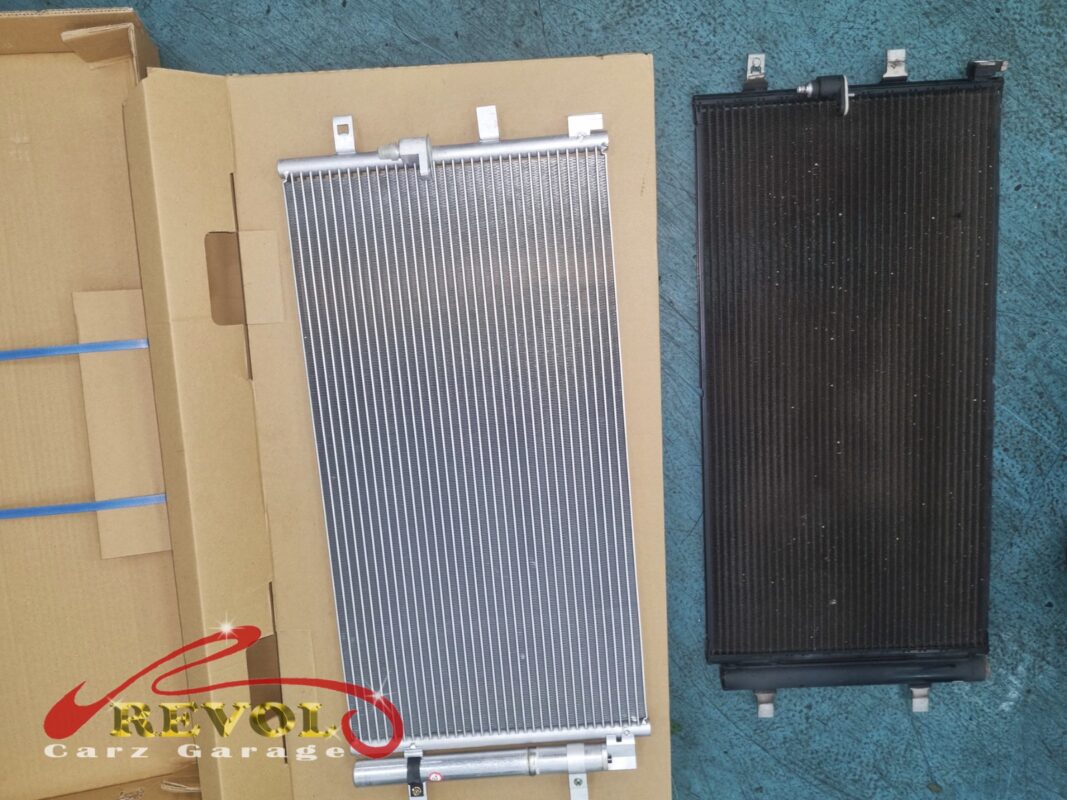
Fitted a new Audi-spec condenser plus a fresh receiver-drier. The drier always gets replaced when the system is opened up, because it absorbs moisture and once exposed to air it has done its job.
Vacuumed the loop down to a deep pull to boil off any moisture, recharged with the correct refrigerant volume and oil charge by weight, then pressure-tested before the car went out.
The outcome
Cold air fully back, at idle and on the move. No hiss from the front. The system holding pressure and cycling at normal intervals rather than constantly.
The A4 went home with the AC working the way it should. For the owner, in this climate, that is the difference between a cabin that cools quickly and stays cold and one that just about manages.
And by doing the receiver-drier and the proper vacuum-and-recharge as part of the job, the system is set up to hold its charge for the long run rather than being back for a top-up in a few months.