The brief
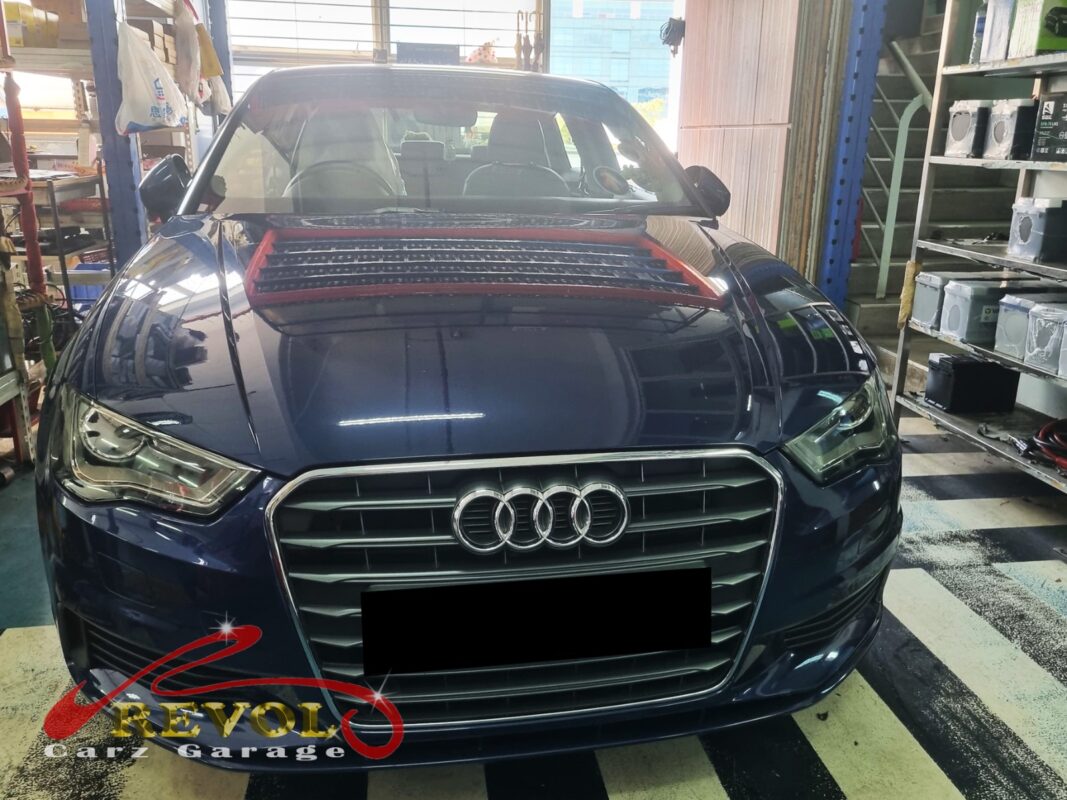
The A3 had developed clunks over rough roads, the kind of dull thud from the front when the suspension takes a hit. The steering felt looser than it should at motorway speeds, a slight vagueness on-centre. And the inside edges of the front tyres were feathering, wearing faster than the rest of the tread.
Three symptoms, all to do with how precisely the front of the car is located. The front subframe carries the engine and the front suspension, and it bolts to the body through big rubber bushings. When those bushings wear, the whole front assembly can shift slightly under load, which gives you the clunk from the movement, the loose steering from the imprecision, and the uneven tyre wear from the geometry not staying put.
The diagnosis
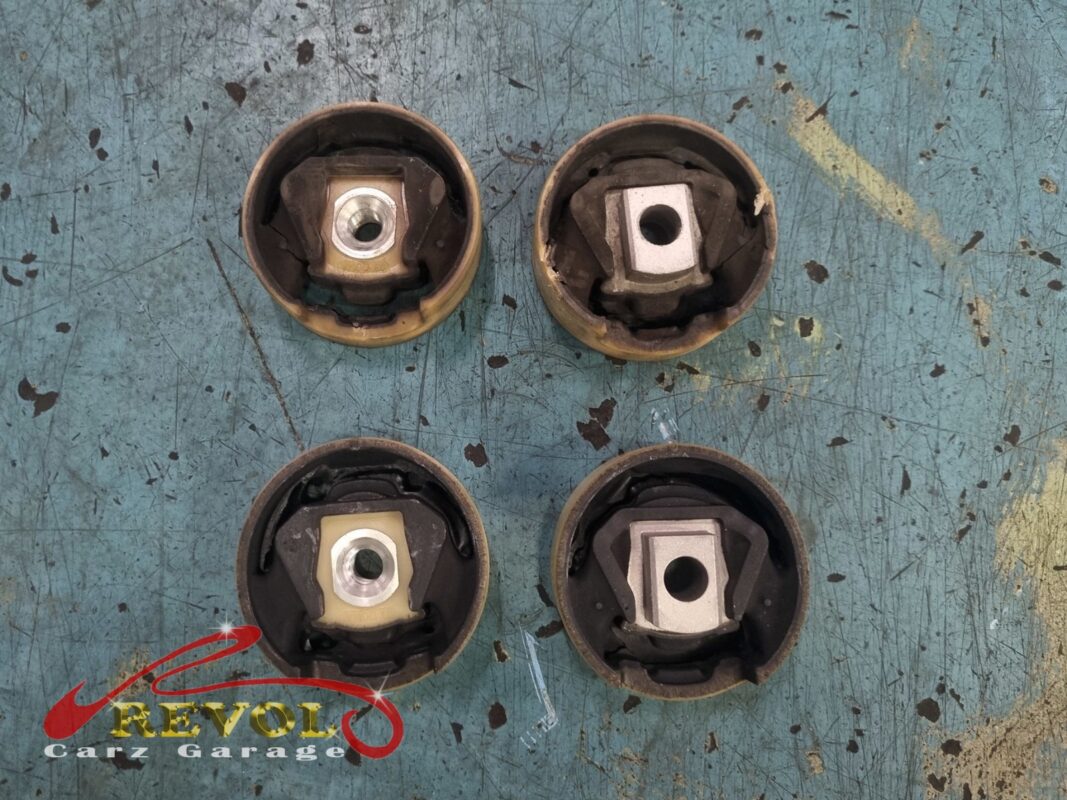
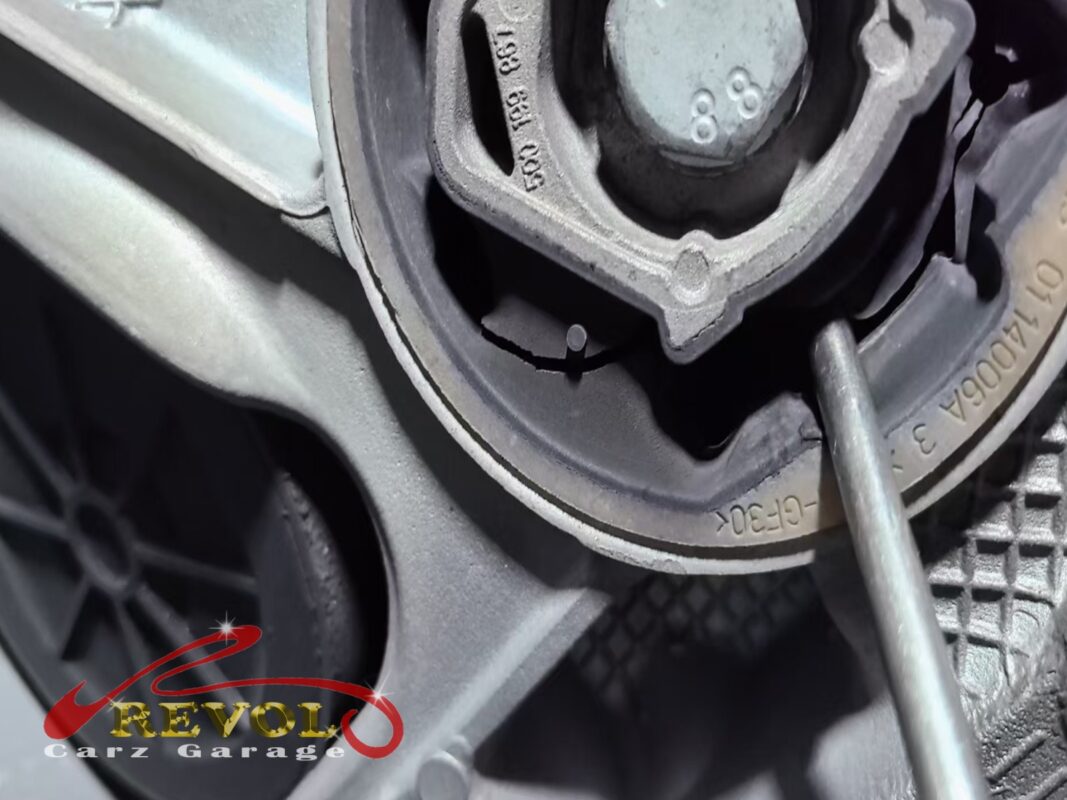
A pry-test on the front subframe area confirmed it. The subframe bushings showed visible deflection in more than one direction when levered, and the rubber had started separating from the inner sleeve, which is the failure mode for these: the bond between rubber and metal lets go after enough years and heat.
The lower control arms and the links were within tolerance, so the bushings were the failed component, not the arms. That made the call clear: press out the worn subframe bushings, press in new ones, and realign afterwards because the geometry will have drifted while the subframe was free to move.
The work
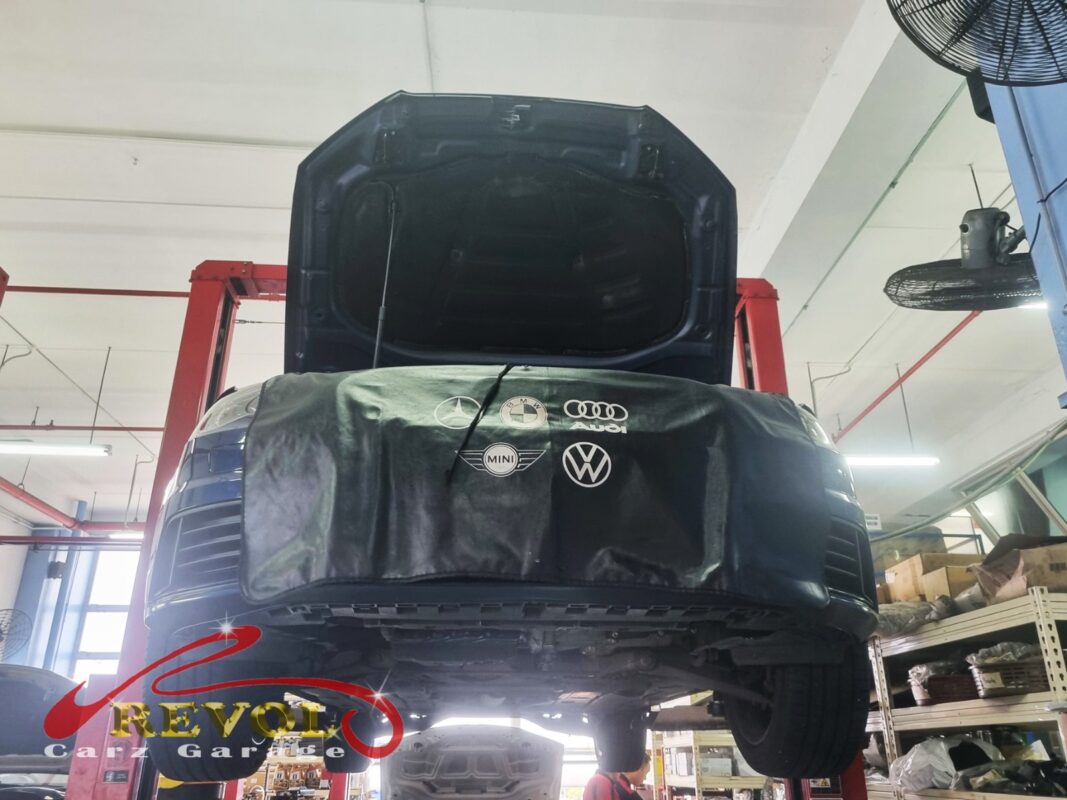
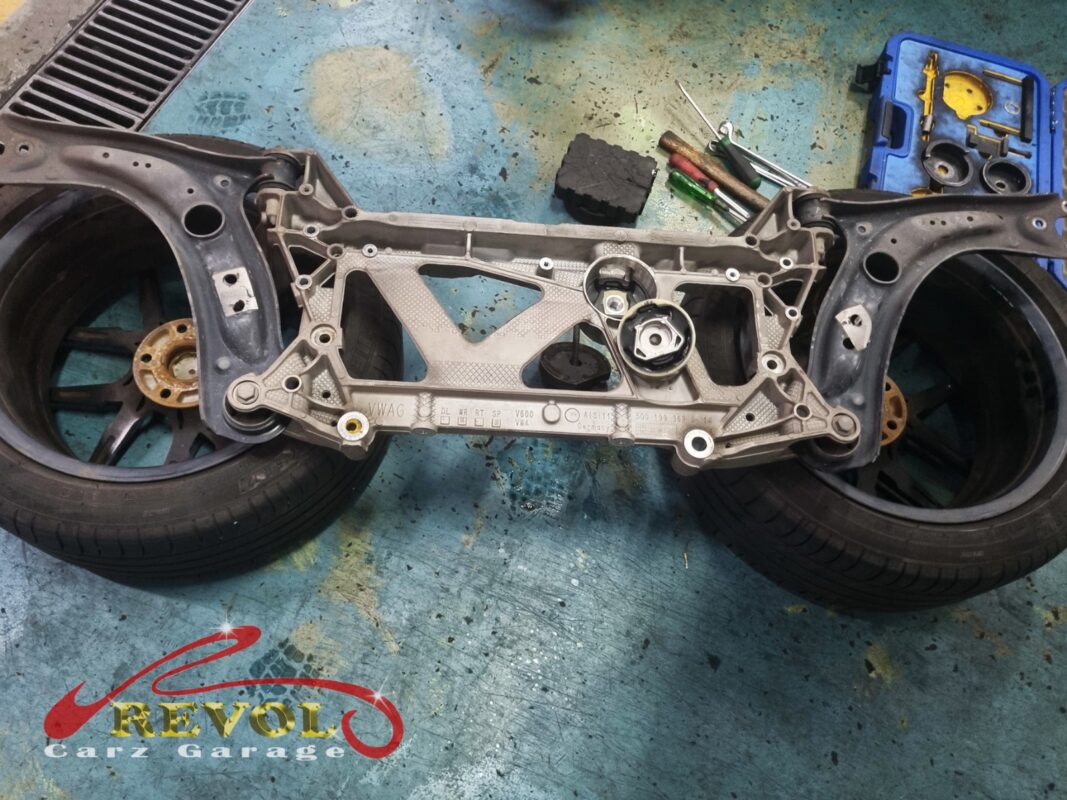
This is a job that needs the subframe down. Supported the engine, then dropped the front subframe far enough to get at the bush seats.
Pressed out the failed bushings, pressed in new VAG-spec replacements to the correct depth. Press depth matters here: a bushing seated too shallow or too deep changes the subframe's position relative to the body, which throws the geometry off before you even start.
Reinstalled the subframe with new bolts torqued to spec, then rolled the car onto the alignment rack. Camber, caster and toe brought back to factory across all four corners, before-and-after numbers printed.
The outcome
Clunk gone over rough roads. The steering tightened up at speed, the vagueness on-centre gone. Alignment back in spec.
The A3 went home tracking properly, the front end feeling solid and precise again. For the owner, the obvious win is the car driving the way it should. The quieter win is the tyres: with the geometry restored, the front tyres will wear evenly across their tread instead of feathering away an inside edge, which is a full set's worth of kilometres rather than a premature replacement.
And fresh subframe bushings are good for many years, so this is not a job that comes round again soon.