The brief
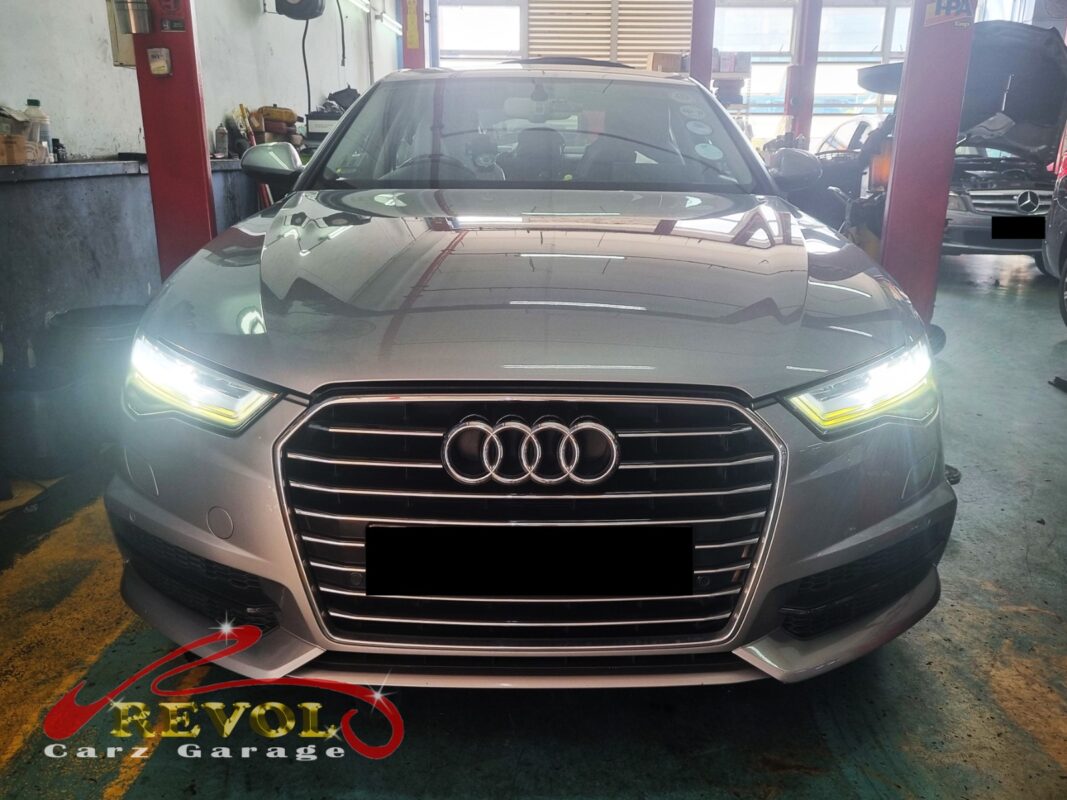
The A6's owner had been seeing the temperature gauge climb above its usual position on longer drives. And on cold mornings the cabin heater was slow to come up to temperature.
A quick check under the bonnet showed coolant traces around the thermostat housing. Those two symptoms together, a gauge that runs hot on longer drives and a heater that is slow to warm, with a coolant weep at the thermostat, point at the thermostat itself failing in a particular way: stuck or sluggish, plus leaking.
A thermostat that does not open cleanly traps heat; one that does not close properly, or leaks, lets the engine struggle to warm up. This one was doing both.
The diagnosis
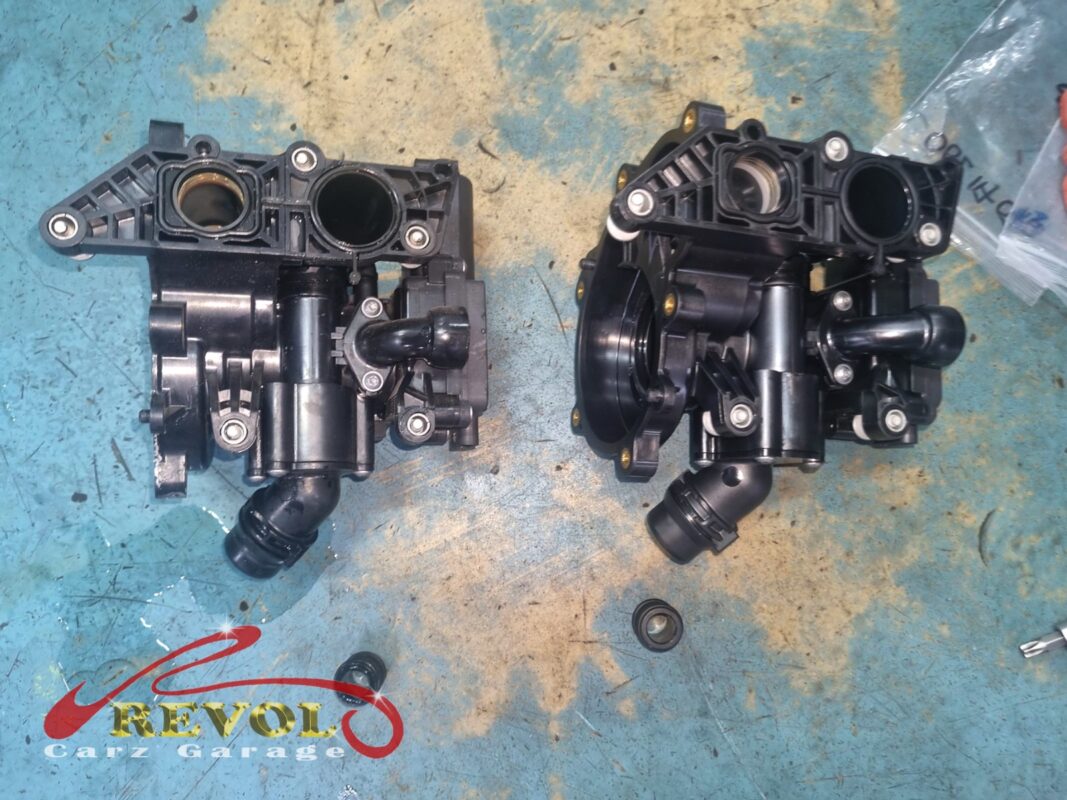
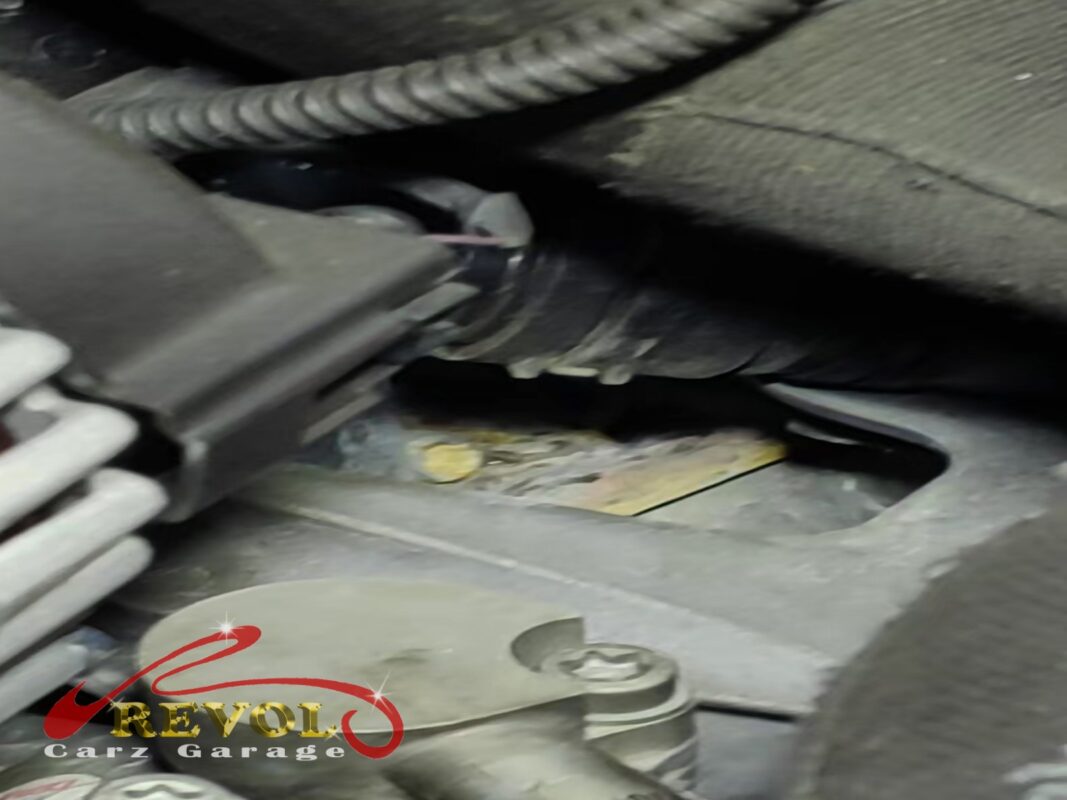
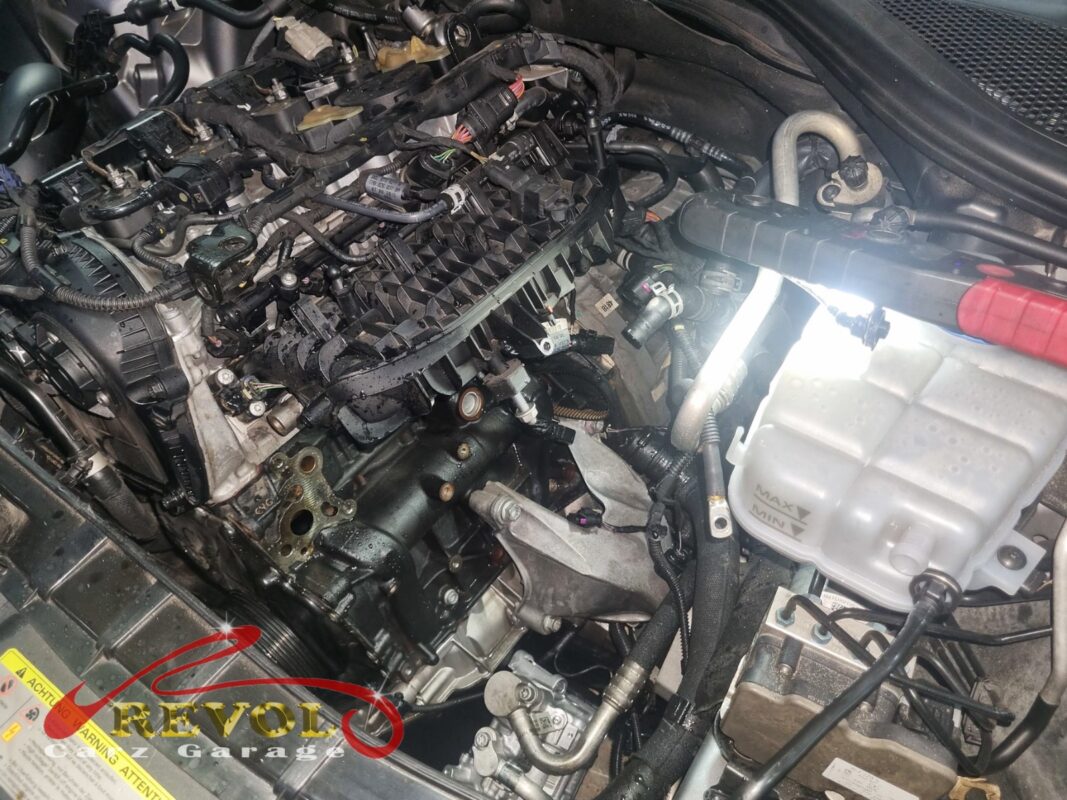
Dismantling around the thermostat confirmed it. The thermostat itself was deteriorated, the sealing face wet where coolant had been weeping, and the live data showed it not opening cleanly at its rated temperature.
That combination, an internal failure and an external leak in the same part, is what was producing both symptoms at once: the hot gauge from the sluggish opening, the slow warm-up and the coolant loss from the leak. On this engine the thermostat is part of an integrated housing assembly, so the fix is to replace the whole module rather than just the thermostat element.
The work
Drained enough coolant to drop the thermostat housing, then removed the failed assembly. Fitted a new Audi-spec thermostat housing with fresh O-ring seals.
Refilled with the correct coolant at the right ratio, then ran the bleed cycle the proper way to clear the air pockets a modern cooling system traps after a refill. Once it was purged and up to temperature, held pressure on the system to confirm a sealed result before the car went out.
The outcome
Warm-up time back to normal. The gauge holds in the middle through traffic and on the motorway. The cabin heater warming up at the right point on a cold morning.
The A6 went home with the cooling system regulating properly again. For the owner, that means an engine that runs at the temperature it is designed to, no more watching the gauge creep on a long drive, and a heater that does its job in the morning.
And catching a leaking, sluggish thermostat at this stage matters: a thermostat that finally jams shut can overheat an engine fast, which is the expensive end of this story.