The brief
The A4 had crossed 120,000 km. There was no squeal, no slip, nothing wrong yet. The owner had simply read enough about belt failures stranding drivers, decided the conservative route was the right one, and booked the car in before any symptom showed up.
That is the smart way to treat a belt. By the time an accessory belt is squealing, it has already been slipping; by the time it lets go, it can take the charging and the cooling out in one go and leave you on the hard shoulder. Doing it on a known interval, before any of that, turns a possible breakdown into a planned visit.
The diagnosis
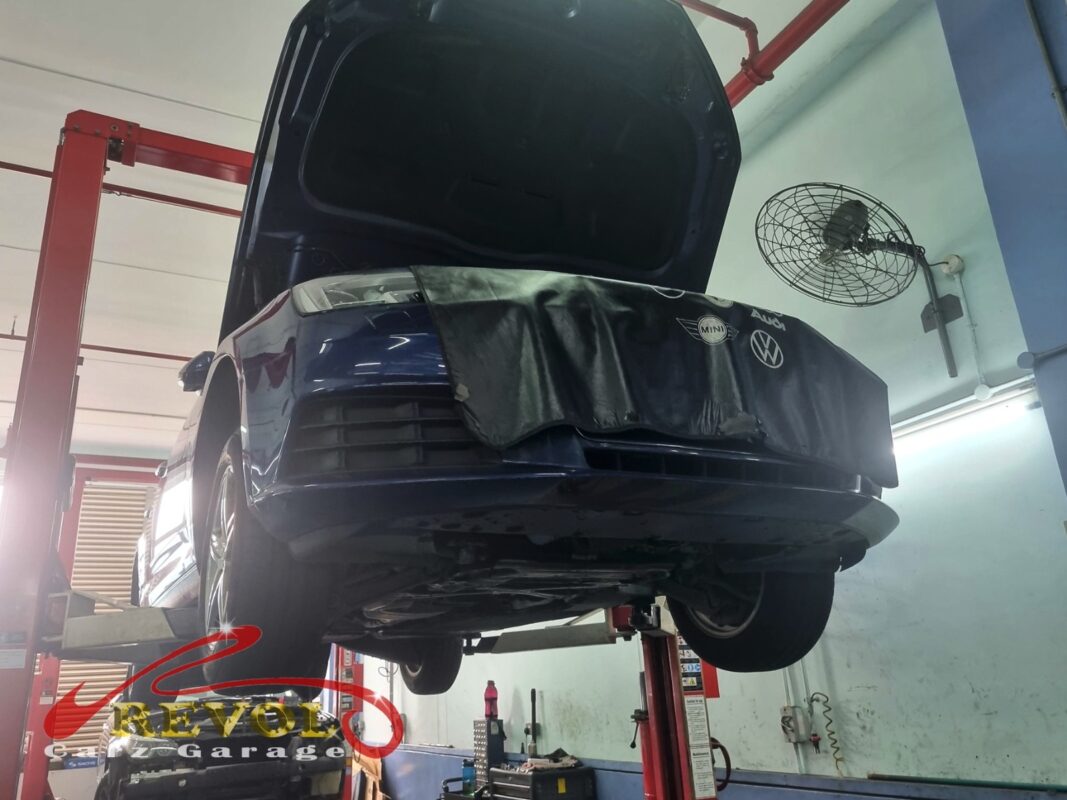
On the lift, the existing belt told the story you would expect at 120,000 km. The rib face was glazed, that hard shiny look a belt develops over time, with fine surface cracks just starting to appear. The tensioner had picked up a touch of bearing roughness when spun by hand. The idler pulleys were still smooth, but on the same age clock.
Nothing had failed, but everything was on its way there. That is exactly the point at which you do the whole set: belt, tensioner, idler pulleys, all together, rather than picking off the worst-looking part and leaving the others to fail next month. The labour to get in there is the same either way.
The work
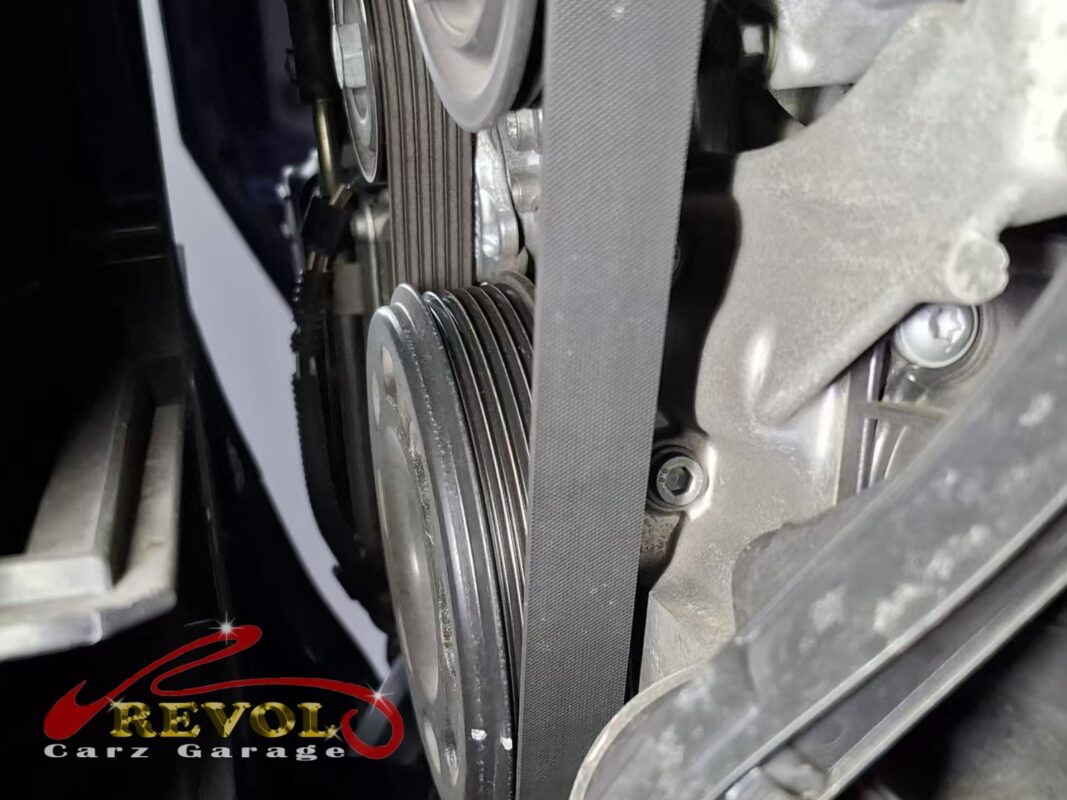
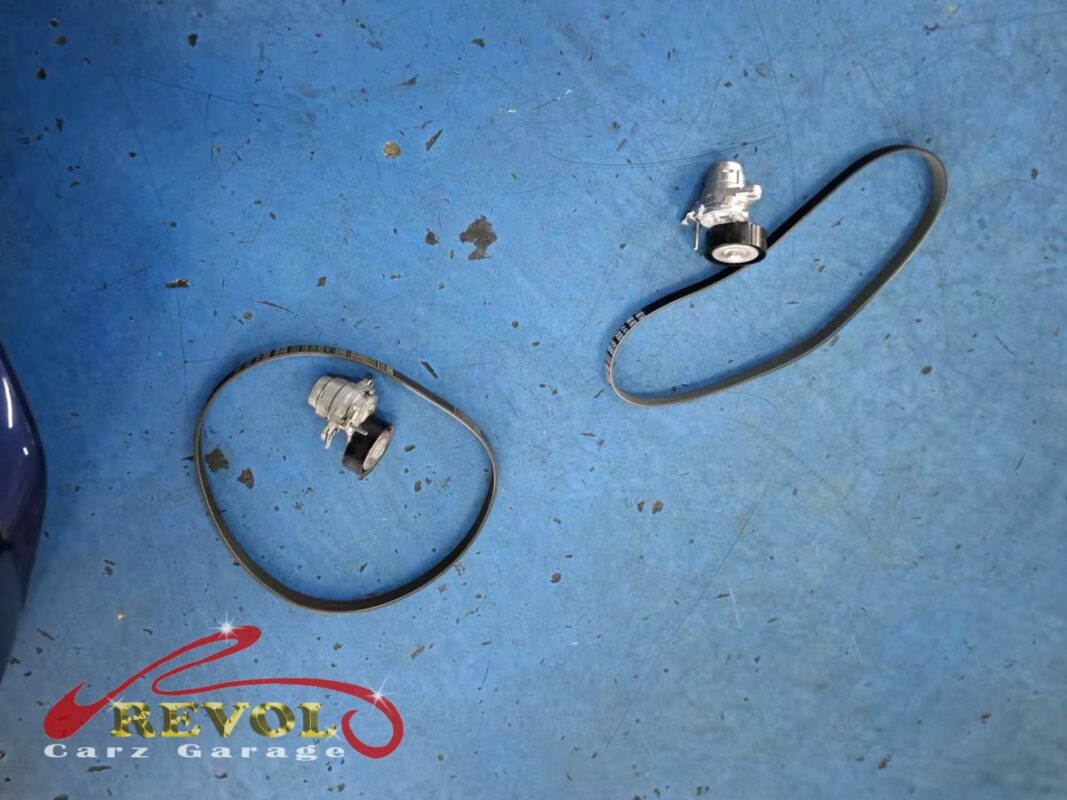
Released the tensioner, removed the old belt, and swapped the tensioner and idler pulleys for new VAG-spec parts.
Fitted a fresh belt, routed correctly through every pulley, because a belt run the wrong way around an idler wears out fast. Re-tensioned to the spec figure, not by feel.
Then verified the belt ran silently with the engine warm and the major loads applied, aircon on and electrical load up, so the whole accessory drive was confirmed under real demand before the car went out.
The outcome
No squeal under any combination of AC and alternator load. A silent belt drive across the rev range.
The A4 went home with the front of the engine reset to like-new and the single most common high-mileage failure point removed from the list. For the owner, that means a car they can trust on a long drive without the belt being a worry, fixed before it could ever become a problem.
That is what preventive maintenance looks like done right: spending a known, planned amount now to avoid an unknown, badly-timed one later.