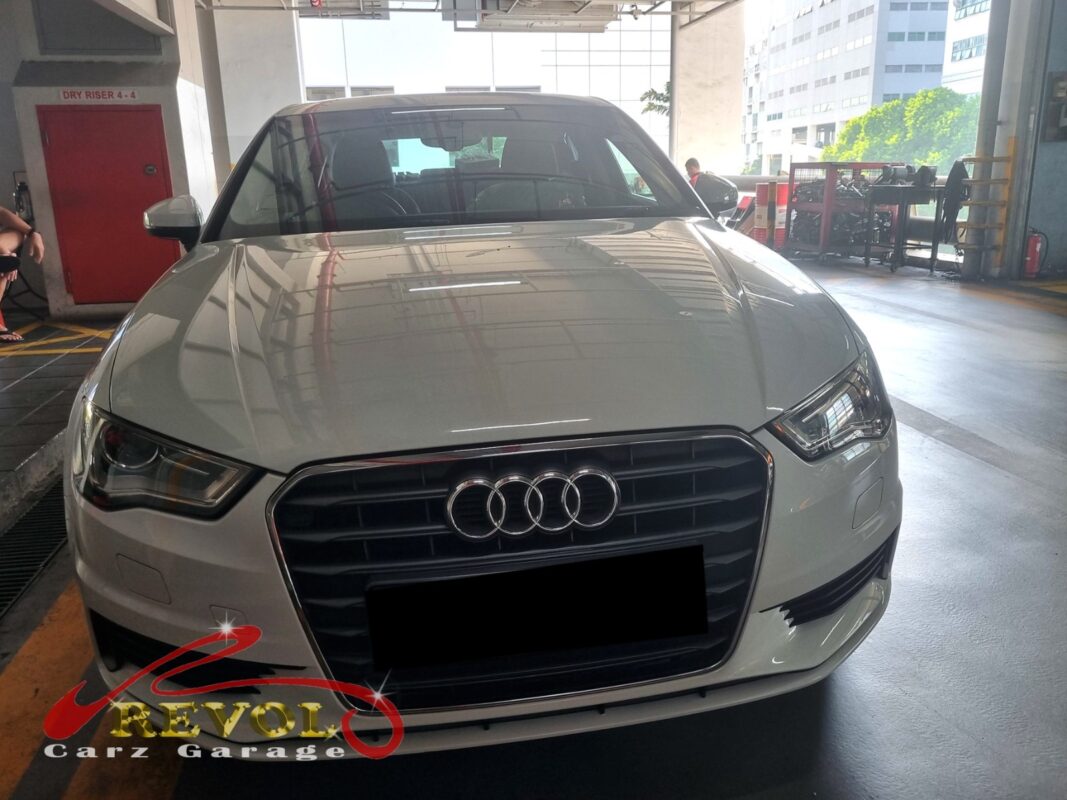
The brief
The owner first noticed a faint hum at higher speeds. Then he realised it was loudest from the back of the cabin. And in long sweeping right-handers it stepped up to a growl.
That last detail is the diagnostic giveaway. A wheel bearing carries the car's weight as the wheel spins, and when you corner, the load shifts side to side. A worn bearing being loaded up gets louder; the same noise changing with the direction of the corner tells you which side the bad bearing is on. He brought the A3 in before the hum became a real noise, which is the right time to do it.
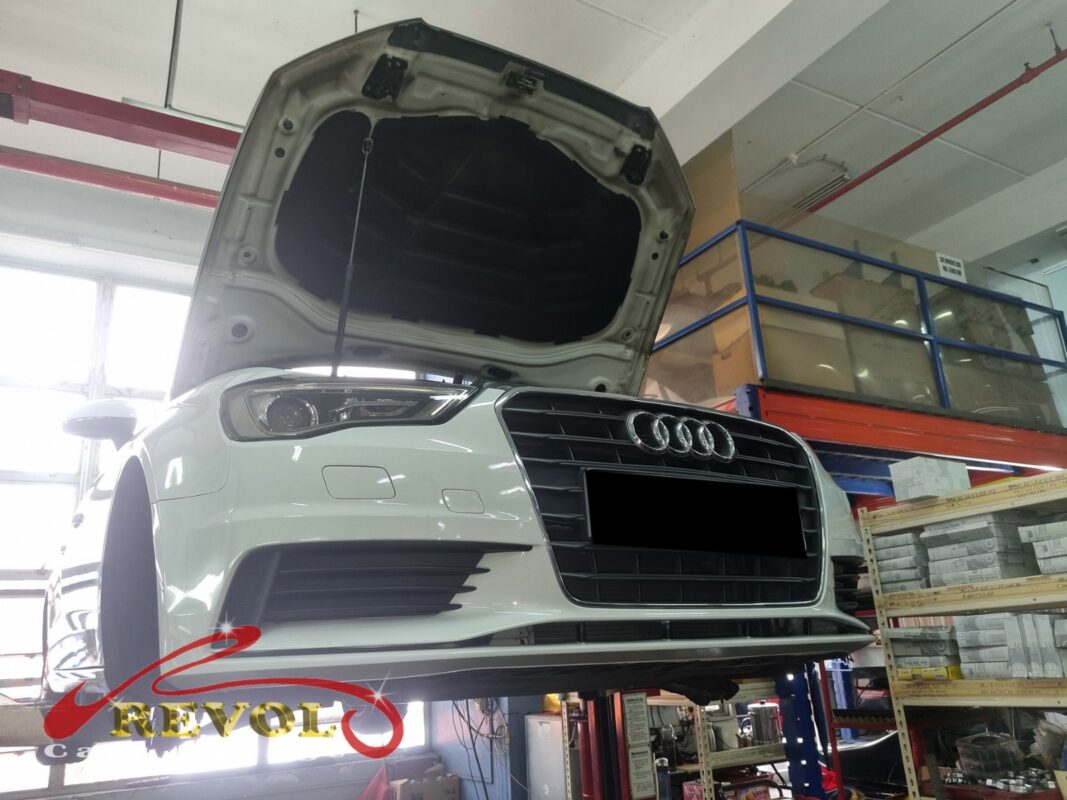
The diagnosis
On the lift, we spun each rear wheel by hand and listened. The driver side had clear roughness on rotation, the gritty feel of a bearing whose rollers and races have started to wear, plus a tiny amount of axial play at the hub. The passenger side spun smooth and quiet.
So the driver-side bearing was the failed one. But the passenger-side bearing was the same age, on the same roads, and a bearing that has done the mileage to wear one side is usually not far off on the other. So the call was to do both rear bearings as a pair, rather than be back for the second one in a few months.
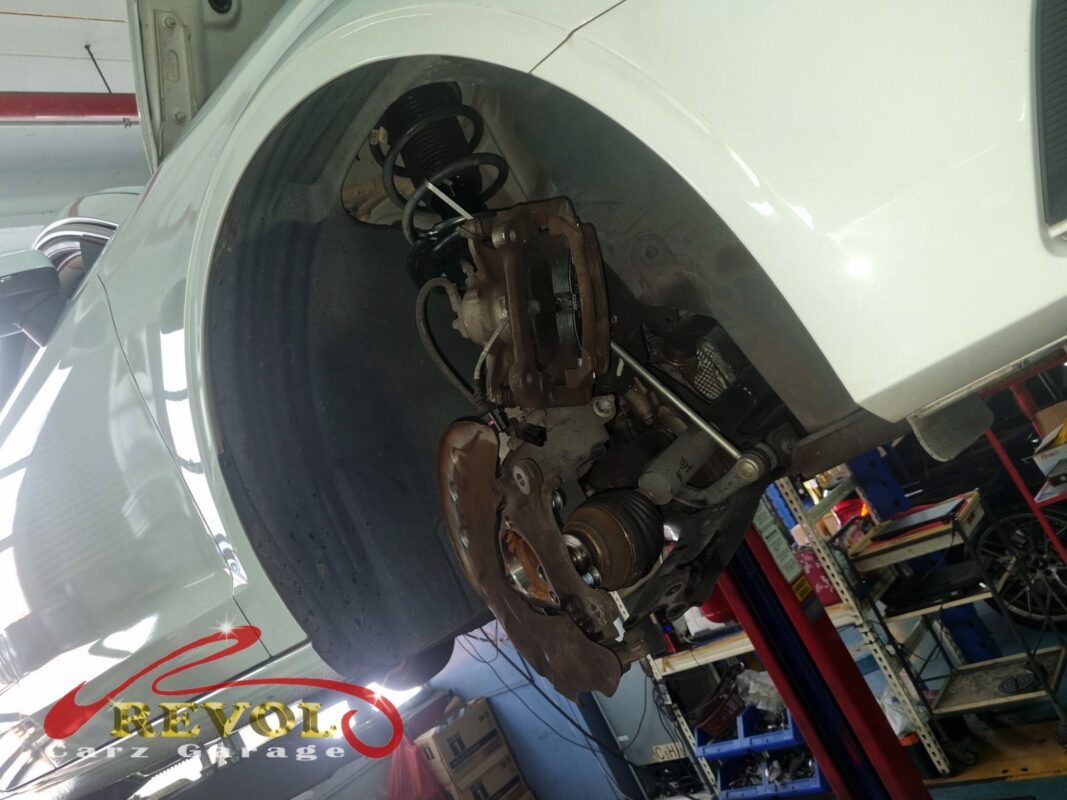
The work
Removed the caliper and disc on each side, then pressed out the failed bearings with the hub puller. Pressing a wheel bearing in and out wants the right tooling and the right pressure; forcing it the wrong way damages the new bearing before it ever turns.
Fitted new Audi-spec bearings, each set to the correct preload, because preload matters: too loose and the bearing knocks and wears fast, too tight and it runs hot. Reassembled the hubs and torqued the axle nuts to spec.
Then spun each wheel by hand again to confirm it turned silently and smoothly with no play, before the wheels went back on.
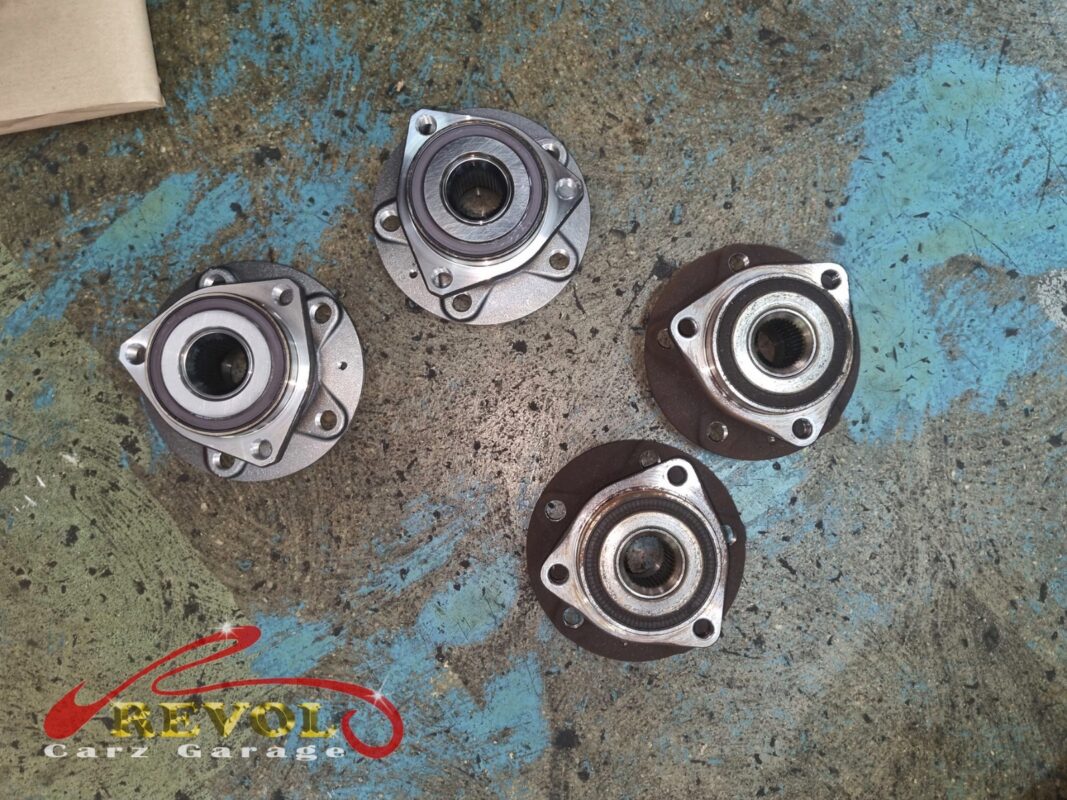
The outcome
The hum gone. No growl in cornering, either direction. No play at the hubs.
The A3 went home quiet across the rev range and back to behaving the way an A3 should. For the owner, the practical win is a quiet, smooth car again, plus rear bearings that should now go the distance.
And catching it at the hum-and-growl stage rather than letting a bearing fail completely kept the repair to the bearings themselves; a bearing run to destruction can take the hub or the wheel speed sensor with it.