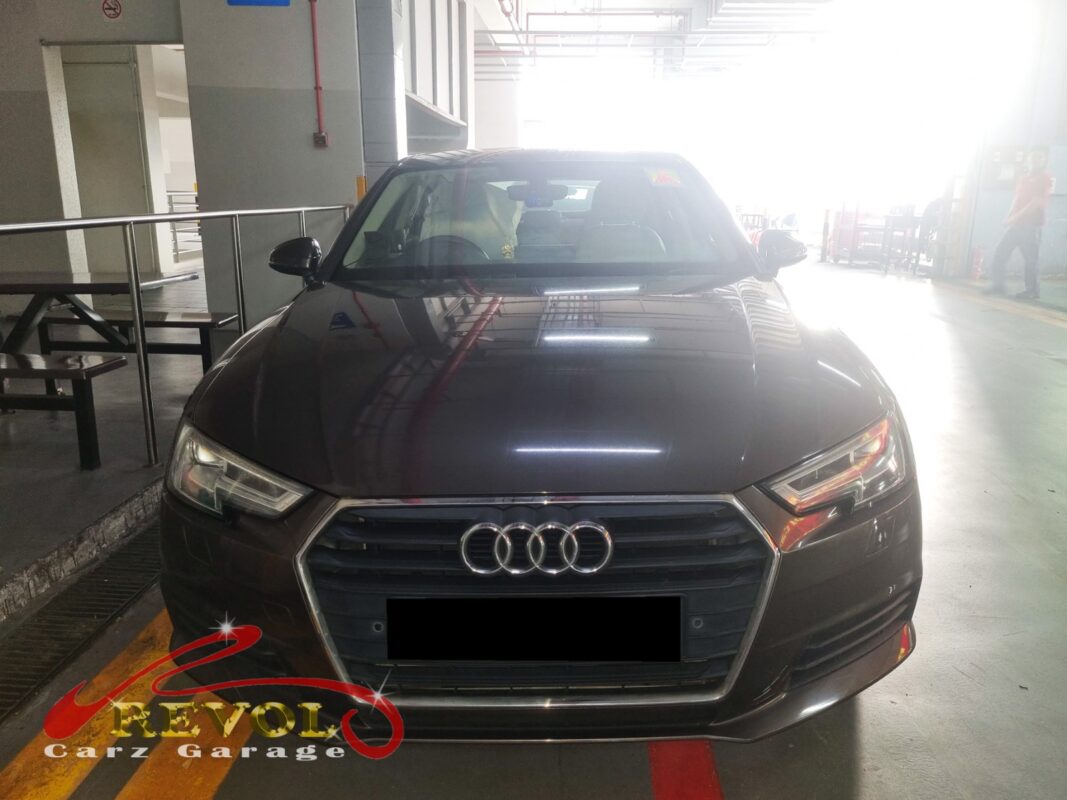
The brief
The A4 had been needing a coolant top-up every couple of weeks. The owner had also started catching a sweet smell from the engine bay after drives, and a quick look under the bonnet showed damp coolant traces around the water pump.
That smell is a useful clue. Coolant has a distinct syrupy smell when it has been on hot engine parts, so picking it up after a drive usually means coolant is reaching something hot. Combined with the regular top-ups and the visible residue right at the pump, the diagnosis pretty much wrote itself.
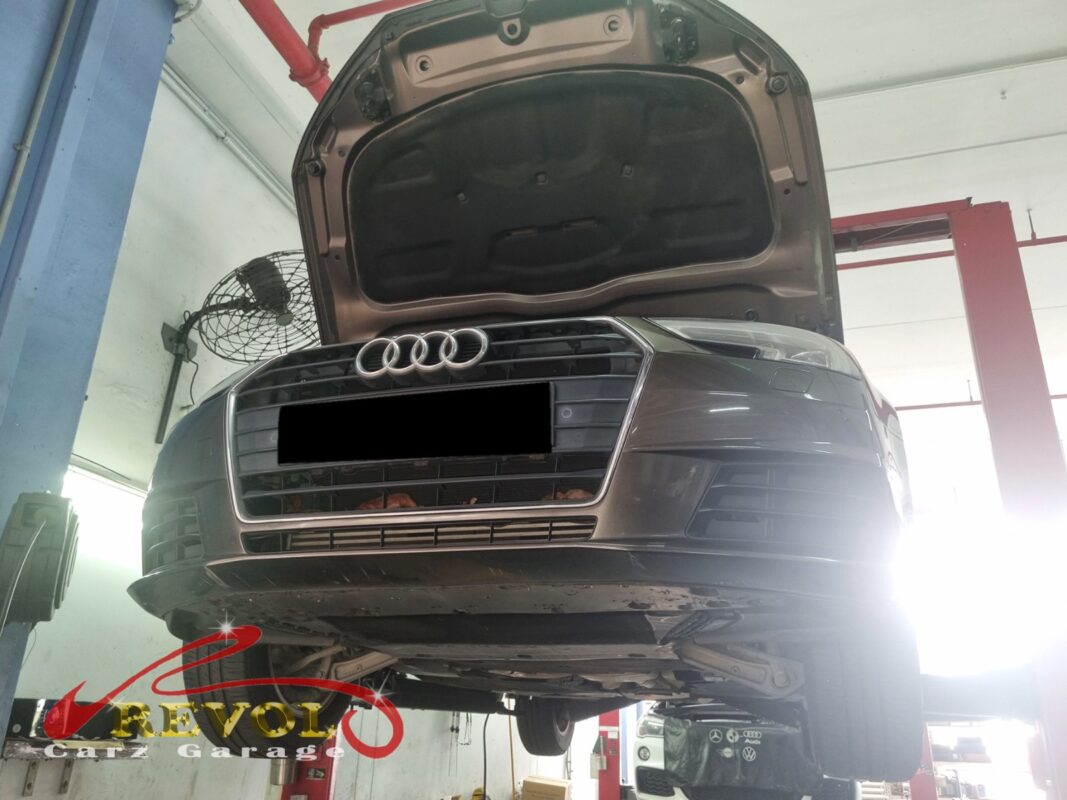
The diagnosis
A pressurised cooling-system test traced the leak directly to the water pump shaft seal, the seal that holds coolant back while the pump shaft turns. Once it weeps, coolant escapes around the shaft and runs down the engine, which matched the residue we could see.
We checked the rest of the loop, since a coolant leak deserves a proper look before you commit to a part. The radiator, the hoses, the expansion tank and the thermostat housing all checked out clean. The pump shaft seal was the source. And on a pump that has reached the point of weeping at the seal, the right fix is replacement, not a re-seal that would leave the rest of an ageing pump in place.
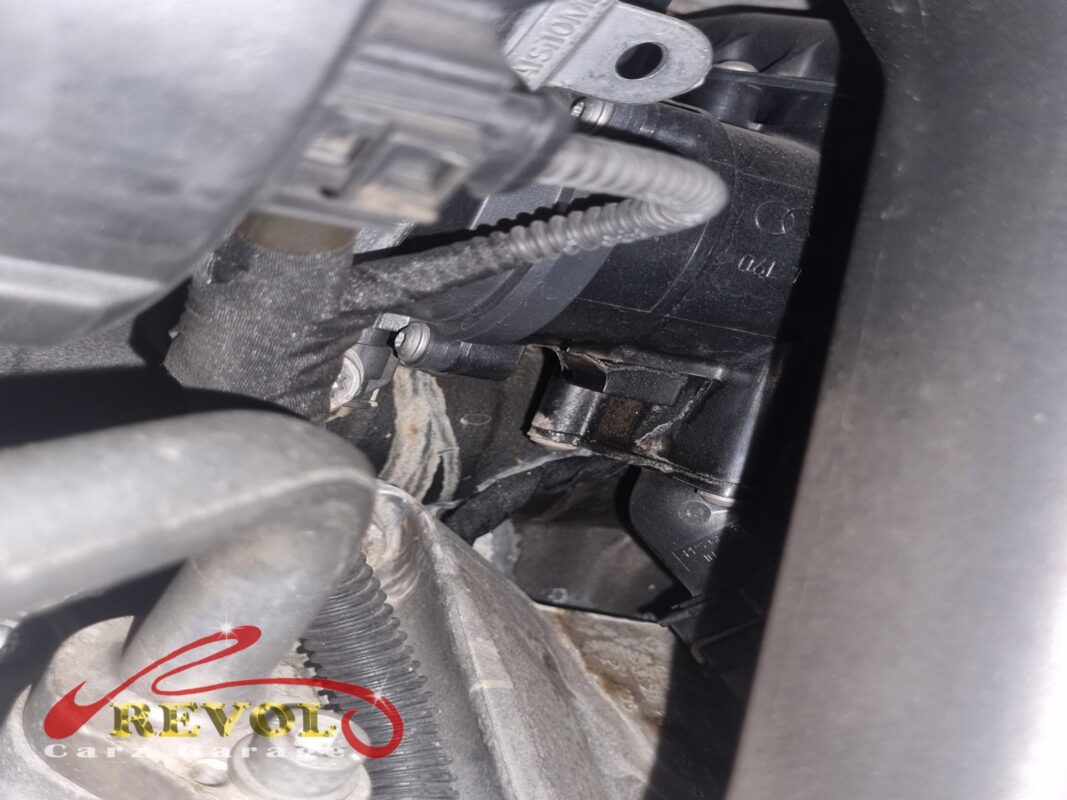
The work
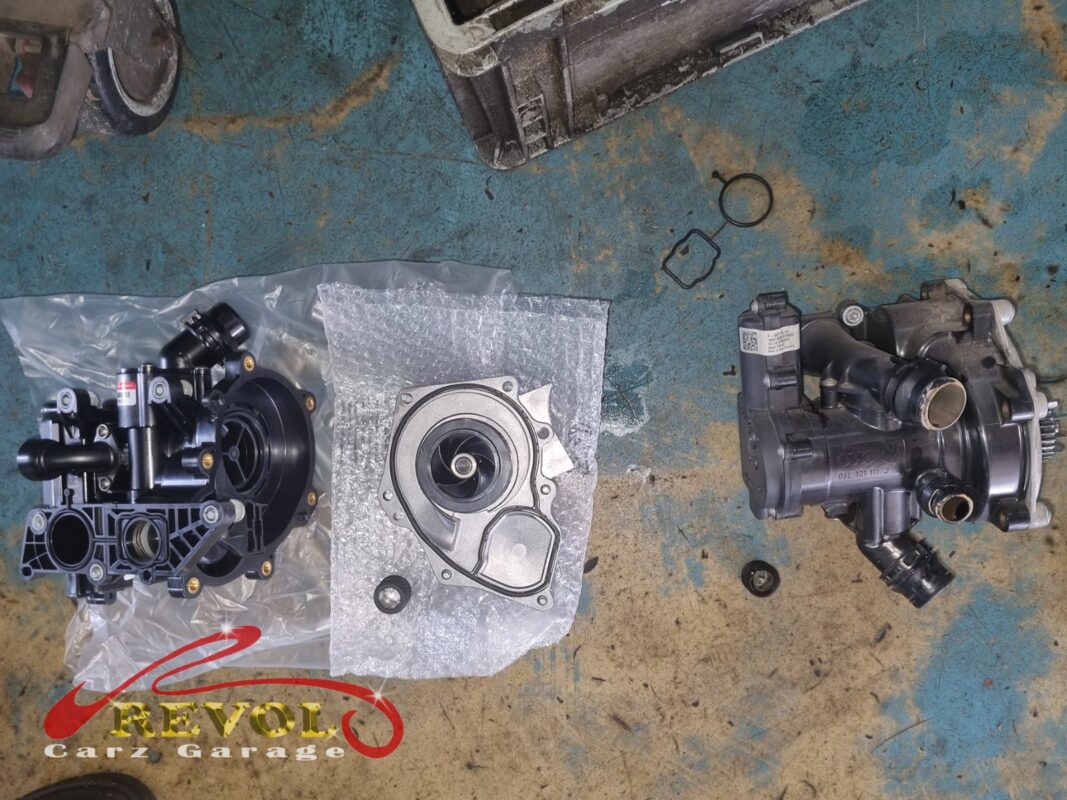
Drained the system, released the drive belt section to clear access, and removed the failed water pump. On this engine the pump and the thermostat housing are one integrated module, so the whole assembly gets swapped together.
Fitted a new VAG-spec pump with a fresh seal, refilled with the correct coolant at the right ratio, then ran the bleed cycle the proper way to clear the trapped air pockets, and held pressure on the system to confirm a sealed result before the car went out.
The outcome
No drips. Coolant level holding steady between checks. The sweet smell gone.
The A4 went home with the cooling system back to spec. For the owner, that means a car that holds its coolant and runs at the right temperature, with no more topping up every fortnight and no more smell after a drive.
And catching a weeping pump at this stage keeps the engine clear of the overheating risk that comes if a coolant leak is left to run until the level drops too far.