The brief
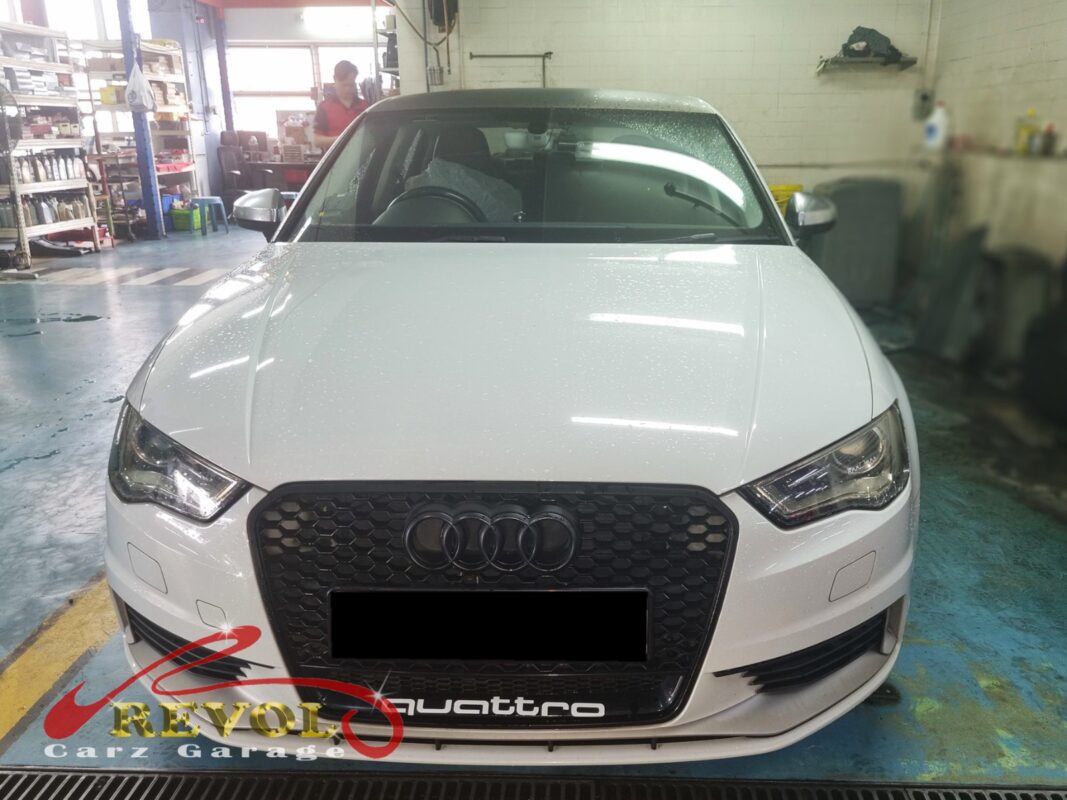
The A3 had crossed 120,000 km, which on this engine is the recommended timing belt interval. The owner brought it in proactively, before any symptom showed up.
That is the only sensible way to treat a timing belt on this kind of engine. It is an interference engine: if the belt lets go, the valves and the pistons can meet, and what was a belt-and-pulleys job becomes a cylinder-head rebuild or worse. A timing belt does not really give you a warning before it snaps, so you do it on the clock, not on a noise. Booking it in at the interval, before anything goes wrong, is exactly right.
The diagnosis
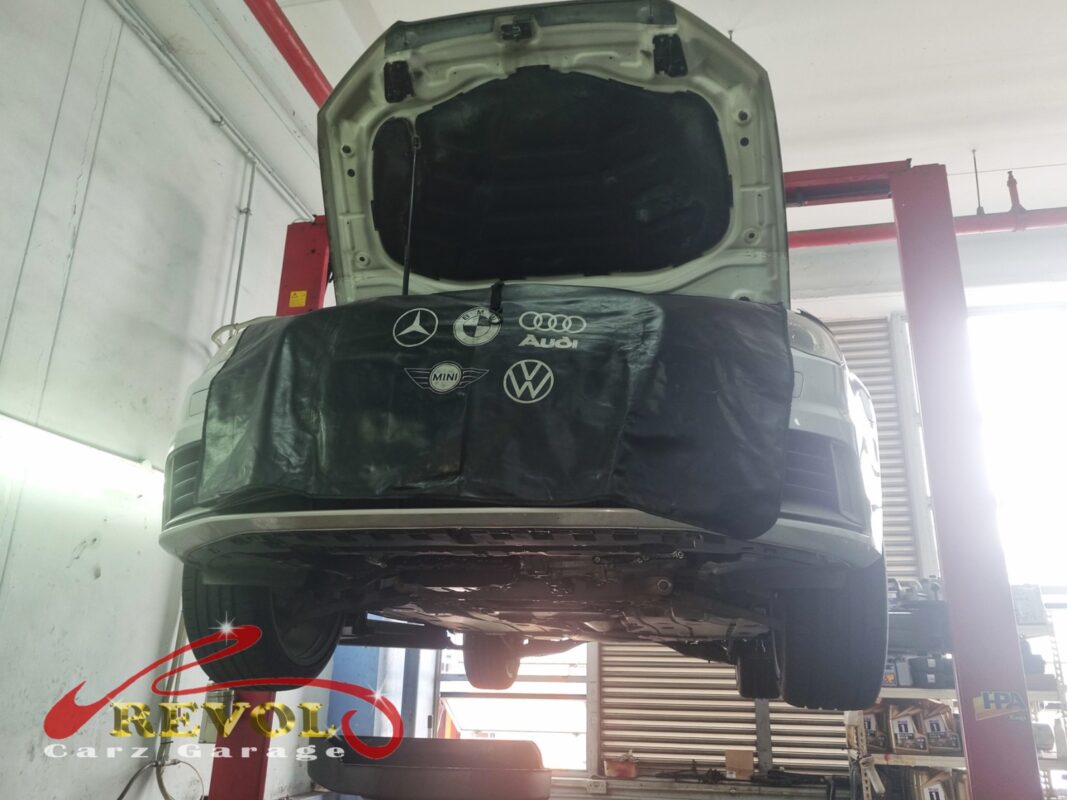
On inspection, the existing belt showed the wear you would expect at 120,000 km, nothing dramatic, just the normal ageing. The tensioner had developed bearing roughness when spun by hand. And the water pump, which on this engine is driven by the timing belt, had a small weep starting at its seal.
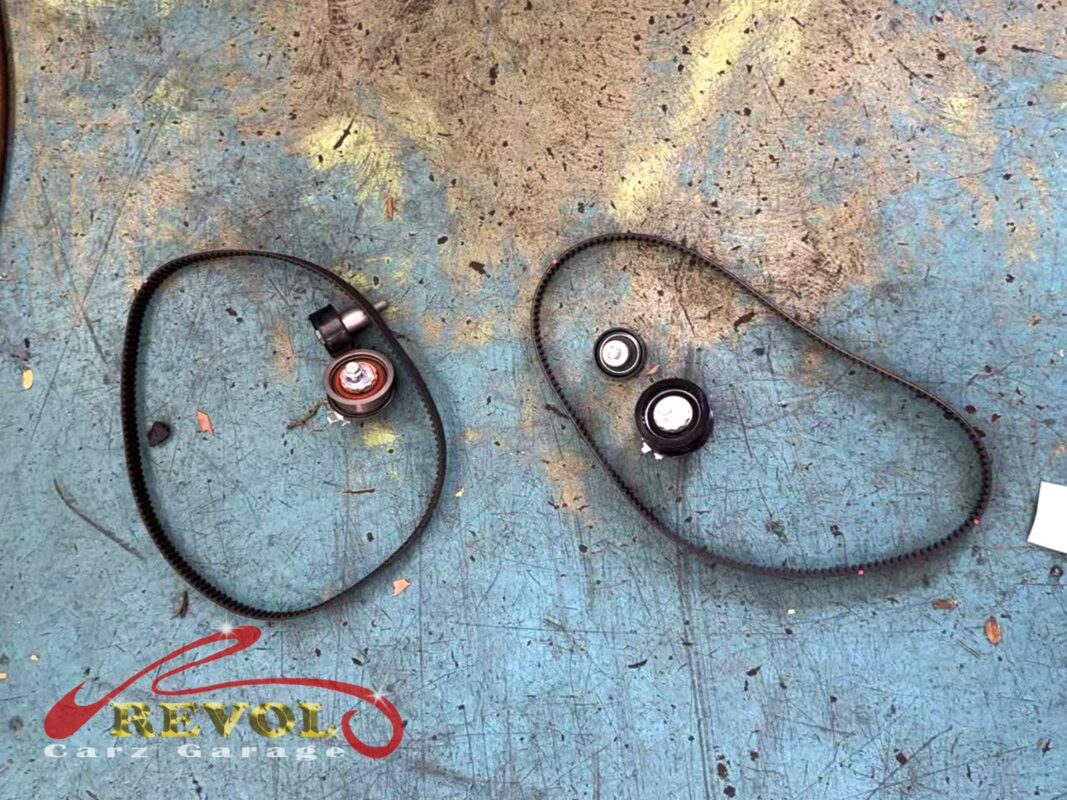
That last point decides the scope. The water pump sits behind the timing belt, so getting at it means the same strip-down as the belt. Doing the belt now and leaving a weeping pump would mean tearing the front of the engine apart again in a few months when the pump finally goes. So it is the full kit: belt, tensioner, idlers, and water pump, all in one job.
The work
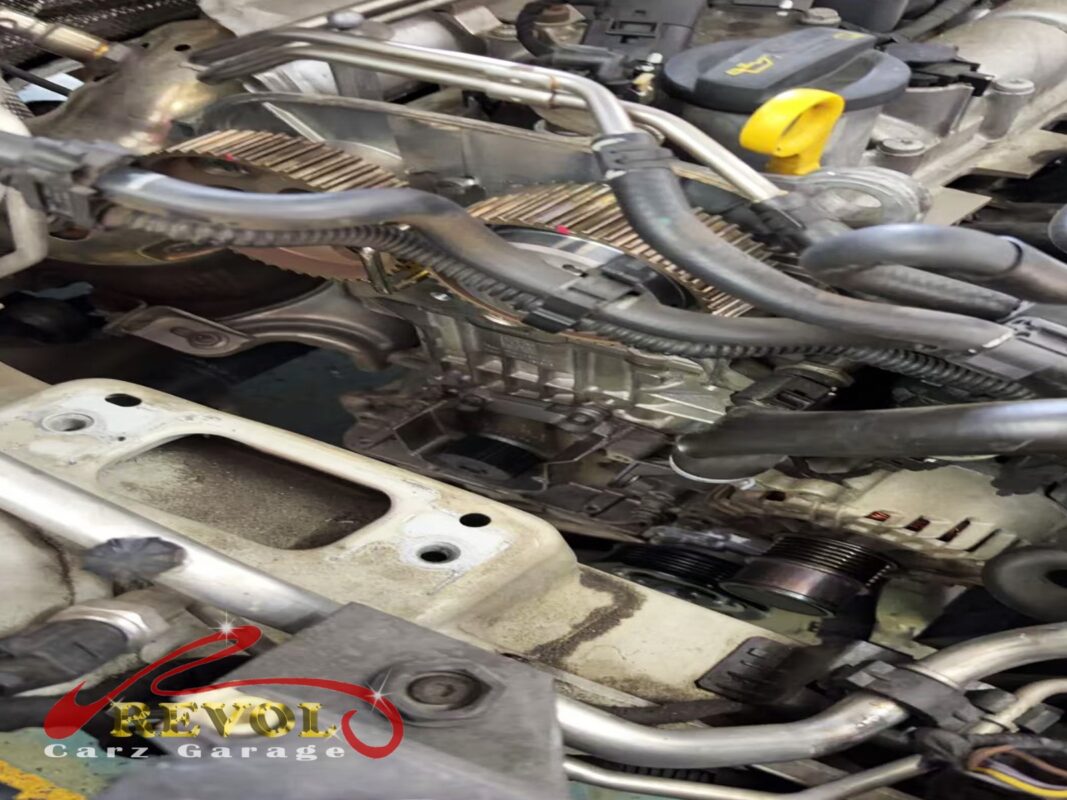
Locked the engine timing on the proper VAG tools, because on a belt change the camshafts and crankshaft have to stay exactly where they are while the old belt comes off and the new one goes on. Get that wrong and the engine does not run, or worse.
Removed the old belt and idler set, fitted a new VAG-spec belt kit including the tensioner, the idlers, and the water pump. Reset the timing to spec, refilled the coolant, and ran the engine through a warm-up cycle to verify it ran cleanly and held timing.
The outcome
Clean timing reset. A dry water pump. A silent belt drive.
The A3 went home with a full reset of the timing system, good for the next interval. For the owner, the practical win is peace of mind: the one component on this engine that ends careers when it fails has been renewed before it could, along with everything that shares its strip-down.
That is preventive maintenance at its most worthwhile, spending a known amount on a planned job to take the worst-case engine failure off the table entirely.