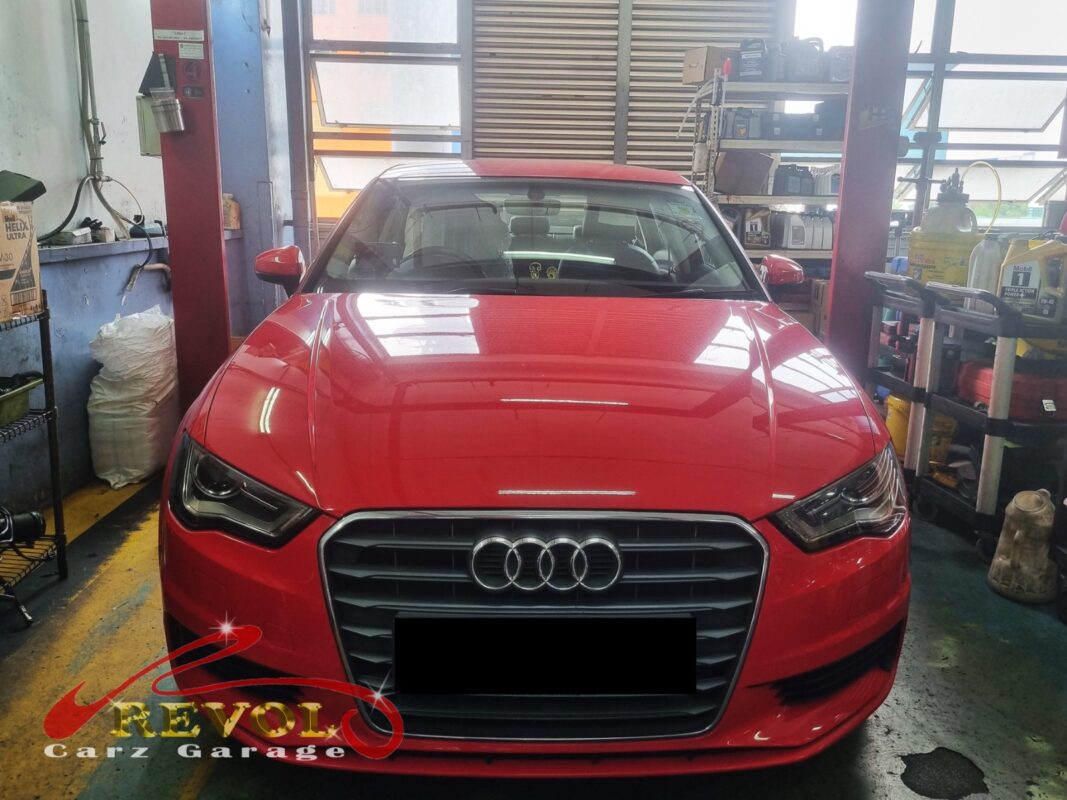
The brief
The owner described the rear of the A3 as feeling 'floaty' over rougher patches, the body kept moving for a beat too long after each bump. And it was rolling further than it used to in faster corners. The rear tyres were starting to scallop, wearing in a wavy pattern.
That is the slow kind of complaint. None of it happens overnight; the car just gradually stops feeling composed at the back, and one day you notice. All of it points at the rear shock absorbers: when the damping inside them fades, the body floats after bumps, rolls more in corners, and the rear axle bounces enough through its contact patch to wear the tyres unevenly.
The diagnosis
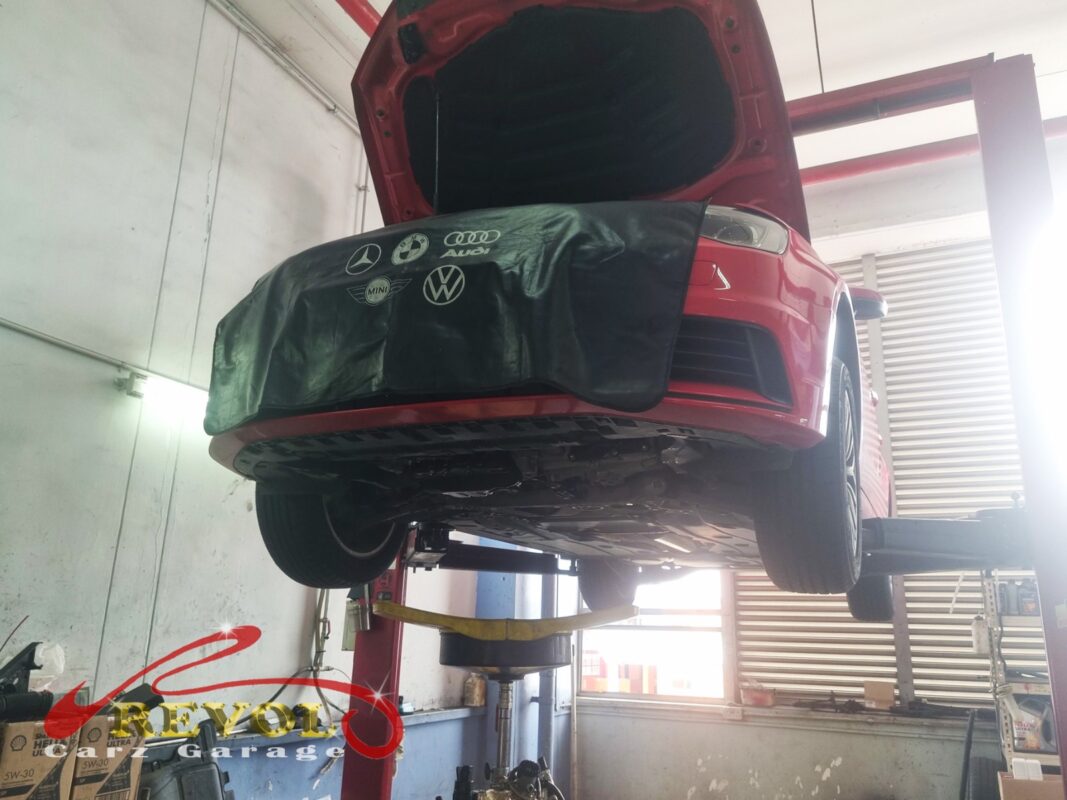
On the lift, both rear shocks tested with collapsed rebound damping, the part of the shock that controls how the body returns after a bump. There was no fluid weep, the seals had not let go, but the internals were past their useful life: the shocks were no longer doing the job they are there for.
As always with shocks, replacing only one would leave the rear axle loaded asymmetrically, one corner controlled, the other floating, which makes the car feel worse, not better. So it was a pair job, both rear shocks together, with fresh bump stops and top mounts since those get disturbed for the swap anyway.
The work
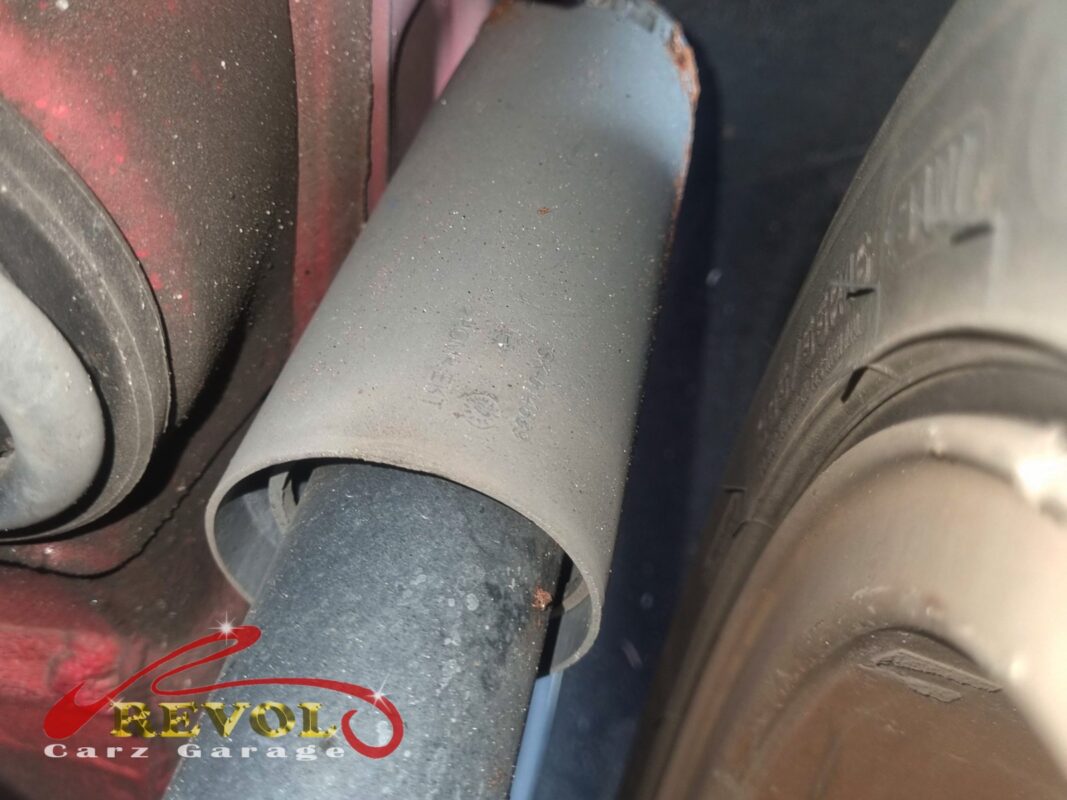
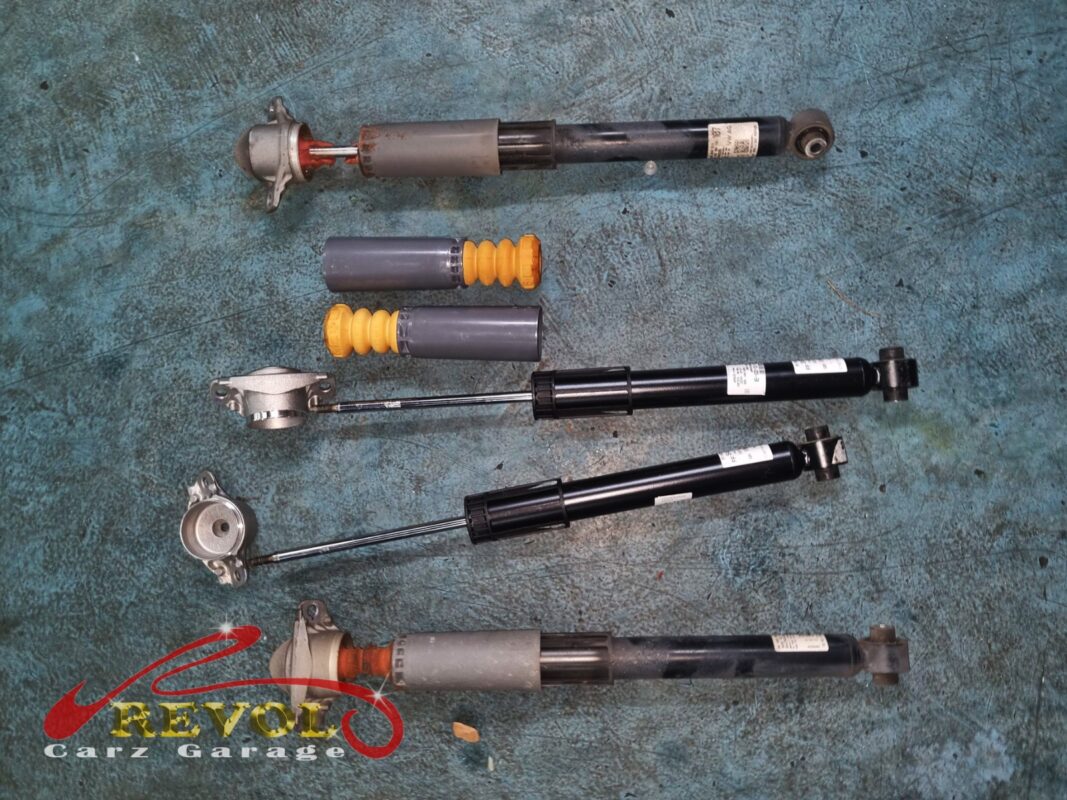
Removed both rear shock absorber assemblies. Fitted a matched pair of new Audi-spec replacements, with fresh bump stops, dust boots and top mounts, and torqued the upper and lower mounts to the workshop manual values.
Then rolled the car off for a settle cycle, bouncing the suspension to seat everything, followed by an alignment check to confirm the rear geometry was still where it should be after the work.
The outcome
The rear end planted again, settling cleanly after bumps instead of floating. Body roll cut back in corners. And with the rear riding properly again, the scalloped tyre wear pattern will reset over the coming kilometres.
The A3 went home with the back end behaving the way the front already did. For the owner, the practical win is a car that feels composed again, end to end, rather than loose at the back, plus rear tyres that will now wear evenly rather than being scrubbed by an axle that could not keep its contact patch planted.
That is a repair you feel from the first drive.