The brief
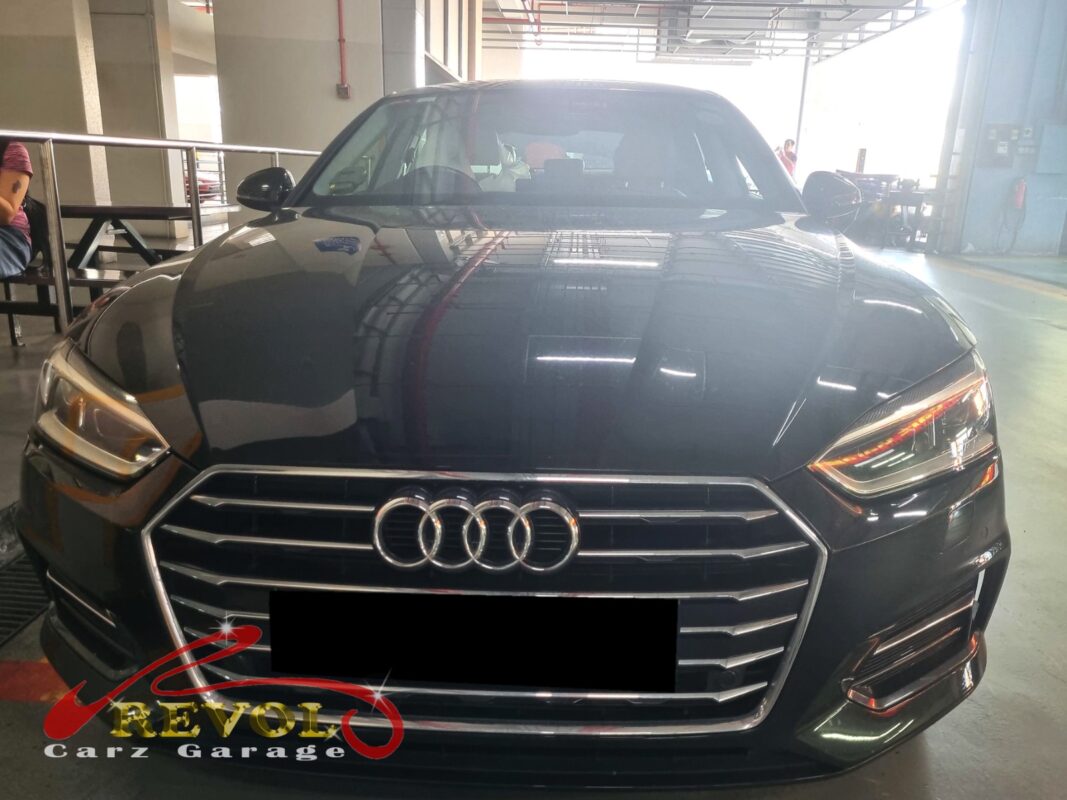
The owner of the A5 had been topping up fuel more often than usual. The check engine light had come on. And the engine had a faintly uneven feel at idle, nothing dramatic, just not quite as smooth as it should be.
He had logged the trip economy, noticed the dip, and brought it in. That combination, worse fuel economy plus a check engine light plus a slightly rough idle, is a classic oxygen sensor signature. The O2 sensor is the engine's feedback on whether the fuel mixture is right; when it goes lazy, the engine ends up running richer than it needs to, which burns more fuel and roughens the idle a touch.
The diagnosis
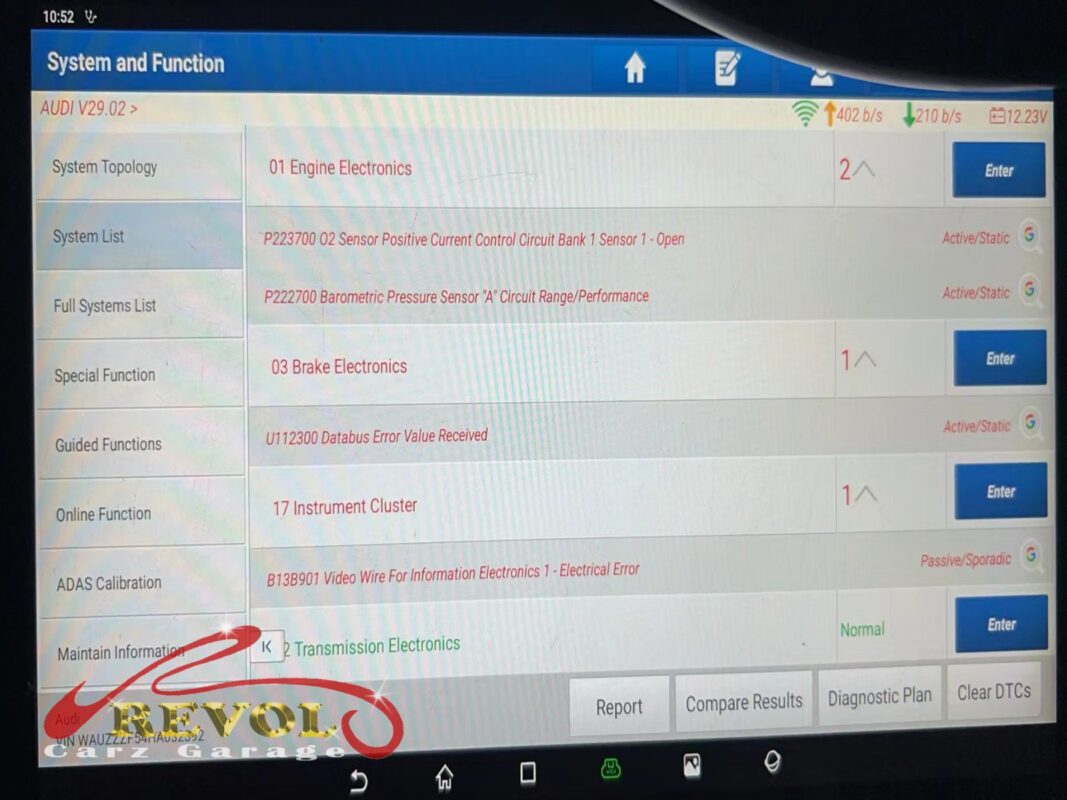
On the scanner, the codes pointed at the front oxygen sensor, the upstream one, reading off-band. The live data confirmed it: the sensor was stuck in a narrow voltage range instead of switching back and forth the way a healthy O2 sensor does as it tracks the mixture.
The downstream sensor, the one after the catalyst, checked out fine. So the front sensor was the failed part. There is no fixing an oxygen sensor that has worn out; the fix is replacement, and getting the right one in restores the engine's feedback loop.
The work
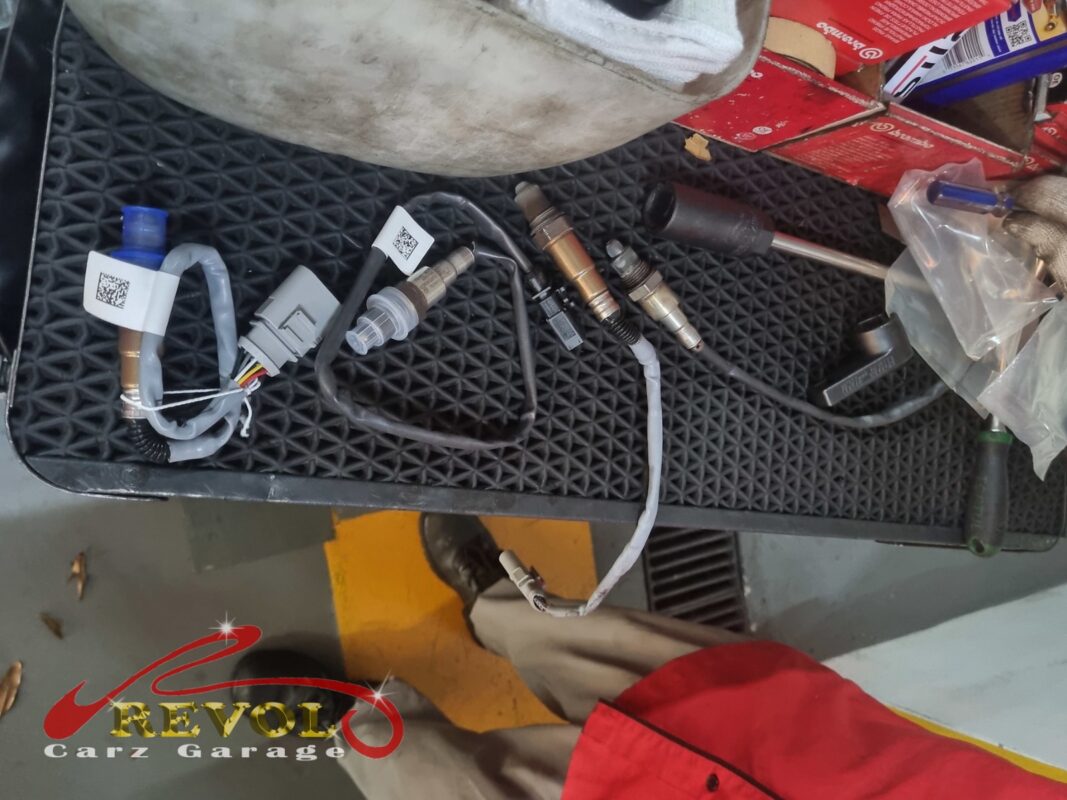
Located and unplugged the front O2 sensor, then threaded the failed unit out with the proper O2 socket, which is a slotted socket designed to clear the sensor's wire while it turns.
Fitted a new Audi-spec sensor, reconnected the harness, and cleared the stored fault codes on the scanner. Then watched the live data to confirm the new sensor was switching the way it should.
The outcome
The switching pattern back, the mixture back to spec, the idle smooth. The check engine light stayed off after a full drive cycle. And the fuel economy returned to normal across the next tank, which is the confirmation that the swap did its job.
The A5 went home running cleanly. For the owner, that means a fuel bill back where it should be, a smooth idle, and a dash with no warning light.
And it is fixed at the actual cause, a worn sensor, rather than left to keep quietly costing fuel and slowly fouling the catalyst with a rich mixture, which is the more expensive way this story ends if an O2 sensor is ignored.