The brief
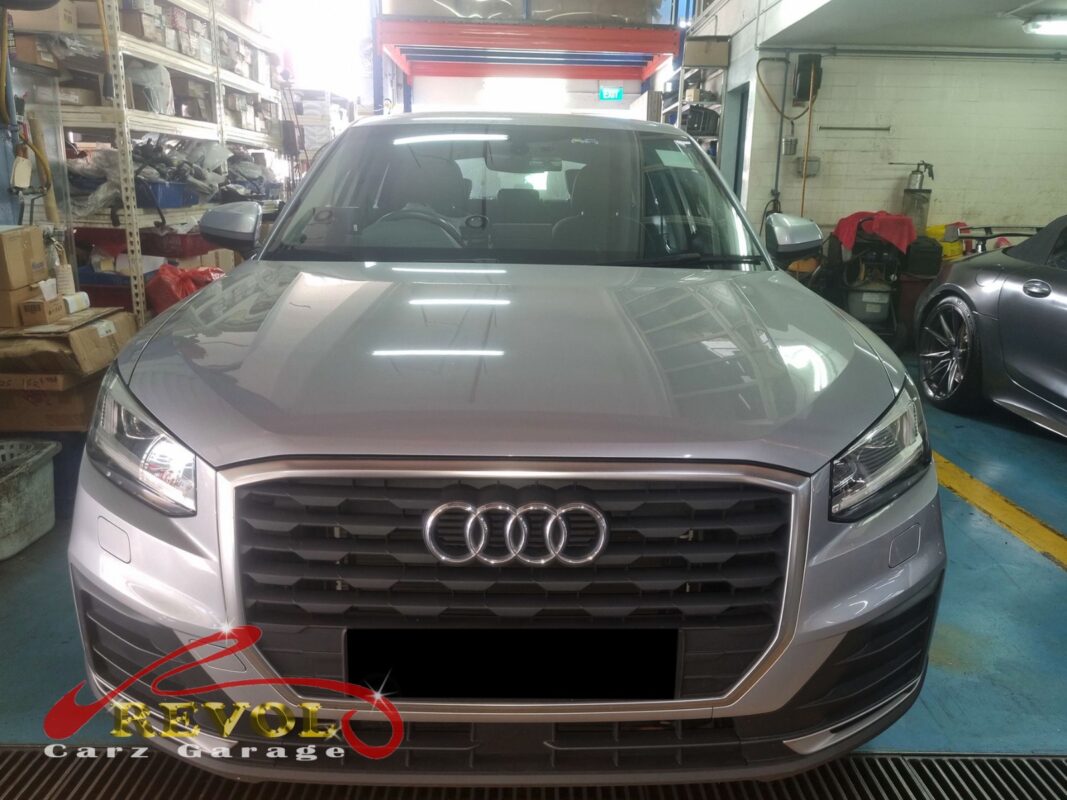
The Q2 had been making a high-pitched squeal under light braking around town, the kind that announces itself at every junction. On harder stops the pedal had developed a fine vibration. And stopping distances were not where they used to be, that subtle sense the car needs a little more road to pull up.
The squeal is usually the wear-indicator tab on the pads doing its job: a small metal tang that touches the disc and chirps when the pads are nearly done. The vibration on harder stops points at a disc that is no longer flat. And shorter-than-it-should-be braking is what you get when the friction surfaces are worn and glazed. The owner brought it in before any of it turned into something worse, which is the right time for brakes.
The diagnosis
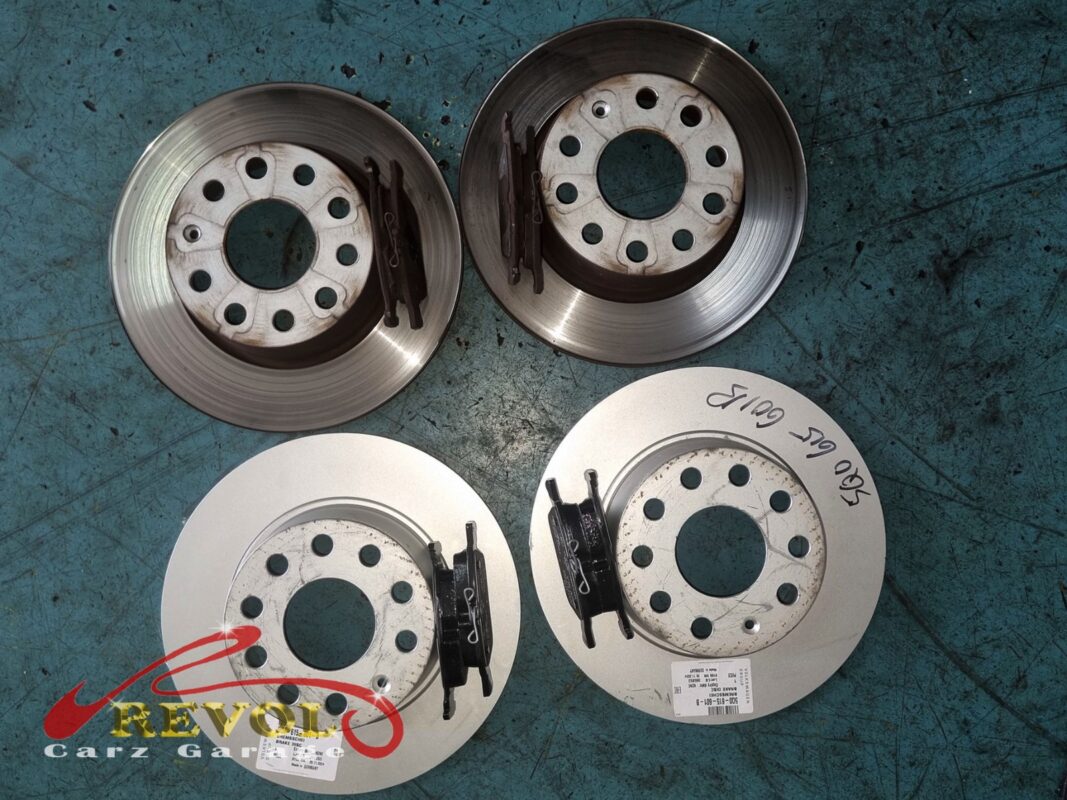
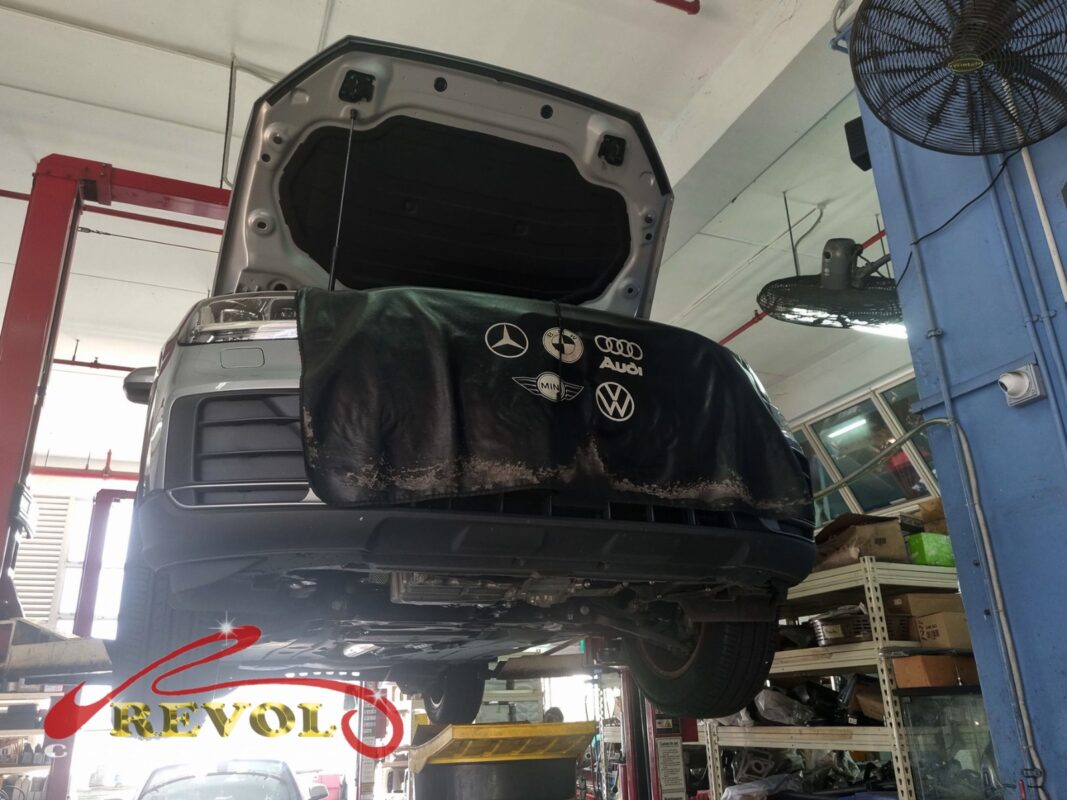
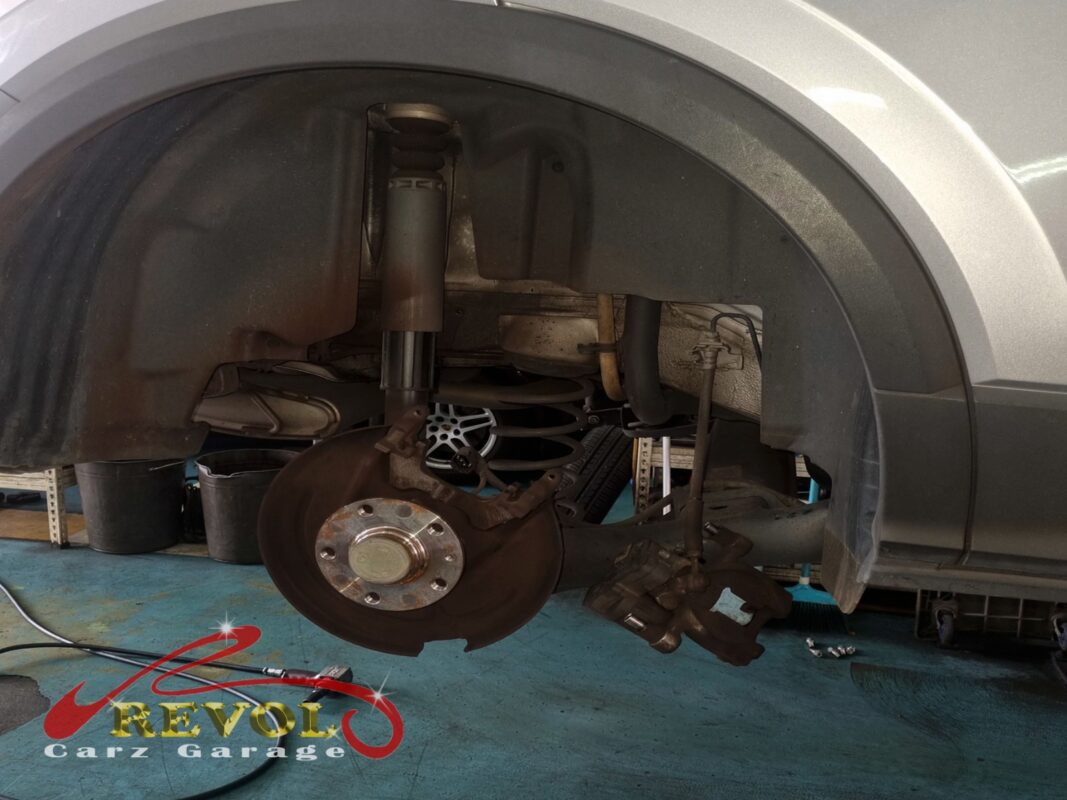
Wheels off, the diagnosis was straightforward. The front pads were down to the wear-indicator metal, exactly what the squeal had been telling us. And the front discs had a clear edge lip, a raised ridge at the outer rim where the pad sweep had worn the rest of the face down around it, plus they ran out of acceptable thickness on a runout check.
That decides the scope. Fitting new pads onto lipped, out-of-spec discs would just bed the fresh pads into the same uneven surface, which brings the vibration and the short braking right back. So it was a set job: discs and pads together, on the front axle.
The work
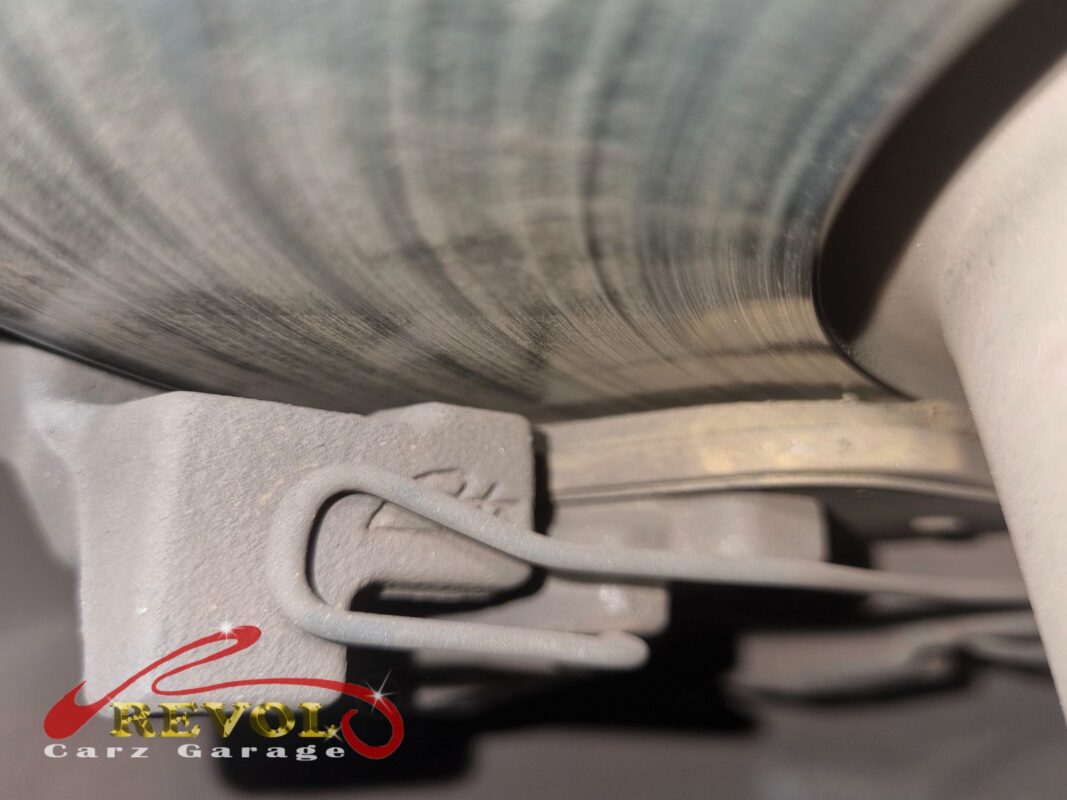
Removed the front callipers, swapped both discs for new Audi-spec rotors, and fitted a fresh set of pads. Cleaned and lubed the slider pins, since a caliper that cannot slide freely wears the pads unevenly and pulls the car under braking. Refitted the callipers to torque.
Then bedded the new brakes in across a controlled road test, a series of progressively firmer stops that transfers an even layer of pad material onto the new discs. Brakes that are not bedded in properly squeal and judder; the bedding-in is part of the job, not optional.
The outcome
No squeal. No pedal vibration. Full bite back at the front, the car pulling up cleanly.
The Q2 went home stopping the way it should, with the brake feel reset to like-new. For the owner, that means a quiet car at every junction, a firm pedal under hard braking, and stopping distances back where they belong, which on the road is the one thing you do not want to be running short on.
Catching the pads at the wear-indicator stage rather than letting them go to metal-on-metal also kept this to discs and pads, rather than the caliper damage that comes from running brakes to destruction.