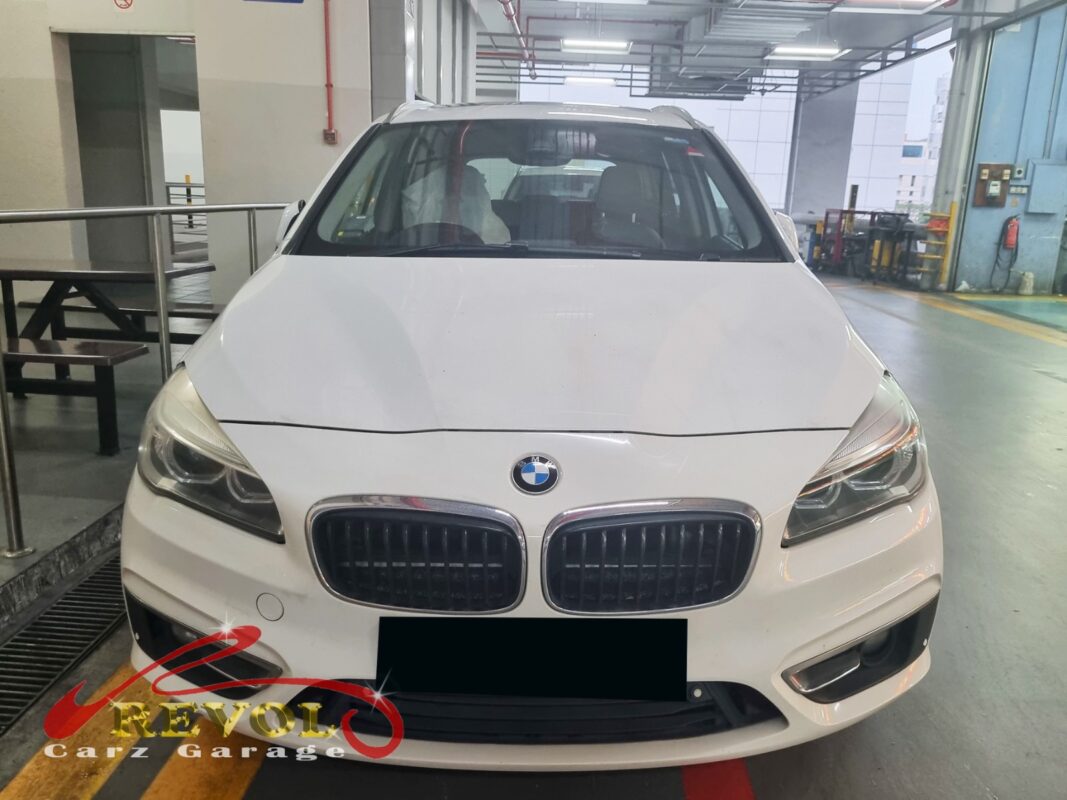
The brief
The 216d had grease tracking down around a driveshaft, a knock coming from underneath, and now and then a burning smell, the kind you get when grease drips onto a hot exhaust. The driveshaft boot, the rubber cover over the joint, had let go. That boot does one job: it holds the grease in around the CV joint and keeps water and grit out. When it splits, the joint slings its grease out as the shaft spins, which is the mess on the undercarriage and the smell, and dirt starts working its way in. Left long enough, the joint runs dry and starts to knock for real, and then you're replacing the whole driveshaft. Caught early, it's just the boot.
The diagnosis
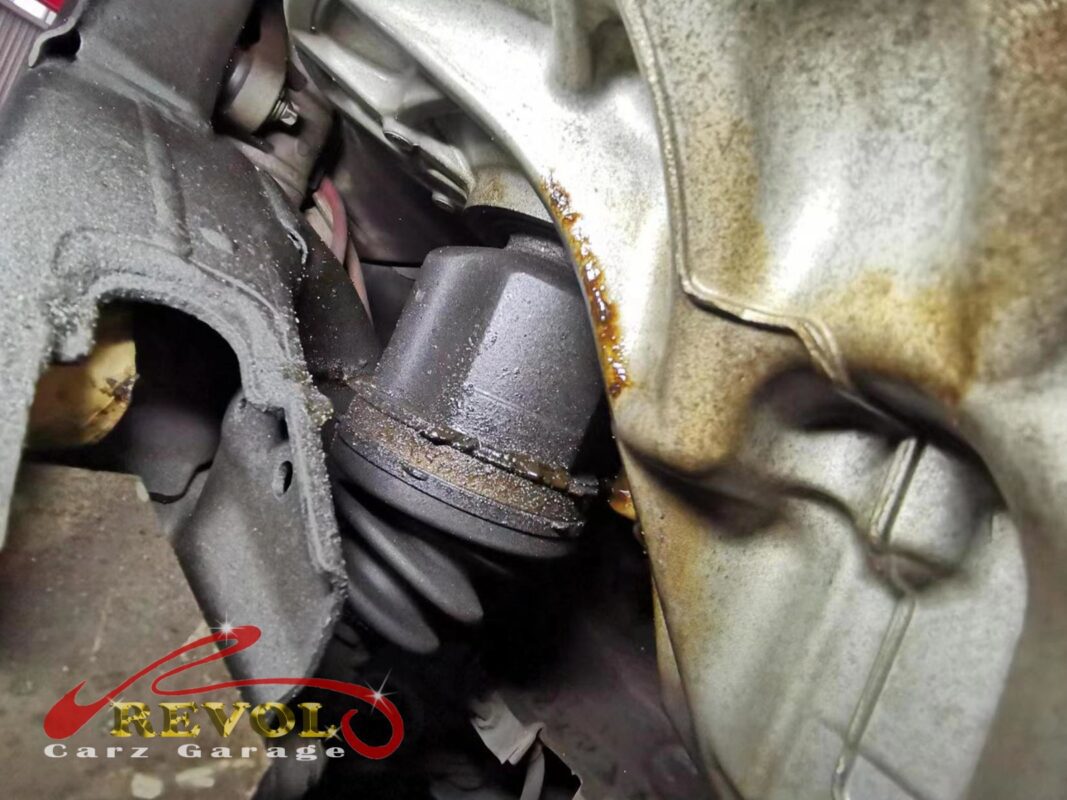
Underneath, the boot had split along one of its folds and was flinging grease out as the shaft turned. The good news was the timing: the CV joint under it still felt tight with no notchiness, so the grit hadn't done its damage yet. The knock was the joint starting to complain about running low on grease, not a joint that was finished. So this was a boot job, not a driveshaft job. Clean it out, reseal it, pack fresh grease into the joint, and it's good for the long run.
The work
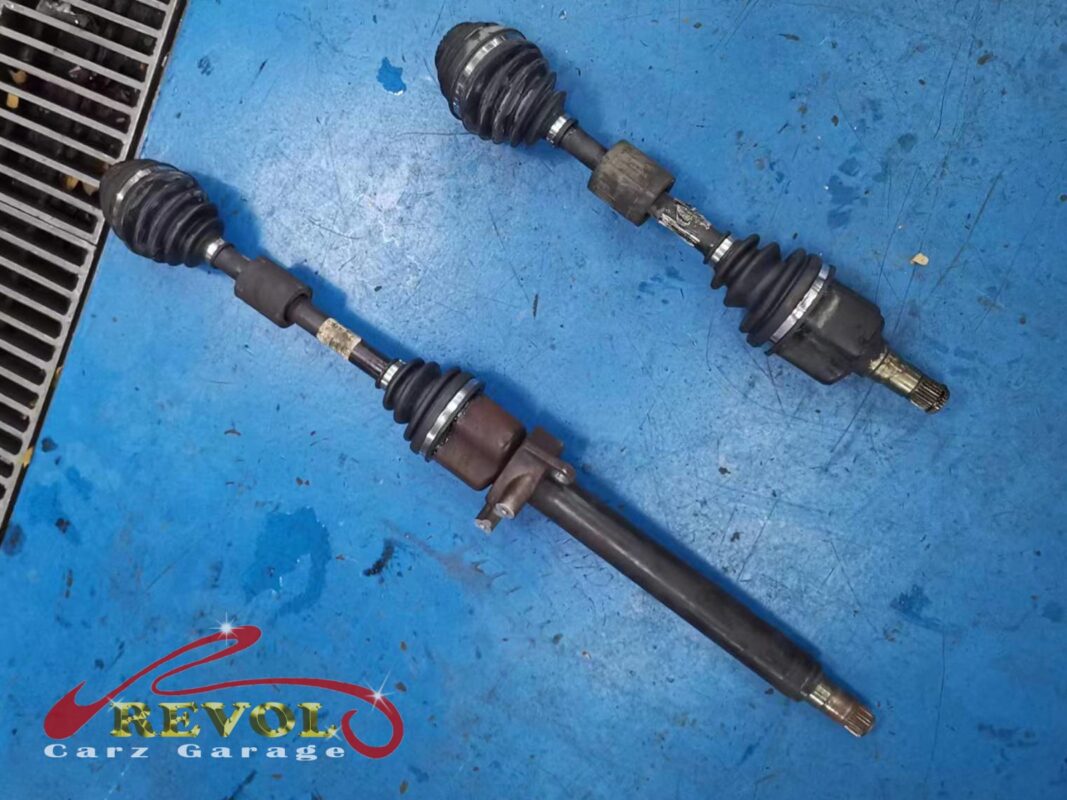
The driveshaft section came out, the joint was opened up and the old grease and any grit washed out, and the joint checked over properly with it apart. It was sound. A new genuine BMW-spec boot went on, the joint packed with the correct fresh grease, and the cover reseated with its clamps and the fasteners torqued. The shaft went back in, and the joint was turned by hand to confirm it ran smooth and silent. A road test confirmed the knock was gone and there was no more grease being thrown around.
The outcome
No knock from underneath, no grease tracking down the shaft, and no burning smell. The 216d went home with the joint sealed up and packed properly. Acting on the grease and the noise before the grit got into the joint meant a boot and a clean-out rather than a new driveshaft, which is the job this turns into if it's left.