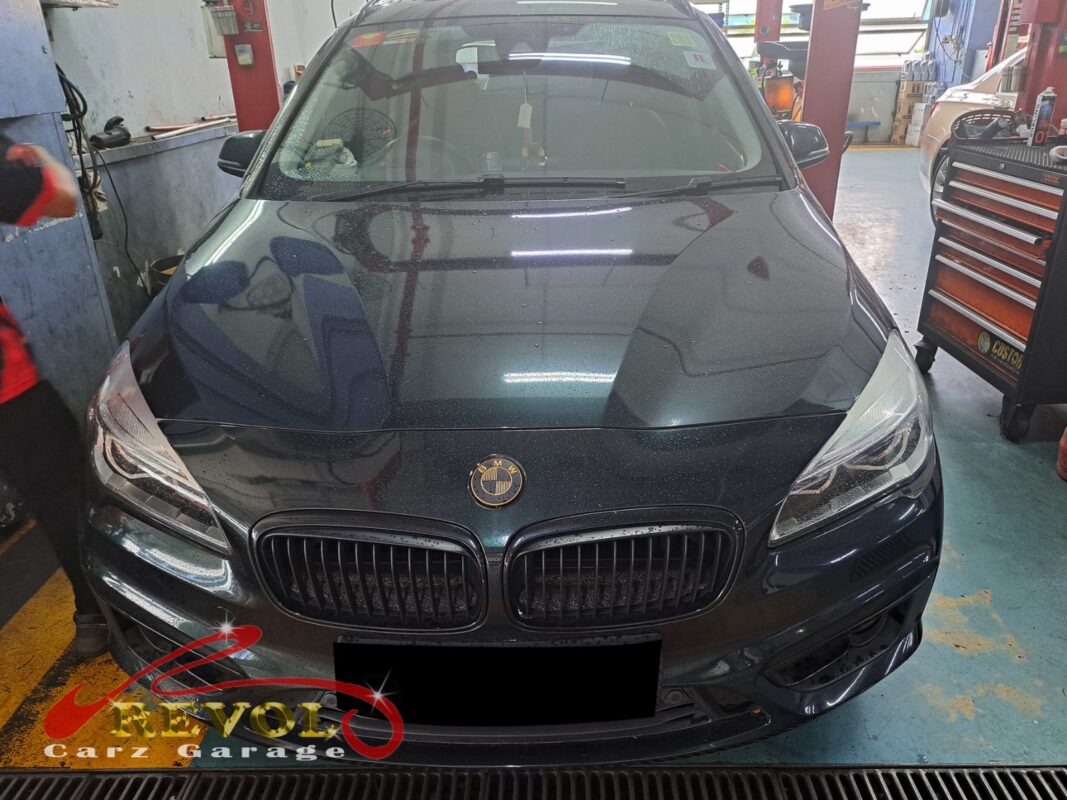
The brief
The 216d had developed a squeal from the engine, worst on a cold start and under acceleration, the kind of noise that means a belt is slipping. The car was past 120,000 km, which is the interval where the accessory belt and its tensioner are due, so the owner brought it in. The accessory belt drives the alternator, the aircon compressor and the power steering off the front of the engine, kept tight by a spring-loaded tensioner. As the belt ages it glazes and cracks, and as the tensioner's bearing wears it stops holding the belt steady, which is the squeal. Left long enough, a slipping belt can let the engine overheat if it stops driving the cooling, leave the steering heavy, and trigger a battery warning if the alternator isn't being driven. A belt squealing on a high-mileage engine is a set on its way out.
The diagnosis
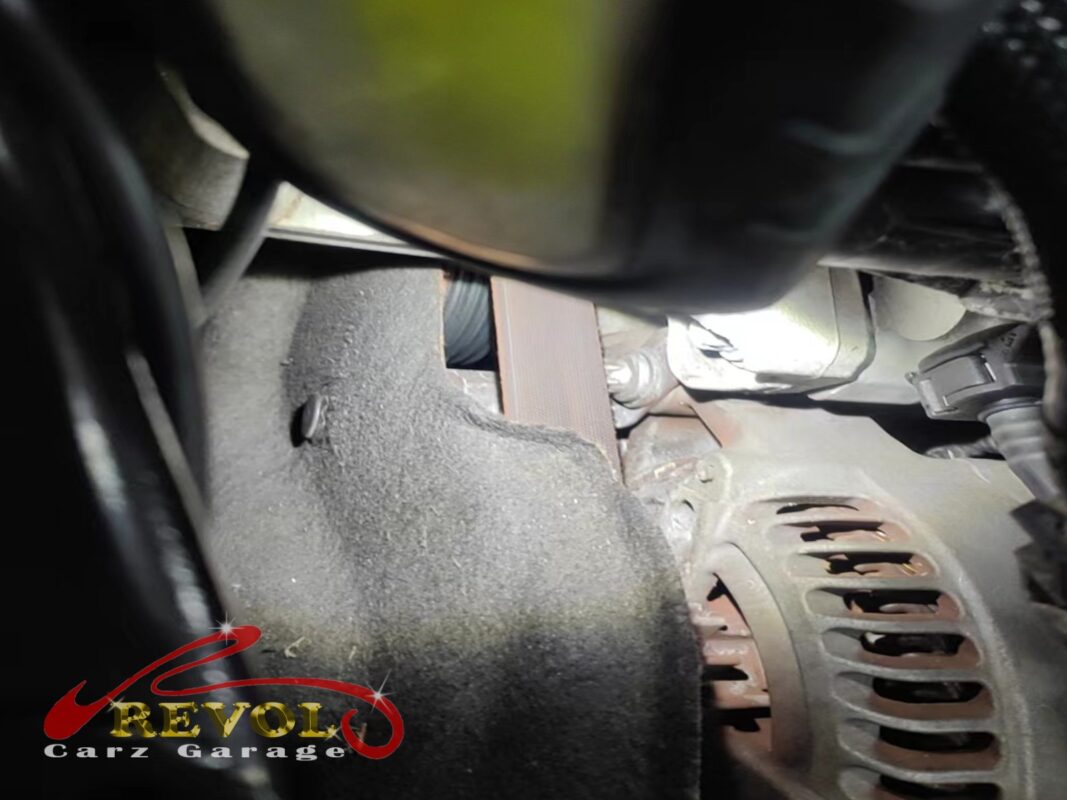
The belt was glazed and cracked along its rib face, classic age-and-heat fatigue, and the tensioner had a wobble on its bearing. Doing just the belt would leave a worn tensioner ready to be the next problem behind it, so it was a set job, belt and tensioner together, rather than back here in a few months.
The work
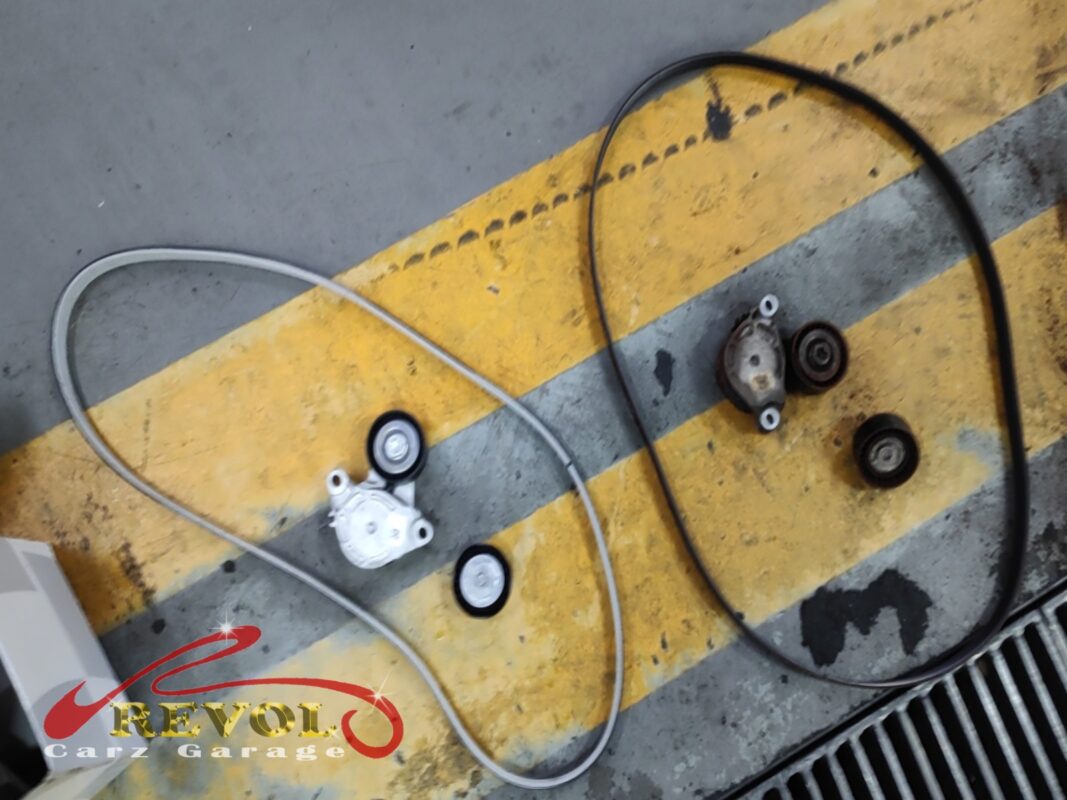
The tensioner was released, the old belt slipped off, and the tensioner swapped for a new genuine BMW-spec unit. A fresh belt went on, routed correctly through every pulley, and re-tensioned to spec. A road test confirmed the squeal was gone and the belt drive ran silent across the rev range.
The outcome
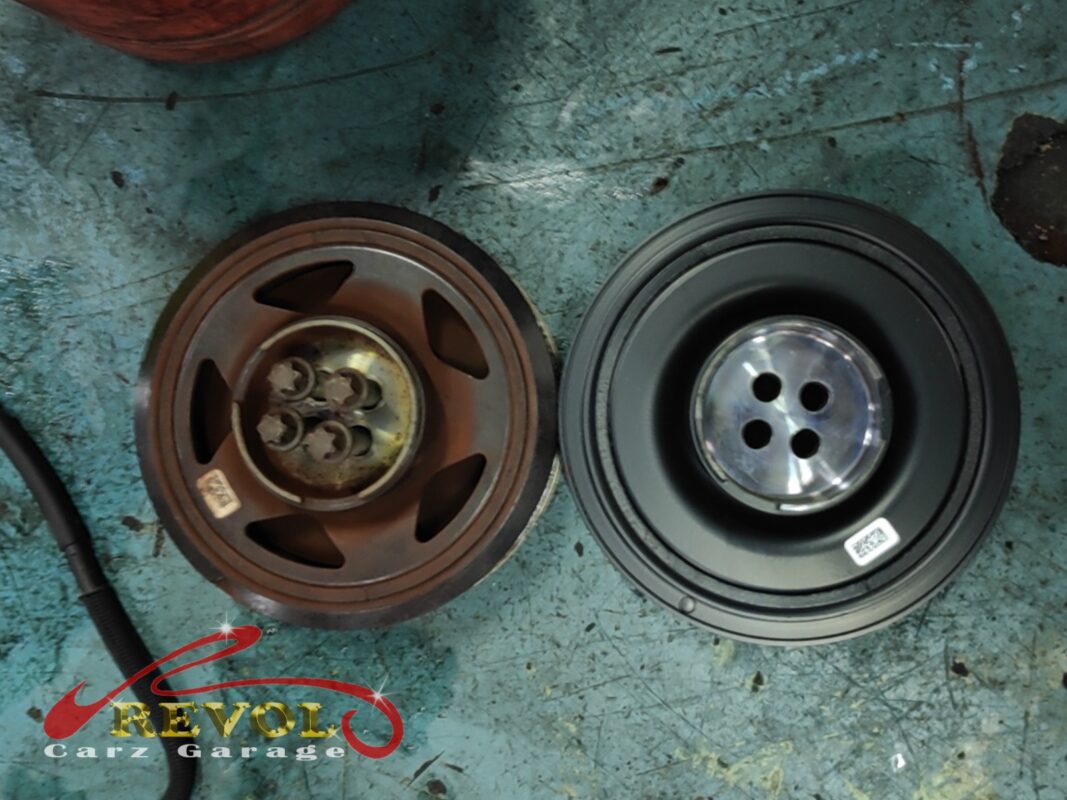
No squeal on a cold start, no slip under load, and a silent belt drive across the rev range. The 216d went home with the engine noise gone and ready for another long stretch. The belt and its tensioner wear together, and a slipping or snapped belt can take the cooling, the steering and the charging down with it, so doing the set on the first squeal kept it to a tidy job.