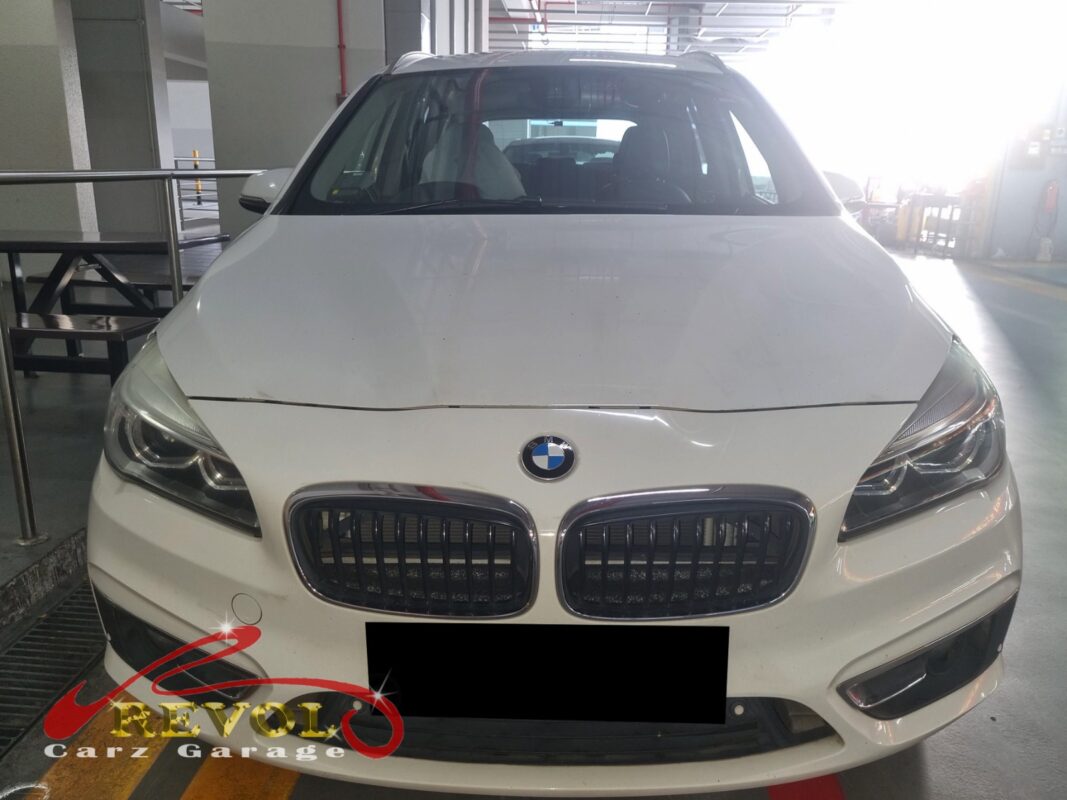
The brief
The 216d was leaving a small coolant puddle under the front of the engine. The expansion tank was dropping between drives, enough that the owner had noticed it on a couple of cold mornings. And a closer look showed a visible weep around the water pump housing.
Three signs, all pointing at the same place. On this engine the water pump is part of a plastic housing assembly bolted to the side of the block, and that plastic housing has a seal where it meets the engine. When the seal goes, coolant escapes around the joint and runs down the front of the engine, which is the puddle, the dropping tank, and the weep.
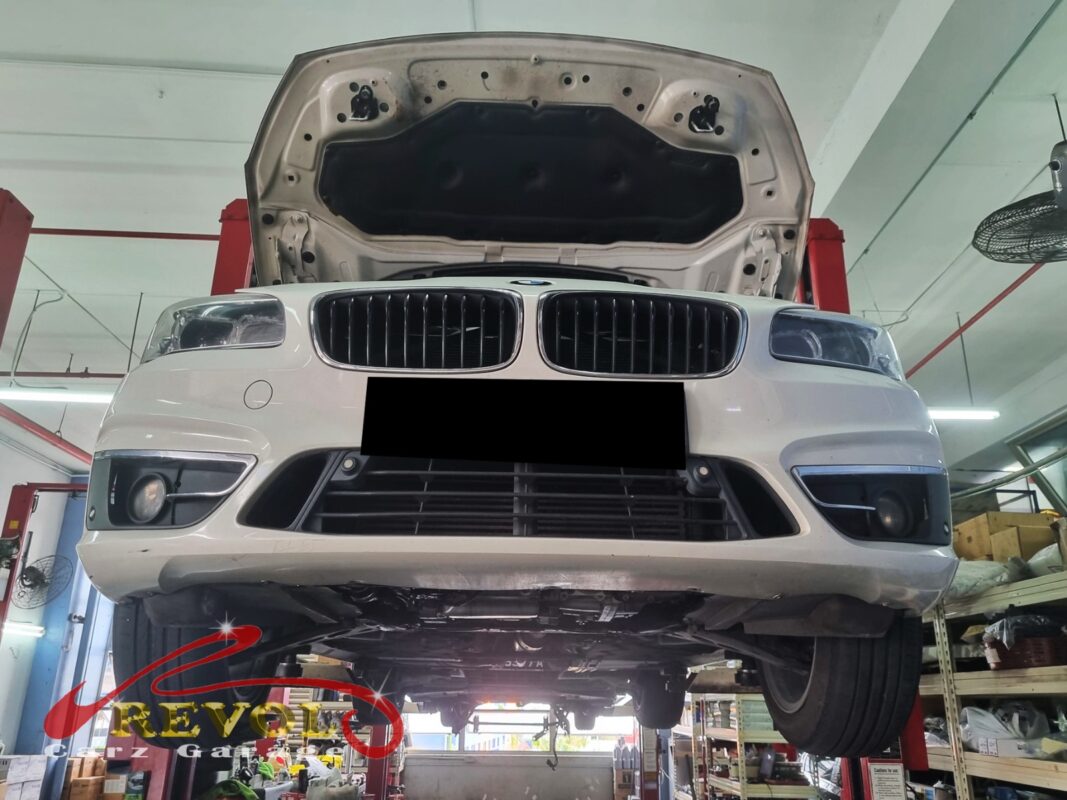
The diagnosis
A pressure-test localised the leak to the water pump housing seal. The plastic housing had aged, and the seal between it and the block was no longer holding coolant back at the joint, which is the typical failure for these once they have done enough years and heat cycles.
The pump itself was within spec on flow, spinning fine, no bearing roughness. So this was a housing job, not a pump job: replace the housing assembly with a fresh seal, and the pump comes along with it as part of the unit. No point disturbing a healthy pump beyond what the housing swap requires.
The work
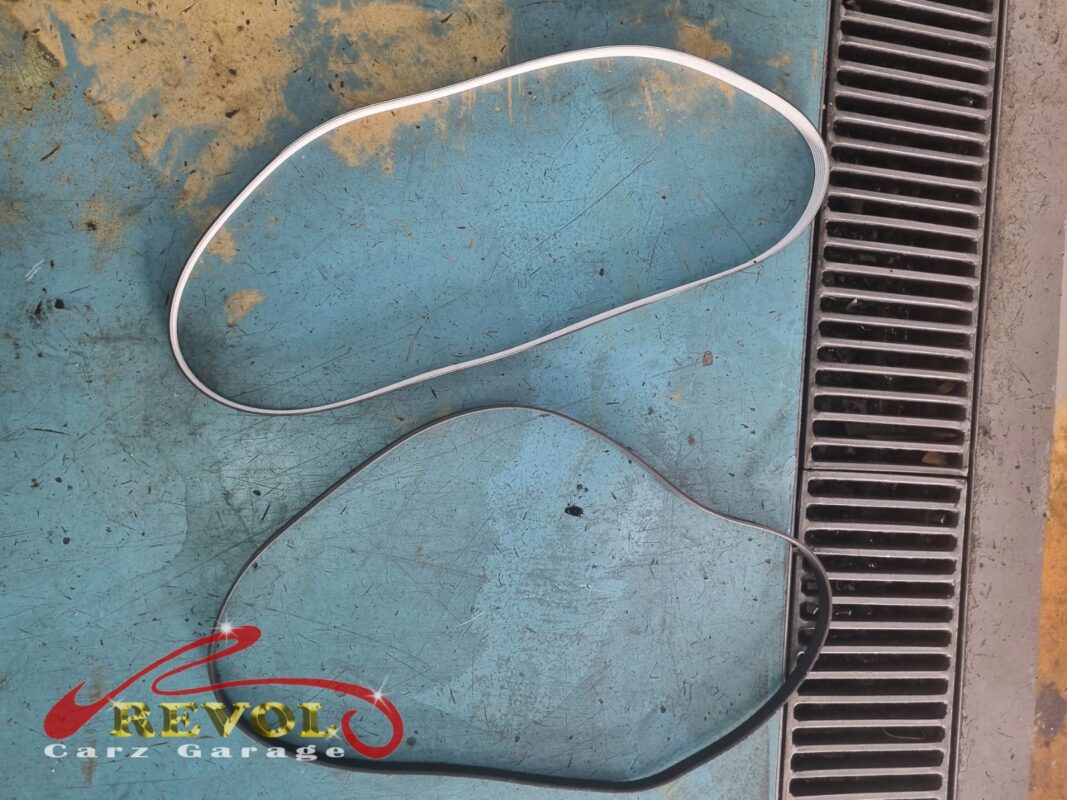
Released the system pressure, drained the coolant into a clean catch, and removed the auxiliary belt to clear access.
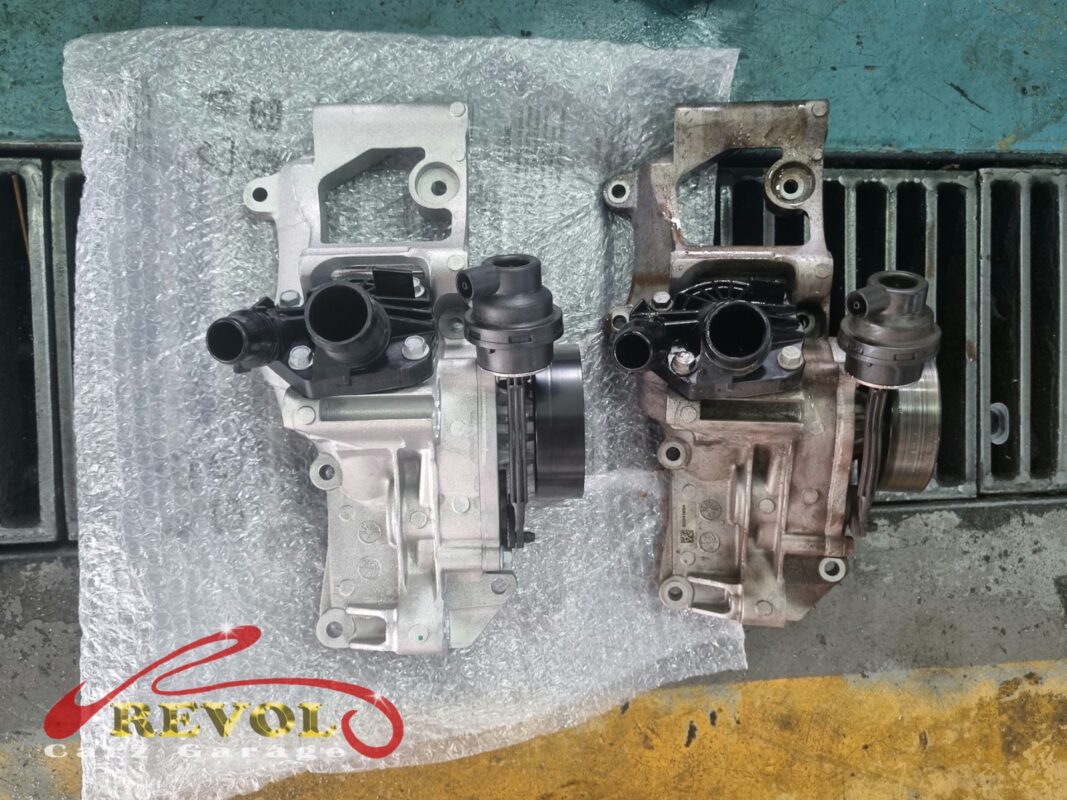
Dropped the old water pump housing off the block, then fitted a new BMW-spec housing with a fresh seal. Refilled with the correct coolant mix at the right ratio.
Then ran the bleed cycle through the scan tool, because a modern cooling system traps air pockets after a refill that topping up alone will not shift, and on this engine the bleed is a scan-tool-driven routine that cycles the electric pump and watches the temperature behaviour to confirm the system is fully purged.
The outcome
No puddle under the car. No weep at the housing. The expansion tank holding level across the test cycle.
The 216d went home with the cooling system sealed. For the owner, that means a car that holds its coolant and runs at the right temperature, with no more topping up between drives.
And catching a weeping housing seal at this stage keeps the engine clear of the overheating risk that comes if a coolant leak is left to run until the level drops too far, which on a small turbo-diesel is an expensive way to learn the lesson.