The brief
The X5 had its brake warning light steady on the dash, the pedal felt softer than usual under the owner's foot, and the car's own service screen was flagging brake work due.
A brake warning on a BMW like this is not vague: the dash tells you which axle, because the pads carry wear sensors that report directly to the car. In this case the service screen had it laid out plainly. The owner brought it in before the warning could turn into anything worse, which is the right time for brakes.
The diagnosis
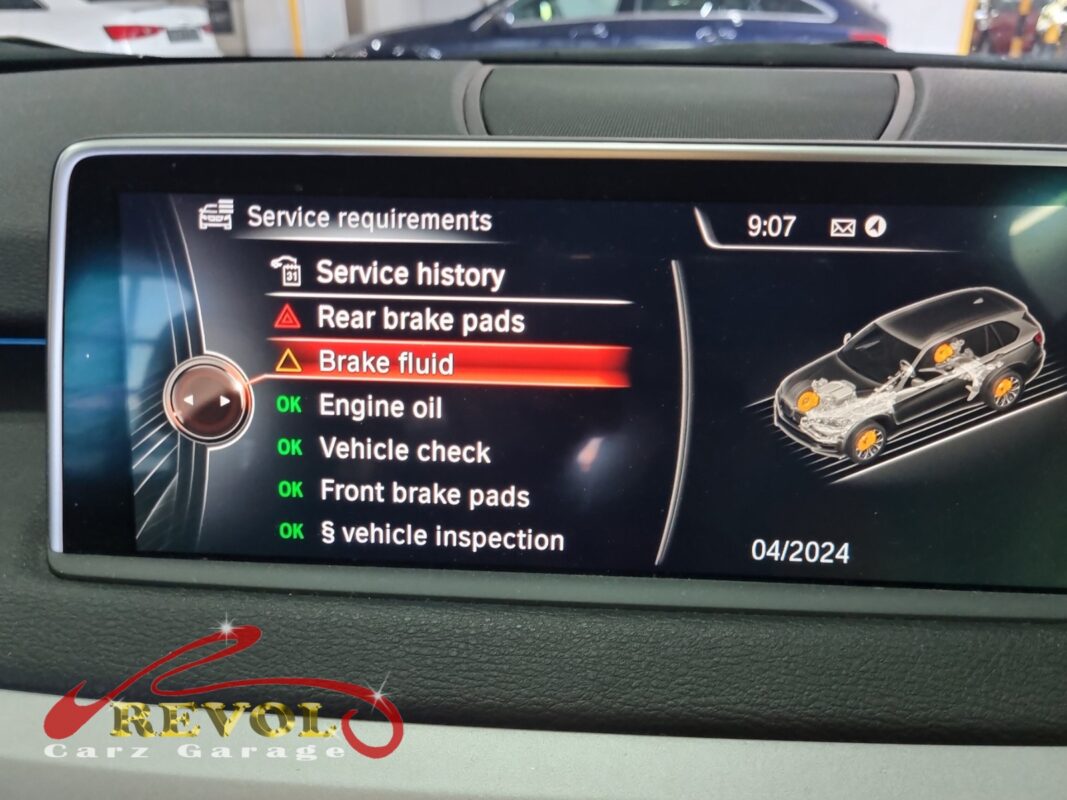
The car's service-requirements screen told the story: the rear brake pads flagged red, the brake fluid flagged for service, and the front pads still showing OK. So the worn pads were on the rear axle, not the front.
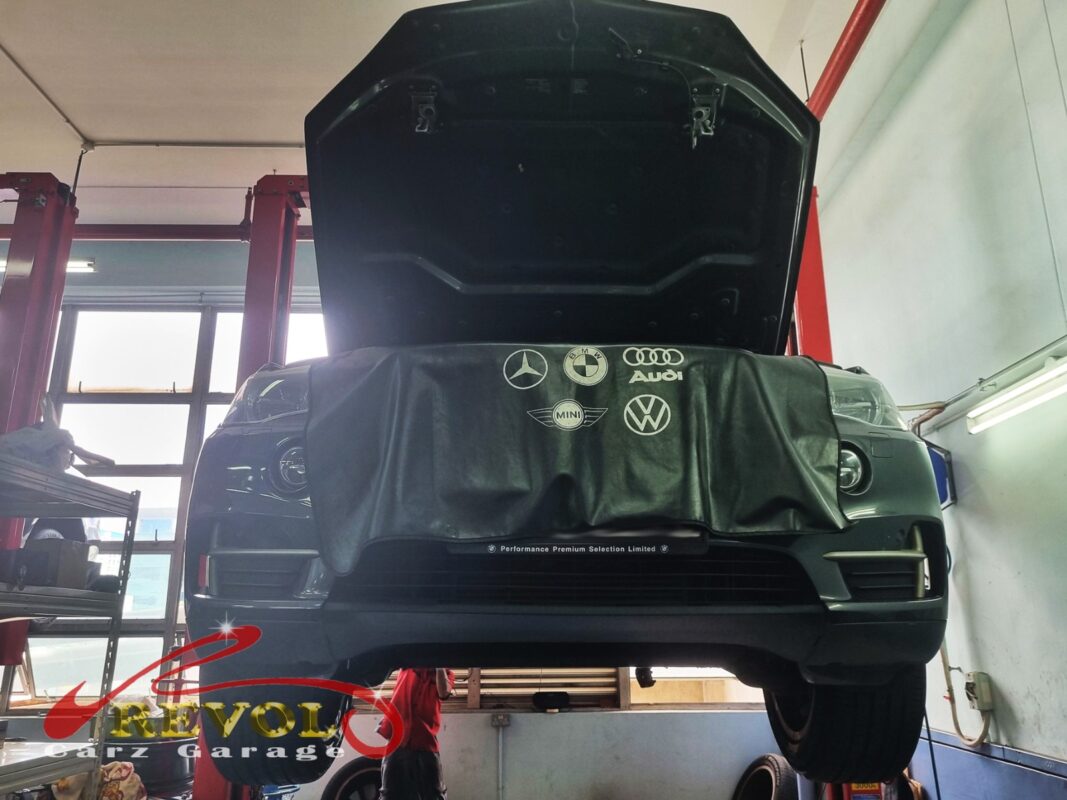
We confirmed it on the lift, measuring rear pad thickness below the replacement threshold. The wear sensor on that axle was doing exactly what it should, telling the truth, and it would need a fresh one once the new pads went in (the sensor is a sacrificial part, designed to be worn through). The discs were within reuse spec. So the scope was rear pads and a rear wear sensor, plus the brake fluid service the screen had also flagged.
The work
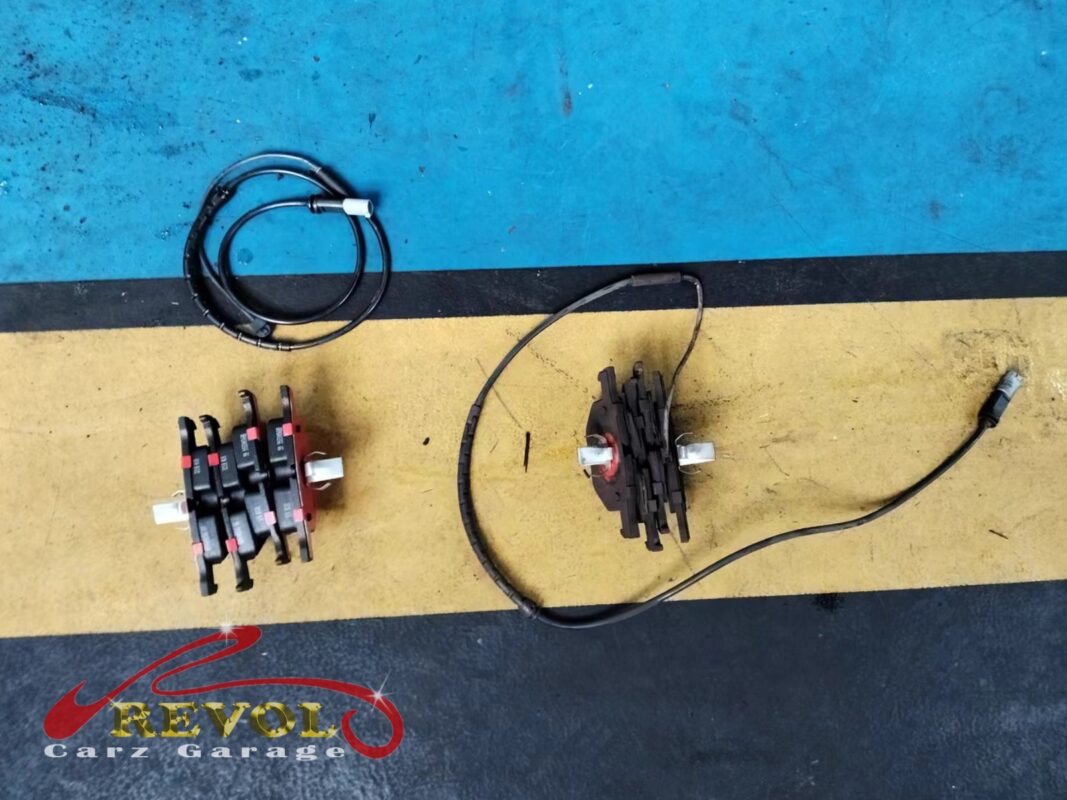
Lifted the rear, removed the wheels, dropped the rear calipers, and took the worn pads out. Fitted new BMW-spec pads with a fresh wear sensor.
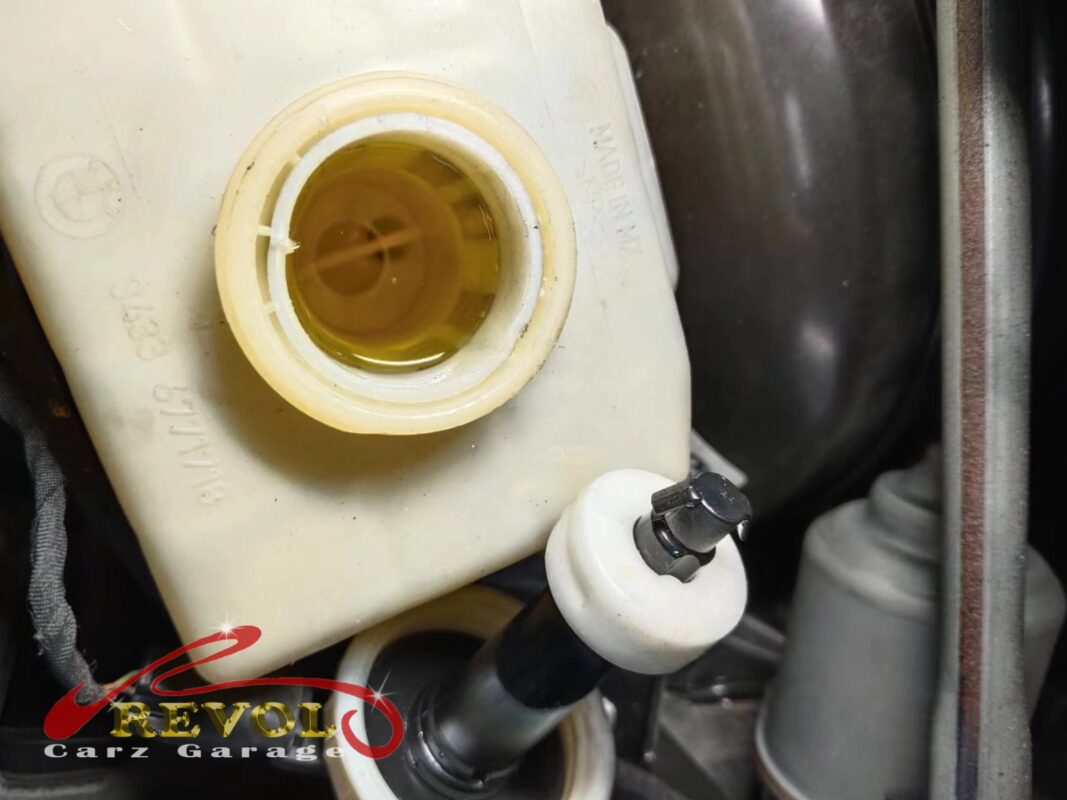
Then the brake fluid: bled and topped the system to the max mark with the correct spec, since brake fluid absorbs moisture over time and is on its own service interval regardless of the pads.
Cleared the warning on the scan tool, reset the brake-pad service counter, and confirmed clean brake feel on a road test before the car went out.
The outcome
Brake warning light off. Pedal firm. No wear-sensor fault returning. Brakes feeling solid, the car pulling up cleanly.
The X5 went home with the rear brakes fresh and the fluid serviced. For the owner, that means a dash with no warning, a firm pedal, and a braking system that is back to spec front and rear.
Doing the pads at the wear-sensor stage rather than running them to metal-on-metal also kept this to pads, a sensor and fluid, rather than the disc or caliper damage that comes from ignoring the warning.