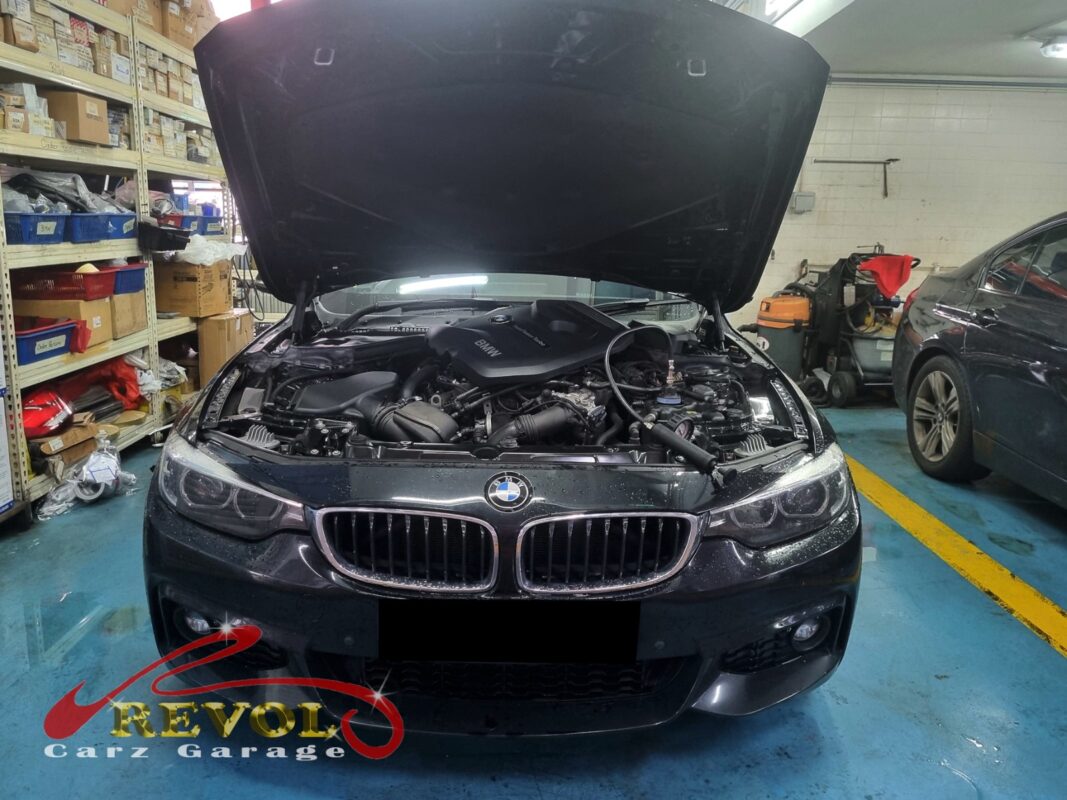
The brief
The 420i was running hotter than usual in traffic, the temperature gauge sitting higher than its normal settled spot when the car was crawling. The owner had spotted coolant on the engine bay near the thermostat. And there was a sweet smell after long drives.
Three converging signs, all at the thermostat housing. On this engine the thermostat lives in a plastic housing bolted to the block, and that housing has a seal. When the seal weeps, coolant escapes there, which is the residue the owner saw and the sweet smell as it reaches hot parts. And if the thermostat inside is also sticking or sluggish, it traps heat, which is the gauge running high in traffic. The two often go together because they are the same part.
The diagnosis
A pressure-test confirmed coolant escaping from the thermostat housing area, the joint no longer holding. The plastic housing seal had aged out, which is the typical failure for these.
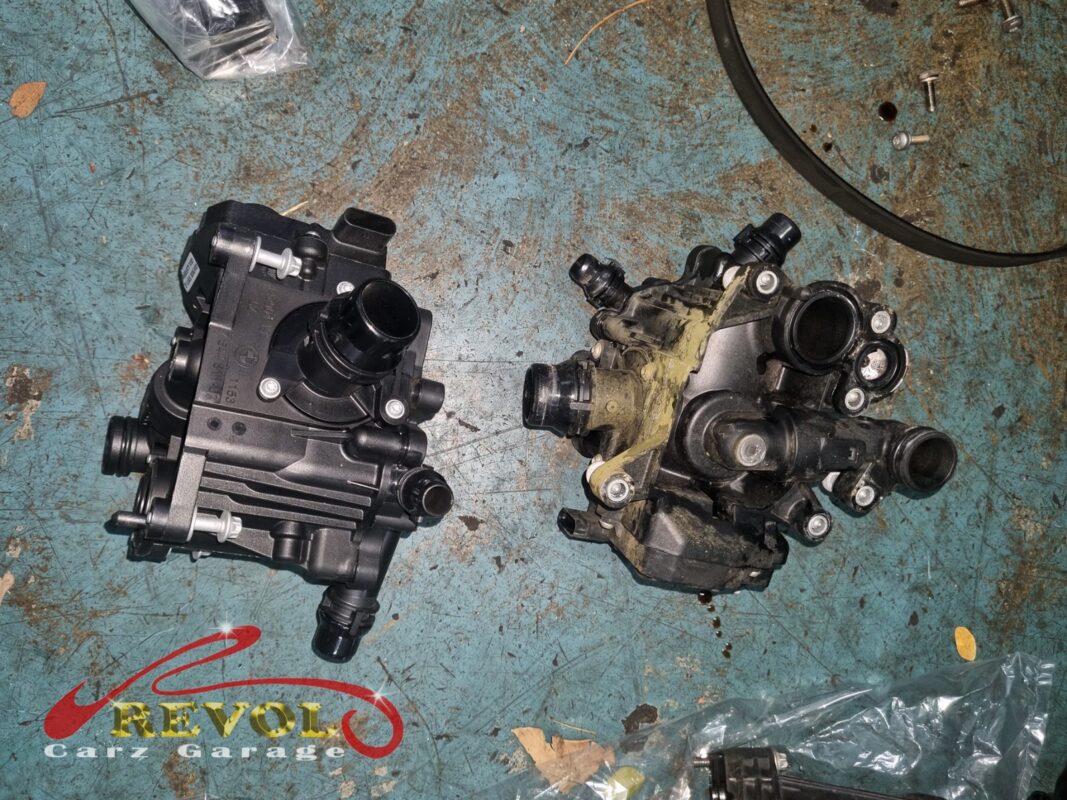
The scan tool showed the thermostat's operating range slightly off too, opening later than it should, which fits the gauge running high. So the right call was a complete thermostat-and-housing replacement rather than just chasing the seal: on this engine the thermostat and the housing are one assembly, and replacing only the seal would leave an ageing thermostat in a housing that has already shown it cracks.
The work
Released the system pressure, drained the coolant into a clean catch, and removed the old thermostat and housing. Cleaned the mating surface on the engine back to bare metal, since any leftover gasket residue stops the new housing sealing flat.
Fitted a new BMW-spec thermostat housing assembly with a fresh seal, refilled with the correct coolant mix at the right ratio, then ran the bleed cycle to clear the air pockets a modern cooling system traps after a refill.
The outcome
No weep at the housing. The temperature gauge steady in traffic, sitting where it should. No sweet smell after a long drive.
The 420i went home with the cooling system reading sealed. For the owner, that means a car that holds its coolant and runs at the right temperature, no more watching the gauge creep in a jam.
And catching a leaking, sluggish thermostat at this stage matters: a thermostat that finally jams shut can overheat an engine fast, which is the expensive end of this story.