The brief
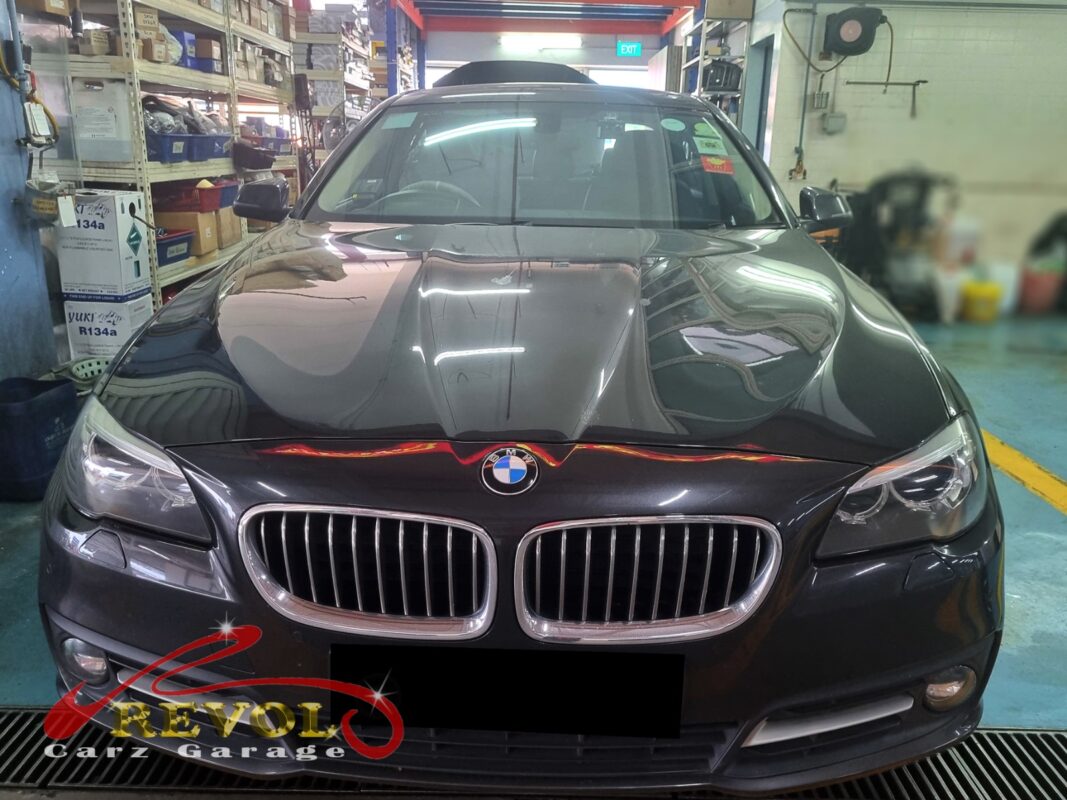
The 520i was leaving a coolant puddle under the front of the car. The dash had thrown a low-coolant warning. And the owner had seen steam coming off the engine bay after a hard drive.
Three signs, and together they are not subtle: a puddle, a warning light, and steam are a clear radiator leak. The radiator sits right at the front of the car behind the grille, and on this generation it has plastic side tanks bonded to an aluminium core. The plastic gets brittle with age and heat, and a crack opens up at the seam where the two meet. Once it does, coolant escapes there, and a hard drive that gets the system hot enough turns that escape into steam.
The diagnosis
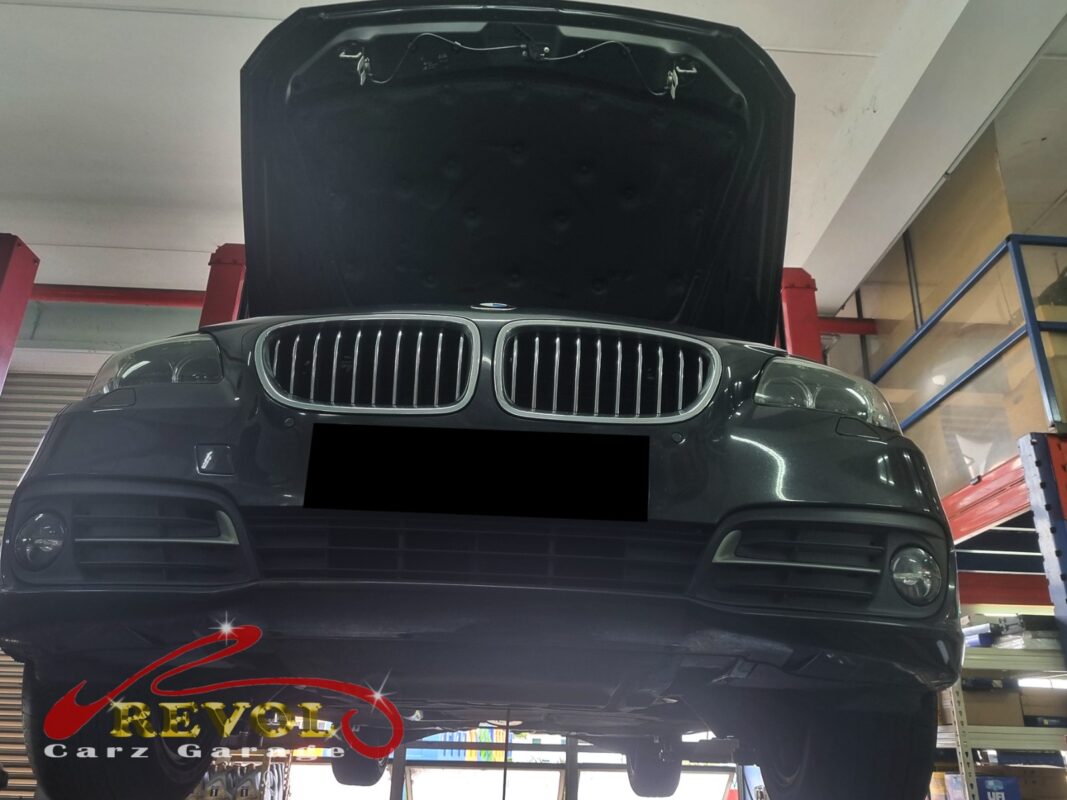
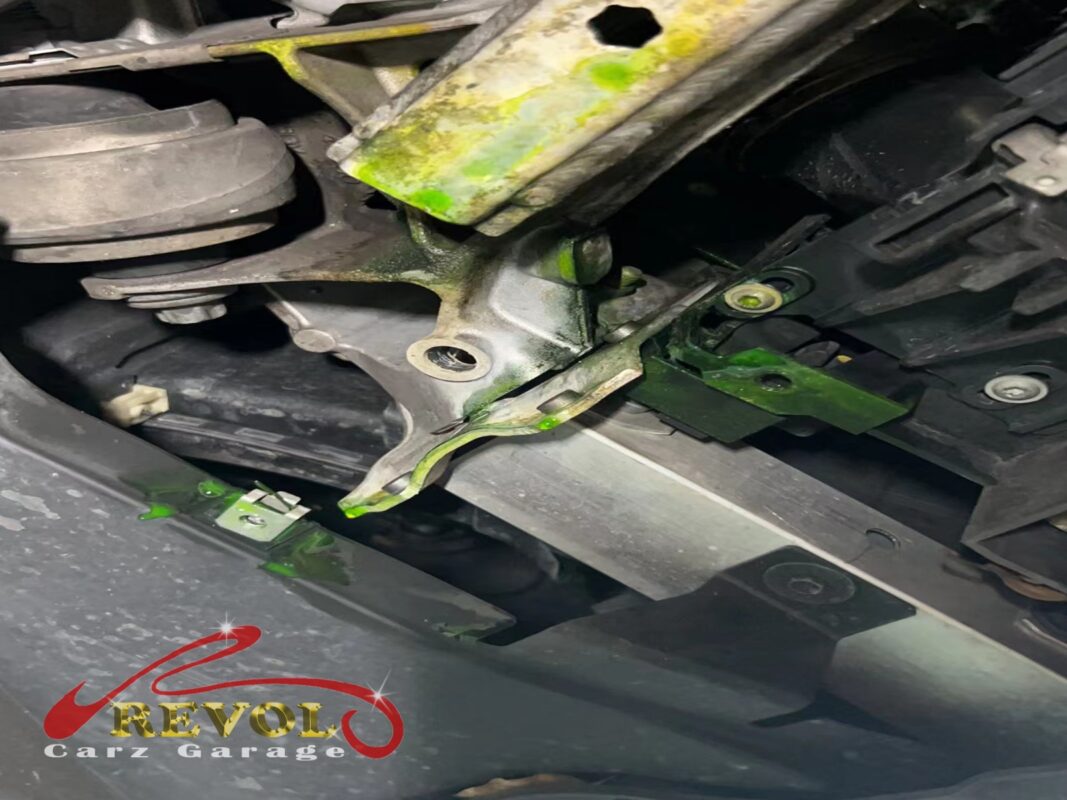
A pressure-test pinpointed the leak: a hairline crack at the seam between the plastic side tank and the core, the typical ageing failure for this part. The bright coolant residue splashed across the radiator support and crossmember showed how much had been getting out.
The plastic was past safe to patch, no point trying. So this was a radiator replacement, and with old coolant having carried debris through the system as it ran low and topped up, a full cooling-circuit flush went with it before the new radiator and fresh coolant went in.
The work
Released the system pressure, drained the coolant, and removed the front trim for radiator access. Dropped the failed unit out.
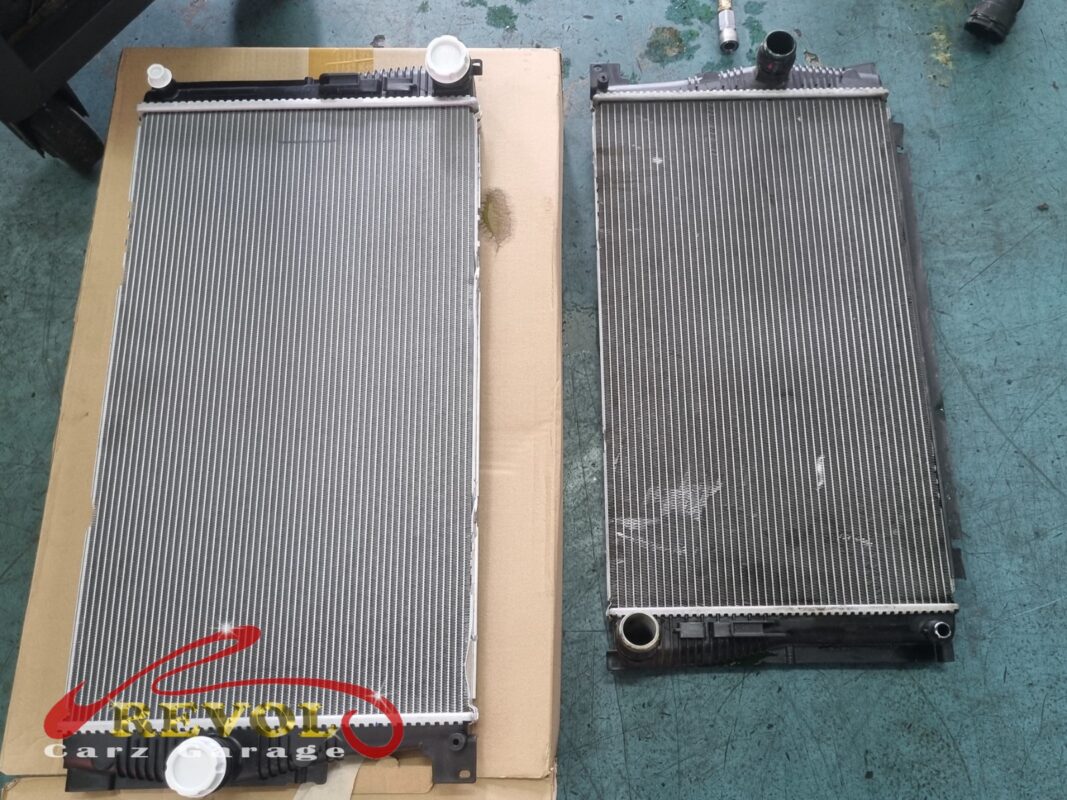
Fitted a new BMW-spec radiator with fresh hose clamps, flushed the cooling circuit clean to clear out the debris the old coolant had carried, refilled with the correct coolant mix at the right ratio, and ran the bleed cycle through the scan tool to purge the air pockets a modern cooling system traps after a refill.
Then held pressure on the system and ran the car warm to confirm it was sealed before it went out.
The outcome
No puddle. No warning. No steam at the bay, even under hard driving.
The 520i went home with the cooling system reading sealed. For the owner, that means a car that holds its coolant and runs at the right temperature, with no more topping up and no more warning light.
And catching a cracked radiator at the leak stage rather than letting it fail completely kept the engine well clear of an overheating event, which on a 5 Series is the expensive way this story ends.