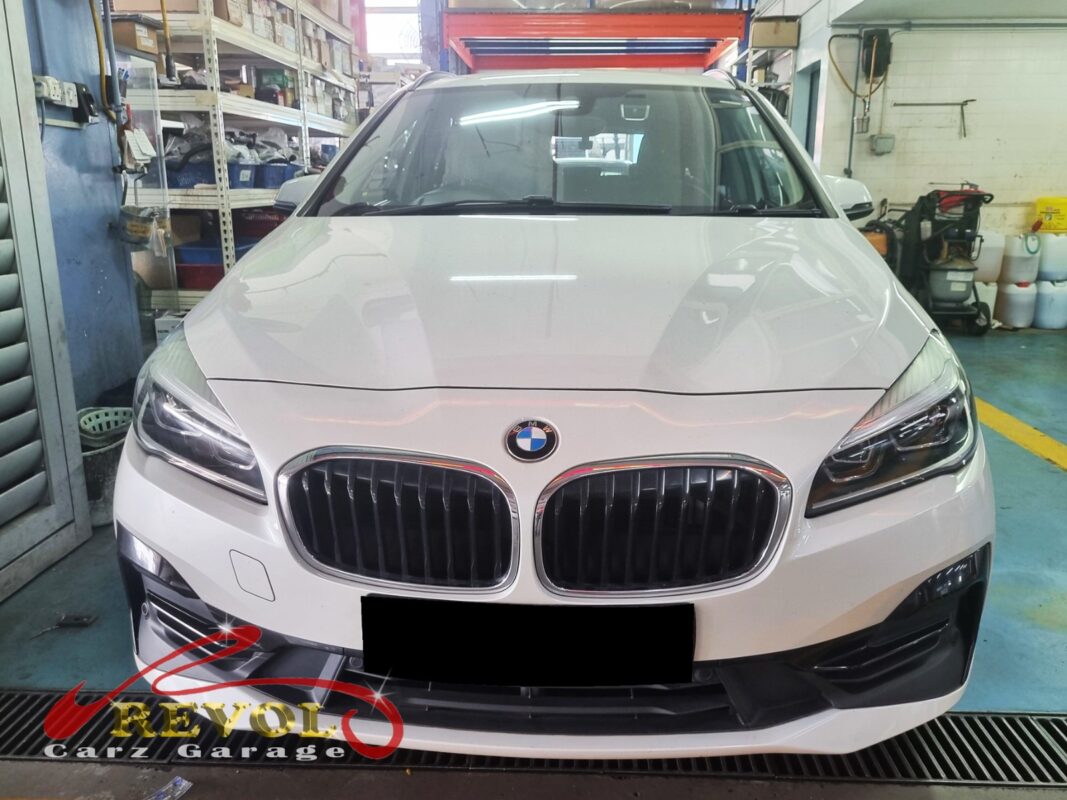
The brief
The 216i came in with four things all going wrong at the same time, which made the picture pretty easy to read.
First, the check engine light was steady on the dash. Second, the engine had lost power under heavier throttle, the kind of dip you would feel trying to overtake on a fast road. Third, the exhaust was puffing a light blue tint of smoke when the boost came up. And fourth, the front of the engine bay had developed a whistling that grew louder with revs.
Each of those on its own could mean a few different things. All four together point at one suspect.
Light blue smoke is engine oil burning, not fuel and not coolant. That tells you the route the oil is taking. Combined with the soft-feeling boost and the whistling, the turbo was the obvious place to look.
The diagnosis
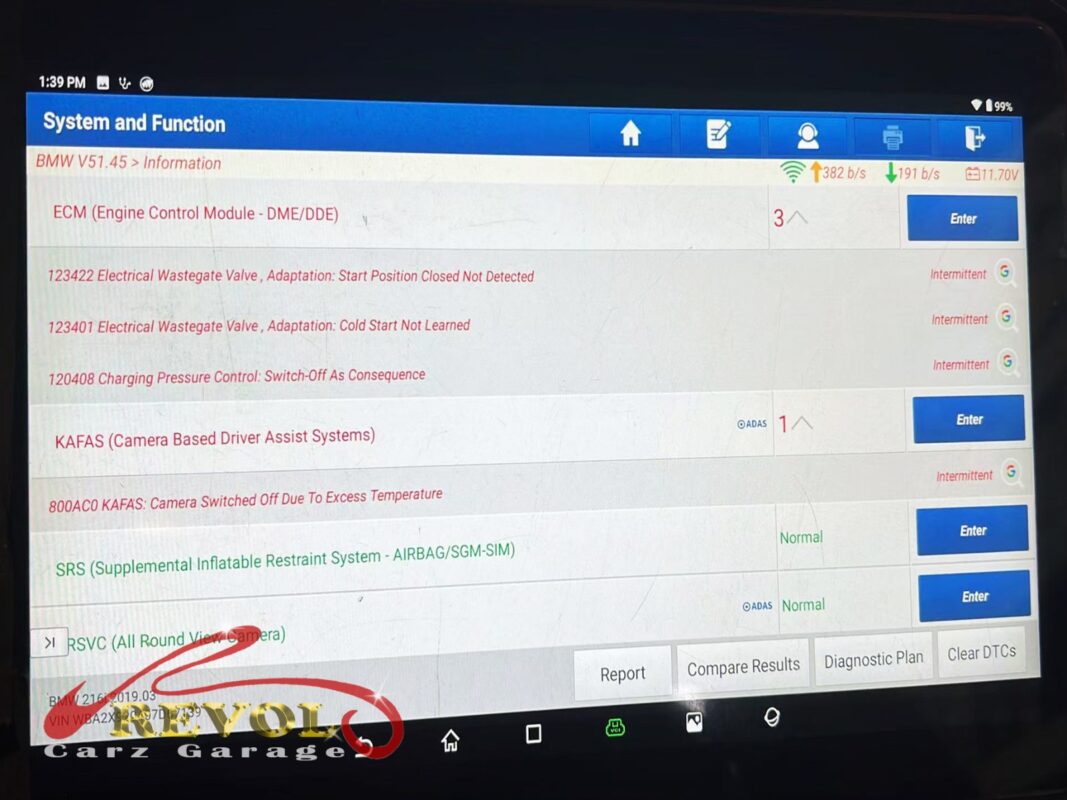
Scan tool first. It pulled a stored fault for underboost, with the boost pressure failing to hit its target map under medium-to-hard load. That confirmed the soft-feeling acceleration was a real measurement, not just a feel.
The light blue smoke confirmed what we suspected. Engine oil was passing the turbo's internal seals and ending up on the exhaust side, where the catalyst was burning it off at temperature.
The whistling sound tracked with bearing-side wear inside the turbo cartridge, not the wastegate flapping or a boost leak. Three independent signals, all pointing inside the turbo itself.
At that point, no sensor swap or actuator adjustment was going to bring it back. The right call was a full turbo replacement, plus a careful flush of the intake tract and the oil feed line. Any debris the failing turbo had shed needs to come out before the new one goes in, or it will end up in the bearings of the new turbo and kill it within a week.
The work
Out came the engine heat shields and the airbox section first, so we had clear access to the turbo.
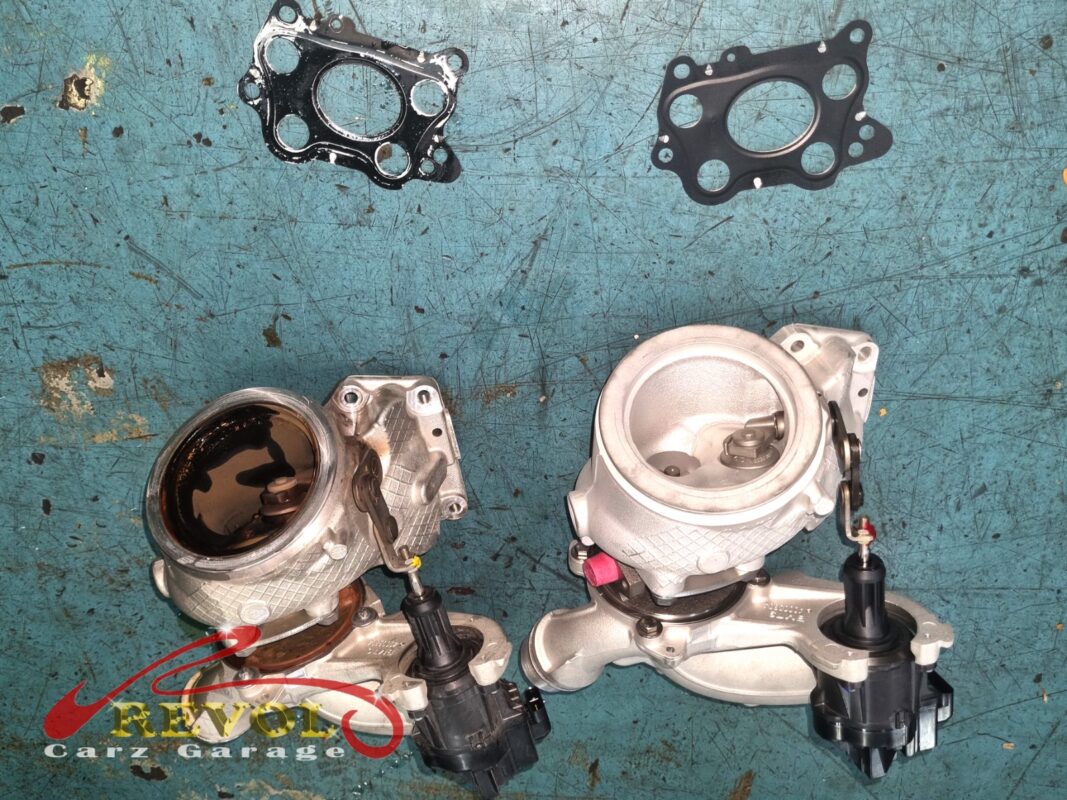
Then we disconnected everything that mates to it: the oil feed and return lines, the coolant lines, the boost piping, and the downpipe at the turbo flange. The failed unit lifted out of the bay once the bolts were off.
The flush is where careful work pays off. We cleaned the intake tract and the oil feed line of any aluminium or steel debris the old turbo had been shedding, because that material going into a fresh bearing is exactly how you replace the same turbo twice.
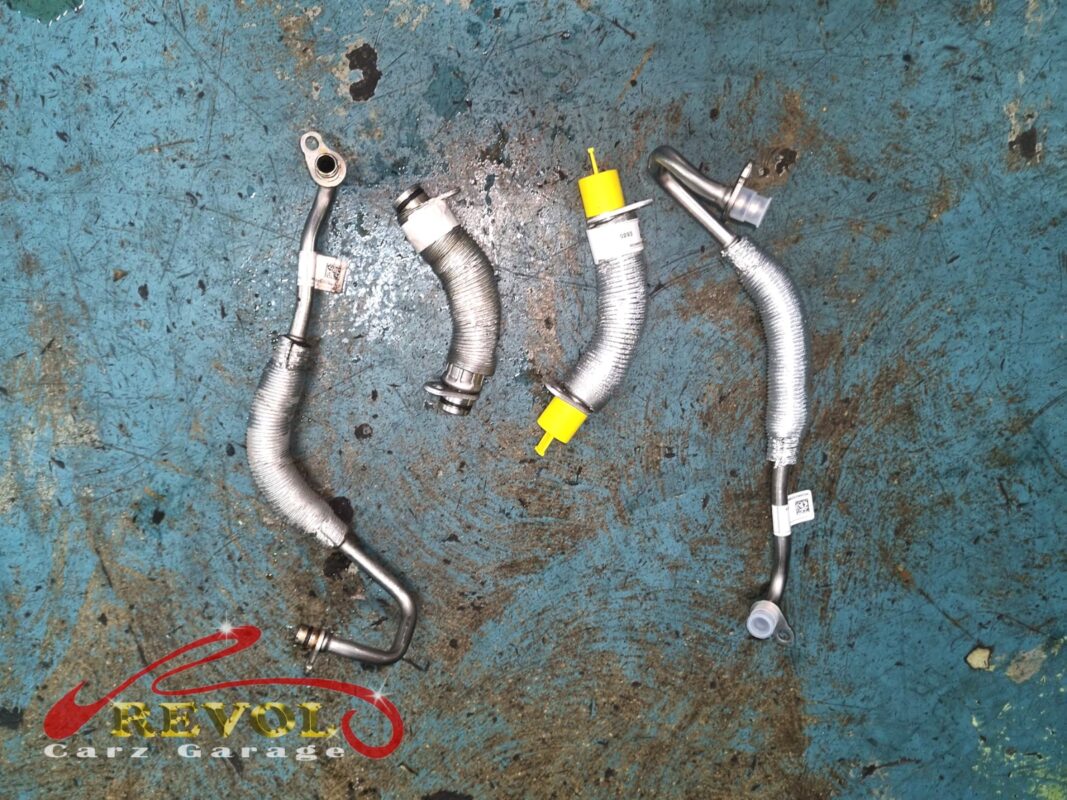
The new turbo is a BMW-spec unit with fresh gaskets, fresh seals, and a fresh oil feed banjo. Everything gets torqued to spec. Before the first start, we hand-crank the engine to prime the oil feed so the bearings have oil pressure on the very first revolution, never running dry.
Last step was clearing the stored fault and confirming everything reads clean.
The outcome
Boost was back to the full target map across the rev range. No smoke at the tailpipe under any throttle position. The whistle gone from the engine bay.
We took it out for a road test that included a hard pull on a fast road, because turbo work is one of those repairs you want to verify under real load, not just at idle. The wastegate and boost behaviour stayed within spec the whole way.
Check engine light cleared and did not come back.
For the owner, the 216i now pulls cleanly through the rev band the way they remember it from when the car was new. And with a clean intake tract going in, the new turbo should get its full service life rather than being killed early by old debris.