The brief
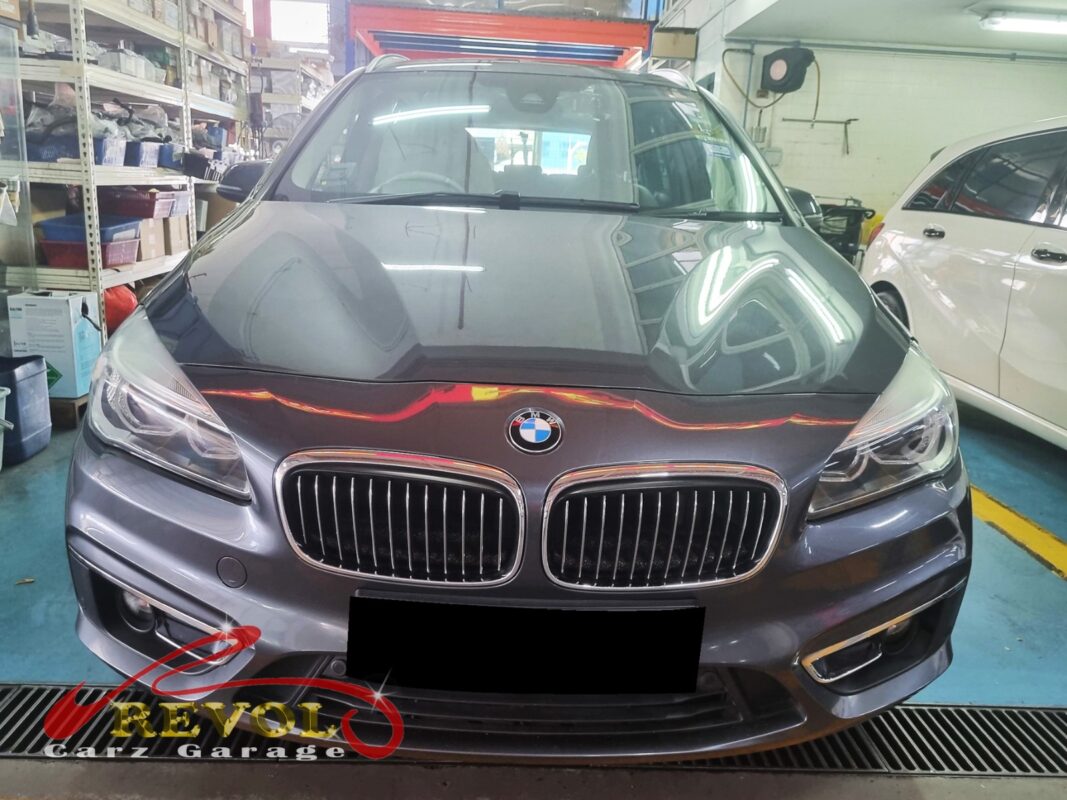
The 216d came in with steering that felt unstable over rough roads, odd noises from the front when it went over speed humps, and on a quick look the owner had spotted a split rubber boot on one of the front joints with grease tracking down from it.
Those three together point at the front lower control arms. Each one locates the front wheel through a ball joint at the outer end and rubber bushes where it meets the body. When the bushes go soft and a ball joint loses its grease and starts to wear, the wheel can shift slightly under load, which is the wandering steering, the knocking over bumps, and the boot you can already see has given up.
The diagnosis
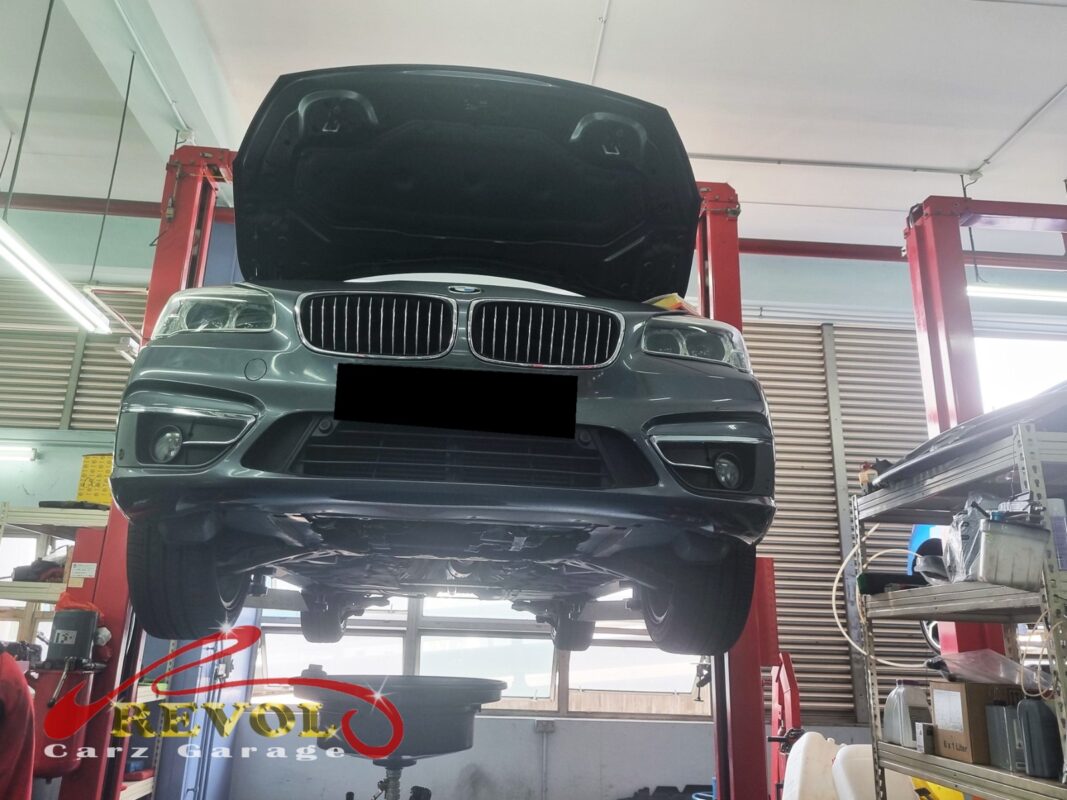
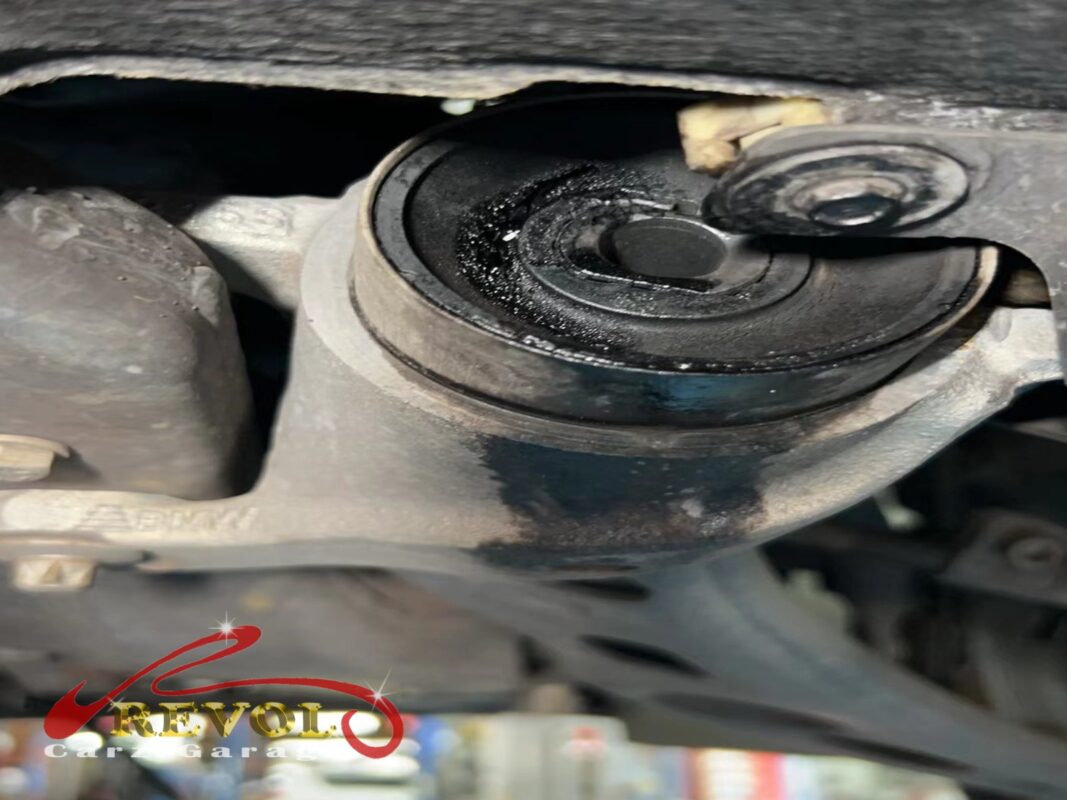
A pry-test on both arms confirmed it. The bushes were deflecting well past spec on both sides, the big rear bush on one arm soft and weeping where the rubber had perished, and the ball joint under that split boot had developed real play.
Replacing one arm and leaving the other would have left the front lopsided and meant a return visit before long. So this was a pair job, both front lower arms renewed together with fresh ball joints and bushes.
The work
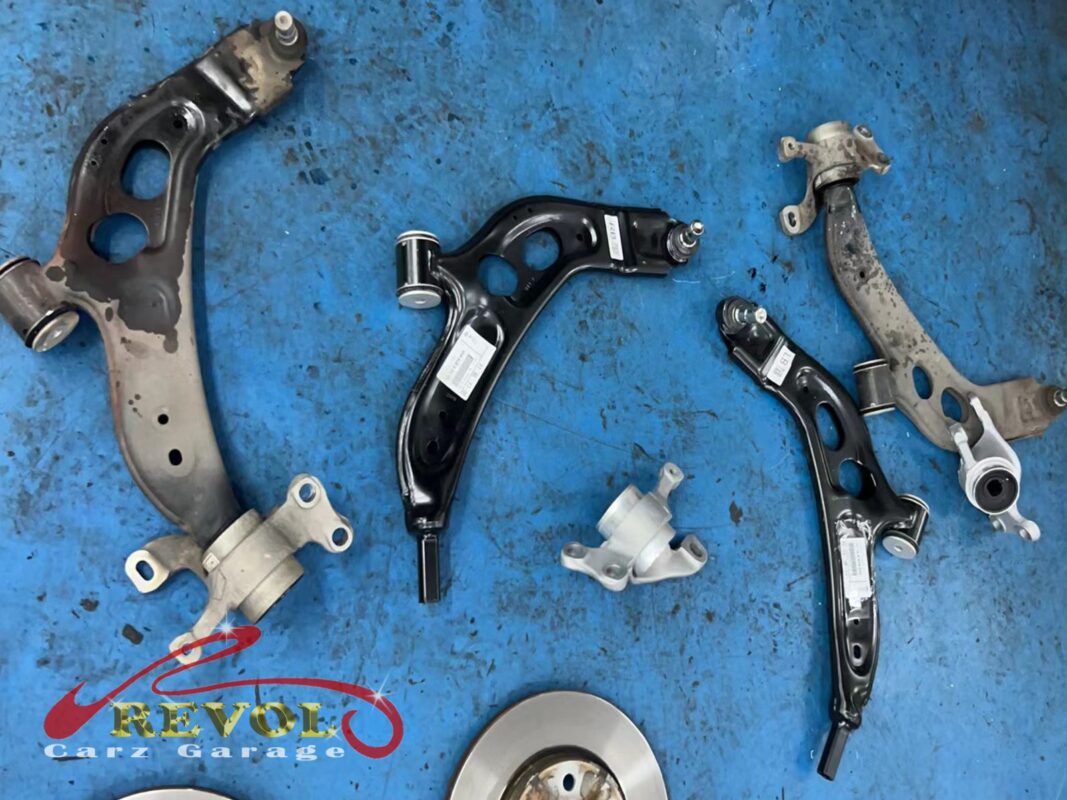
Both front lower control arms came off, and a matched pair of new BMW-spec arms went on, complete with new ball joints and bushes, every chassis bolt torqued to the manual figures with the suspension at ride height so the bushes settle in their neutral position.
Then the car went onto the alignment rack for a full four-wheel alignment, camber, caster and toe all brought back to factory, with the before-and-after numbers printed out for the owner.
The outcome
The steering came back tight and steady. No more knocking from the front over humps. Alignment back in spec across all four corners.
The 216d went home tracking straight and feeling solid again instead of loose and wandering. For the owner that is a car that goes where it is pointed without constant little corrections. And with the geometry reset, the front tyres will wear evenly across the tread rather than being scrubbed away on one edge, which is a full set's worth of kilometres saved on the next one.