The brief
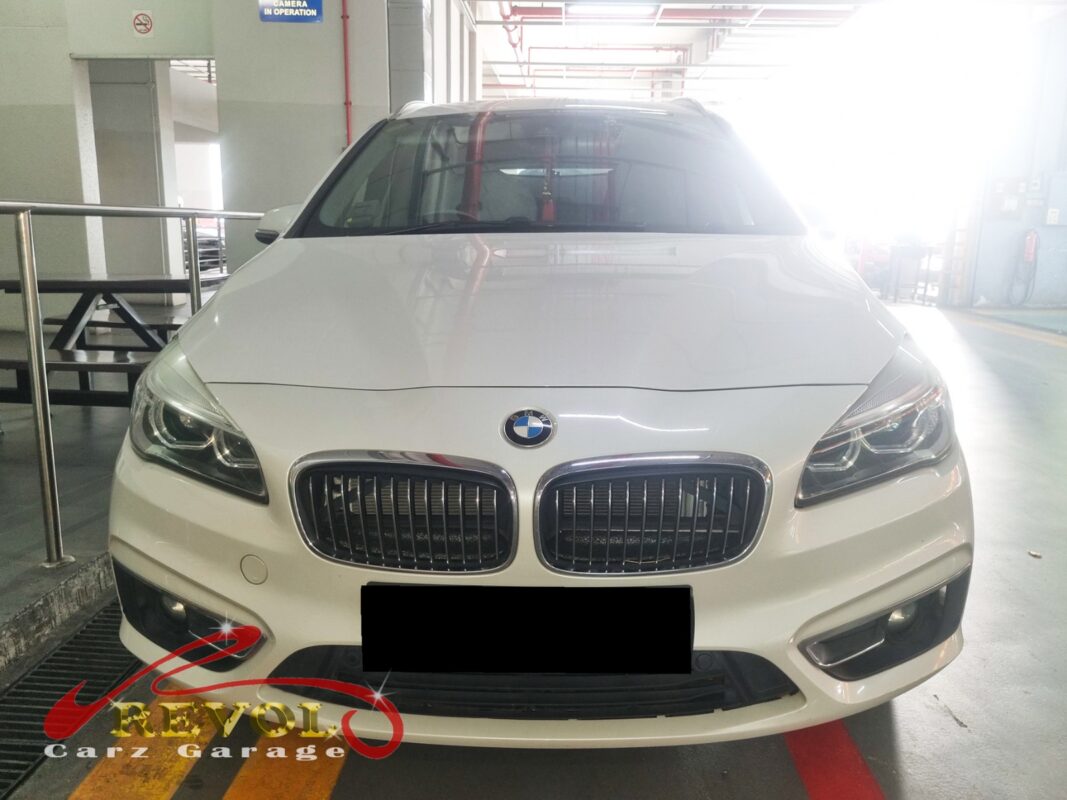
The 216d had a rattle from under the bonnet that got louder as the revs rose, and it idled rough enough that the owner started to suspect the ignition side. Rather than start swapping parts on a hunch, he brought it in for a proper diagnosis first.
A rattle that scales with engine speed almost always lives at the front of the engine, on the belt drive that turns the alternator and the other accessories. There is a lot spinning down there: the belt, the tensioner that keeps it tight, the idler pulleys it runs over, and the crankshaft pulley driving the whole lot. When one of those wears, you get exactly this noise.
The diagnosis
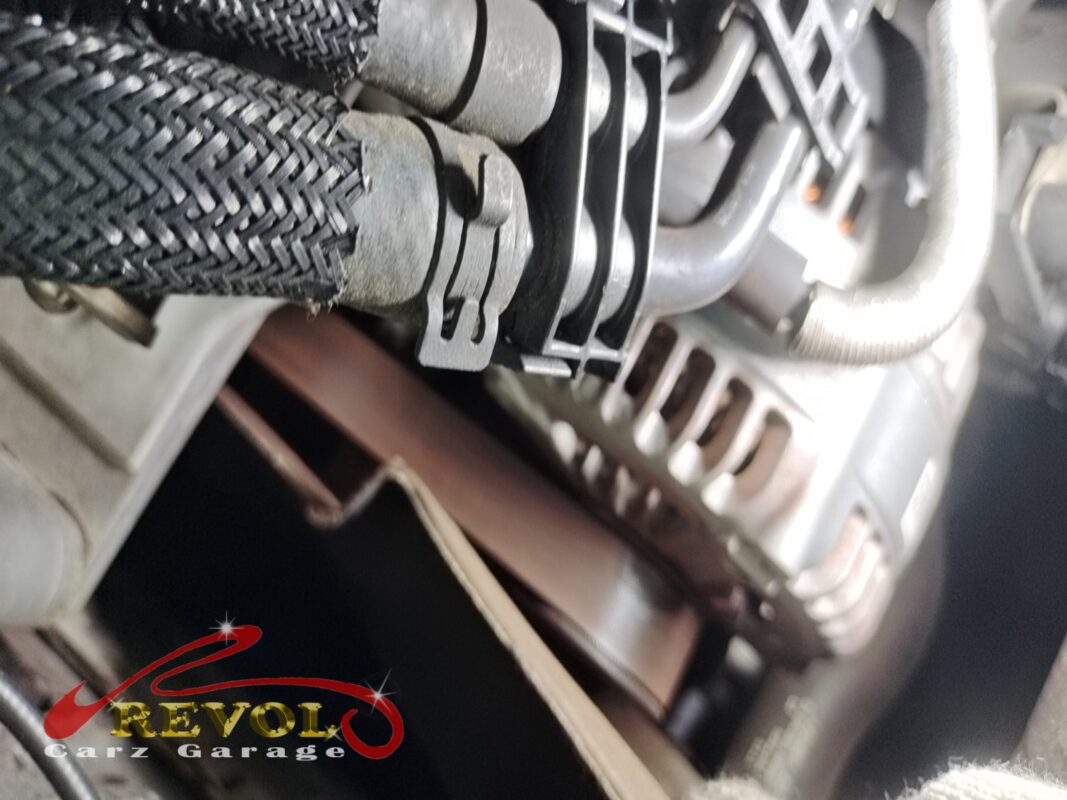
With a stethoscope on the front of the engine the rattle traced to the accessory belt drive. An idler pulley was running rough on a worn bearing, the tensioner had gone weak so the belt was slipping rather than gripping, and the crankshaft pulley's rubber damper had perished and was no longer doing its job.
The rough idle turned out to be a knock-on from the slipping belt: under accessory load the slip dragged the engine speed around at idle. So it was one fault chain at the front of the engine, not an ignition problem at all, which was a relief for the owner.
The work
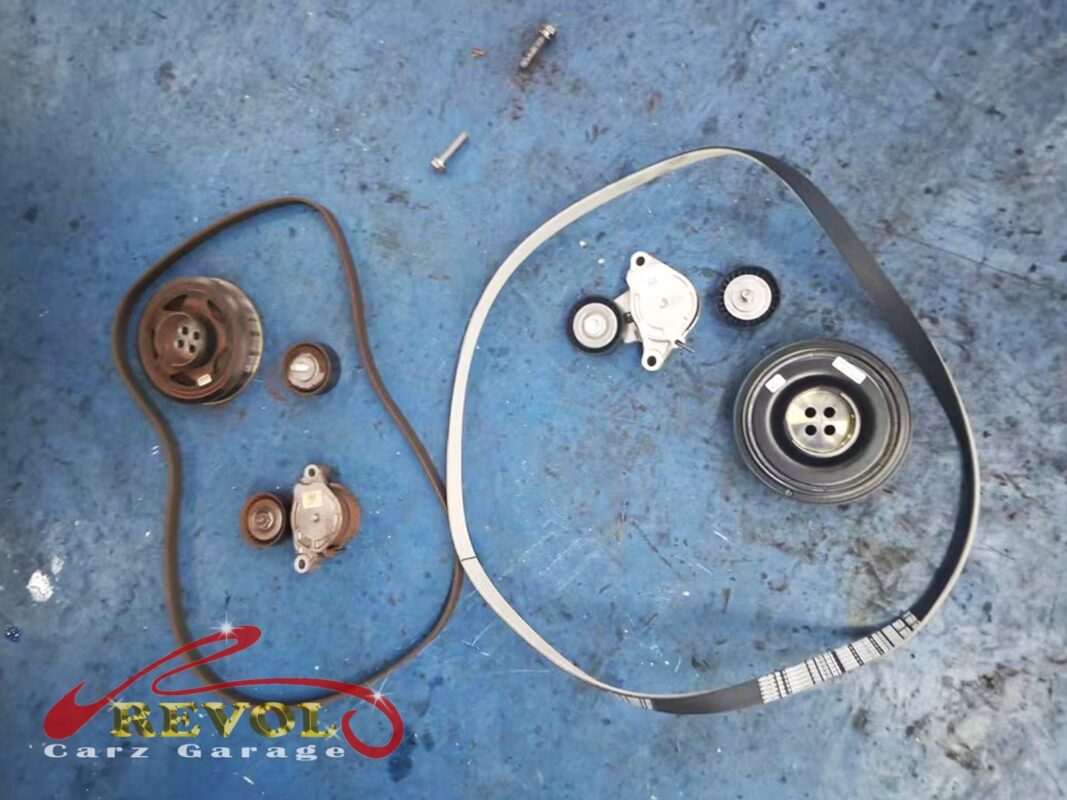
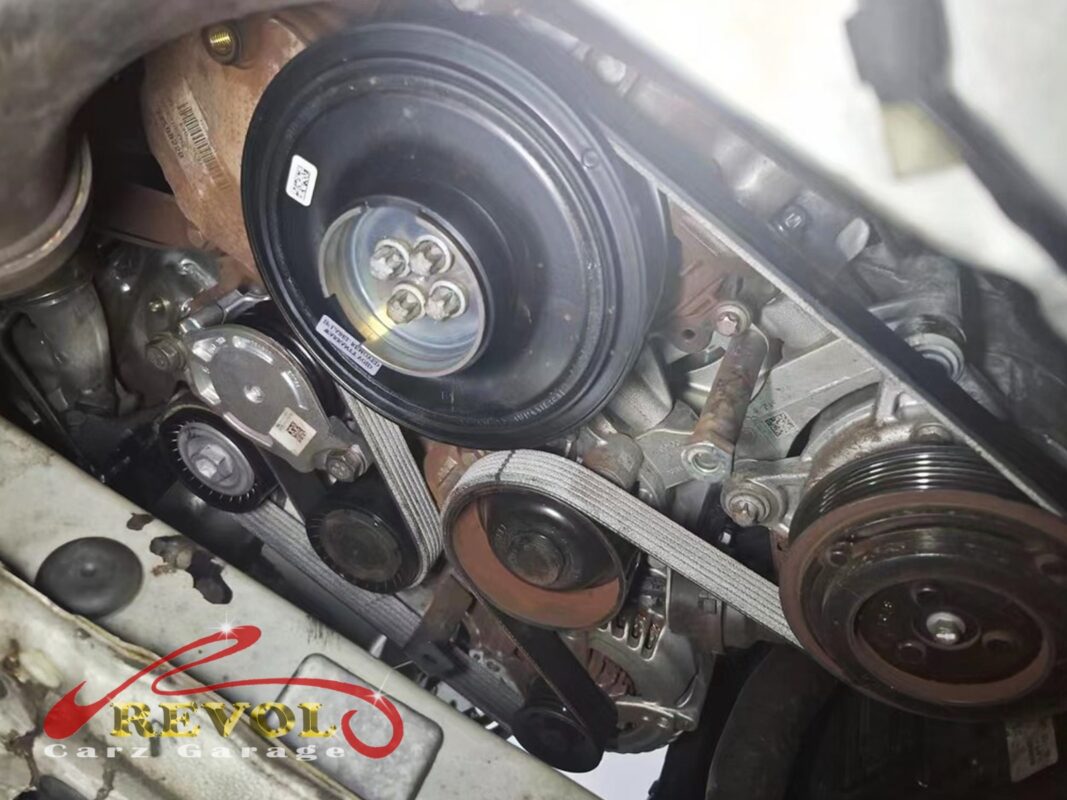
The whole belt drive at the front of the engine was renewed as a set: a new BMW-spec accessory belt, a new tensioner, new idler pulleys, and a new crankshaft pulley to replace the one with the tired damper.
The belt was tensioned to spec, and the engine checked over with a stethoscope at idle and through a full rev sweep to confirm it ran clean and quiet with nothing slipping under any load.
The outcome
The rattle was gone, the idle smoothed out, and nothing slipped whether the air-con was on, the lights were on, or the wheel was loaded up.
The 216d went home with the front of the engine quiet again, and the owner glad it was a belt-drive job rather than the ignition repair he had braced for. Doing the belt, tensioner, idlers and pulley together also means the whole front-end drive is fresh now, rather than chasing the next worn pulley in a few months.