The brief
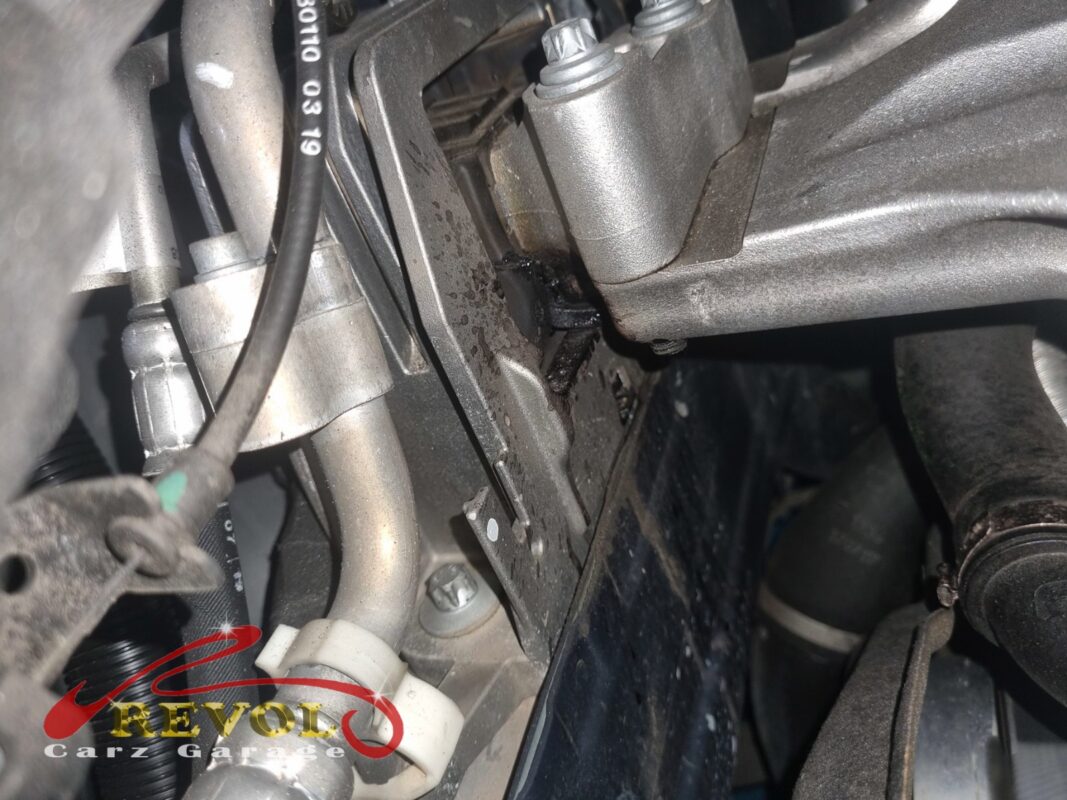
The 216i was vibrating at idle hard enough that the owner could feel it through the seat, there was a clear clunk every time it shifted between Drive and Reverse, and a quick look on the lift showed one engine mount with cracked rubber and fluid seeping out of it.
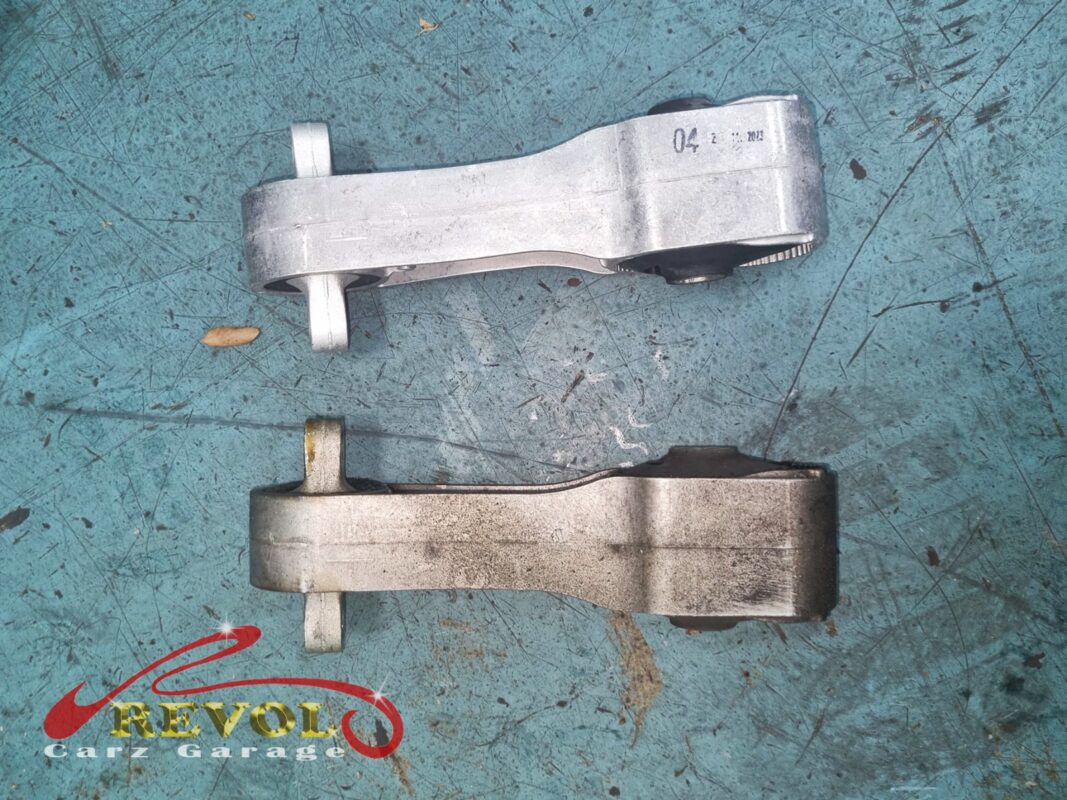
Those symptoms all point at the engine mounts. They are the rubber-and-fluid blocks that hold the engine and gearbox steady and absorb their movement, and there are three of them: one for the engine, one for the gearbox, and a lower strut that stops the whole assembly rocking. When one is visibly failing and leaking, the rest are usually the same age and not far behind.
The diagnosis
On the lift each mount got a pry-test. The front engine mount had cracked rubber and was leaking the damping fluid that should be sealed inside it. The rear engine mount had sagged visibly. The gearbox mount showed measurable movement under load.
So all three were worn out, not just the one that was leaking. Replacing them one at a time would have meant a return visit for the next one soon, so the call was to renew the full set in a single visit while the access was already open.
The work
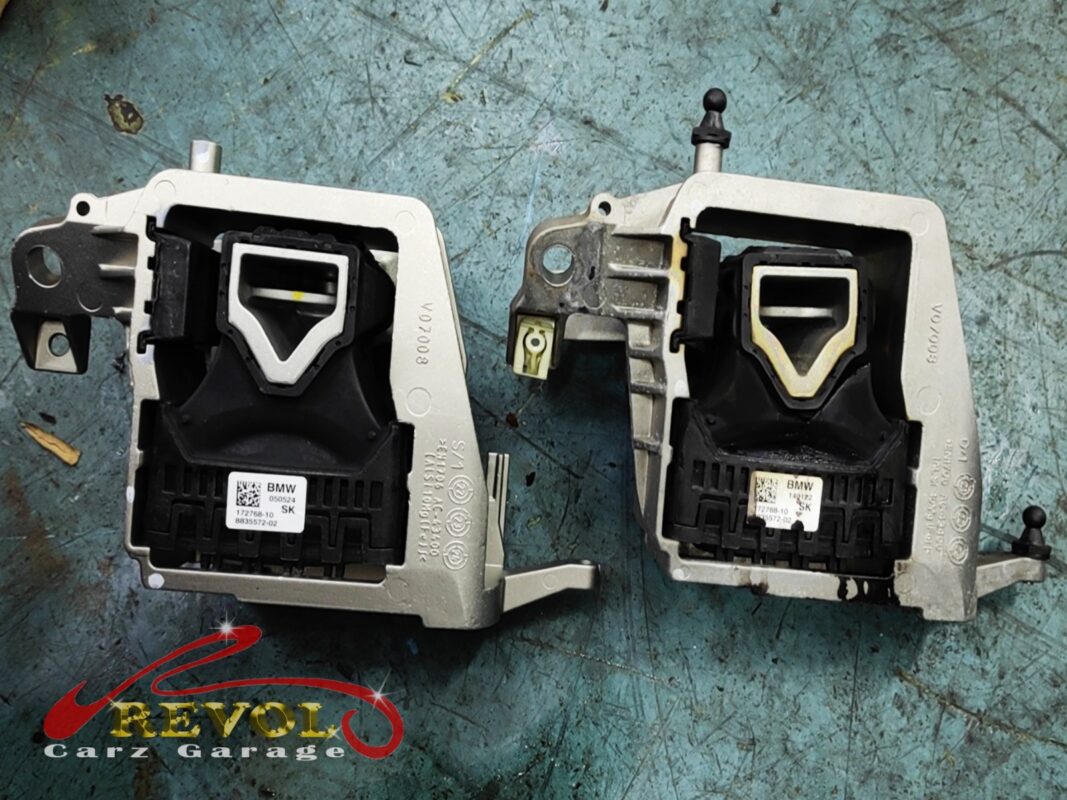
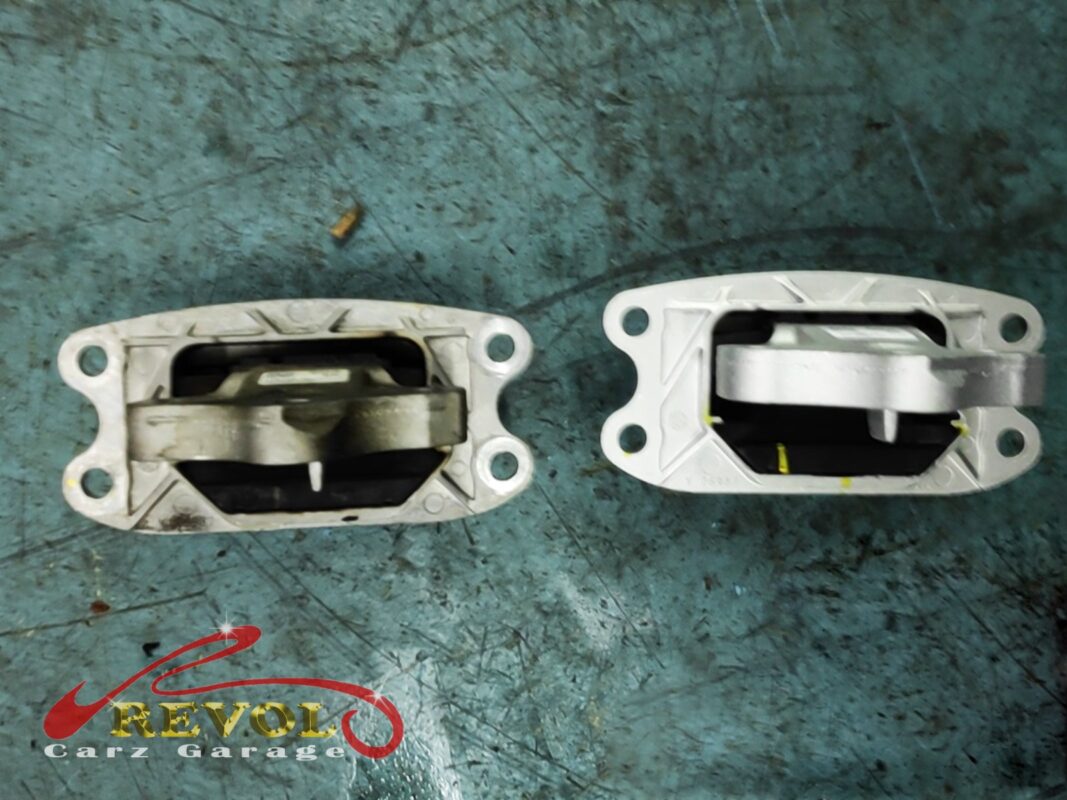
The engine and gearbox were taken onto transmission jacks so the weight came off the mounts, then each old mount was removed in turn and a new BMW-spec replacement fitted in its place, all three: engine mount, gearbox mount and the lower torque strut.
Every fastener was torqued to the manual figures, and before the engine was allowed to settle back onto the fresh mounts the workshop checked the drivetrain was sitting square, so the new rubber would not be loaded crooked from the start.
The outcome
The cabin went smooth at idle, the clunk between Drive and Reverse was gone, and nothing buzzed through the steering any more.
The 216i went home with the engine and gearbox held properly again. For the owner the everyday difference is a car that feels solid and quiet rather than shaky and loose. And doing the whole set at once means all three mounts age together from here, instead of a string of return visits as each old one gives out.