The brief
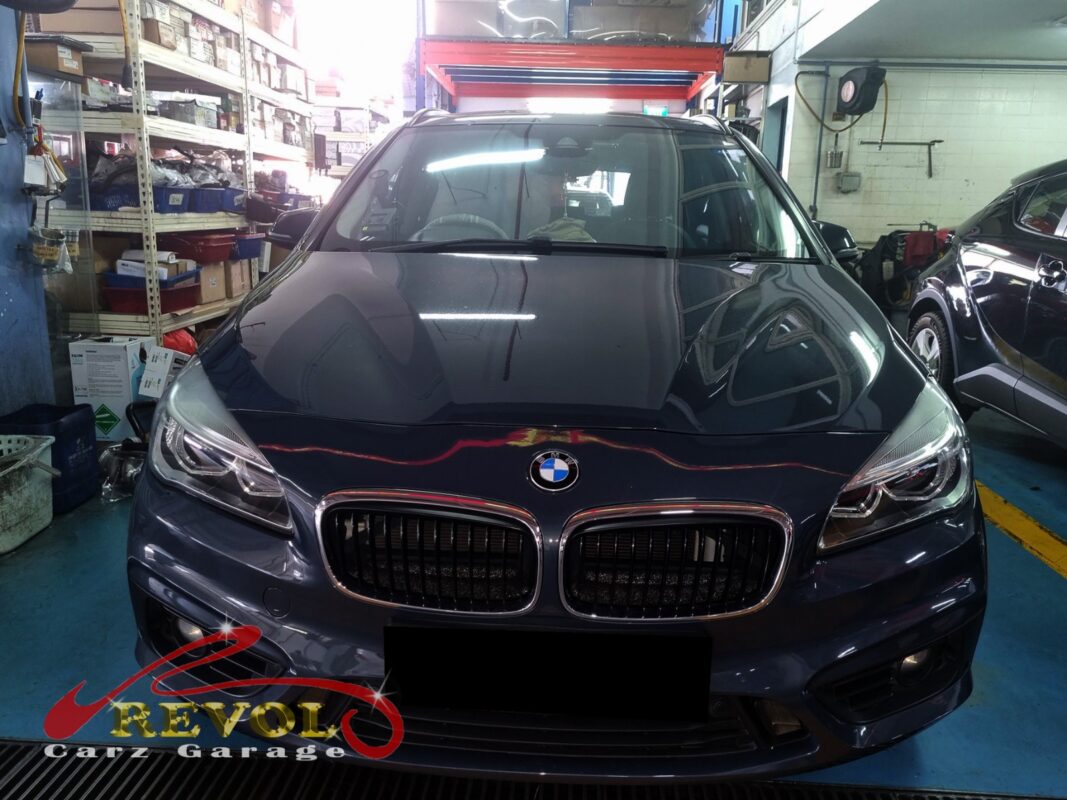
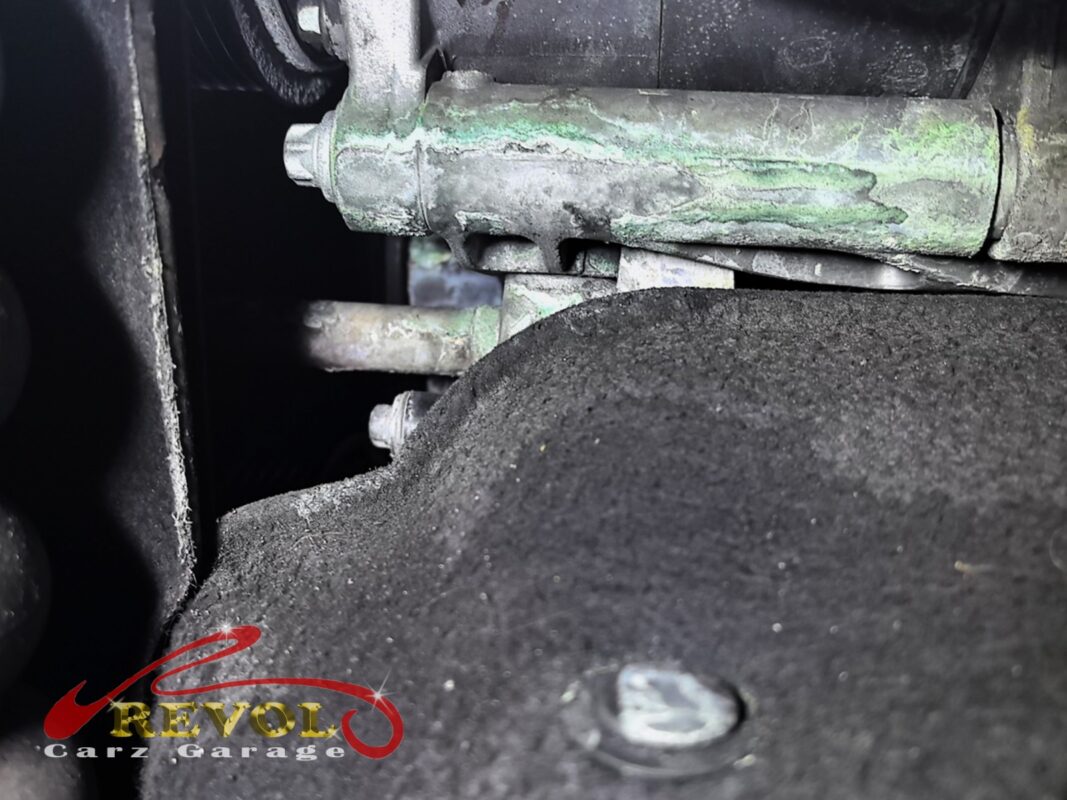
The 216d had been flagging coolant warnings on the dash, and on a long crawl through traffic the owner caught a wisp of steam drifting up from the engine bay. A look under the bonnet found green crusty residue around the water pump, the tell-tale of coolant that has been leaking and drying.
Three signs of one fault. The water pump is what circulates coolant through the engine and radiator, and it spins on a shaft sealed against the coolant. When that seal wears, coolant weeps past it: the leak slowly drops the level, which is the dashboard warning; what spills onto hot parts flashes off as steam in traffic; and the residue it leaves behind builds up as that green crust.
The diagnosis
A pressure test on the cooling system confirmed it: the system would not hold pressure, and the leak was at the water pump shaft seal. The corrosion crust around the housing matched exactly where the coolant had been escaping.
There is no resealing a worn pump shaft, and a pump that is already weeping externally is on borrowed time. The right call was a new pump, done now while it was a planned job, rather than waiting for it to let go properly somewhere inconvenient and risk the engine overheating.
The work
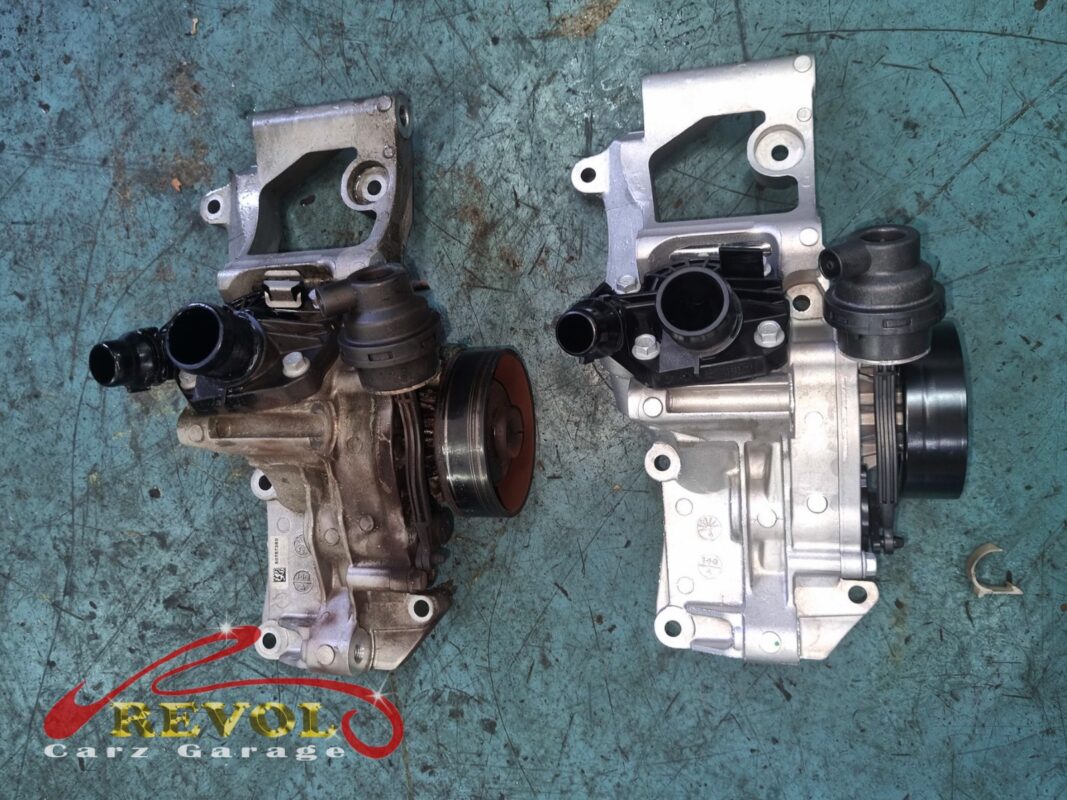
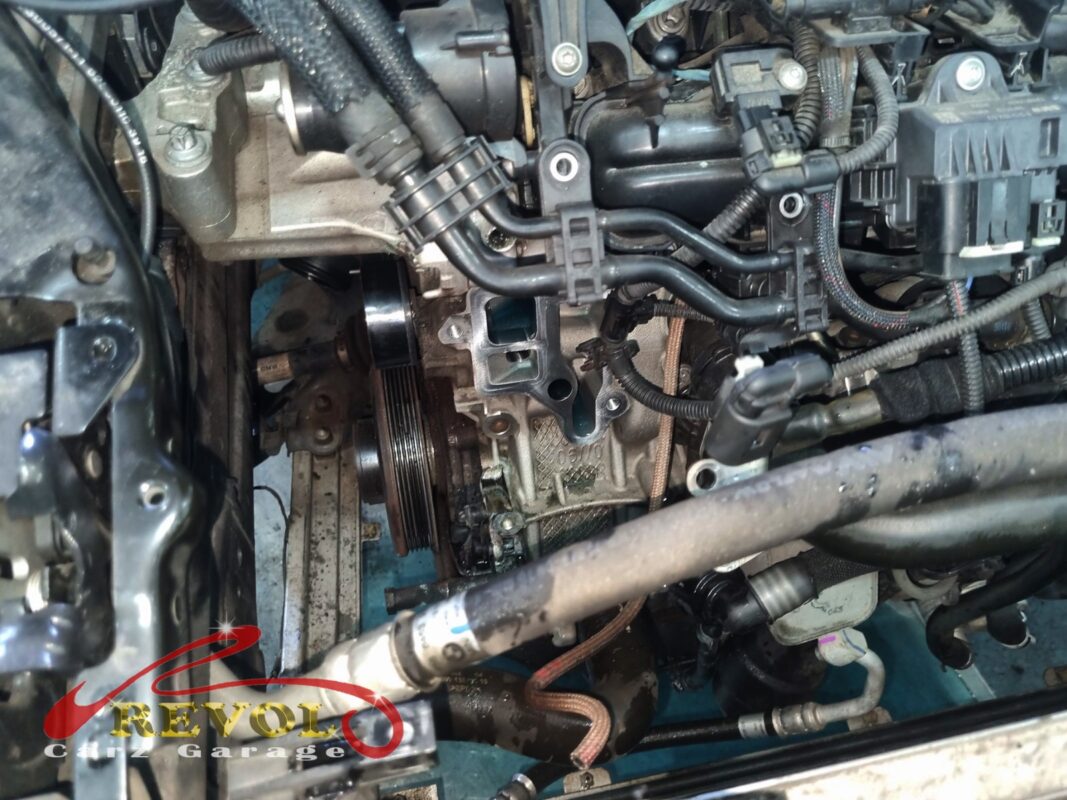
The cooling system was drained, the drive belt section released, and the failed water pump module taken off. A new BMW-spec pump with a fresh seal went on in its place.
Then the system was refilled with the correct coolant and bled of trapped air, which matters on this engine, an air pocket left in there can mimic the very overheating you just fixed. Pressure was held on the system to confirm it was sealed, and the pump checked working through a warm-up cycle.
The outcome
No drips, no coolant warning, no steam in traffic.
The 216d went home with the cooling system back to spec and the leak path closed off. For the owner that is peace of mind in stop-start driving, which is exactly when a tired cooling system gives up. And replacing the pump as a planned repair, before it failed outright, kept this from becoming an overheated engine, which is the kind of damage that turns a routine pump job into an engine rebuild.