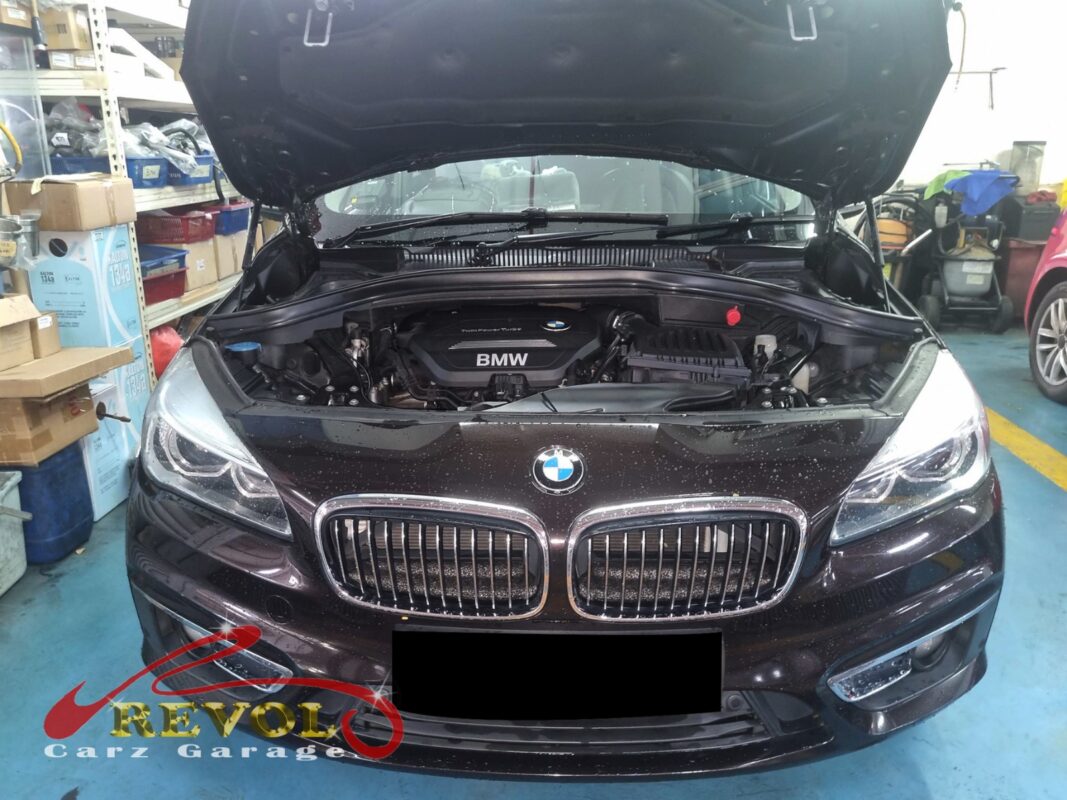
The brief
The 216d had a rattle from the front of the engine, and the owner had noticed it tracked with load: it picked up under acceleration and faded back when the engine sat at a hot idle. That pattern points at something taking strain rather than spinning free, which on this engine means the belt drive at the front.
There is a fair bit going on down there: the ribbed accessory belt, the tensioner that keeps it tight, the idler pulleys it wraps around, and the crankshaft pulley driving the whole arrangement. When one of those starts to wear, a rattle that comes and goes with engine load is exactly what you get.
The diagnosis
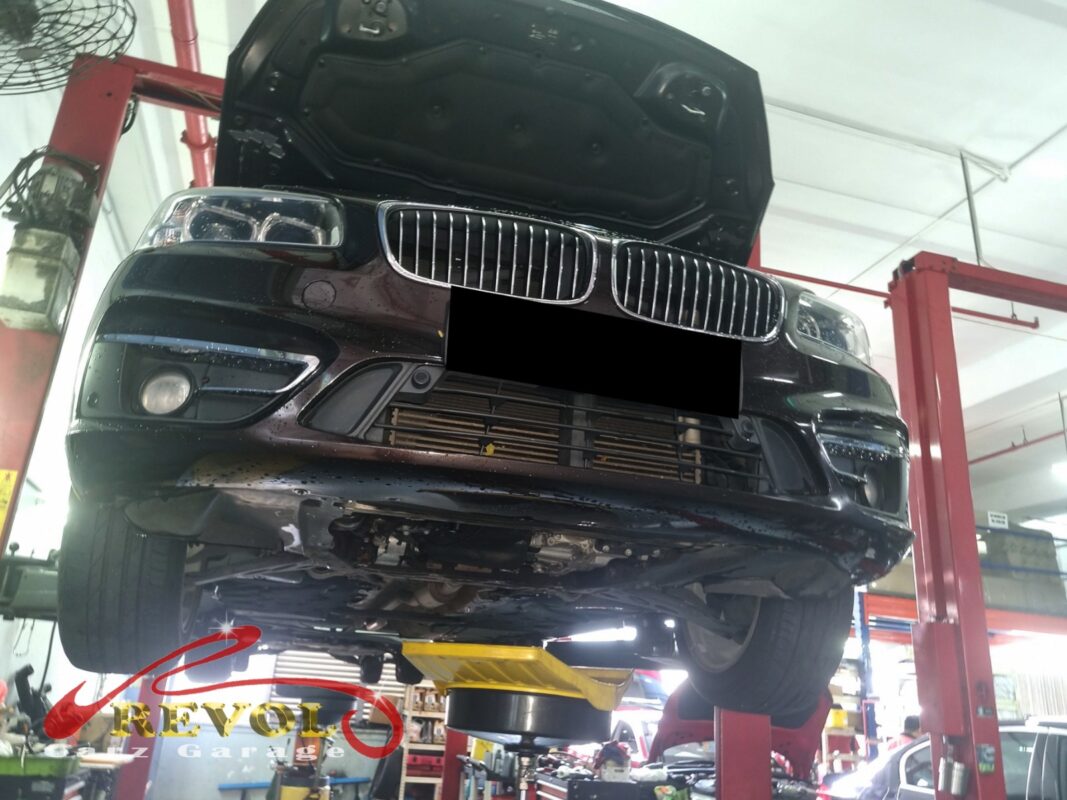
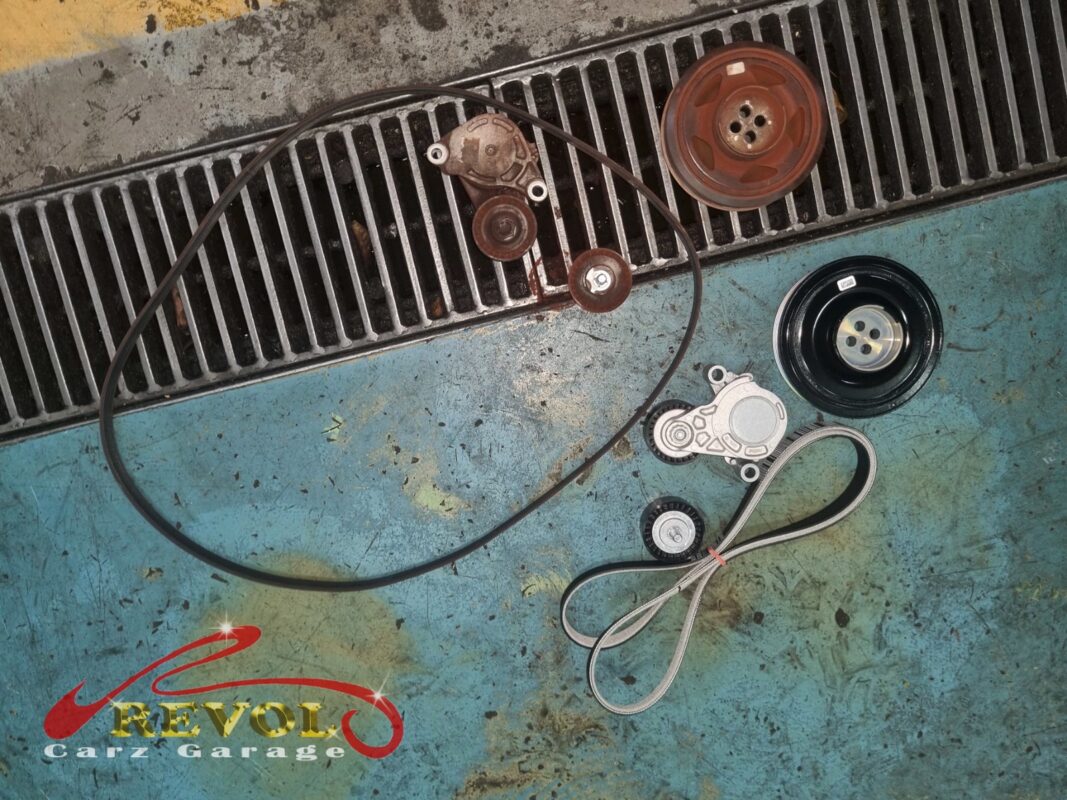
With a stethoscope on the front of the engine the noise traced to the belt drive, and turning things by hand off the belt showed the trouble: a pulley running rough on a worn bearing, and a tensioner that had gone weak. The crankshaft pulley's rubber damper had also done its time.
Leaving a rough pulley to run risks the belt wandering off line, and a weak tensioner lets it slip. The sensible fix here was not to chase one component but to renew the whole front-end belt drive in one go, so nothing old was left alongside the new.
The work
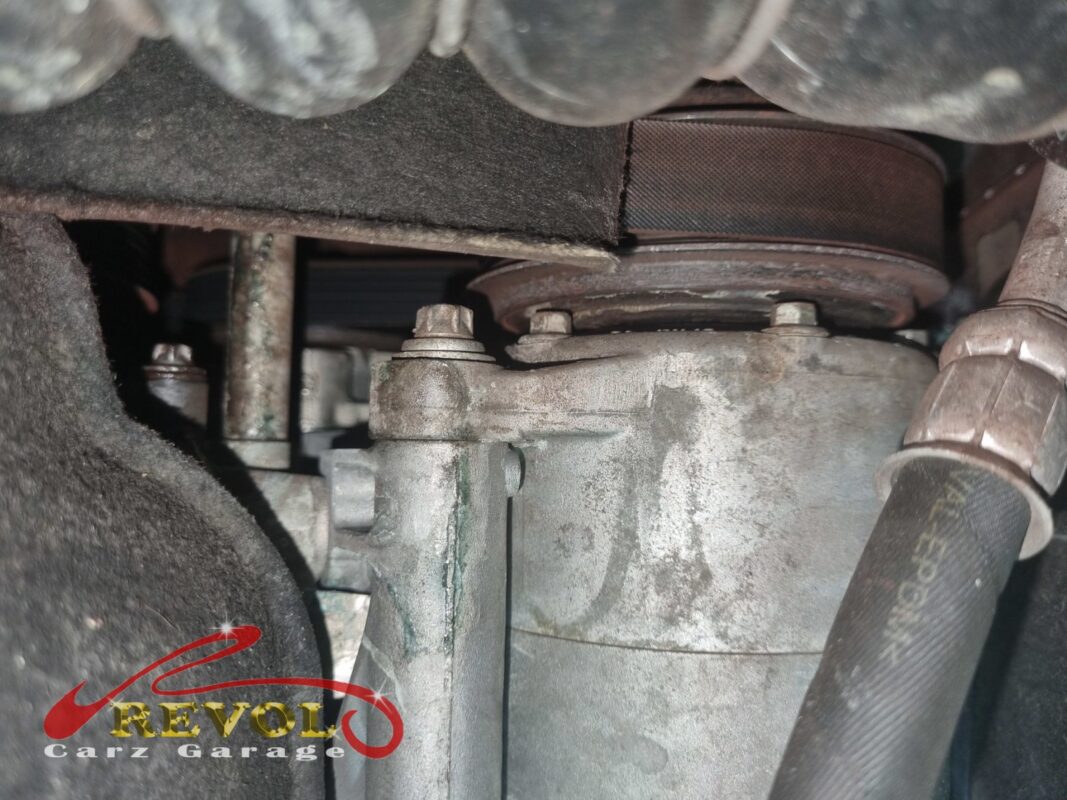
Belt tension was released and the old belt taken off, then the worn pulleys, the tensioner and the crankshaft pulley all came off. A new BMW-spec belt went on over a new tensioner, new idler pulleys and a new crankshaft pulley, and the belt re-tensioned to the workshop manual value.
Then the engine was checked over with a stethoscope at idle and through a full rev sweep to confirm it ran clean and quiet with nothing slipping under any load.
The outcome
The rattle was gone, the front of the engine quiet right through the rev range, and nothing slipping whatever was loading it.
The 216d went home with the belt drive fresh and the timing system holding its geometry the way it should. For the owner that is a quiet engine again and one less thing to worry about, and doing the whole drive as a set means the next worn pulley is not waiting a few months down the road.