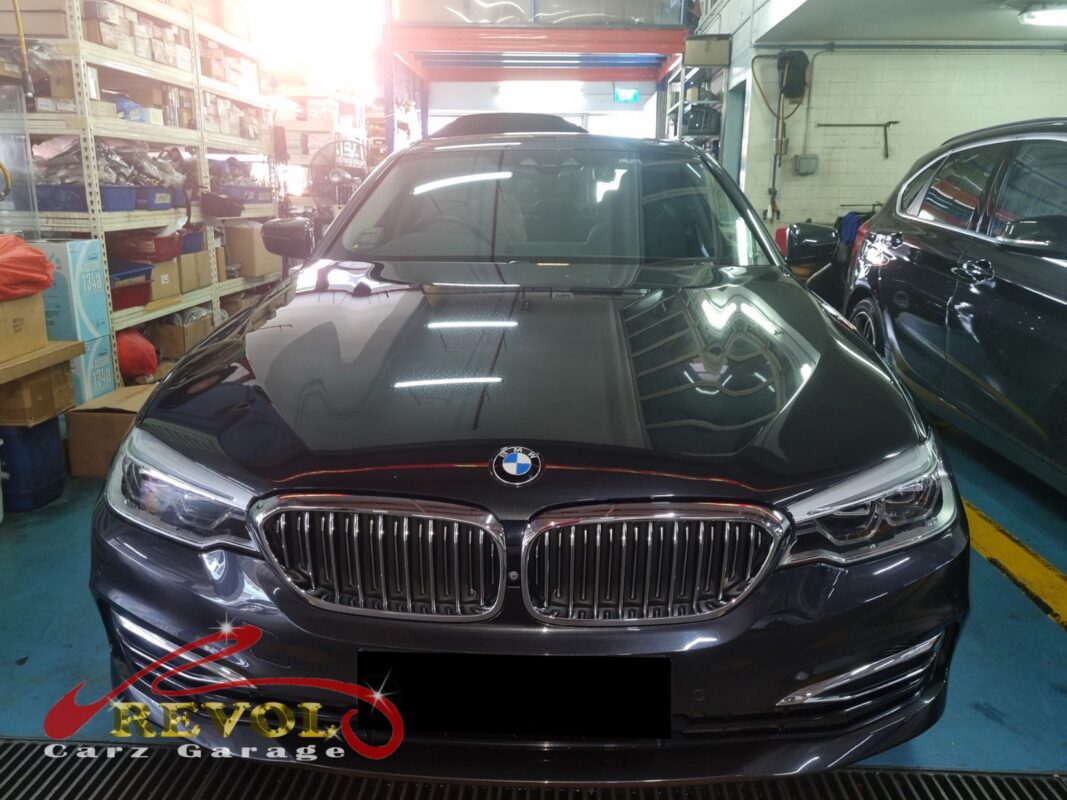
The brief
The 216d had been leaving a small coolant puddle on the floor, and the expansion tank was dropping faster than evaporation could account for. The owner suspected the water pump but brought it in for a proper diagnosis before committing to parts.
The water pump circulates coolant through the engine and radiator to carry away the heat. On this engine it sits in a plastic housing, and that housing takes a hard life, hot and cold cycle after cycle, year after year. A slow coolant leak with a dropping tank level is the classic sign that something around the pump has started to weep.
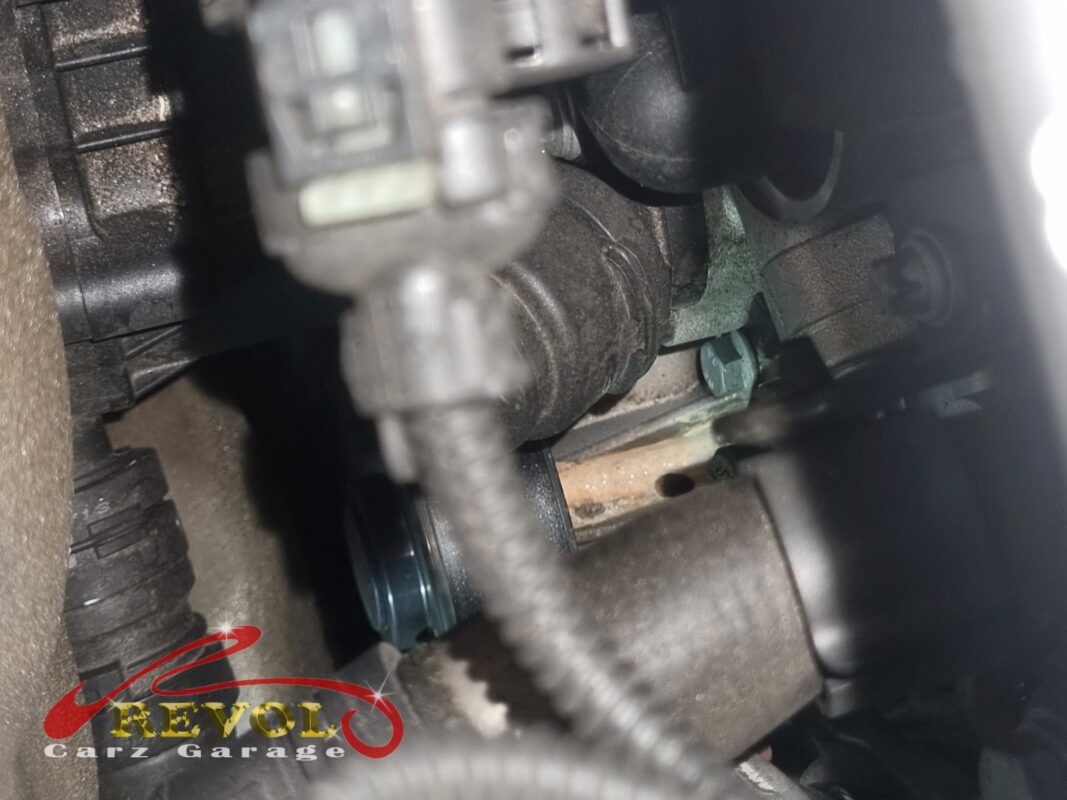
The diagnosis
A pressure test on the cooling system traced the leak to the water pump housing itself. The plastic had cracked at one of the bolt seats, which is a known ageing failure on this engine, the heat cycles eventually open the housing up along the moulding line.
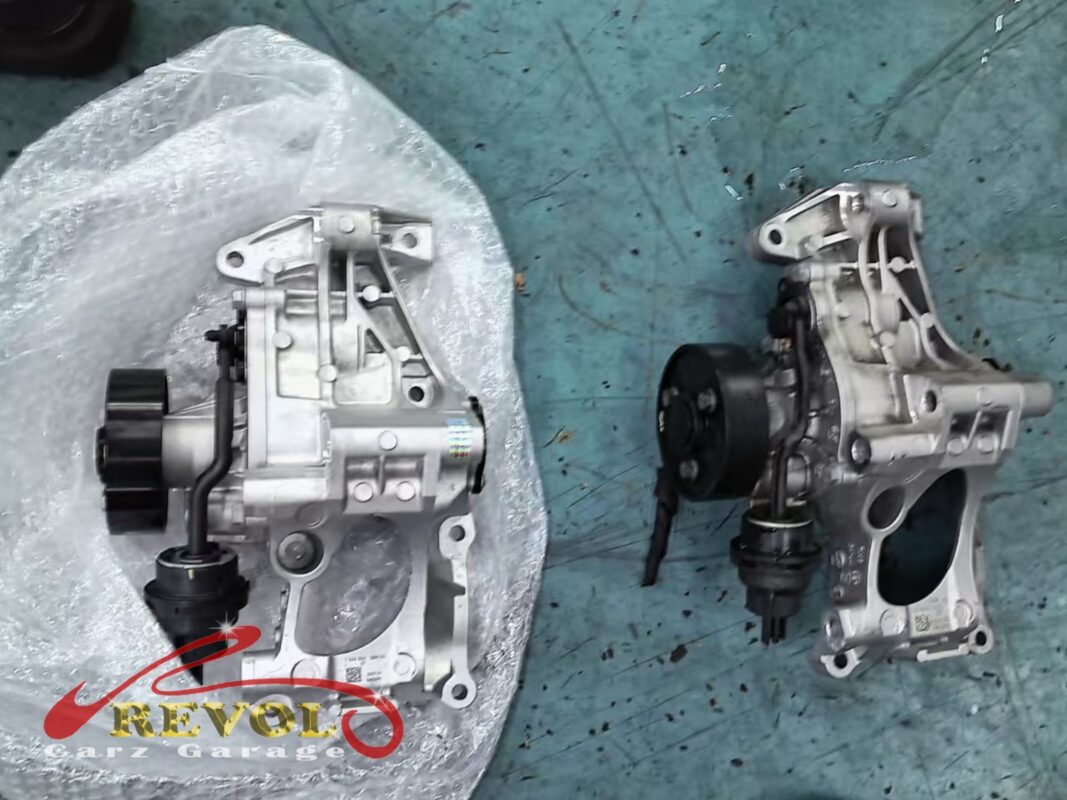
The pump body had to come off anyway to get at the crack, so replacing the pump at the same time was the obvious call, rather than refitting an old pump to a new housing and leaving one ageing part in there to fail next.
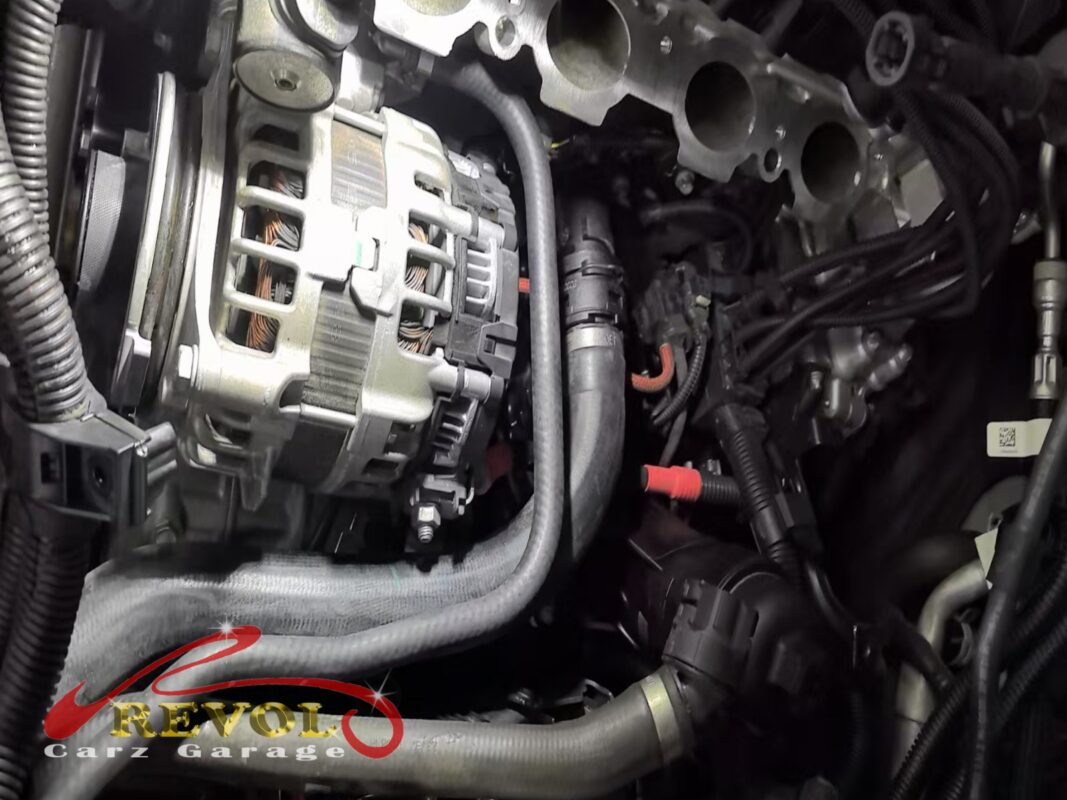
The work
The cooling system was drained, the drive belt section released, and the failed water pump and its cracked housing taken off. A new BMW-spec pump with a fresh housing and new seals went on in their place.
Then the system was refilled with the correct coolant and bled of trapped air, which matters on this engine, an air pocket can mimic the overheating you just fixed. Pressure was held on the system to confirm it was sealed before the car was road-tested.
The outcome
No drips, the coolant level holding steady, and the temperature gauge stable.
The 216d went home with the front of the engine sealed and the leak path closed off. For the owner that is no more puddle on the floor and no more topping up the tank, and replacing the pump alongside the housing means there is no half-old assembly in there waiting to fail, just a fresh cooling-system front end good for years.