The brief
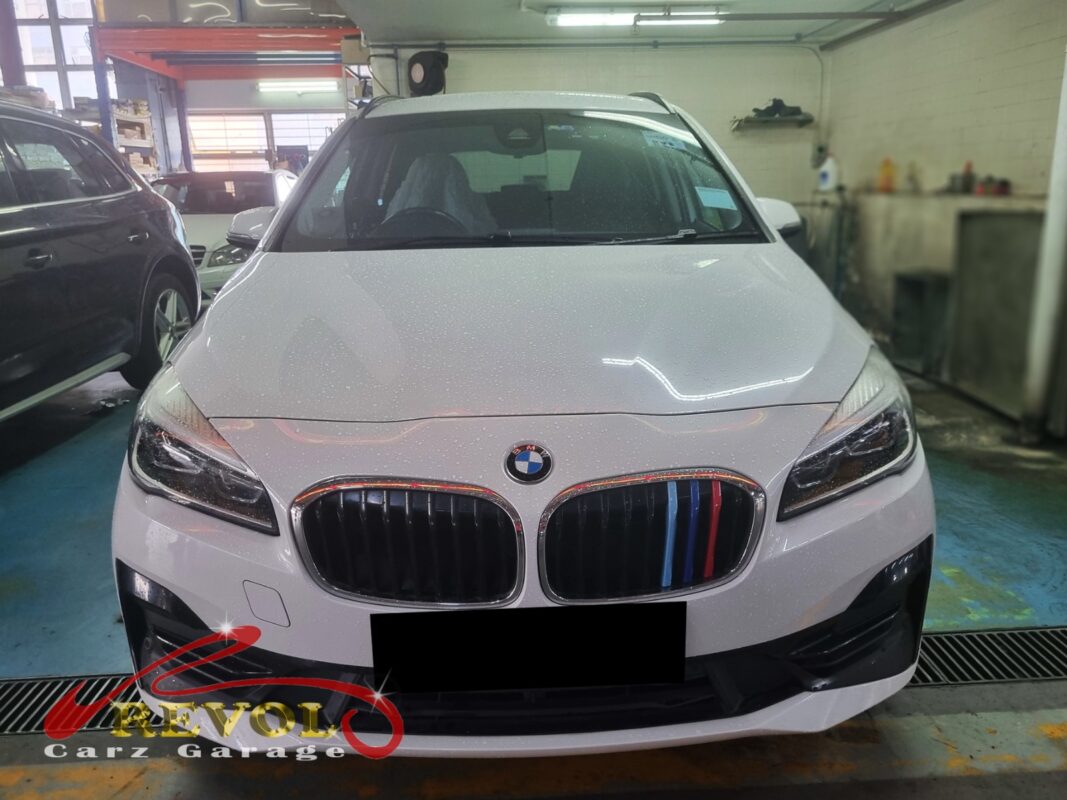
The 216i had been losing oil between services, the plastic liner under the timing cover had picked up a fresh ring of oil, and the cabin caught a burning smell after longer drives. Three signs all pointing at the same place, the front of the engine.
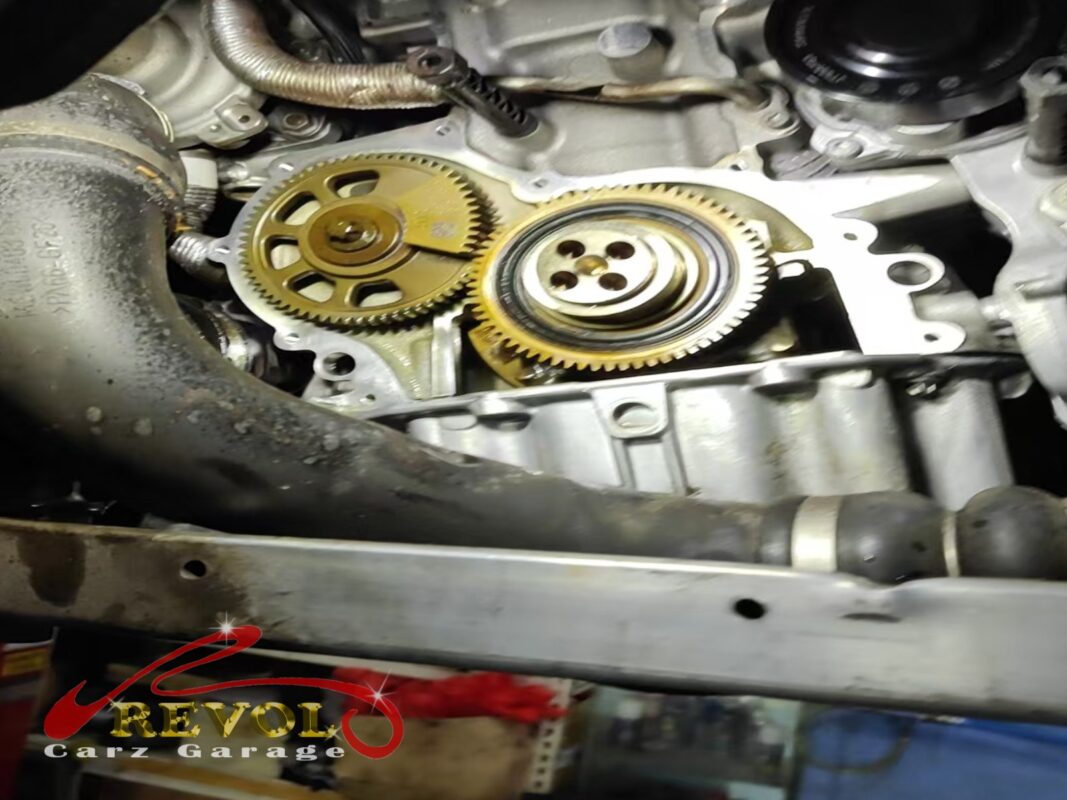
The timing cover sits over the chain and gears that keep the crankshaft and camshafts in step, and it is sealed to the block by a gasket. When that gasket hardens with age it stops sealing, and oil weeps out: enough to drip onto the liner, enough to cook off on a hot exhaust and smell, and over time enough to drop the level you only notice at the next service.
The diagnosis
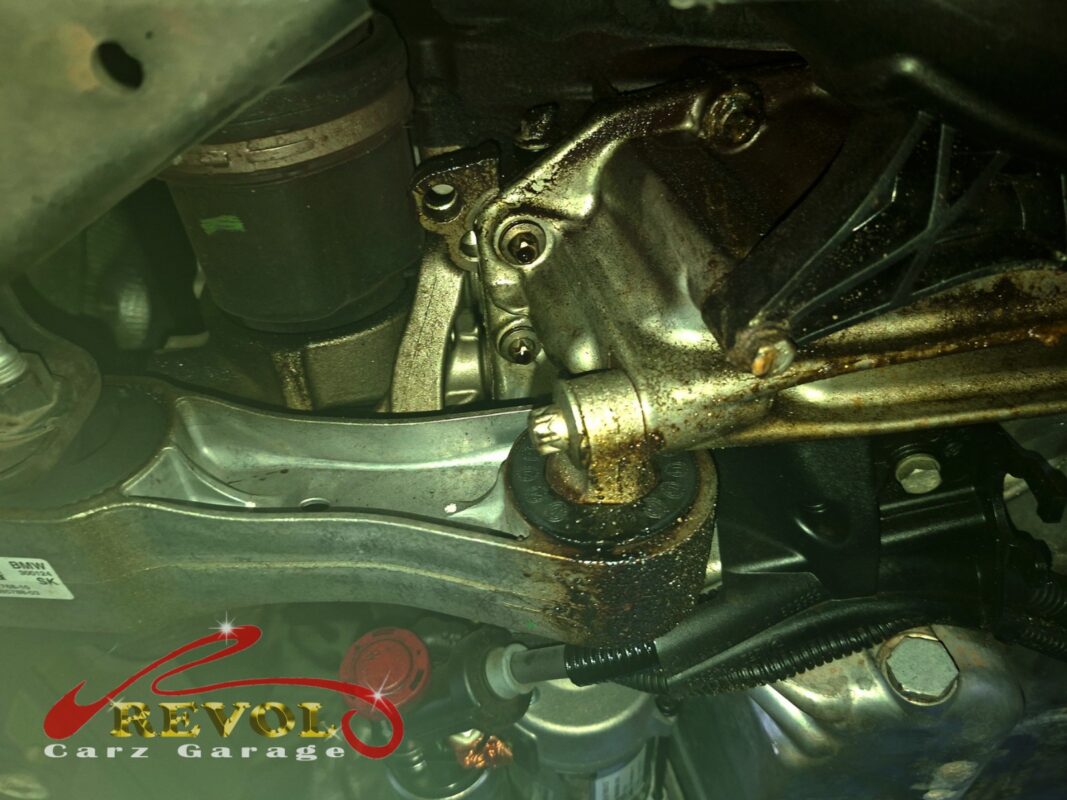
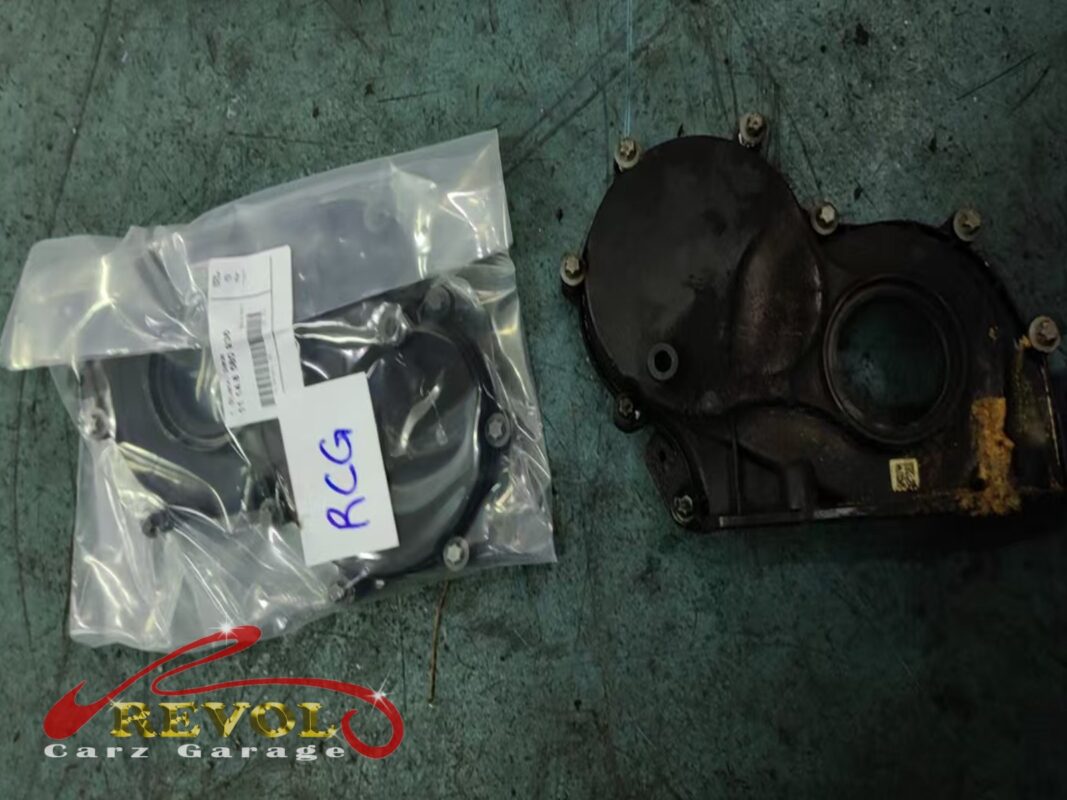
On the lift the leak was localised cleanly to the timing cover, the gasket hardened and no longer sealing along one side. Once the cover was off it was clear the cover itself had done its time, the metal oil-soaked and rust starting at one edge.
The rest of the engine was dry, no other gaskets weeping, nothing wrong at the bolt seats. So the job stayed contained to the front: rather than slot a new gasket onto an old cover that was already corroding, the cover itself was renewed.
The work
The accessory belt and brackets came off, the engine was supported, and the timing cover taken off. Both mating surfaces were scraped back to clean bare metal, then a new BMW-spec timing cover went on with a fresh gasket, the bolts torqued to spec in the right pattern, and the front of the engine reassembled.
Then the engine was run and held through a warm-up cycle, watching the join for any sign of a weep before the car went back to the owner.
The outcome
Dry timing cover, a clean liner after a road test, no burning smell, and the oil level holding.
The 216i went home with the front of the engine sealed properly. For the owner that is the end of topping up between services and the end of that smell on the highway. And dealing with it at the gasket-and-cover stage, before the level dropped far enough to cause harm, kept this a tidy front-of-engine job rather than something bigger.