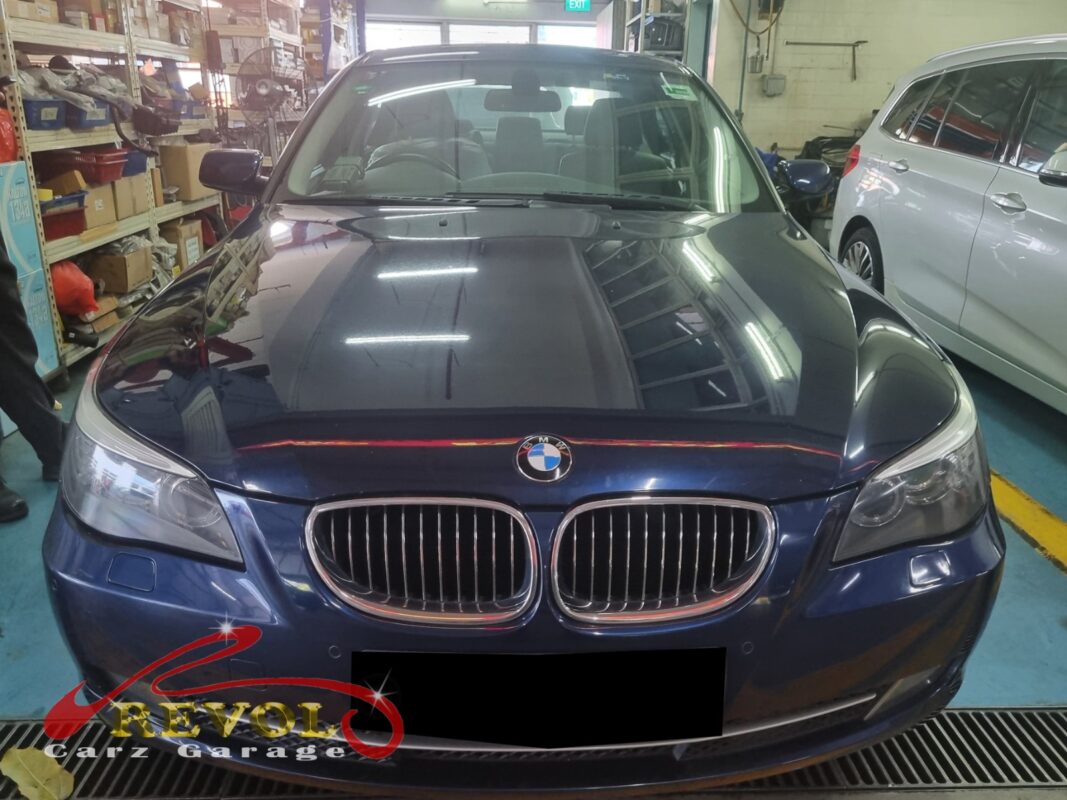
The brief
The 216d had started smelling burnt after motorway runs, the cam cover area was visibly oily, and on the latest drive it had picked up a misfire on one cylinder. The owner brought it in before the misfire turned into a failed coil.
The valve cover, or cam cover, sits over the camshafts and valvetrain at the top of the engine, sealed to the cylinder head by a gasket. When that gasket hardens with age it stops sealing along one edge, and oil weeps out: it cooks off on a hot exhaust and smells, it leaves the top of the engine oily, and worst of all it can track down into a plug well and soak the ignition coil sitting in there, which is what brings on a misfire.
The diagnosis
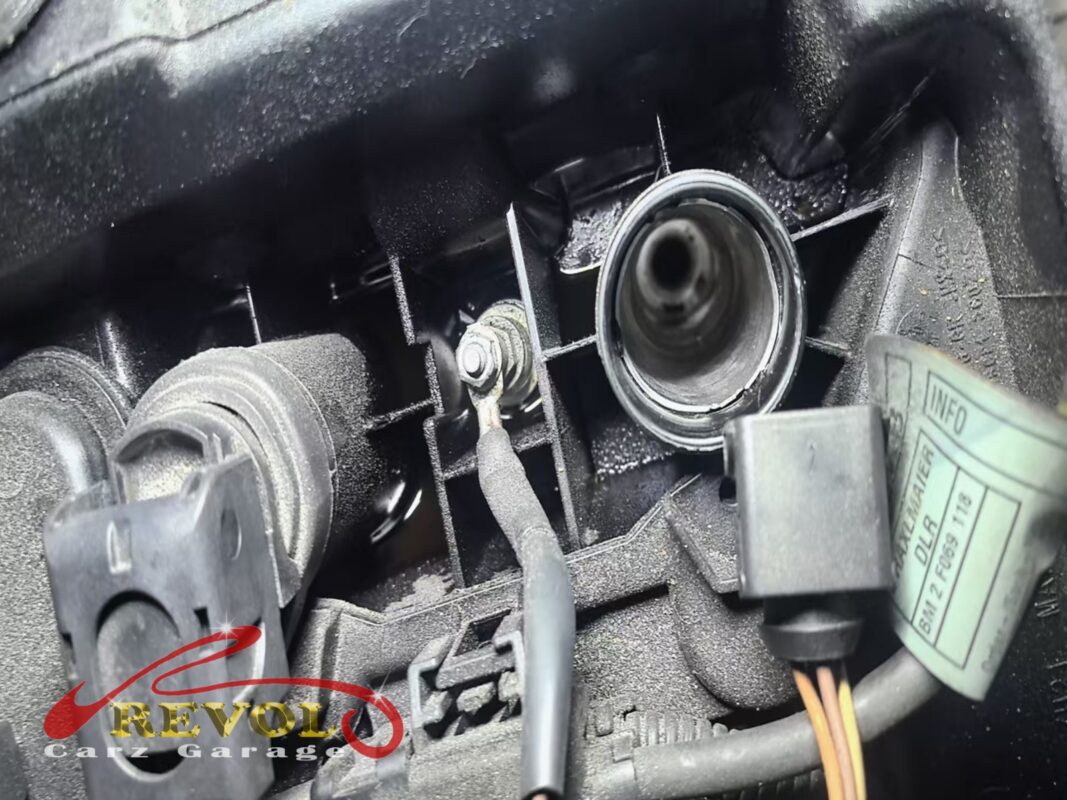
Off the engine, the valve cover gasket had hardened and lost its seal along the long side. Oil had been tracking down the head and had finally pooled into one of the plug wells, soaking the boot of the coil sitting there, and that wet, shorting coil was the misfire.
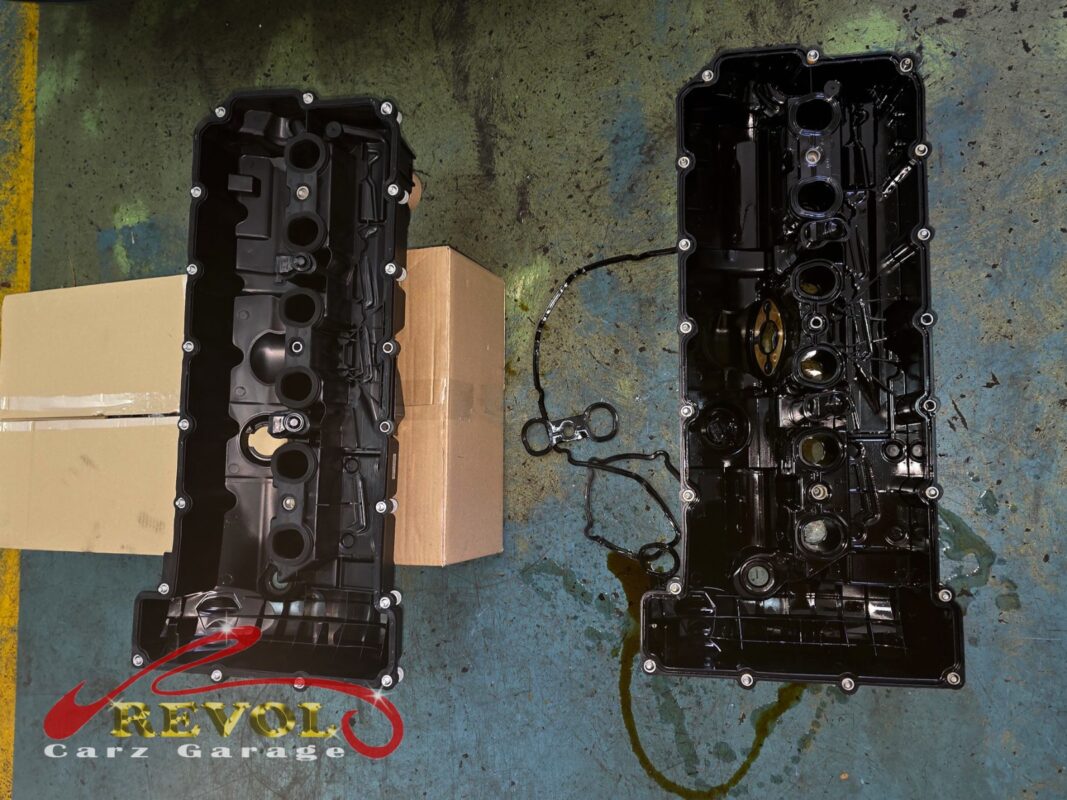
The gasket on this cover is integrated, so you replace the cover as a unit rather than fishing a strip of rubber into a groove. While the cover was off, the affected well needed draining and drying, and the coil cleaned up rather than just thrown away, it was a victim of the leak, not faulty itself.
The work
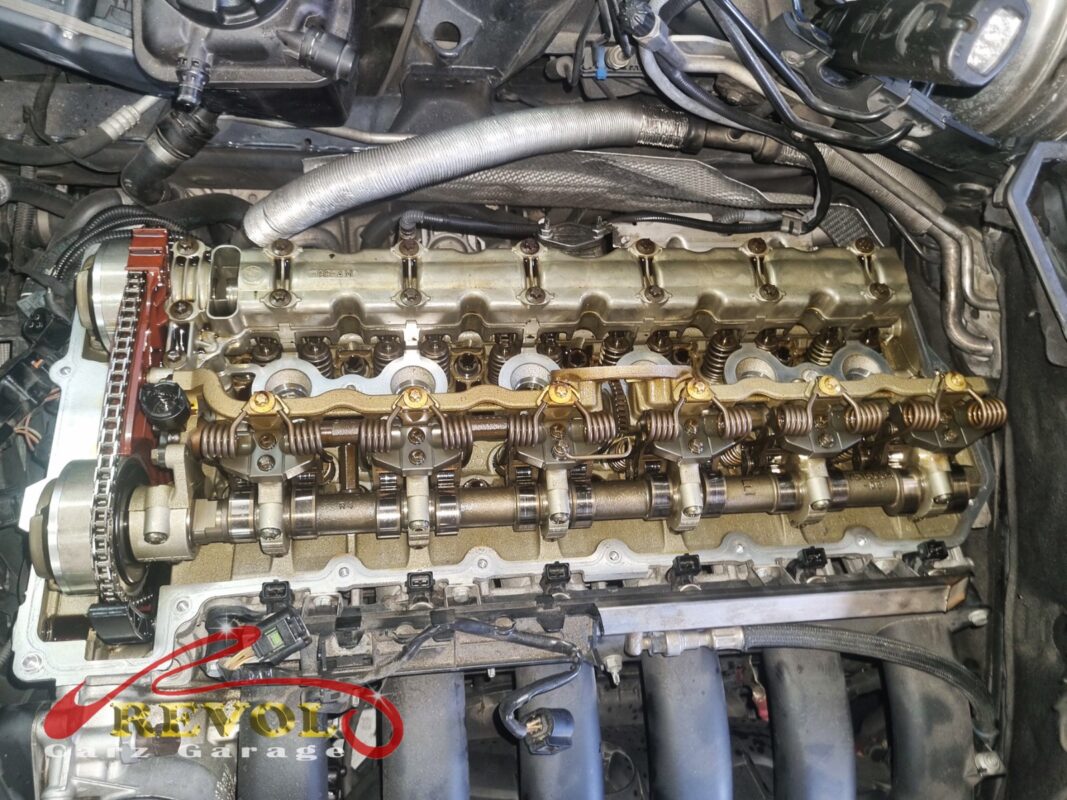
The cover came off, the head face was cleaned back to clean bare metal, and a new BMW-spec valve cover with its fresh integrated seals and new bolts went on, torqued in the right pattern. Then the oily plug well was drained and dried, the coil boot cleaned, the coil itself dried out, and everything reseated.
The engine was run and checked for a clean idle and no return of the misfire before the car went back to the owner.
The outcome
Dry head, dry plug wells, no burning smell after a road test, the misfire gone, and no fault codes.
The 216d went home with the top end sealed properly and a coil saved from a needless replacement. For the owner that is the end of the smell and the wobble at idle, and one fewer part to buy, because catching the leak before it killed the coil meant a clean rather than a replace.