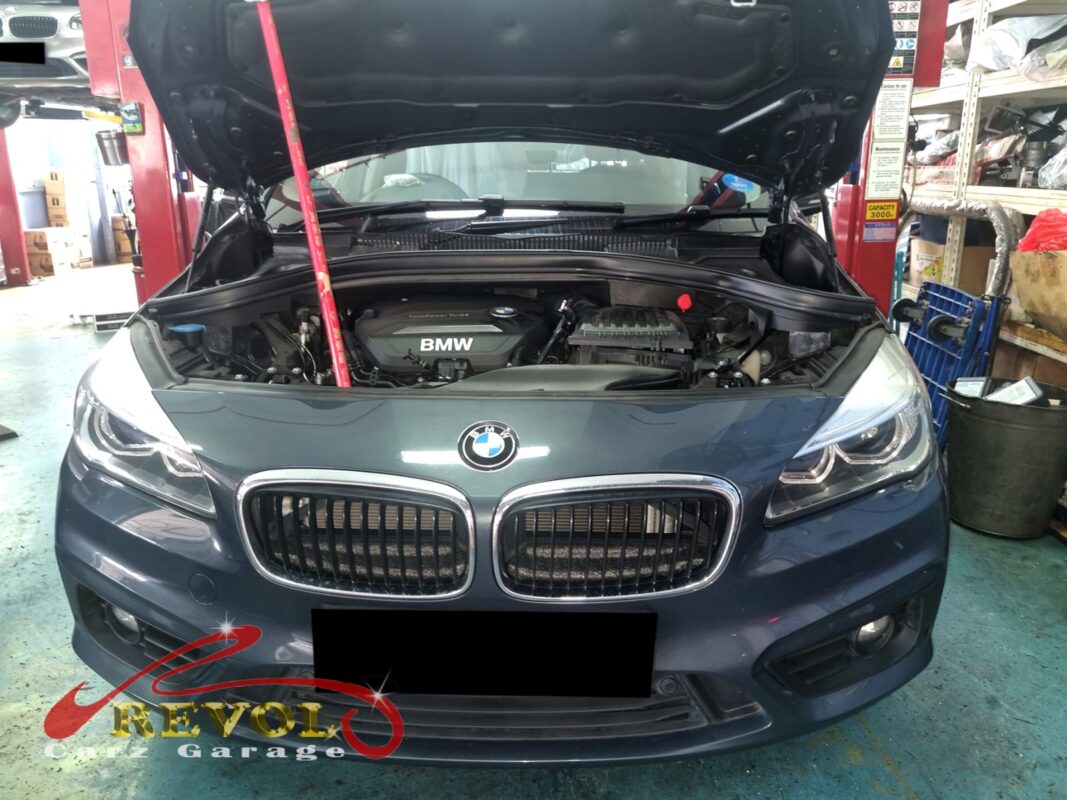
The brief
The 216d had a rattle the owner could pin to the front of the engine, one that rose with the revs and faded back at idle. On a diesel, where the timing and accessory drive components take real load, that is not a noise to leave running.
The front of this engine has the ribbed accessory belt, the tensioner that keeps it tight, the idler pulleys it runs over, and the crankshaft pulley driving the lot. A rattle that scales with engine speed almost always lives in there, on a bearing or a damper that has started to wear.
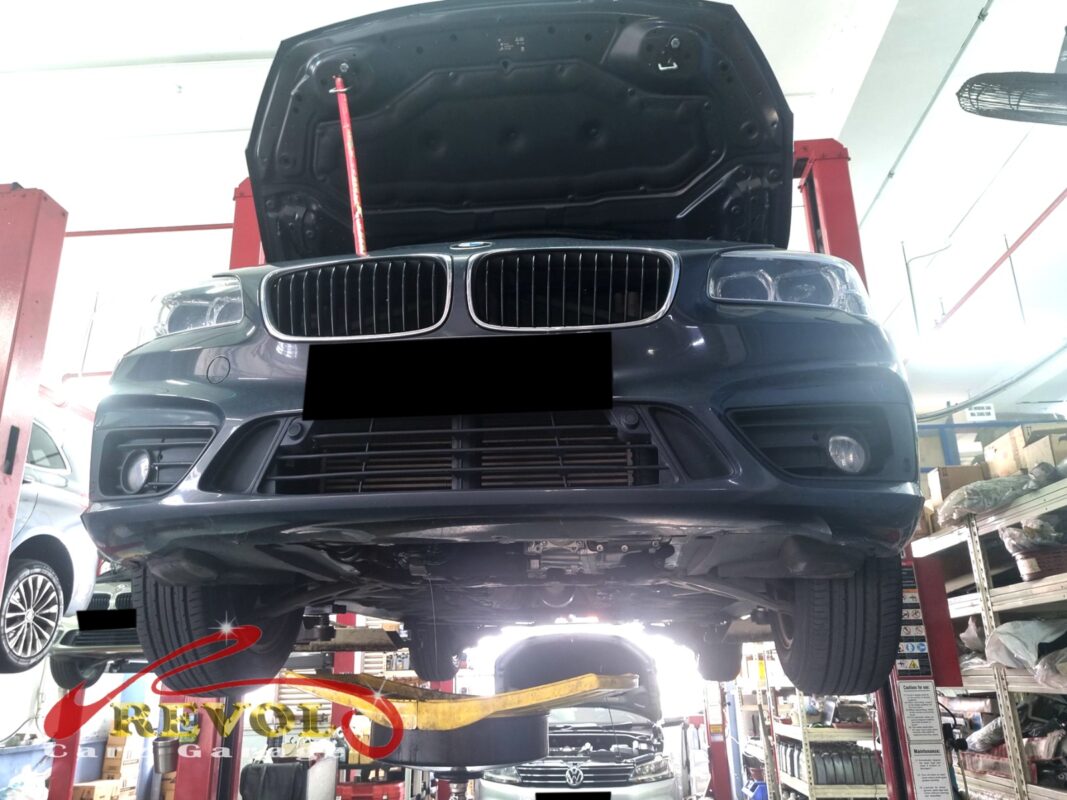
The diagnosis
With a stethoscope on the front of the engine the noise traced to the crankshaft pulley, and turning it by hand off the belt showed clear bearing roughness, with the rubber damper in it past its best. The belt itself was glazed enough to renew at the same time.
Leaving a rough pulley to run risks the belt wandering off line and slipping. So the fix was the crankshaft pulley and the accessory belt renewed together, with the tensioner and idlers checked over while everything was apart.
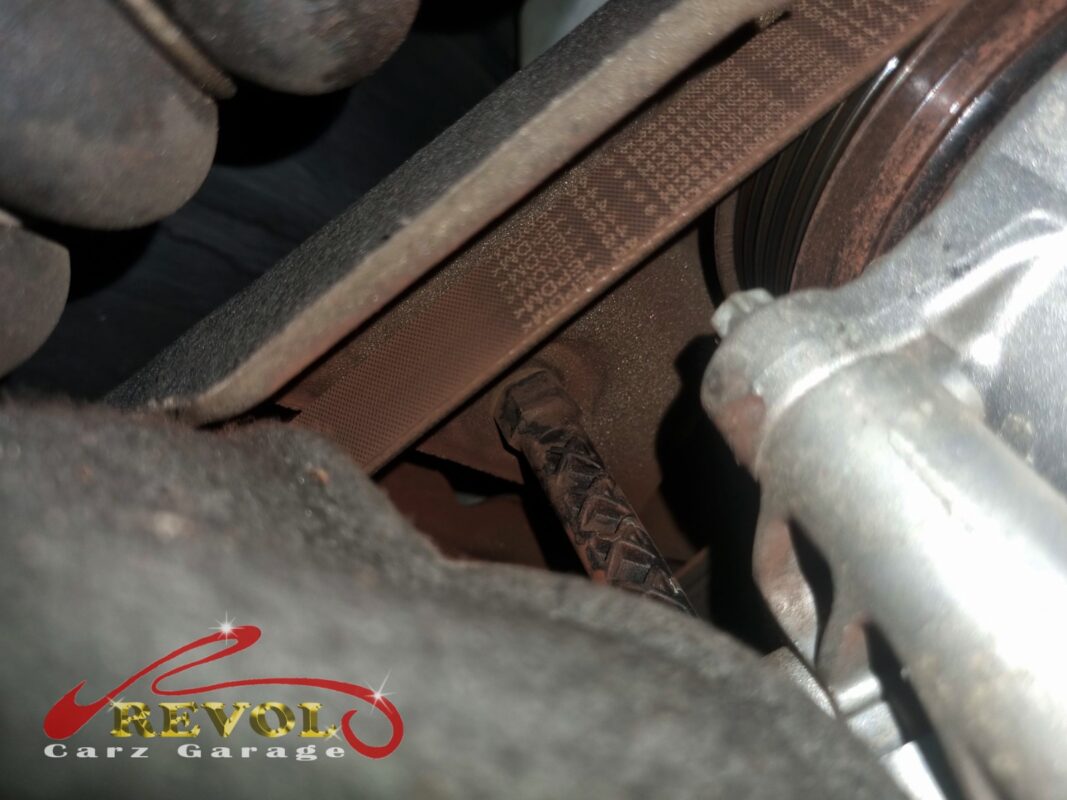
The work
Belt tension was released, the old belt and the worn crankshaft pulley taken off, and new BMW-spec parts fitted in their place, a fresh pulley and a fresh belt routed correctly through the drive. The belt was re-tensioned to the workshop manual value.
Then the engine was checked over with a stethoscope at idle and through a full rev sweep to confirm it ran clean and quiet with nothing slipping under any load.
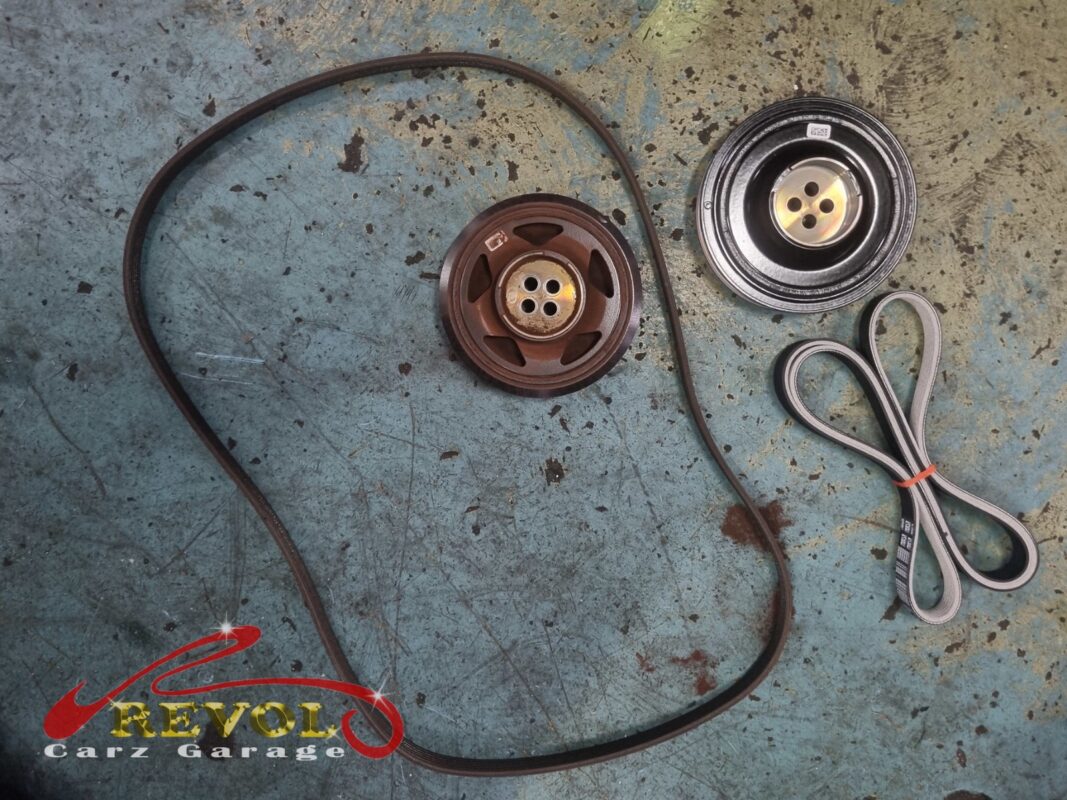
The outcome
The rattle was gone, the front of the engine quiet at idle and through the revs, and nothing slipping whatever was loading it.
The 216d went home with the front of the engine quiet again and the timing drive holding its geometry the way it should. For the owner that is a quiet engine and one less worry, and catching the rough pulley before it threw the belt off line meant a planned job rather than a breakdown.