
The brief
The 216d had grown sluggish off the line, the idle had turned uneven, fuel economy on the owner's regular runs had dropped, and a check engine light was on. He brought it in for a proper diagnosis rather than guessing.
On this diesel the intake manifold has a set of small flaps in it, swirl flaps, that the engine moves to shape the air going into the cylinders for clean, efficient combustion. They are driven by a little actuator on the side of the manifold. When the flap mechanism wears or snaps, the air no longer flows the way the engine expects: rough idle, weak pull, worse economy, and a fault light, all at once.
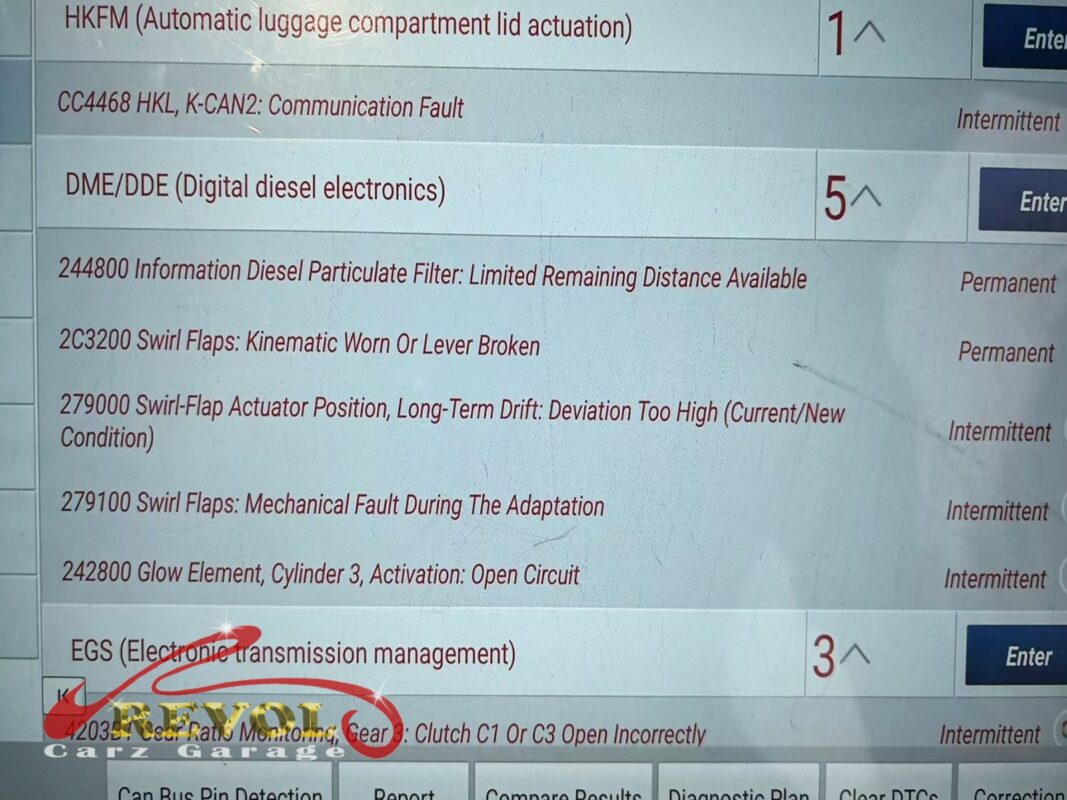
The diagnosis
The fault codes pointed straight at the swirl flap mechanism, a worn or broken lever and an actuator that could no longer hit its positions. Opening up the manifold confirmed it: the flap had broken inside, leaving a loose piece in the intake tract, which is a known failure on this engine.
Just replacing the actuator would have been chasing the wrong end of the problem, the actuator was fine, it was the broken flap and the debris it left behind. And you cannot reliably fish broken pieces out of a moulded manifold and trust nothing is left. The proper fix is a new manifold as a unit.
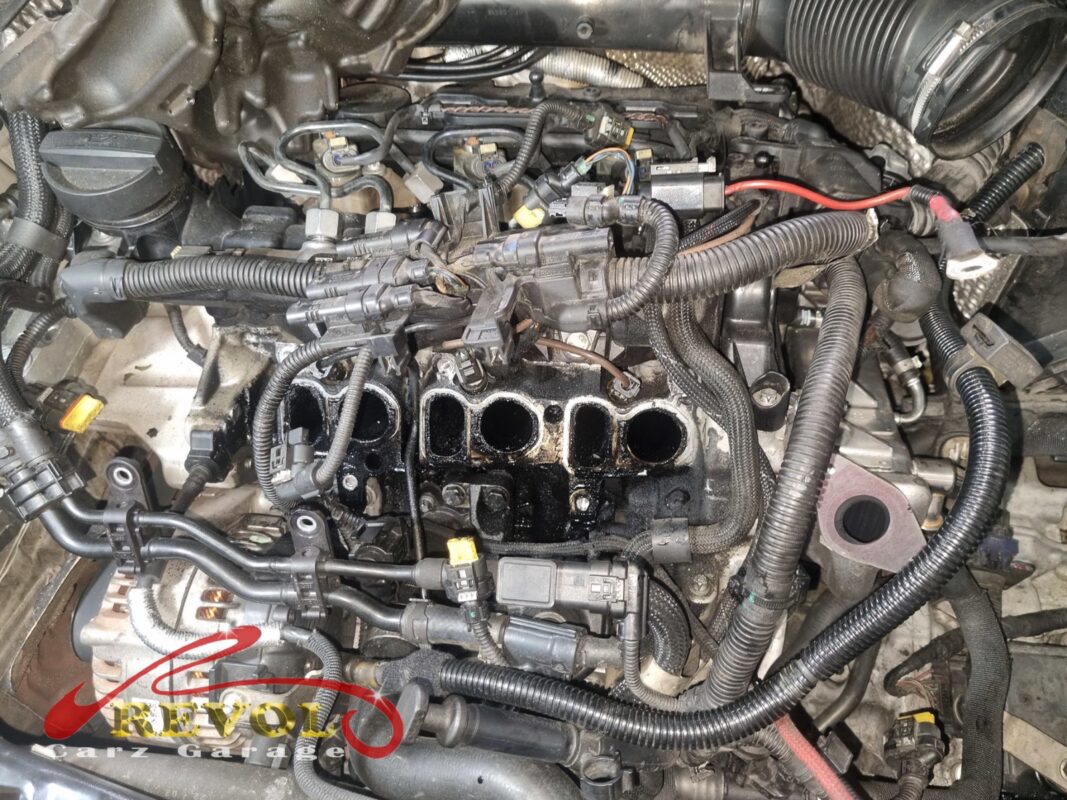
The work
The intake manifold came off, and the broken swirl flap pieces were recovered so nothing was left to get drawn into a cylinder. A new BMW-spec manifold went on with all its gaskets and the actuator, the harness reseated, and the stored fault codes cleared.
The engine was run and checked for a smooth idle and clean throttle response before the car went back to the owner.
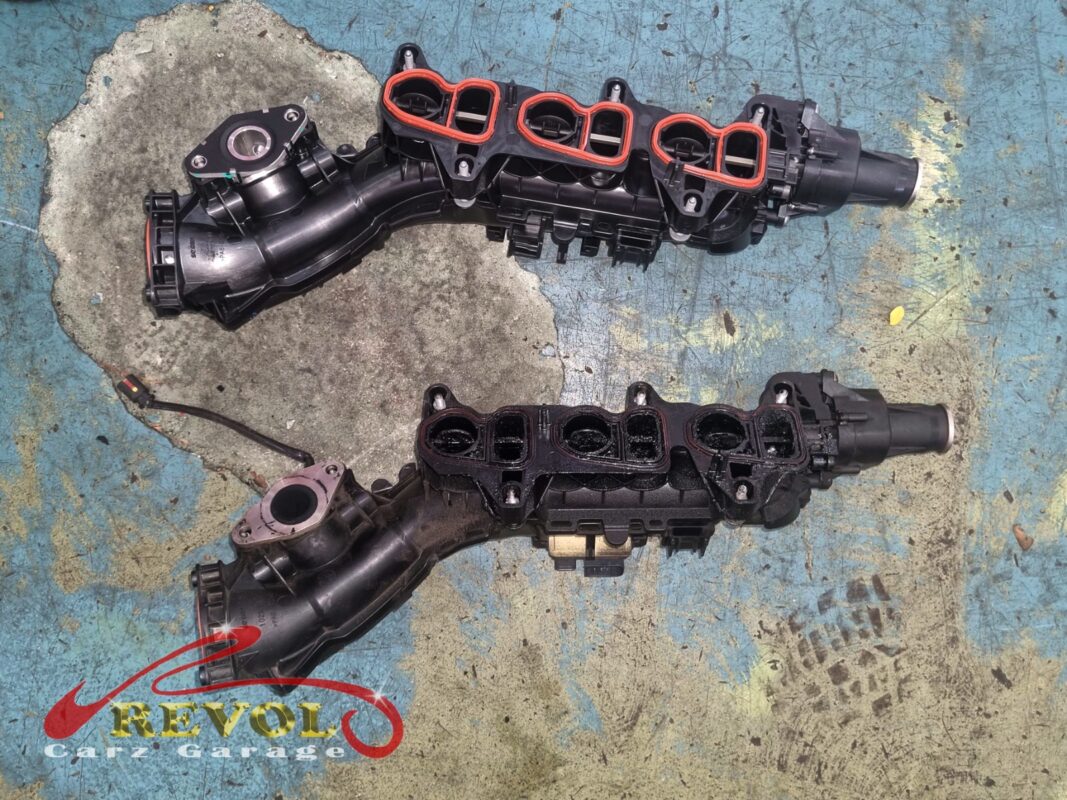
The outcome
The idle smoothed out, the throttle response came back, the check engine light stayed off after a drive cycle, and fuel economy returned to normal across the next tank.
The 216d went home running properly again. For the owner that is a car that pulls cleanly and idles smoothly instead of feeling flat and rough, and one that is not quietly burning extra fuel on every trip. And getting the broken flap pieces out, rather than leaving them rattling around the intake, removed the risk of one being swallowed into a cylinder, which is the kind of damage a manifold job is cheap insurance against.