
The brief
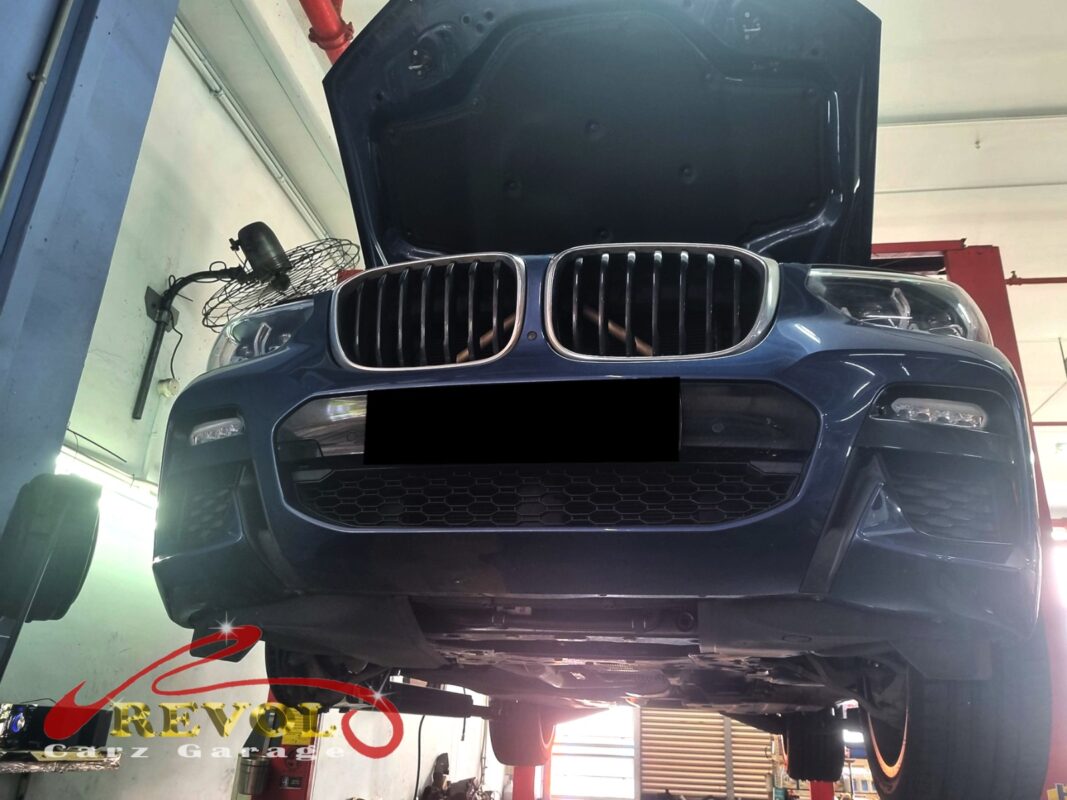
The X3 had been losing coolant slowly, a small puddle forming under the front of the car after parking, and the cabin would catch a faint sweet smell after a drive. The owner brought it in before the engine started overheating.
The radiator is where the coolant dumps its heat, hot coolant running through a fine core in the airflow and coming out cooler. The core is aluminium but its end tanks are plastic, and over years of pressure and heat cycles those tanks can crack along a moulding seam. The slow drop in level is the leak, the puddle is what reaches the floor, and the sweet smell is coolant vapour, the giveaway it is coolant and not something else.
The diagnosis
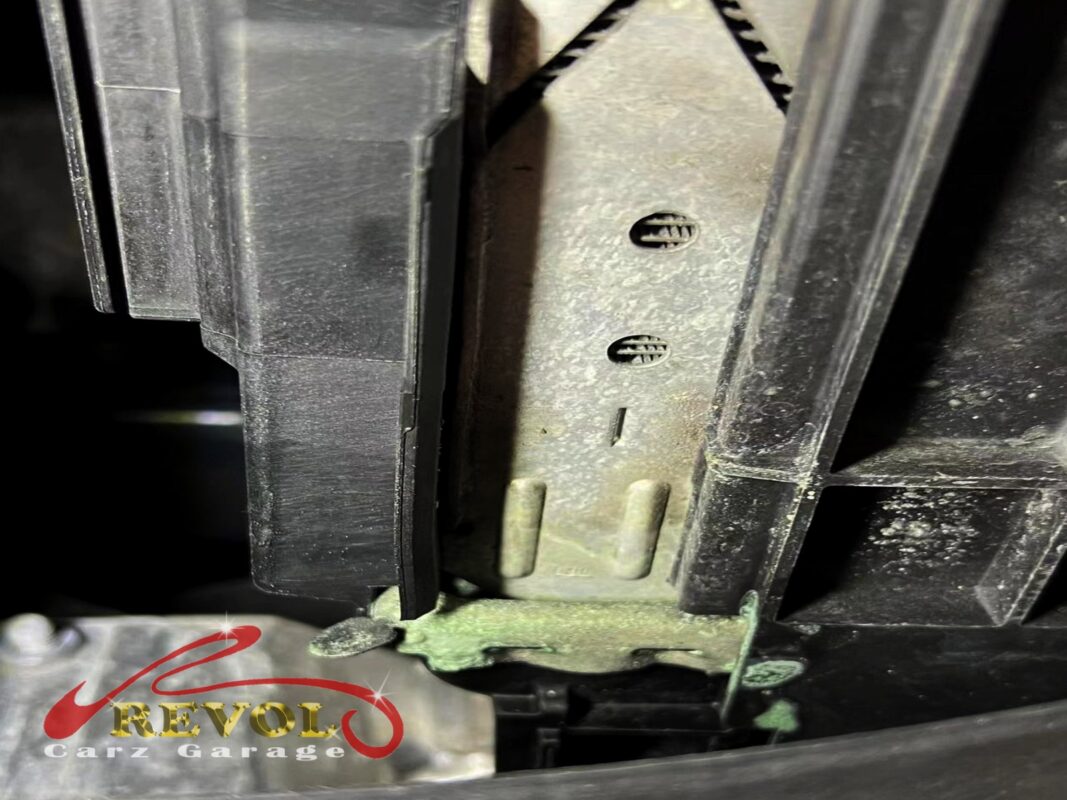
A pressure test on the cooling system traced the leak directly to the radiator, a hairline crack along one of the plastic end-tank seams, marked out by the green crust the coolant had left as it dried. The hoses, the water pump and the expansion tank all checked out clean.
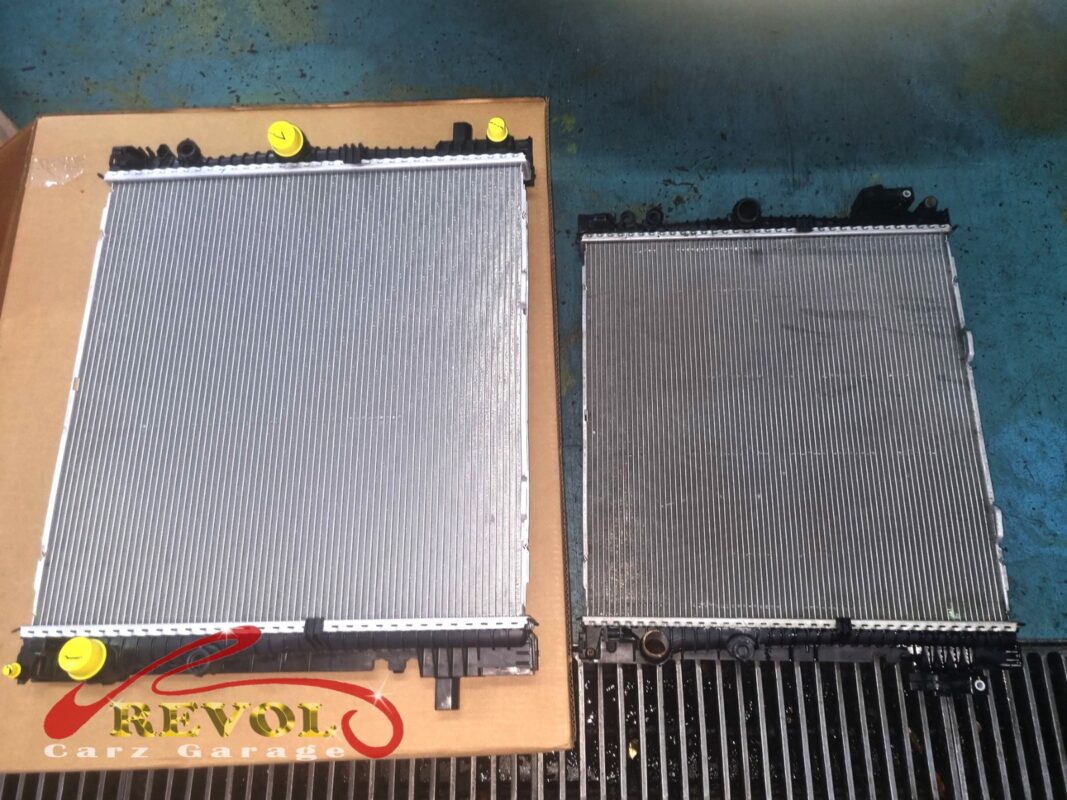
There is no patching a cracked end tank in any way that lasts. The right fix was a new radiator, which also gives the cooling system a fresh, full-capacity core rather than one that has been quietly losing coolant.
The work
The cooling system was drained, the radiator hoses disconnected, and the failed radiator lifted out of its mounts. A new BMW-spec radiator went in, all the hoses reseated with fresh clamps.
Then the system was refilled with the correct coolant and bled of trapped air, and pressure was held on it to confirm the new radiator and every connection were sealed before the car was road-tested.
The outcome
No drips, the coolant level holding steady, and the temperature gauge stable.
The X3 went home with the cooling system back to spec. For the owner that is the end of the puddle and the sweet smell, and replacing the radiator before it failed outright meant no overheating event, which is the difference between a planned cooling-system job and a much bigger engine repair.