The brief
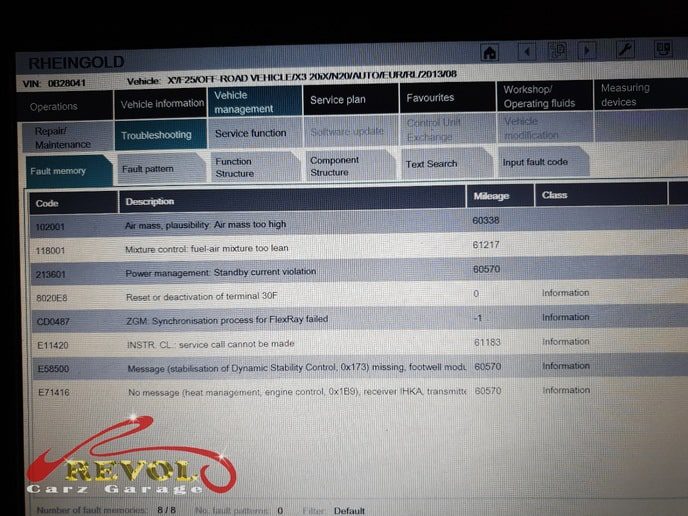
Mr Dennis brought his X3 in for a service and mentioned it would lose power on and off. So two jobs in one visit: the service, and tracking down where the power went, which the scan helped with. The air mass sensor measures the air going into the engine, and the engine management trims the fuel to match it. When that sensor drifts or fails, the readings go off, so the fuelling is wrong and the engine goes flat at times. The scan also threw up a fault code for the footwell module, the FRM, which in many cases means the FRM has failed. But a fault code isn't proof a part is bad, it can be set by something else, so the right move is to test the module before condemning it, not just swap it because a code mentions it.
The diagnosis
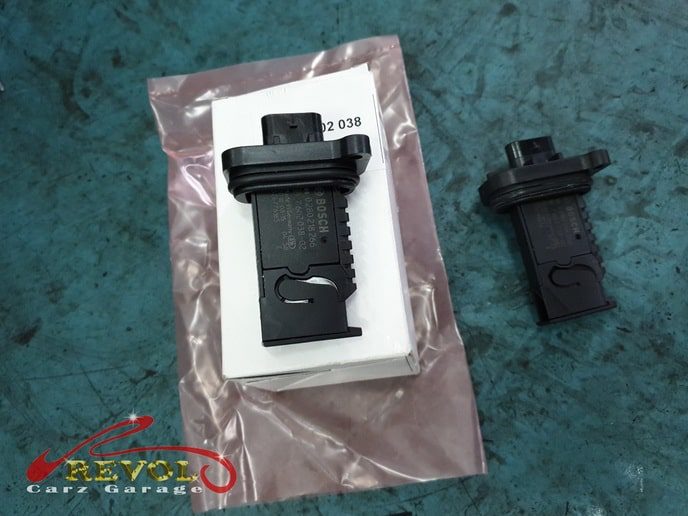
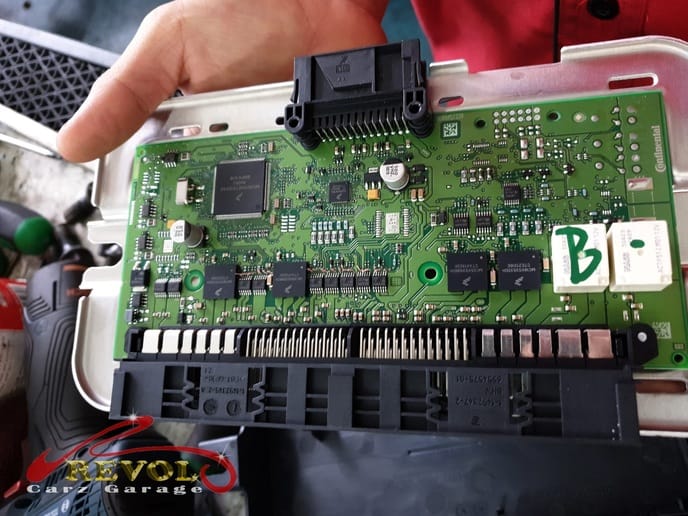
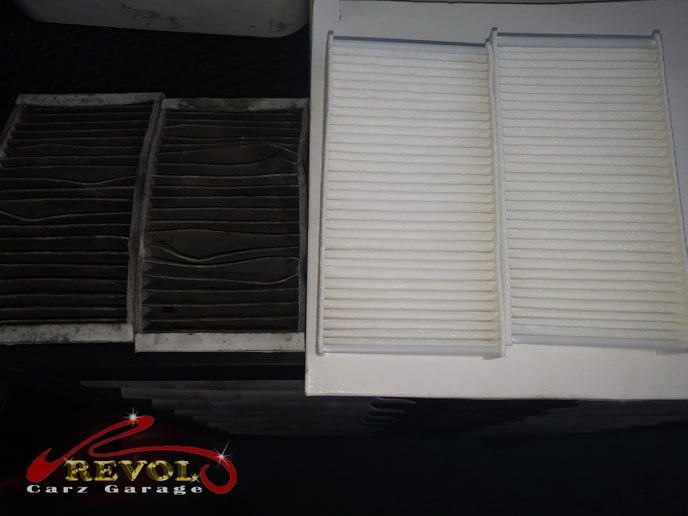
The scan showed the air mass sensor reading wrong, which is the intermittent power loss, and a stored FRM fault code. We replaced the air mass sensor, the confirmed fault, and rather than assume the FRM was dead, we opened it up and tested it, found no abnormality, cleared the code and put it back. The cabin air filter was also badly due. The rest of the car was sound. So it was an air mass sensor replacement plus testing and clearing the FRM rather than replacing it, and a new cabin filter, with the service items alongside.
The work
The old air mass sensor was removed and a new genuine BMW-spec sensor fitted, the intake checked for leaks while it was apart. The FRM module was opened up and tested, found to be working with no abnormality, so the fault code was cleared and the module refitted, no replacement needed. The badly due cabin air filter was replaced, the service items, oil, filters, fluids, done alongside, and the fuel adaptations reset. A road test confirmed the power back with no flat spot, a steady idle, no warning lights, and the service done.
The outcome
Full power back, no flat spot, no warning lights, a fresh cabin filter, the service done, and a perfectly good FRM module left where it was rather than needlessly replaced. Mr Dennis got the X3 back pulling properly. Replacing the air mass sensor that had actually failed and testing the FRM before condemning it meant the right parts got changed and the wrong ones didn't, which is the difference between a fixed problem and an inflated bill.