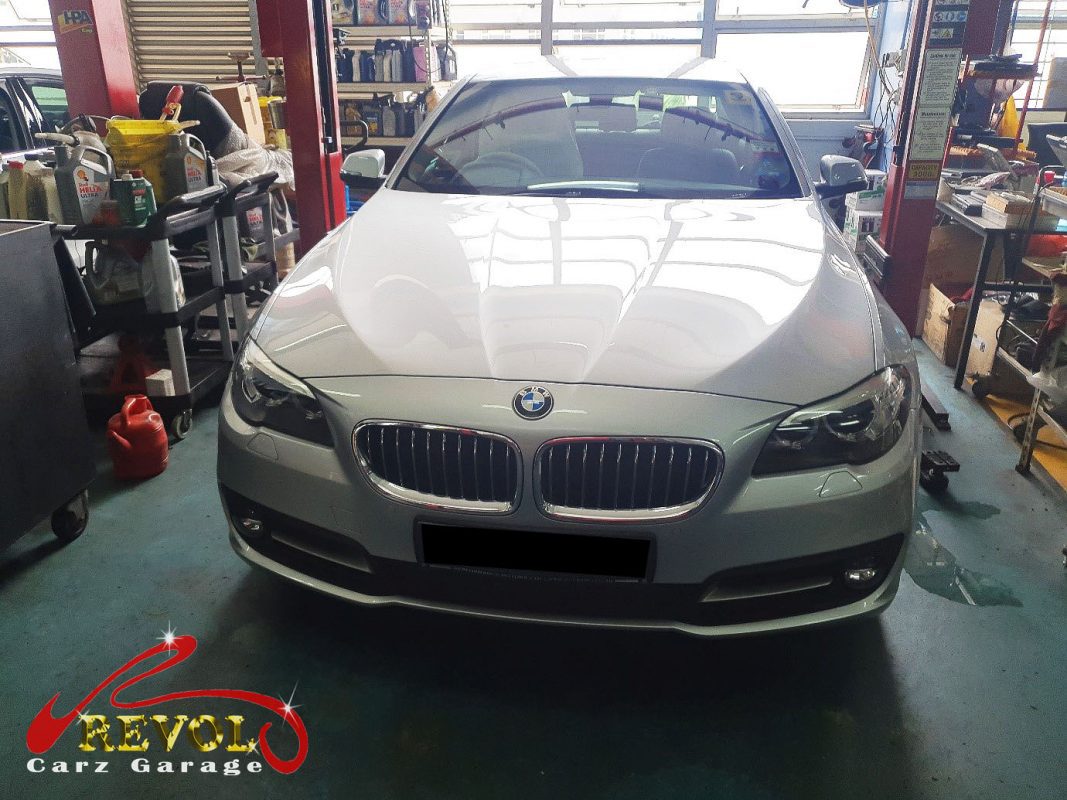
The brief
The 520i needed oil topped up between services, with a film building up under the engine. No, that's not normal, and he was right to bring it in, an oil leak only spreads, the loss adds up, and an engine running low risks low oil pressure and damage. The trail pointed at the oil sump, the pan bolted to the bottom of the engine that holds the oil. It seals to the block with a gasket or sealant bead, and over the years the heat cycles harden it until it shrinks and cracks and the seal lets go, so oil weeps out the join, runs down the pan, and drips. A weeping sump doesn't reseal itself, and the leak only gets worse, so the pan has to come off and go back on with a fresh seal.
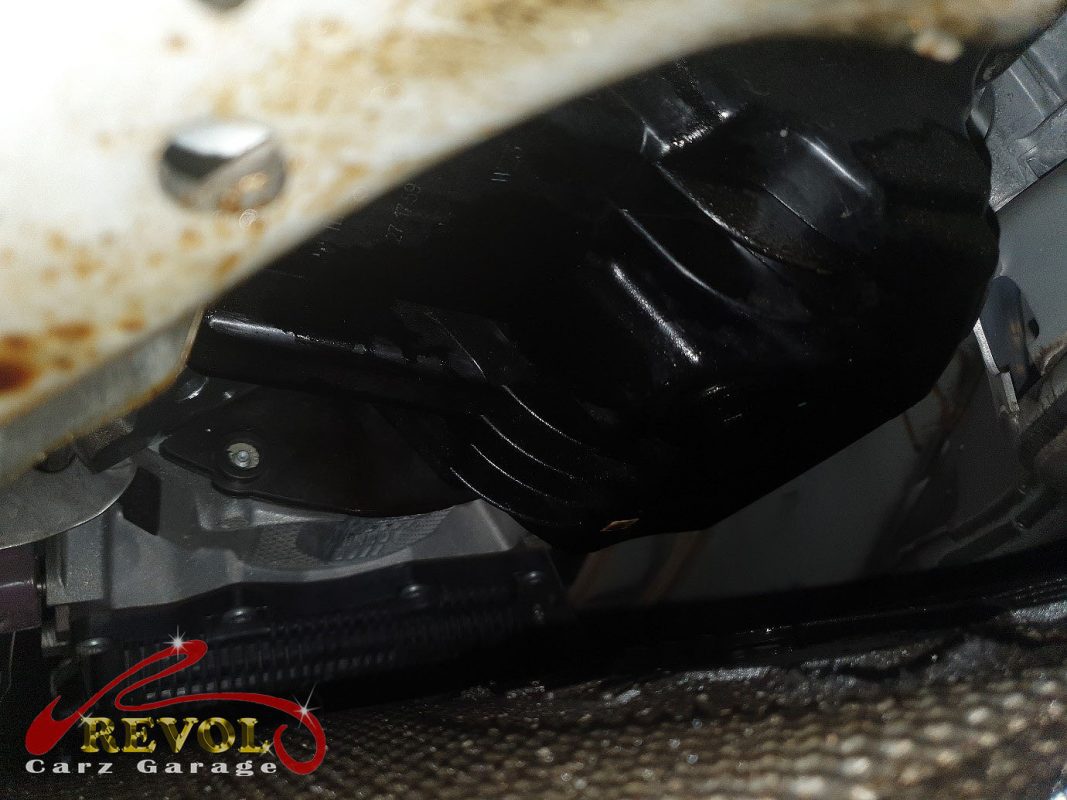
The diagnosis
With the engine cleaned off and run, the leak traced to the sump gasket, oil weeping from the seam between the pan and the block, not from the drain plug or anywhere higher up. The rest of the engine's seals checked out dry, so it was the sump gasket. That's a reseal: drop the sump, clean both mating faces back to bare metal, and seal it up properly the way the engine calls for, with a fresh gasket or sealant bead to spec.
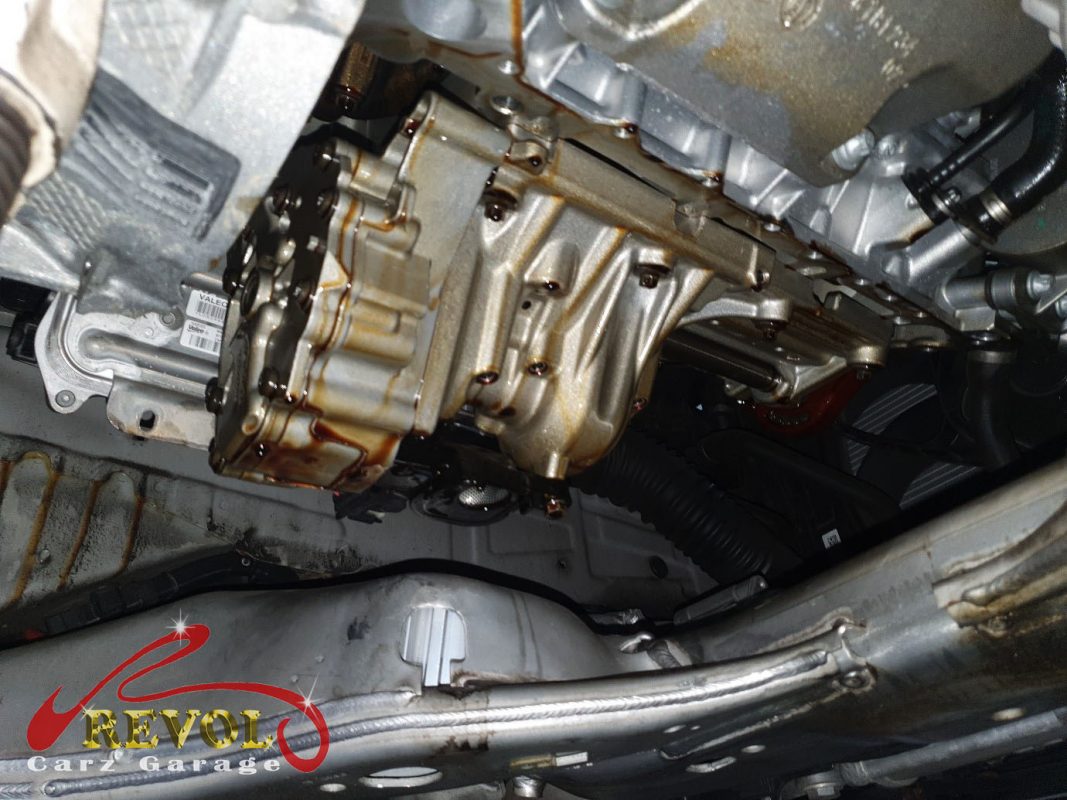
The work
The undertray came off, the oil was drained, and the sump pan unbolted and removed. Both mating faces, on the pan and on the block, were cleaned right back so the new seal had a clean surface to bite on, the oil pickup checked clear, and the sump refitted with a fresh seal to the manufacturer's spec, every bolt torqued in sequence. Fresh oil to level, and the engine run and checked warm for any weep. A road test confirmed the sump was dry and the level held.
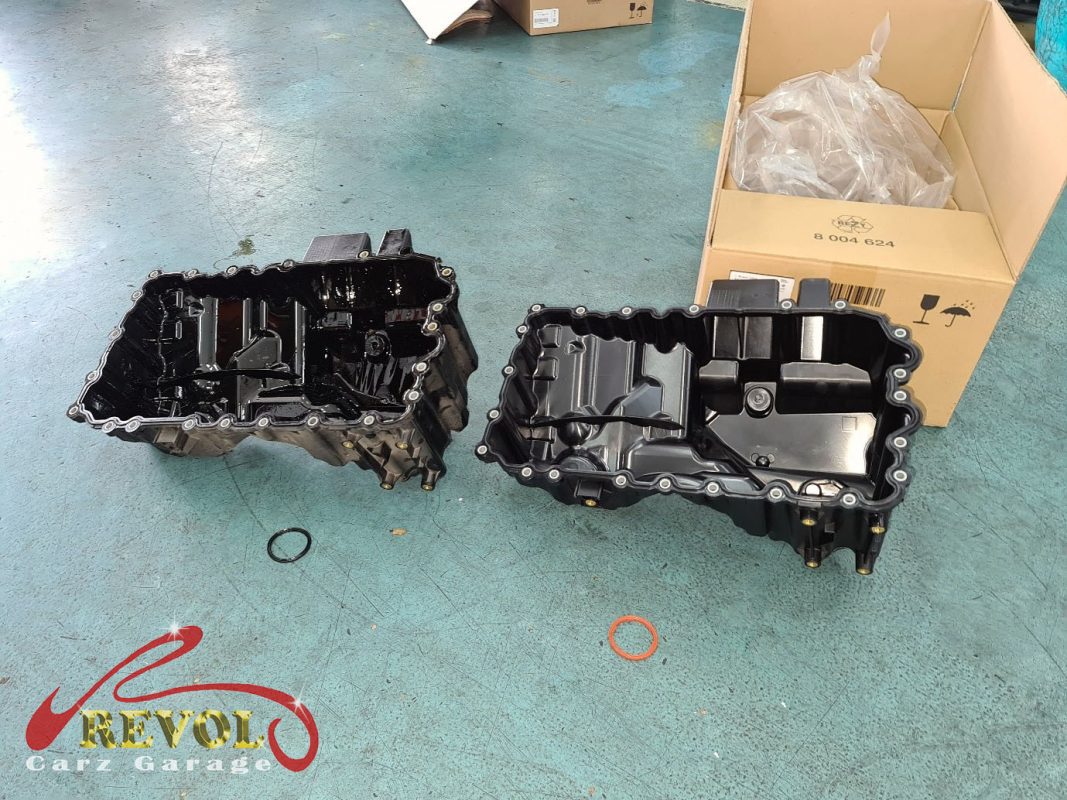
The outcome
No more oil under the engine, the sump sealed and dry, and the oil level holding between checks. The 520i went home with the leak sorted at its source. A weeping sump gasket only worsens and quietly drinks oil, so pulling the pan and resealing it properly stopped the leak and kept the engine where it should be on oil.