The brief
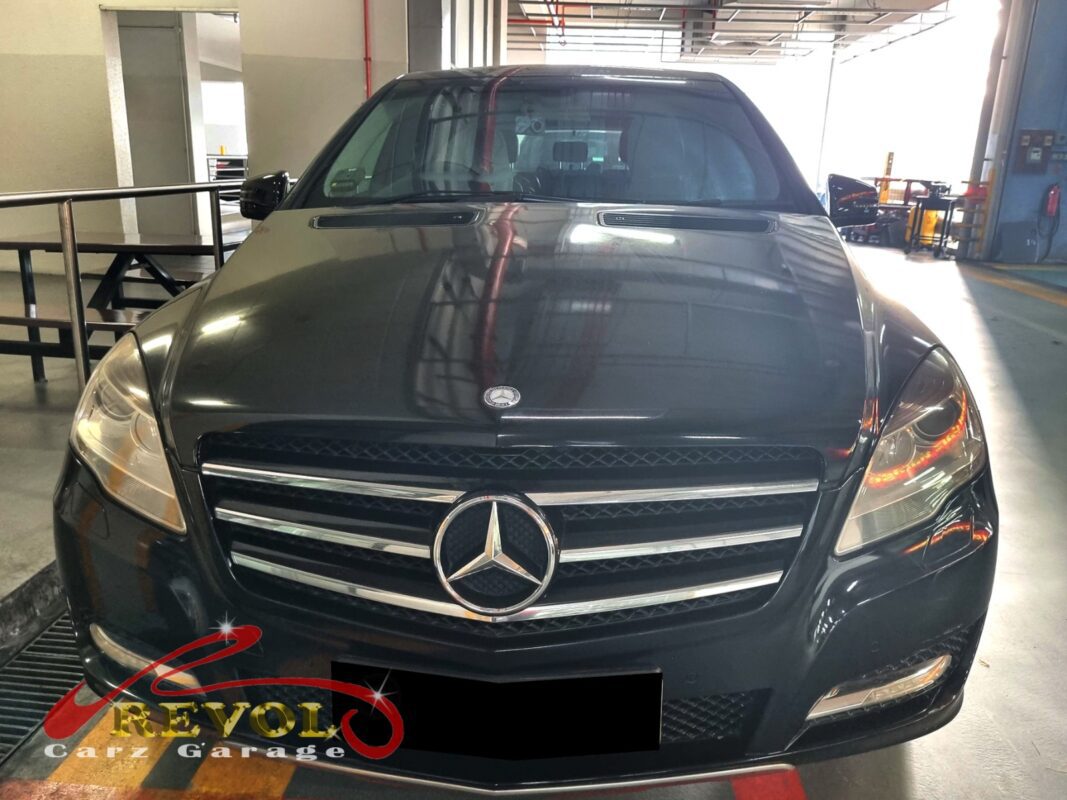
The R300L had coolant puddles under it, wet spots visible on the radiator, and the coolant level dropping between checks. He brought it in before it overheated. Wet spots on the radiator and puddles underneath point straight at the radiator itself. The radiator's job is to shed the heat the coolant has picked up from the engine, and on these the end-tanks are plastic, which ages and cracks along the seams over time, letting coolant weep out. Lose enough and the level drops and the engine can't keep its temperature, which on this big a car means an overheat, and a hot engine can warp a head. A cracked radiator only cracks further, so it isn't something to keep topping up.
The diagnosis
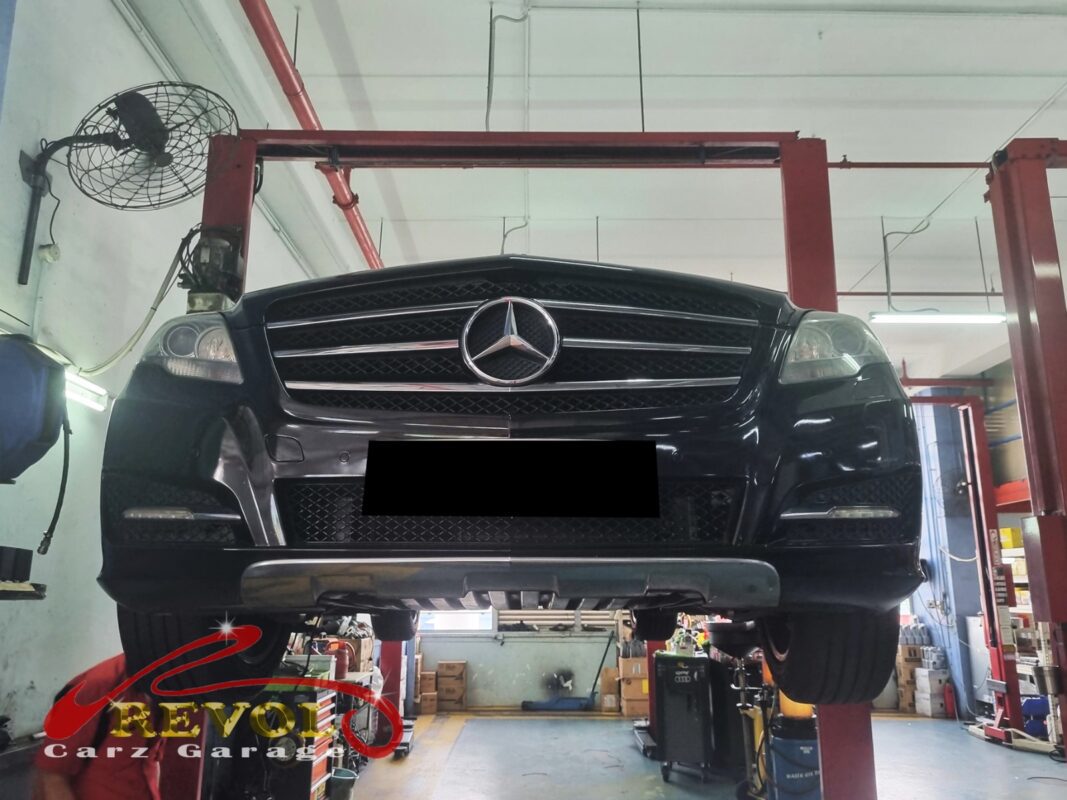
A pressure check confirmed coolant weeping from the radiator, a crack along an end-tank seam, with the hoses, the water pump and the thermostat all checking out clean. That's a radiator replacement, not a hose job or a re-seal. You don't patch a cracked plastic tank, so the radiator was getting changed.
The work
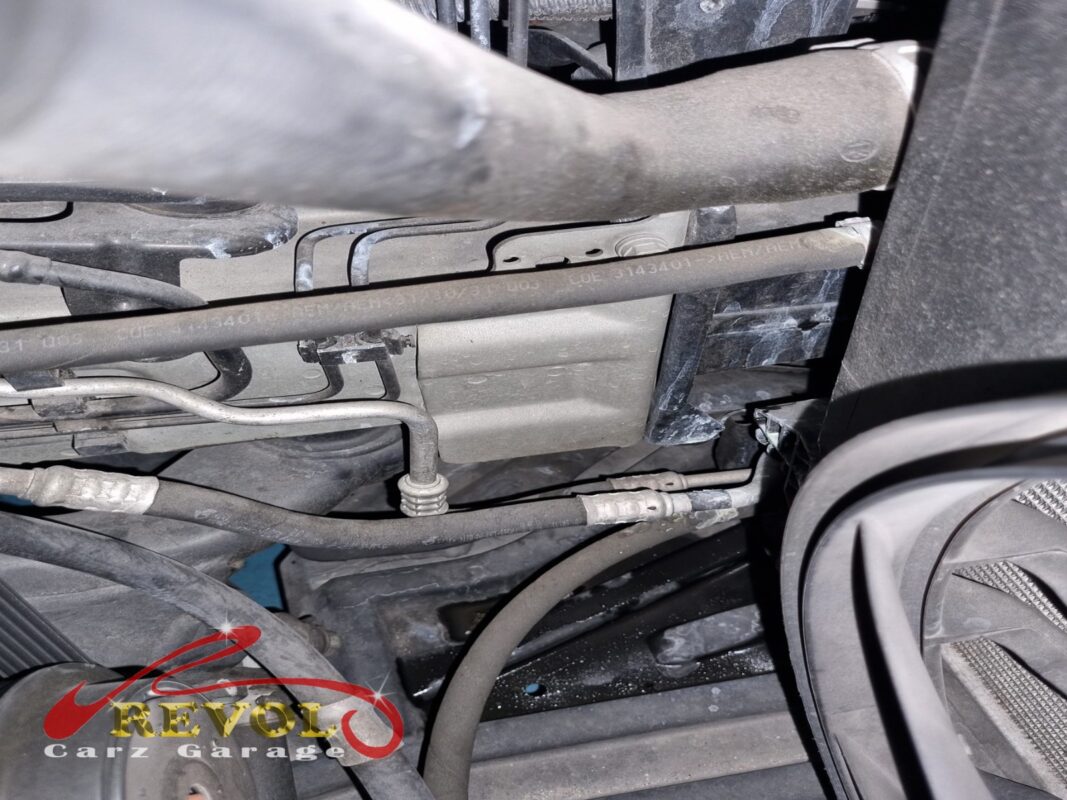
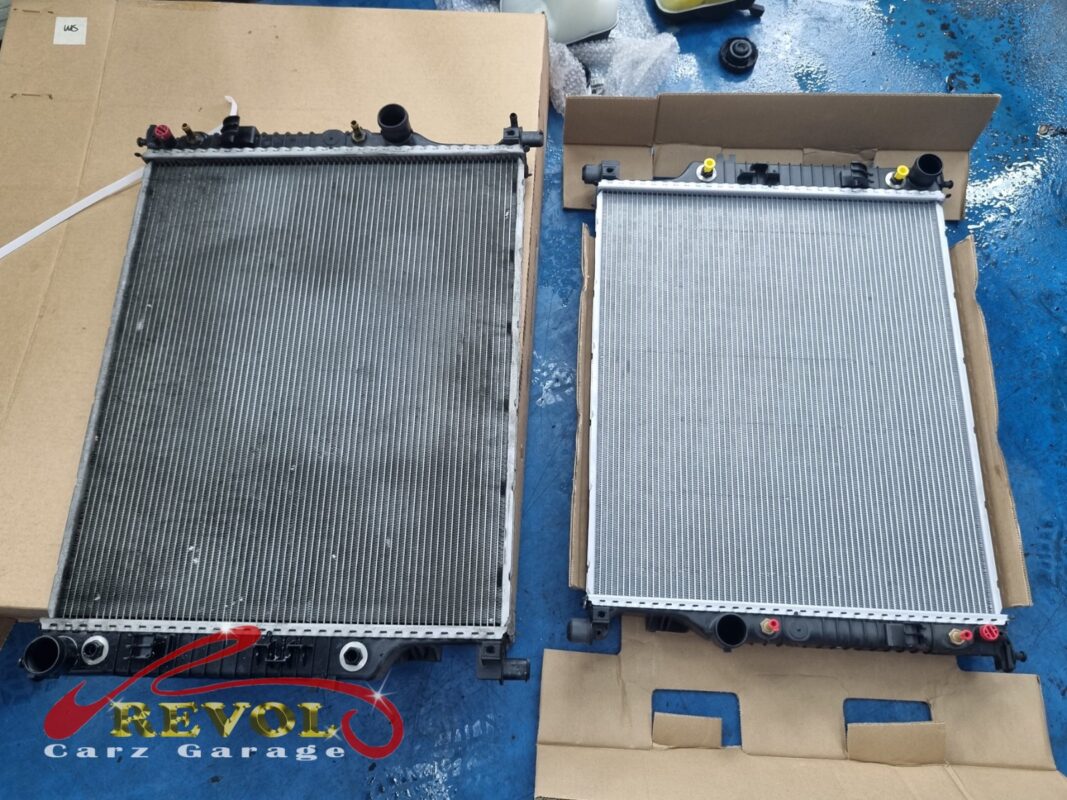
The cooling system was drained, the front end stripped back enough to reach the radiator, and the failed unit removed. A new genuine Mercedes-spec radiator went in, the hoses reseated with fresh clamps, and the system refilled with the correct coolant, the air bled out the proper way, and held under pressure to confirm the seals were dry. A road test confirmed the level held, the gauge sat steady, and there was nothing dripping.
The outcome
No drips, no wet spots on the radiator, the level holding, and the gauge steady. The R300L went home with the cooling system back to spec. A cracked radiator only gets worse, and the failure at the end is an overheat that can cost a head gasket, so changing it on the first signs kept it to a planned job.