
The brief
The GLA180 had been showing signs of overheating, the temperature climbing higher than it should, with coolant traces near the thermostat housing and a warning light on the dash. The owner stopped driving it and brought it in, which is the right move, an engine showing overheating shouldn't be run on. The thermostat is the valve that decides when coolant flows to the radiator. It stays shut while the engine warms up, then opens to let the radiator do its job. When it sticks part-closed, the engine can't shed heat fast enough, so it overheats, and on these the thermostat sits in a plastic housing that ages and weeps coolant from its seams, which is the wet traces. Run an engine hot for long and you risk a warped head or a blown gasket.
The diagnosis
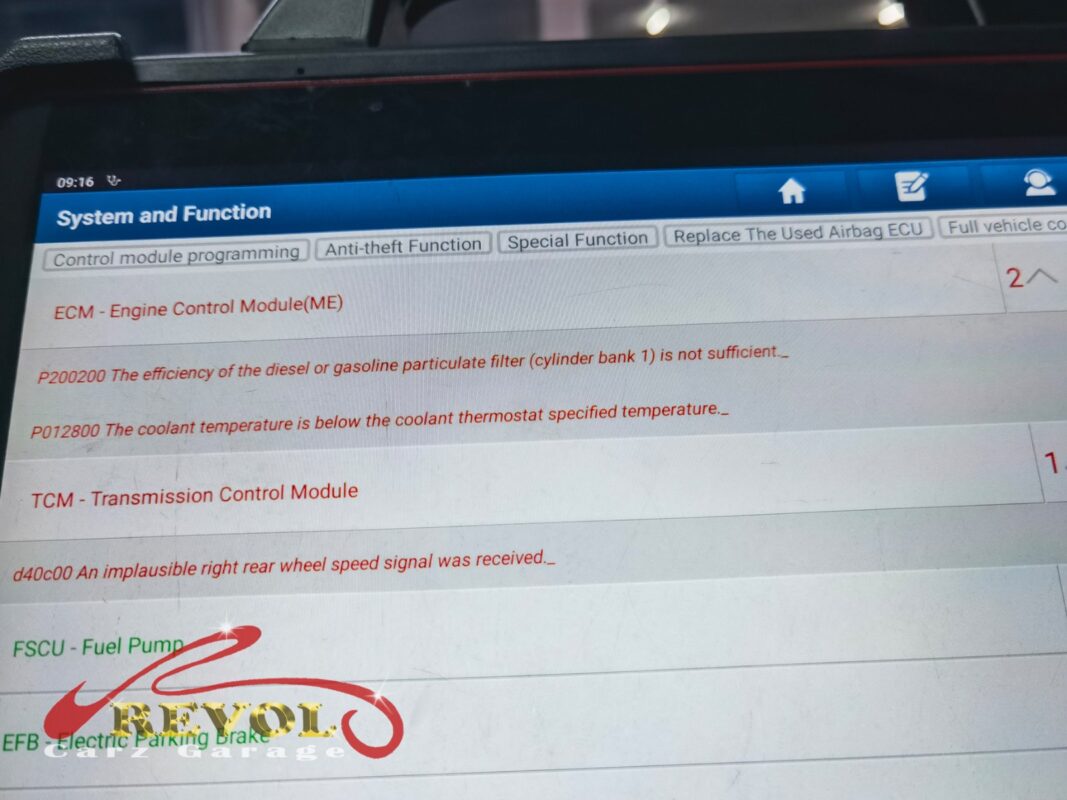
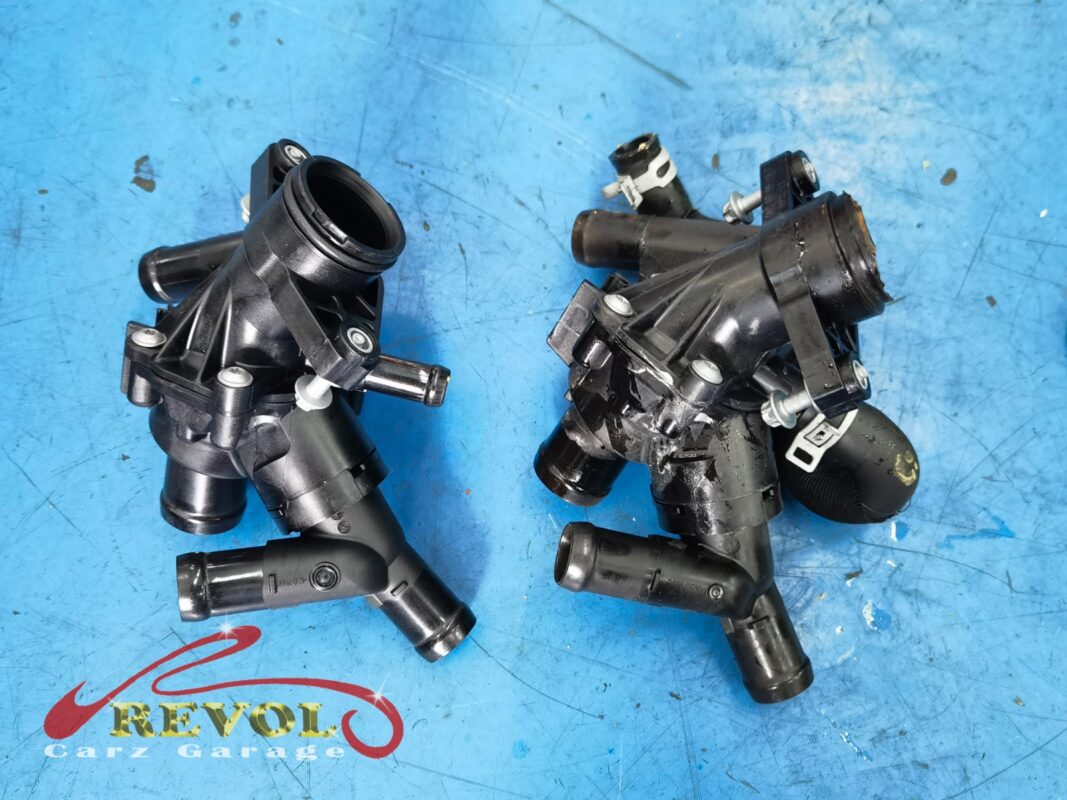
A pressure check confirmed coolant weeping externally at the thermostat housing, and a check of the thermostat itself showed it wasn't opening cleanly at its rated temperature. So it was failing two ways at once, leaking outside and not regulating inside. That made replacement the obvious call. On this engine the thermostat comes as one piece with its plastic housing, so the whole unit gets changed with a fresh seal.
The work
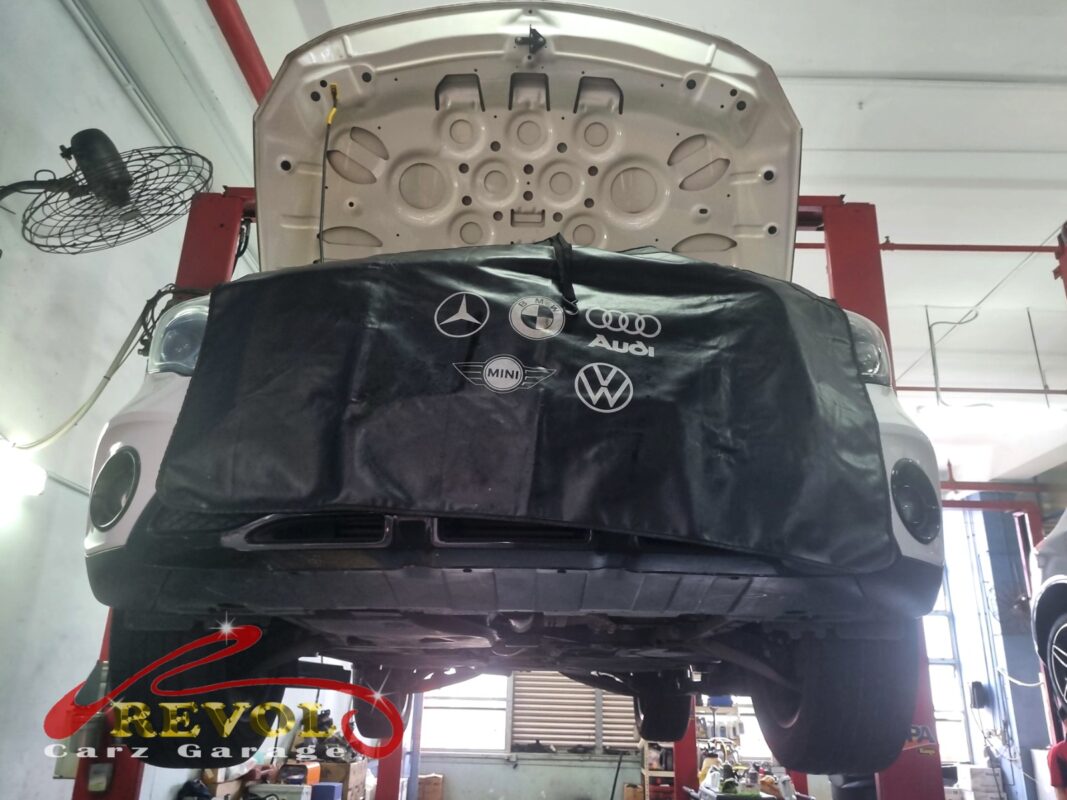
Enough coolant was drained to drop the thermostat housing, the old unit removed, and a new genuine Mercedes-spec thermostat housing fitted with a fresh seal. The system was refilled with the correct coolant, the air bled out the proper way so no pockets were left, and held under pressure to confirm the seals were dry. A road test confirmed the gauge sat steady and the engine warmed up on time.
The outcome
Gauge steady, no coolant traces under the bonnet, and the engine holding its temperature whether crawling or cruising. The GLA180 went home regulating properly again. A sticking thermostat and a weeping housing only get worse, and the failure at the end is an overheat that can cost a head gasket, so changing the unit kept it to a tidy, planned job.