The brief
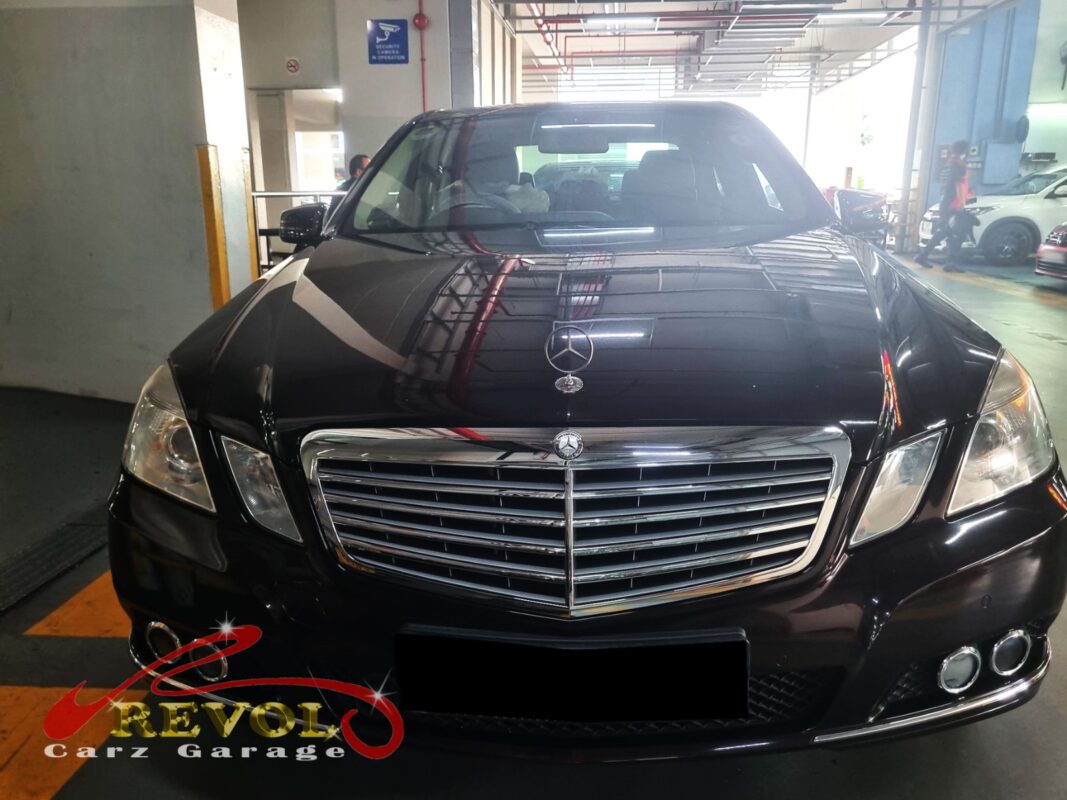
The E200 had a strong fuel smell inside the cabin, the morning crank had got noticeably longer, and a couple of times the engine had stalled shortly after starting. He brought it in straight away, a fuel smell in the cabin isn't something to drive on. Those symptoms point at the fuel delivery side, the pump and the filter. The fuel pump sits inside the tank and pushes petrol up to the engine at a set pressure, through the filter that keeps grit out of the injectors. When the pump weakens it can't build pressure quickly on a cold start, which is the long crank, and it can't hold pressure steady, which is the stalling. The pump module is sealed into the top of the tank, and a tired seal there lets fuel vapour escape, which is the smell. A pump giving you all of that, with a filter that's done its miles, is a job for both parts.
The diagnosis
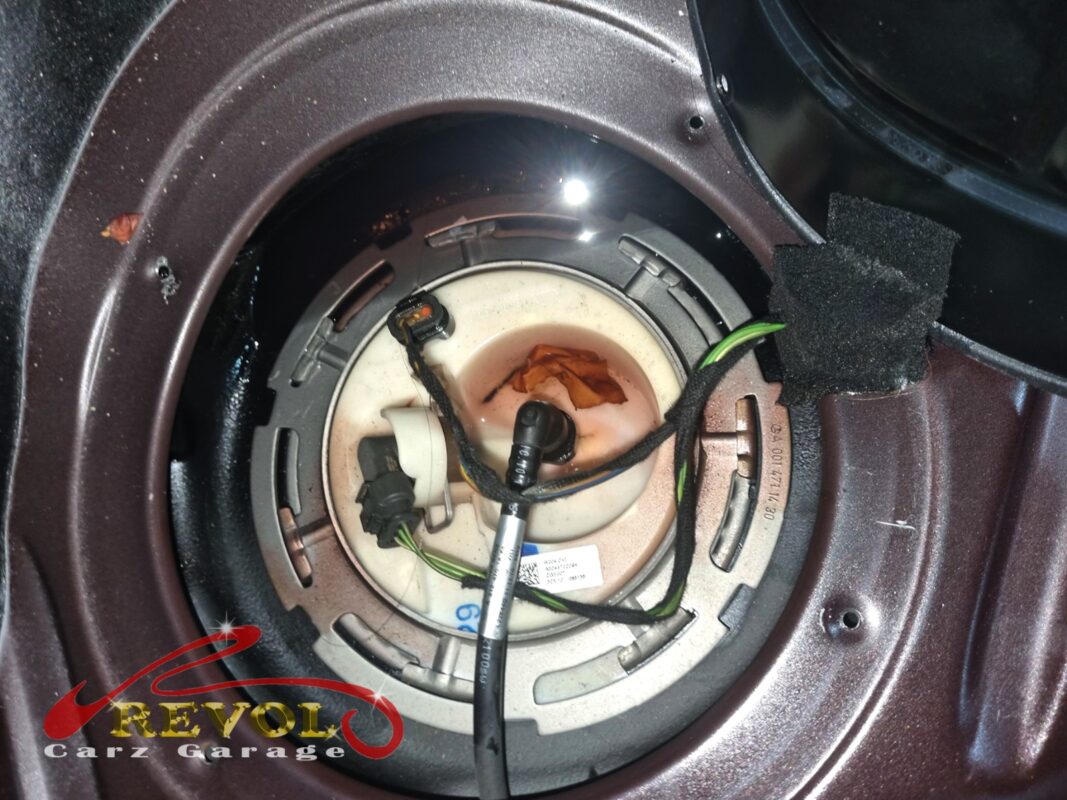
A pressure test confirmed the in-tank pump wasn't holding rated pressure under load, and the pump module had a seep at its top seal, which was where the cabin smell was coming from. The filter was overdue and getting restrictive, so it was going at the same time. That's a replacement, pump and filter together. A weak fuel pump only gets weaker, and the next step is the no-start on the driveway, so it was getting changed now.
The work
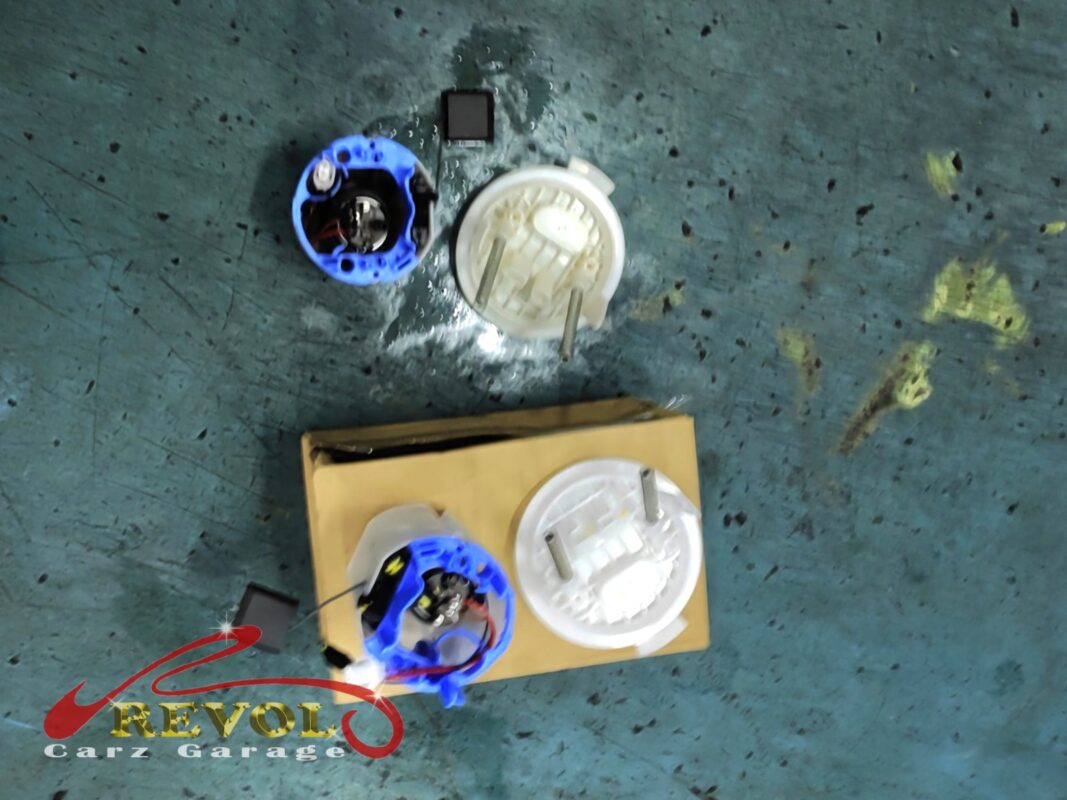
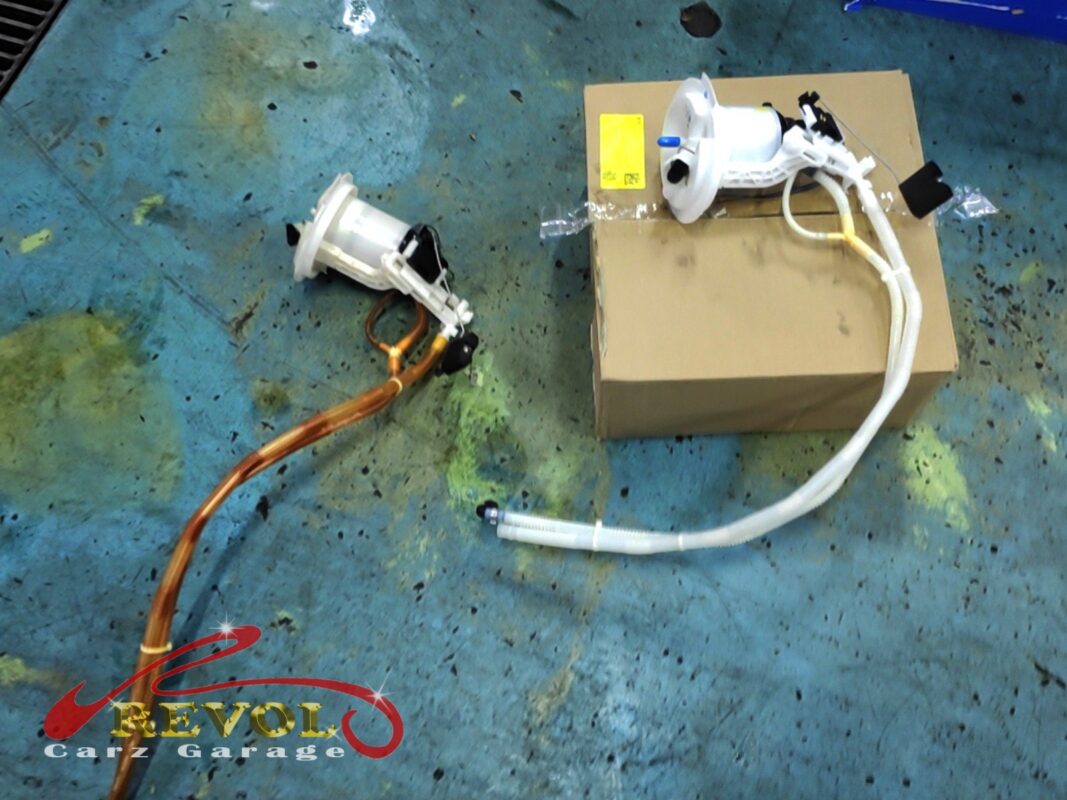
System pressure was released, the access hatch over the tank reached, and the failed pump module drawn out. A new genuine Mercedes-spec pump assembly went in with a fresh seal ring, a new fuel filter fitted, and the module locked down so the top sealed clean. Then the system was primed, the engine started, and the fuel pressure read on the gauge across idle and load to confirm it was holding spec, before the trim went back. A road test confirmed it started cleanly, idled steady, and pulled away with no smell in the cabin.
The outcome
No fuel smell, a normal half-second crank in the morning, no stalling, and full power under acceleration. The E200 went home running cleanly and safely. A failing fuel pump gets steadily worse and then strands you with no warning, and a fuel smell in the cabin is never something to ignore, so acting on it meant a planned fix in the workshop rather than a tow.