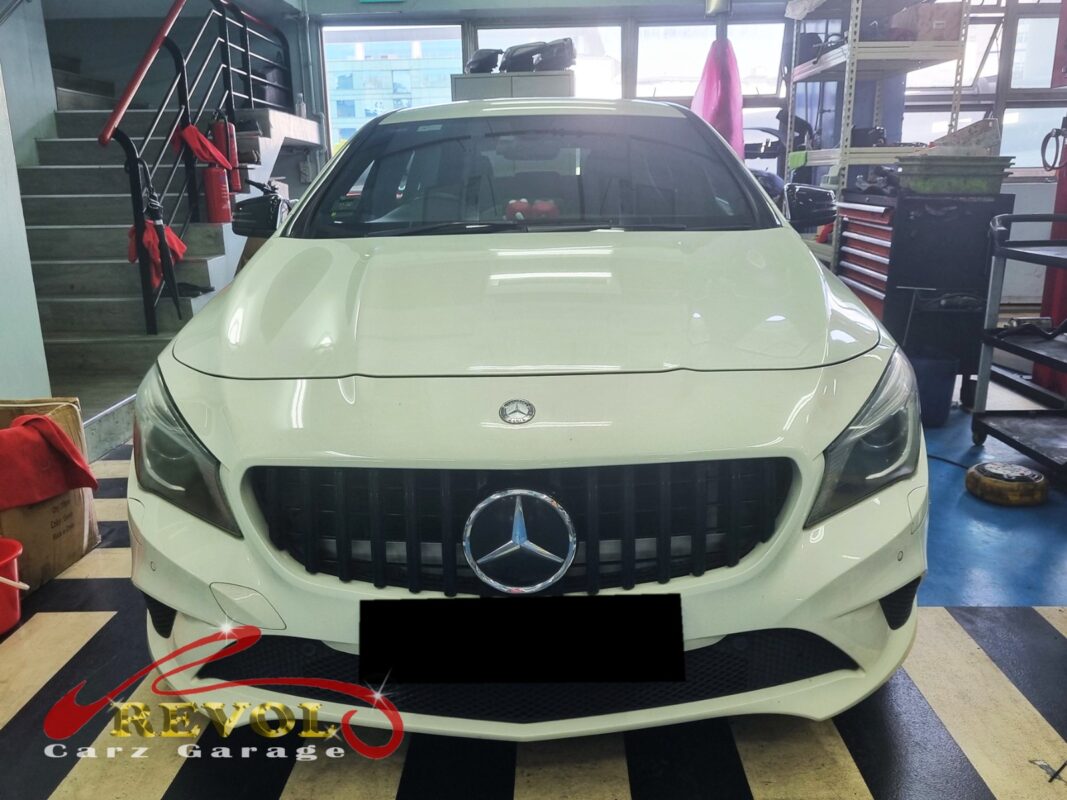
The brief
The CLA180's brake pedal had gone softer than usual and would sink under steady foot pressure, the braking response had weakened, and a wheel inspection found a wet patch where one of the brake lines runs. That pattern is unambiguous: a hydraulic leak in the brake system.
The brakes work by pushing fluid through sealed lines to the callipers. A line that has corroded or perished and is now seeping loses some of that pressure, which is the soft pedal that sinks, and the fluid escaping is the wet patch. A brake leak is not something to drive on, it only gets worse, and the pedal you are relying on is the one losing pressure.
The diagnosis
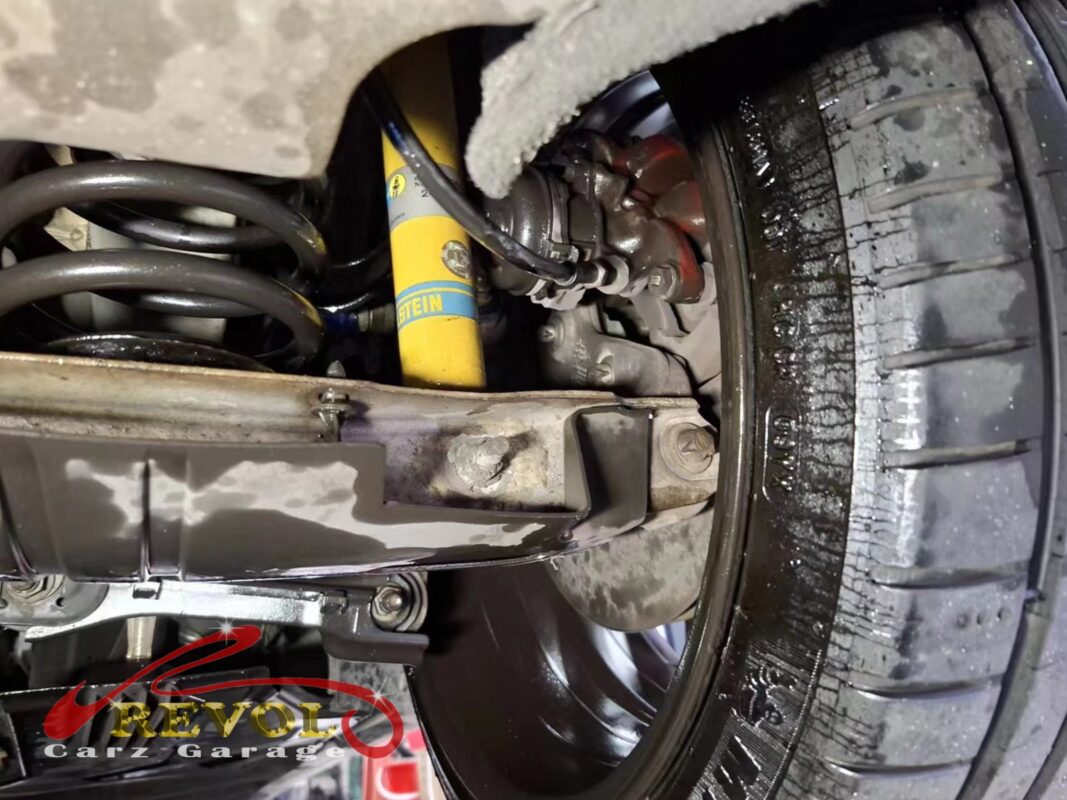
With the wheel off, the brake line on that side was found cracked and seeping fluid through. Working the pedal hard pushed fluid out at the failure point. The rest of the system held.
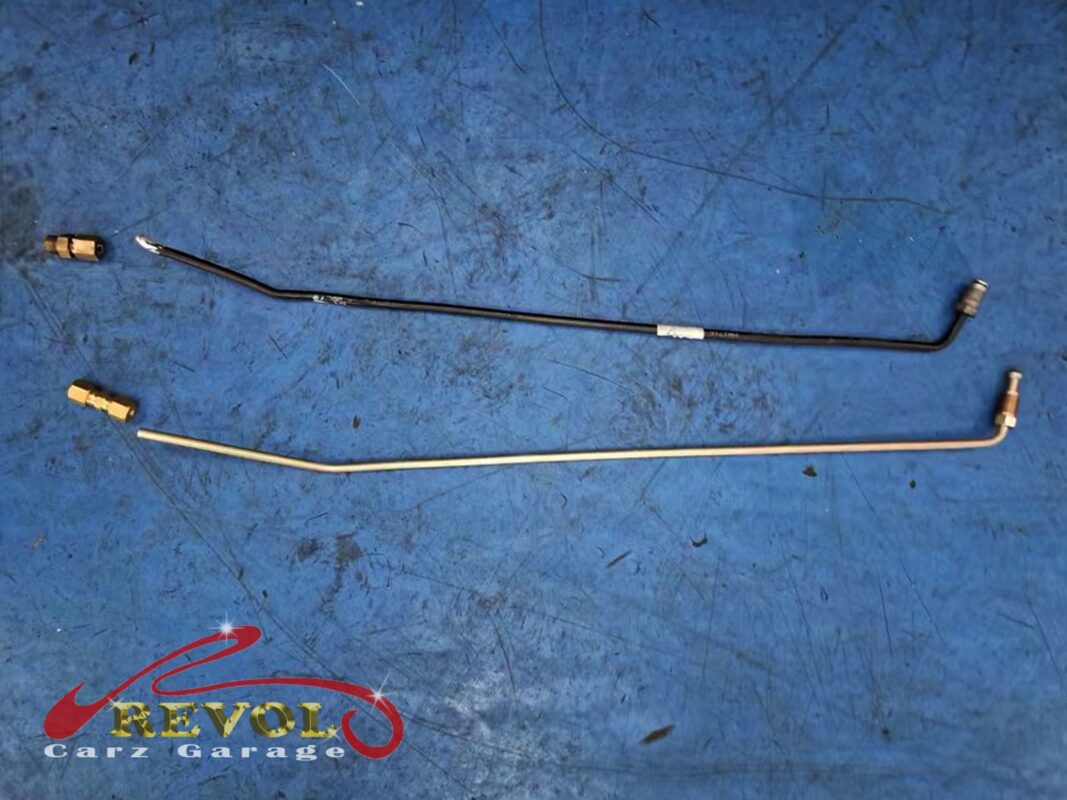
There is no patching a brake line, it carries pressure you cannot afford to lose. The fix is a new line and a full bleed of the brake system afterwards to get every trace of air out, because air in the lines gives you the same soft, sinking pedal a leak does.
The work
The front was lifted, the wheel removed, and the failed brake line opened at both ends and replaced with a new Mercedes-spec line, the fittings torqued to spec. The brake system was then bled to clear all the air, the reservoir topped to the max mark, and a firm pedal confirmed before a road test.
The road test checked the pedal stayed firm and the brakes pulled the car up straight before it went back to the owner.
The outcome
Pedal firm with no sink under steady pressure, the braking response sharp again, and no leak at the new line.
The CLA180 went home with the brakes solid. For the owner that is the most basic kind of confidence restored, a pedal that does what it is asked, and dealing with the leak as a planned repair rather than waiting for the pedal to go to the floor at the wrong moment.