The brief
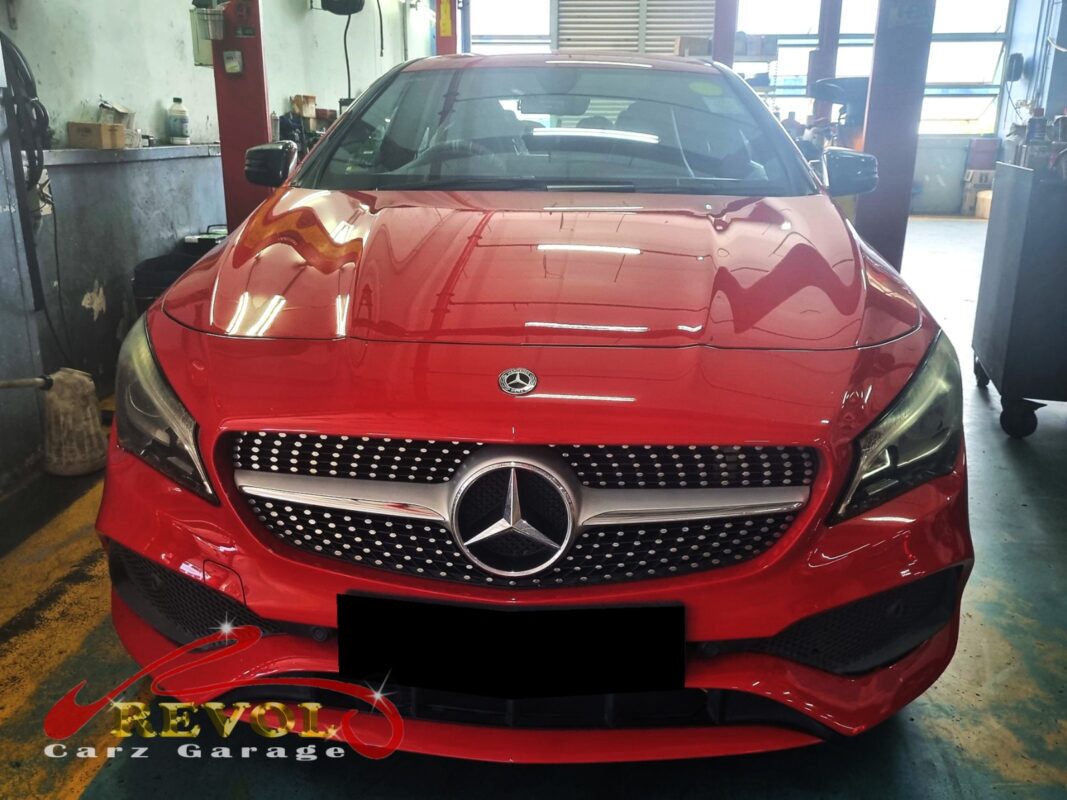
The CLA180 had crossed 60,000 km, the point Mercedes' schedule calls for a transmission service, and the owner had noticed the shifts feeling slightly rougher than when the car was new. The classic point at which a full ATF change earns its money.
Automatic transmission fluid does two jobs at once: it carries the hydraulic pressure that actually changes the gears, and it lubricates and cools the gearbox doing it. Over tens of thousands of kilometres it darkens, picks up fine wear material, and loses some of its sharpness, and the shifts start to feel a little less crisp. There was nothing wrong, just maintenance due on schedule.
The diagnosis
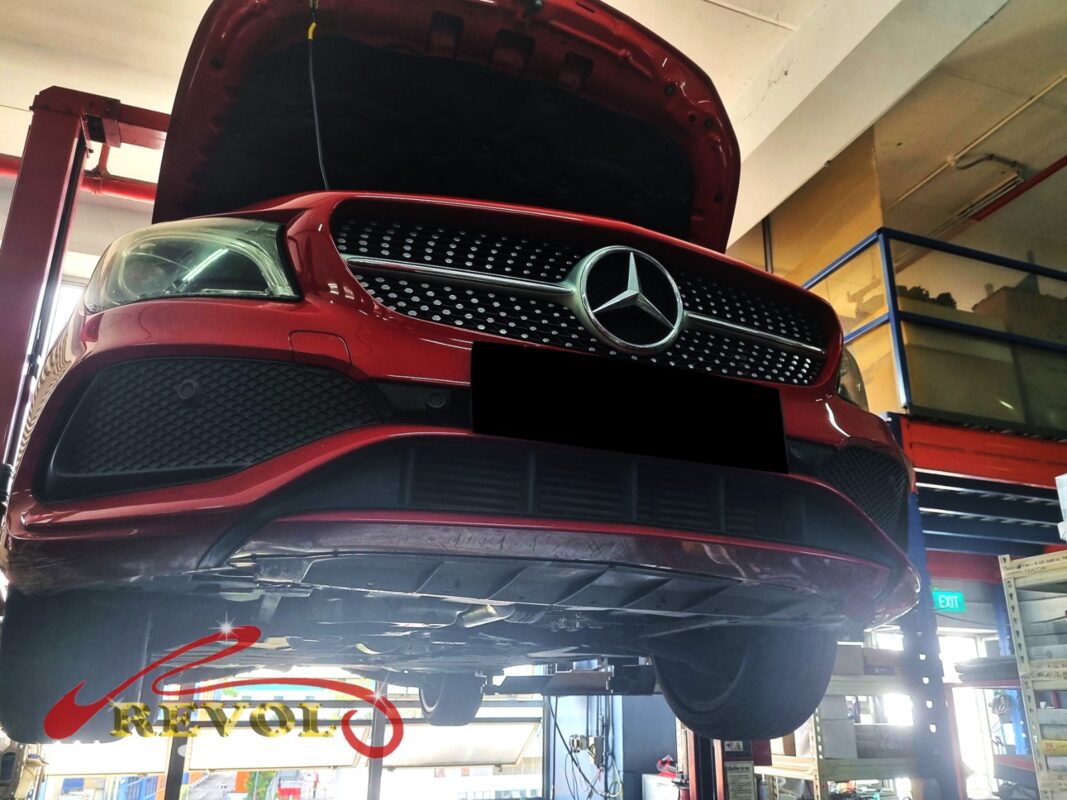
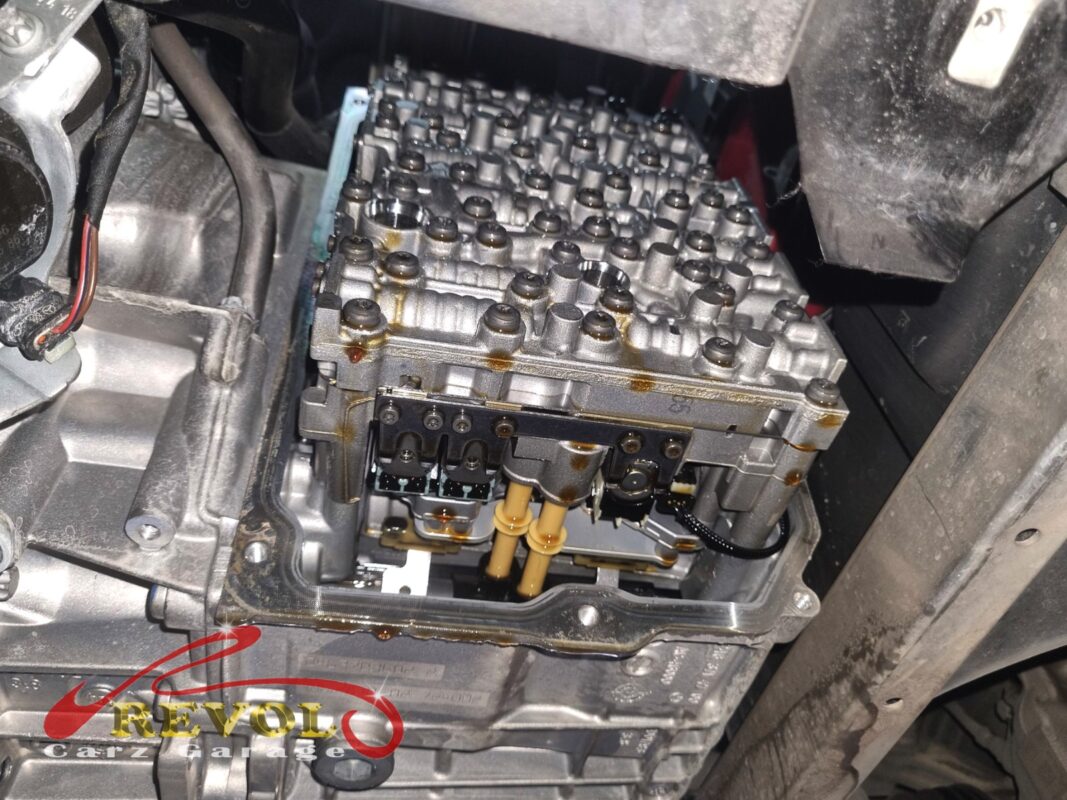
With the pan dropped, the drained fluid told the expected story: dark with a mild metallic glitter, normal at this mileage but a clear sign it had done its work. The filter held matching debris, the pan gasket was dry but due for renewal during the job anyway, and a scan of the transmission control unit came back clean.
So this was a straightforward refresh, not a repair, which is exactly what a 60,000 km ATF service should be: caught on time so there is nothing to fix, just fluid and a filter to renew.
The work
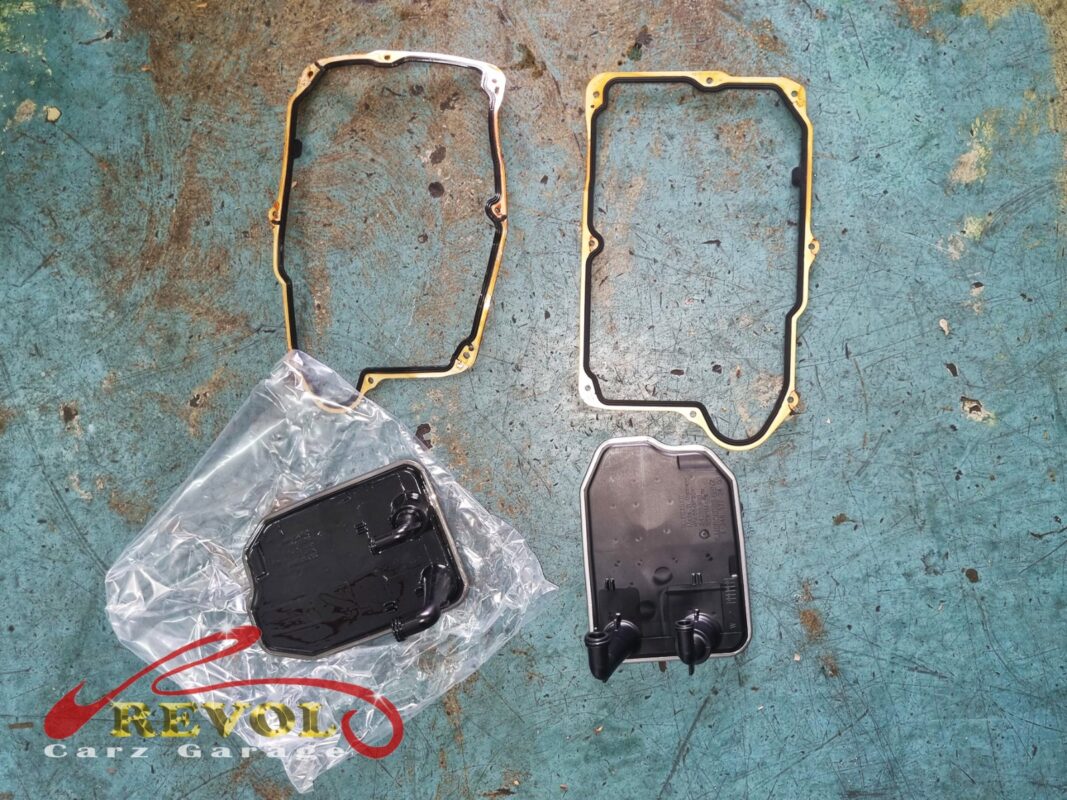
The old fluid was drained, the transmission pan dropped, the internal filter replaced, and the pan magnet wiped clean. A new pan gasket went on, then the gearbox was refilled with the correct Mercedes-spec ATF to the level on the dipstick at temperature, the way the spec requires.
Finally a fresh adaptation learn cycle was run on the scan tool, so the transmission control unit relearned its shift points on the clean fluid rather than carrying over the old worn-fluid settings.
The outcome
Smoother shifts at low speed, no flare on hard upshifts, and the gearbox feeling like it did when the car was new.
The CLA180 went home with the transmission set for the next interval. For the owner, the value is in what did not happen: the gearbox is the most expensive single part of the drivetrain, and a fluid service on schedule is cheap insurance against the kind of wear that, left alone, eventually shows up as a slipping or harsh-shifting box that costs many times more to put right.