The brief
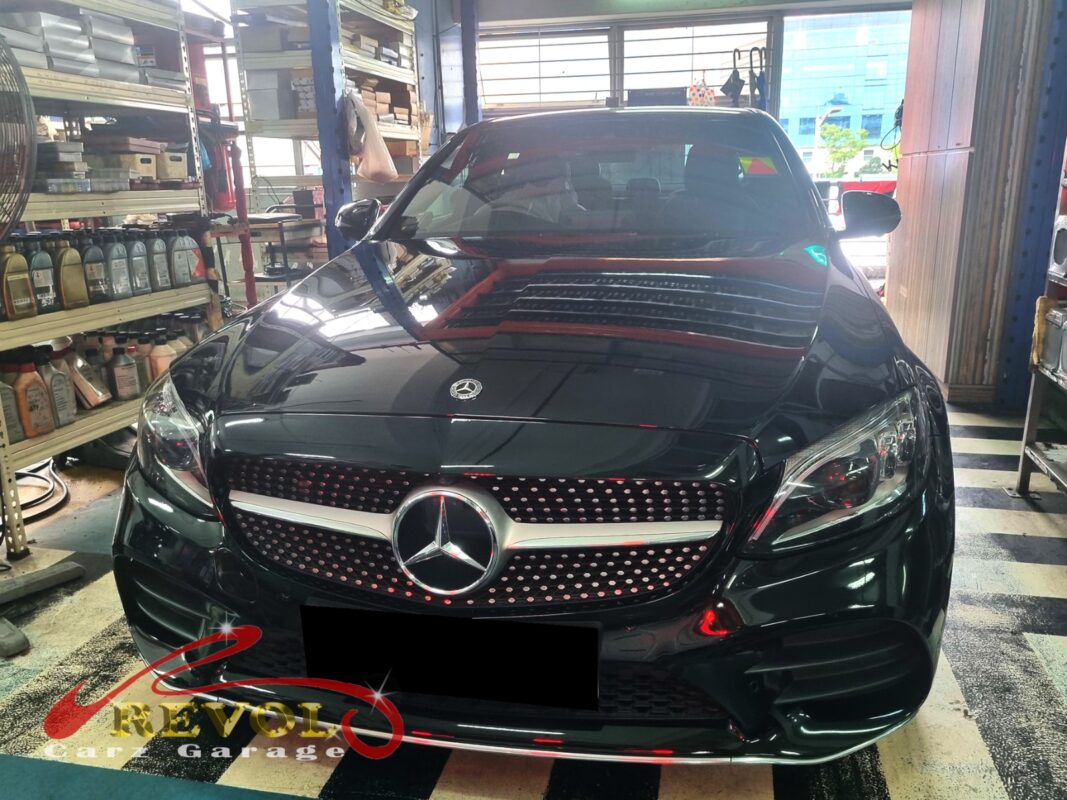
The C200 came in with a front end that had stopped feeling tight. There were clunks over bumps and joints, a slight pull to one side, a vibration coming up through the steering wheel, and the front tyres were wearing unevenly across the tread. Four separate complaints, but they all point at the same area: the front suspension geometry has gone out.
On this Mercedes the front uses a multi-link setup, and the upper control arms carry a big share of holding the wheel at the right angle. Each arm rides on rubber bushes with a ball joint at the end. When those wear, the wheel moves around under load instead of staying put, and you get exactly that mix of noise, pull and tyre scrub.
The diagnosis
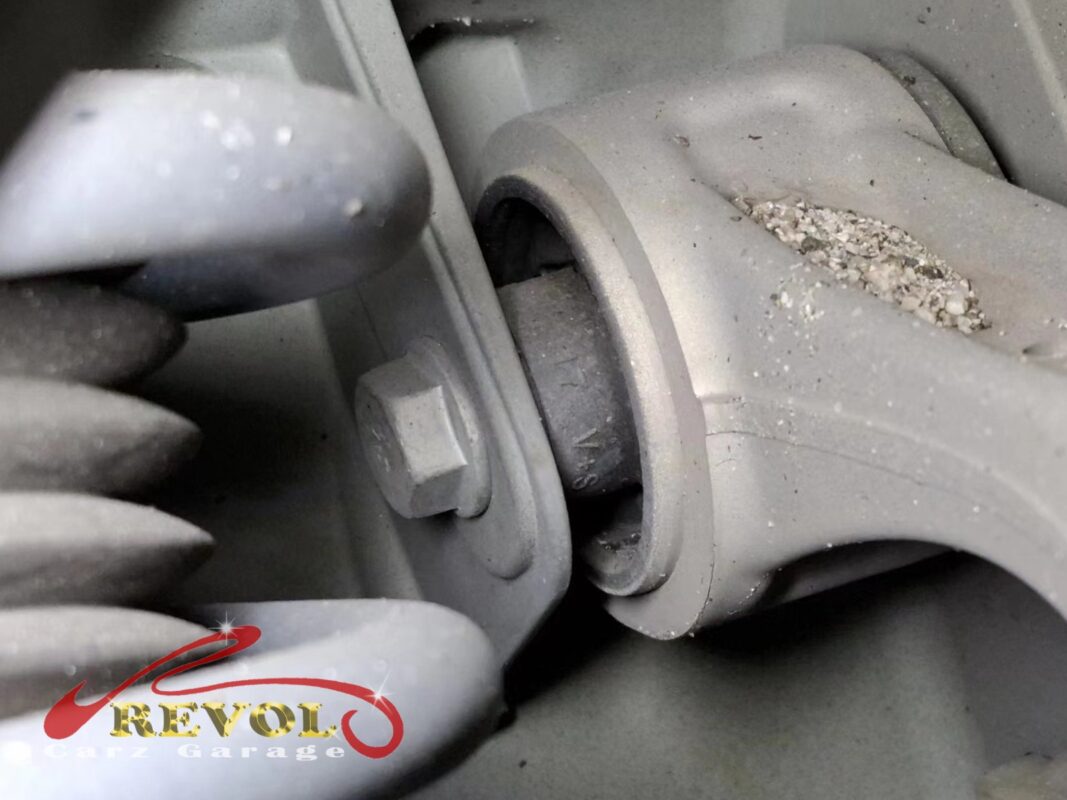
On the lift we levered each arm to check for play. Both upper arms showed bush movement well past what's acceptable, the rubber tired and the casting around it corroding, and one ball joint had developed a noticeable amount of free play. The lower arms checked out fine.
With both uppers worn, the right call is to replace them as a pair. Doing one side and leaving the other would just leave the car loaded unevenly and bring you back here in a few months for the second one. A four-wheel alignment after the swap was non-negotiable, since new arms reset the geometry.
The work
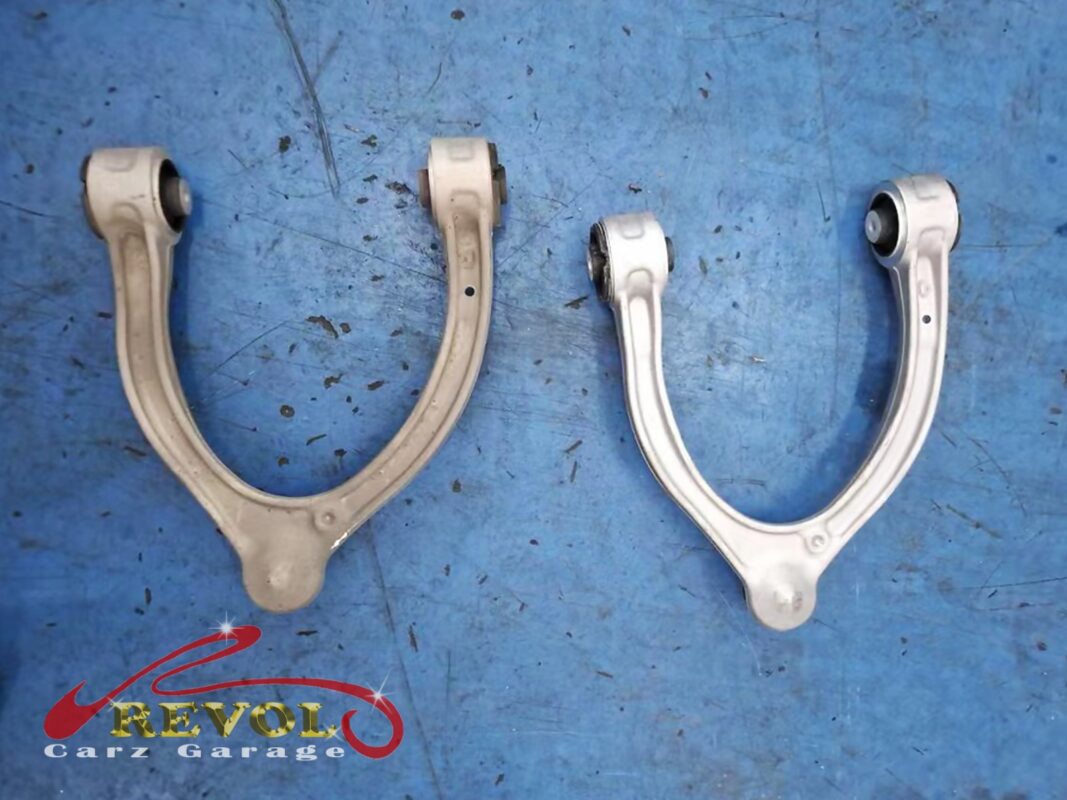
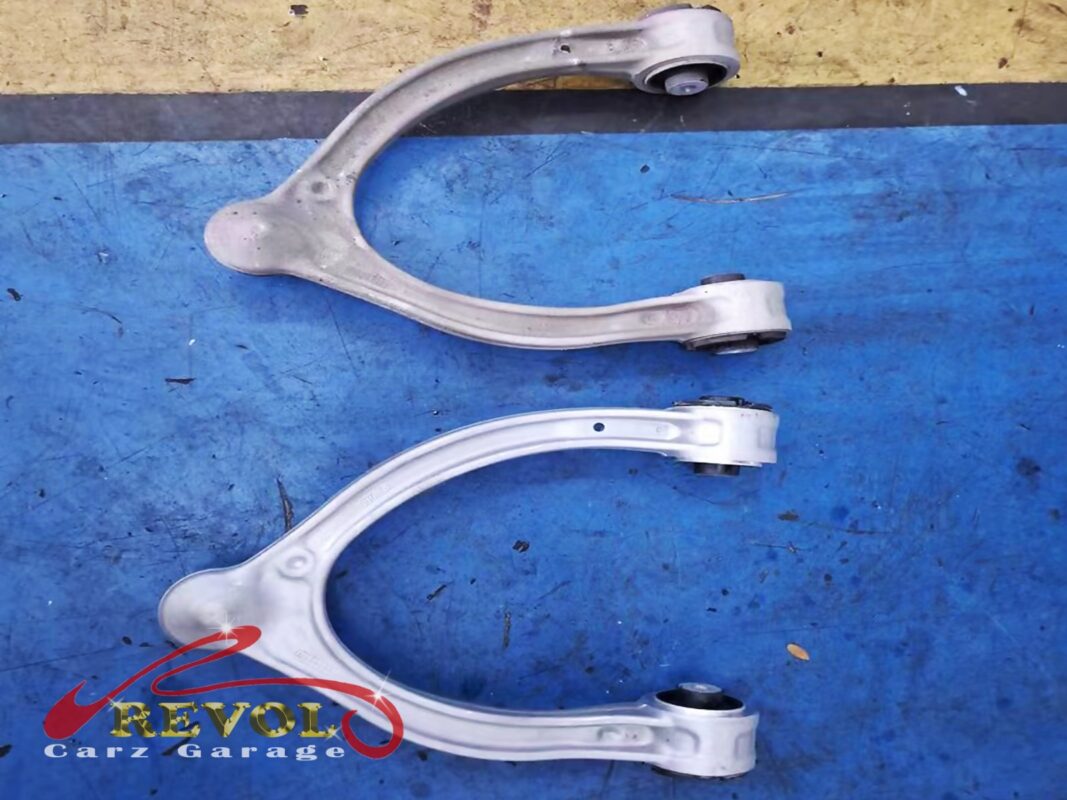
Both upper control arms came off, and a matched pair of new Mercedes-spec arms went on, each one with a fresh ball joint and new bushes built in. Every fastener was torqued to the figures in the manual, since suspension bolts that aren't done to spec work loose.
Then the car went onto the alignment rig for a full four-wheel measurement and adjustment, bringing camber, caster and toe back into Mercedes' window.
A road test afterwards confirmed it tracked straight with no clunks and a clean, settled steering feel.
The outcome
The clunks over bumps are gone, the pull to one side has cleared, the steering vibration is out, and the alignment readout is sitting in spec.
The C200 went home tracking straight and feeling tight through the front again. Replacing the pair and aligning it properly means the new tyres the owner fits next won't get chewed up the way the old set did, and the car drives like the precise thing it's supposed to be.