The brief
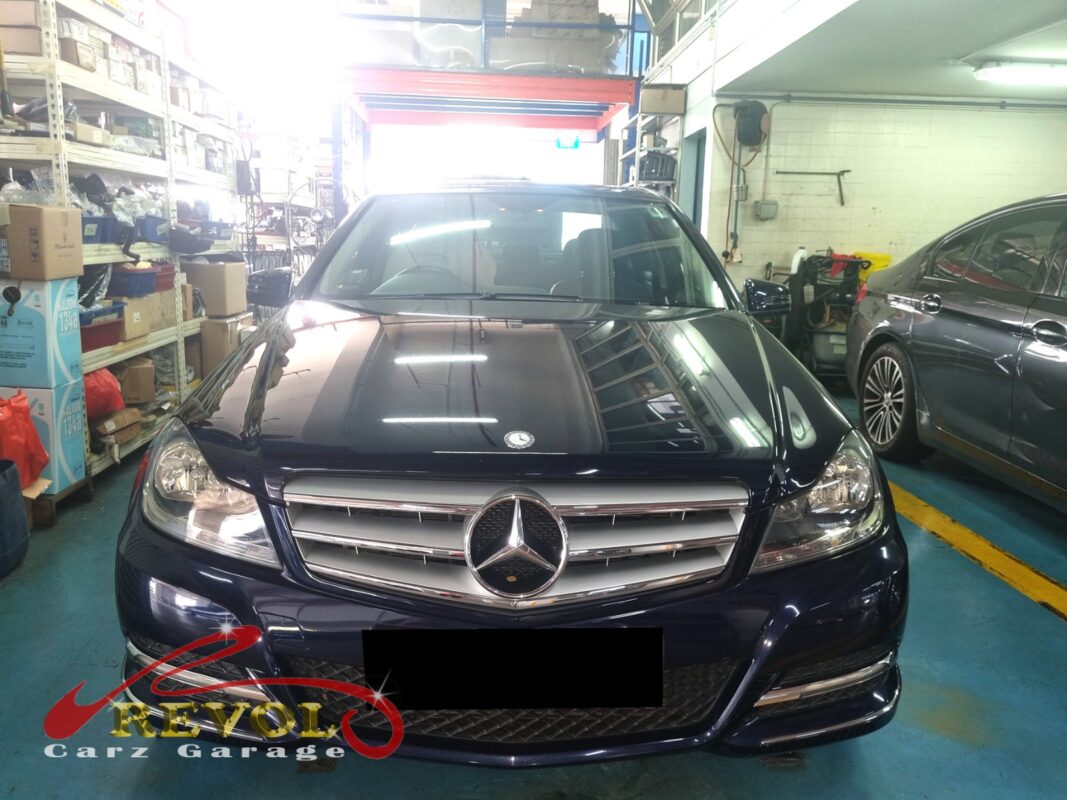
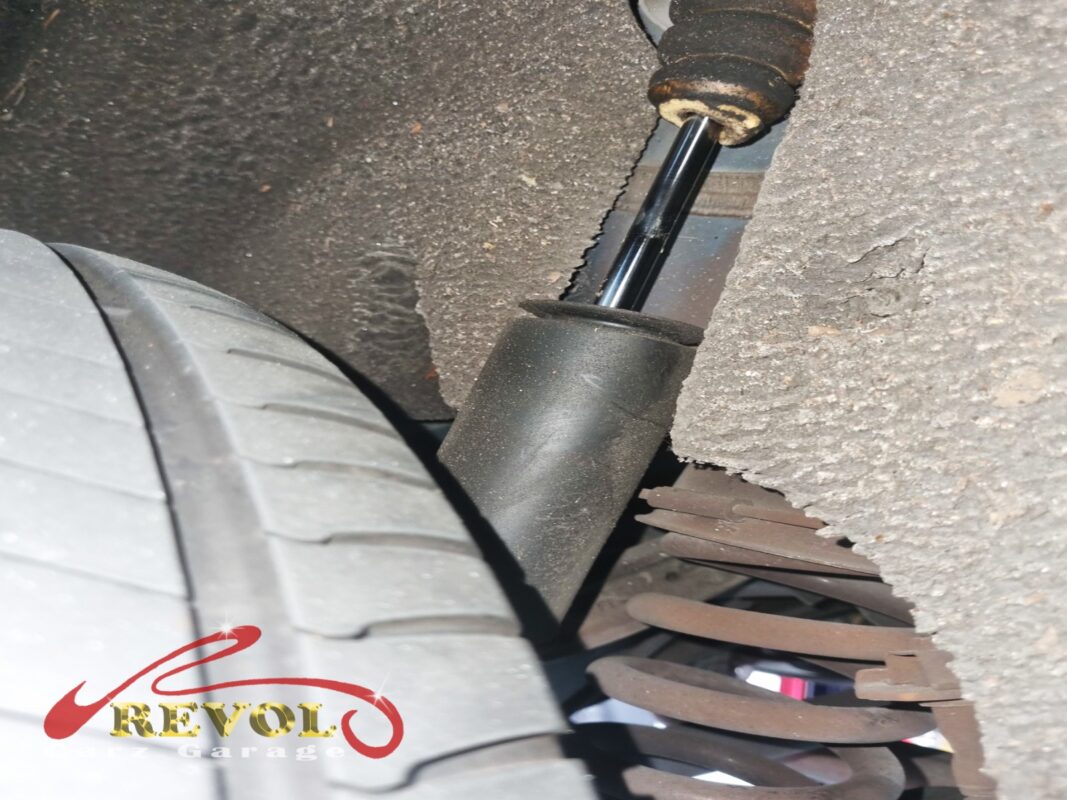
The C180 had gone soft at the back. It felt bouncy over bumps, taking an extra movement or two to settle instead of one clean motion, it swayed more than it used to through corners, and on a quick look the owner had spotted a damp ring of oil partway up one of the rear struts.
A shock absorber's job is to damp the spring, to stop the car carrying on bouncing after every bump. They wear gradually, so you don't always notice, until the back end feels loose and floaty. The oil mark is the giveaway: a shock that's wet has lost the fluid it needs to do its job, and once one side is gone the other is rarely far behind.
The diagnosis
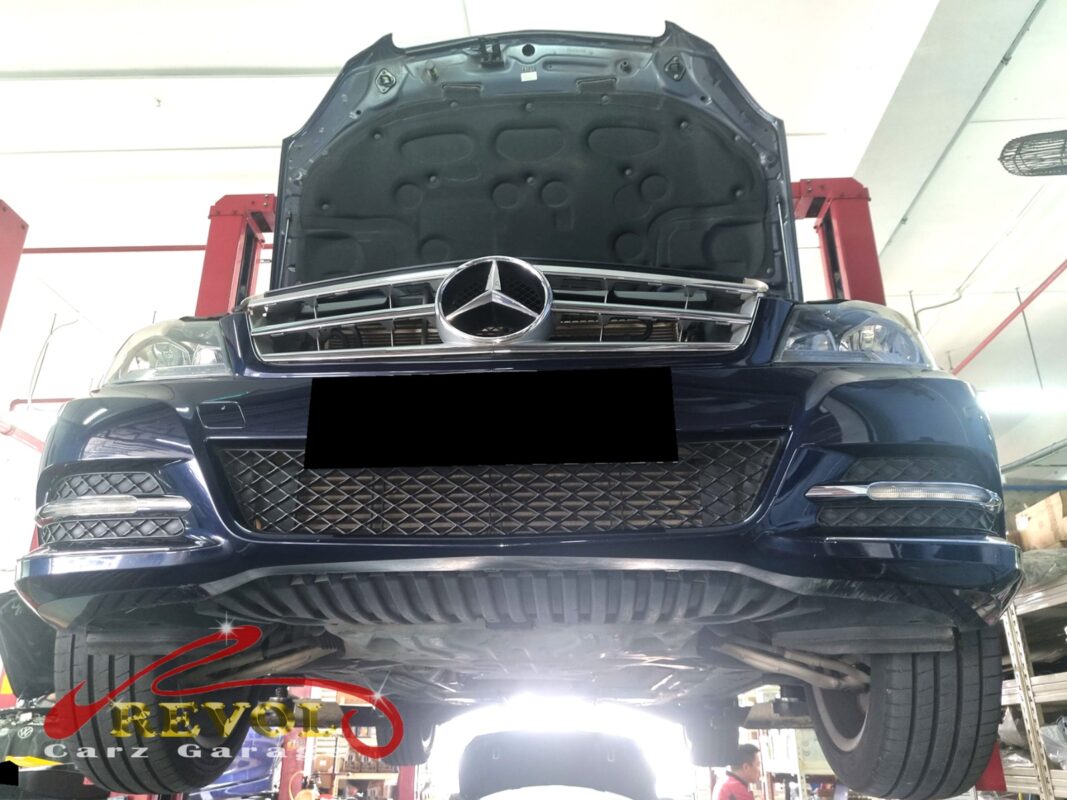
On the lift the strut with the visible weep was clearly at the end of its life, oil seeping past the seal. We bench-tested the rear, pushing down on the body and watching how it returned, and the other side had lost a good chunk of its rebound damping too, just dry rather than wet.
So it was both. Replacing the pair keeps the rear of the car damped evenly side to side, which matters for how it feels and how it grips. Fitting one new shock against one tired one would leave the back end lopsided.
The work
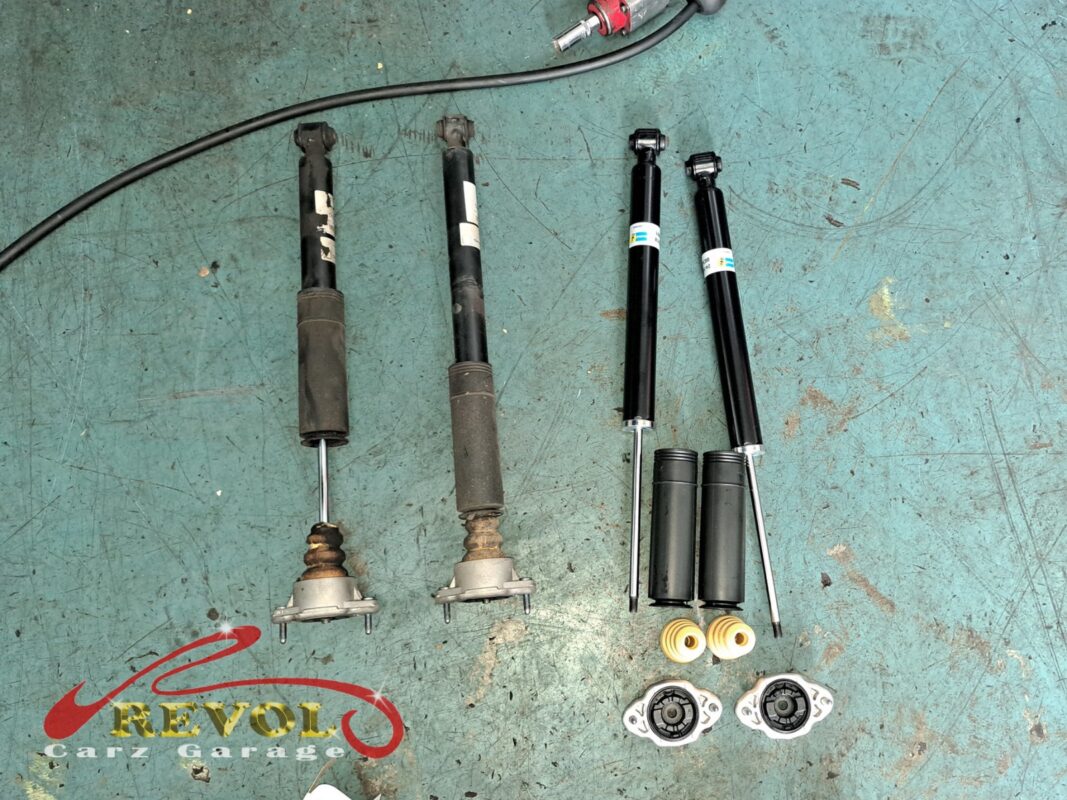
Both rear strut assemblies came off, and a matched pair of new Bilstein shocks went on, with fresh dust boots, bump stops and top mounts in the same go rather than reusing the worn ones.
Every mount bolt, top and bottom, was torqued to the manual figures. The car was then set down, rolled to settle the suspension, and the rear ride height and geometry were checked.
A road test confirmed the back end was planted again, settling in one motion over bumps with no float and no oil anywhere.
The outcome
The rear is planted again, the bounce is gone, the body roll in corners is cut right back, and there's no oil weeping anywhere on the new struts.
The C180 went home with the back end behaving the way the front already did, controlled and settled. Doing the pair plus the mounts and stops at the same time means it's a job that's properly finished, not one that'll need a return visit for the other side.