The brief
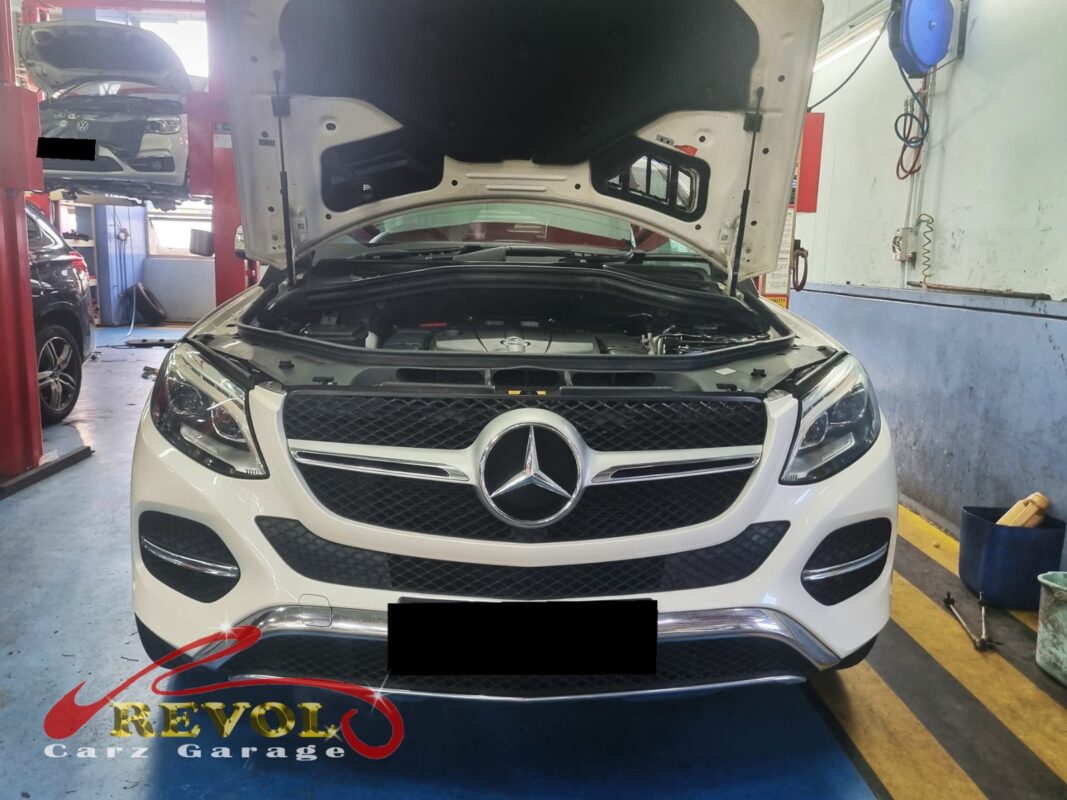
The GLE400 came in with a clear cooling problem stacking up. There was coolant pooling under the front of the car after every drive, a low-coolant warning that kept coming back even after the tank was topped up, and the temperature gauge starting to climb whenever it sat in heavy traffic. The owner did the sensible thing and brought it in before the engine cooked itself.
The radiator is the part that pulls the heat out of the coolant as air passes through it. On a modern car the side tanks are plastic and the core is aluminium, and over years of heat cycling the seam where they join can split. Once it does, coolant escapes faster than the system can hold it, and the engine starts running hot. That's exactly the pattern here.
The diagnosis
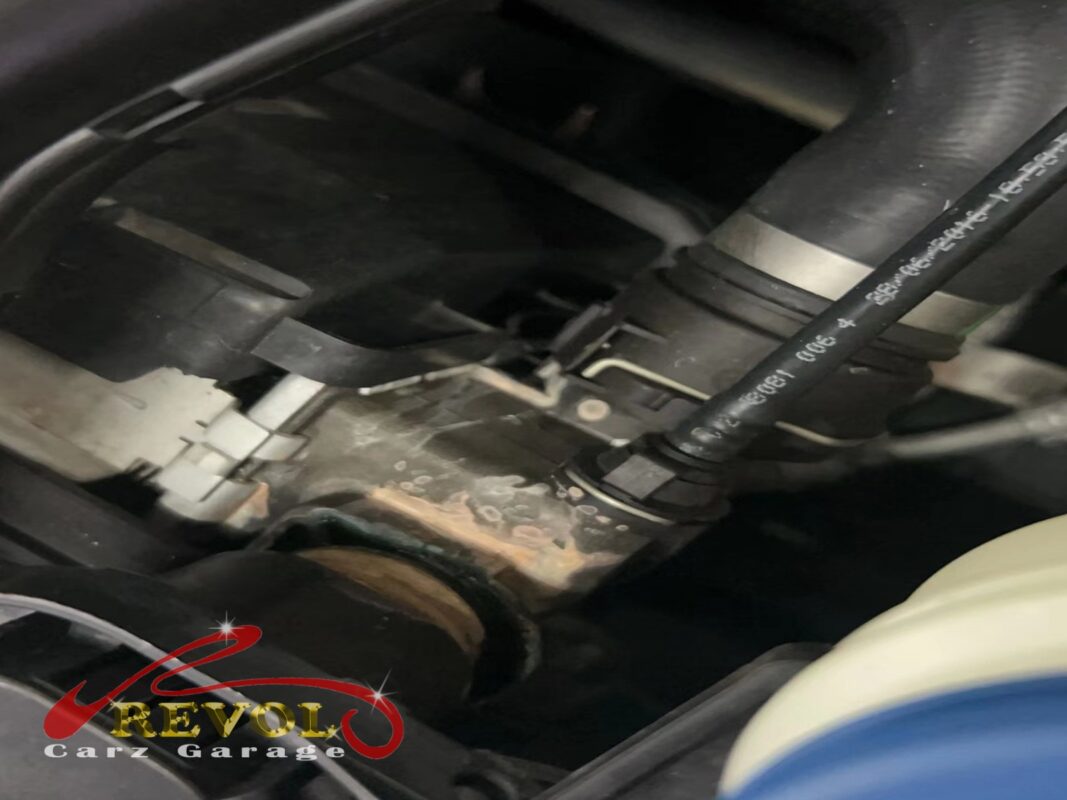
We put the cooling system under pressure and watched where it went. The leak traced to a hairline crack along the seam of the radiator's plastic end tank, the typical age failure. The hoses, the water pump, the expansion tank and the thermostat housing all held and checked clean.
So the diagnosis was a straightforward one: the radiator itself was the only thing leaking, and a cracked end-tank seam isn't something you patch. It gets replaced.
The work
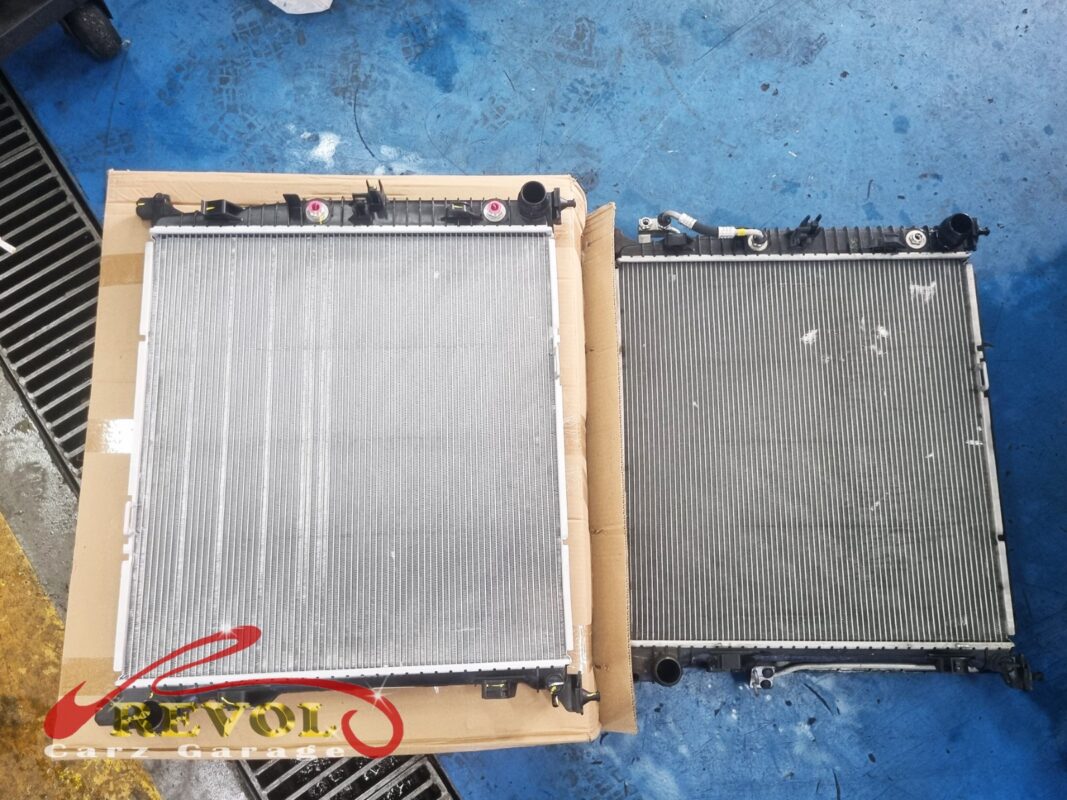
The system was drained, the radiator hoses came off, and the cracked unit was lifted out of the front of the car. A new Mercedes-spec radiator went in, with the hoses reseated on fresh clamps rather than the old ones.
Then it was refilled with the correct coolant, bled to get all the air out so there were no hot spots, and held under pressure to confirm the new unit and every joint were sealed.
A run afterwards, including some slow traffic, confirmed the gauge stayed put and nothing was dripping underneath.
The outcome
No more puddle under the front, the coolant level holds, the low-coolant warning is gone, and the gauge sits steady even crawling in traffic.
The GLE400 went home with the cooling system back to spec. Catching a cracked radiator early, while it's still just a leak, is a lot cheaper than letting it run the engine hot and turn into a head-gasket conversation.