The brief
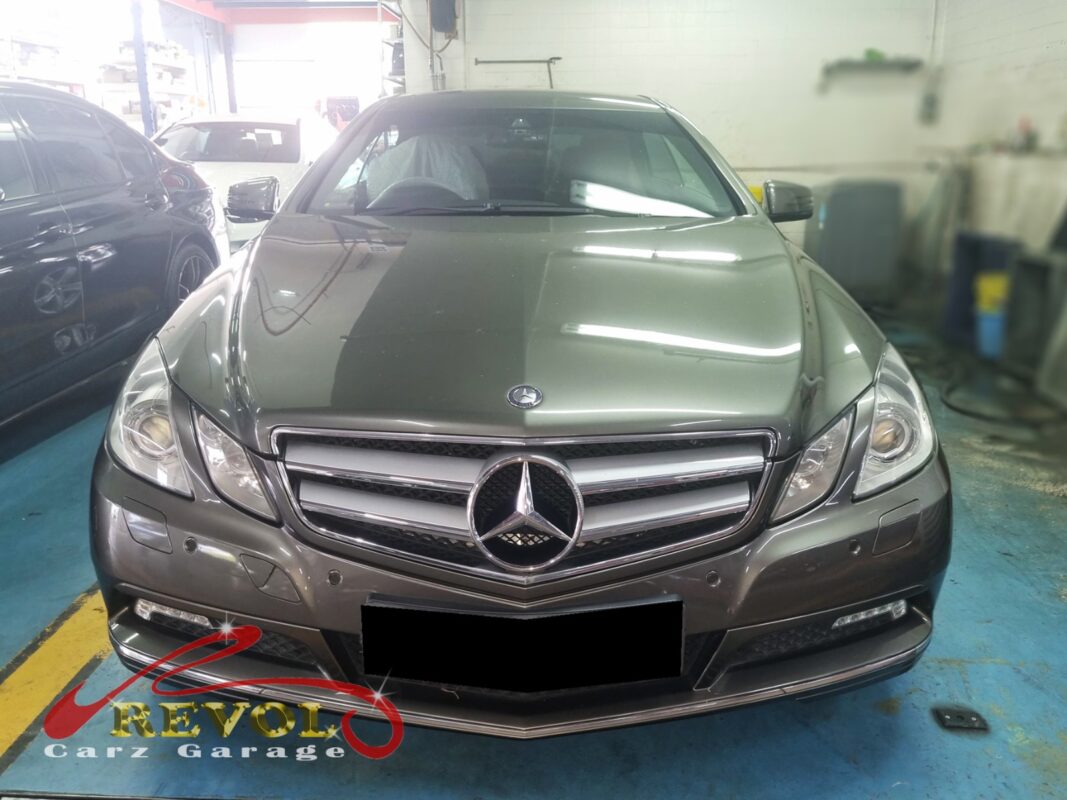
The E250 had picked up a clunk from the front suspension over rough patches and expansion joints, the body was rolling further than it used to through faster corners, and the steering felt a bit vague at motorway speed, not pointing as sharply as it should. Three complaints, but they all trace back to the anti-roll bar not doing its job cleanly.
The anti-roll bar ties the left and right sides of the front suspension together so the car stays flat in corners. It's held to the body by a pair of rubber bushes. When those bushes perish and collapse, the bar can move around in its mounts instead of being held firm, and you get exactly that mix of knocking, extra roll and loose steering feel.
The diagnosis
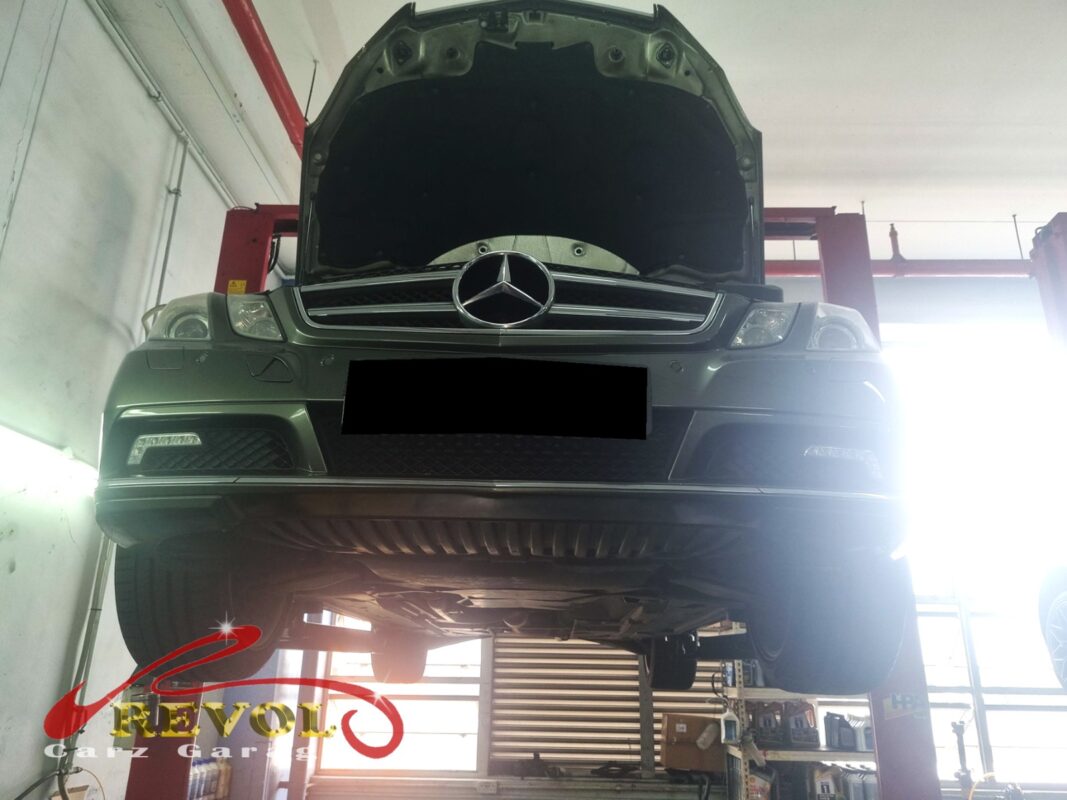
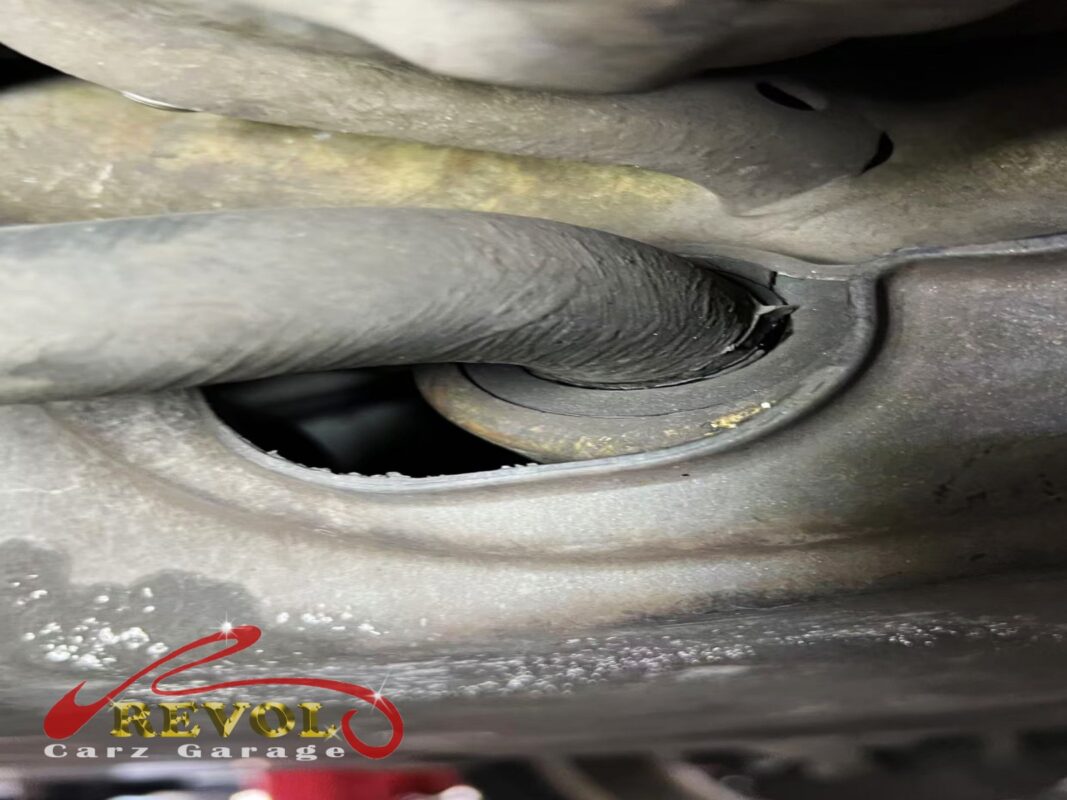
On the lift we went over the anti-roll bar end to end. Both rubber bushes around the bar had collapsed well past their service limit, the rubber visibly cracked through, so the bar was knocking around in its mounts. The drop links at the ends checked out within tolerance.
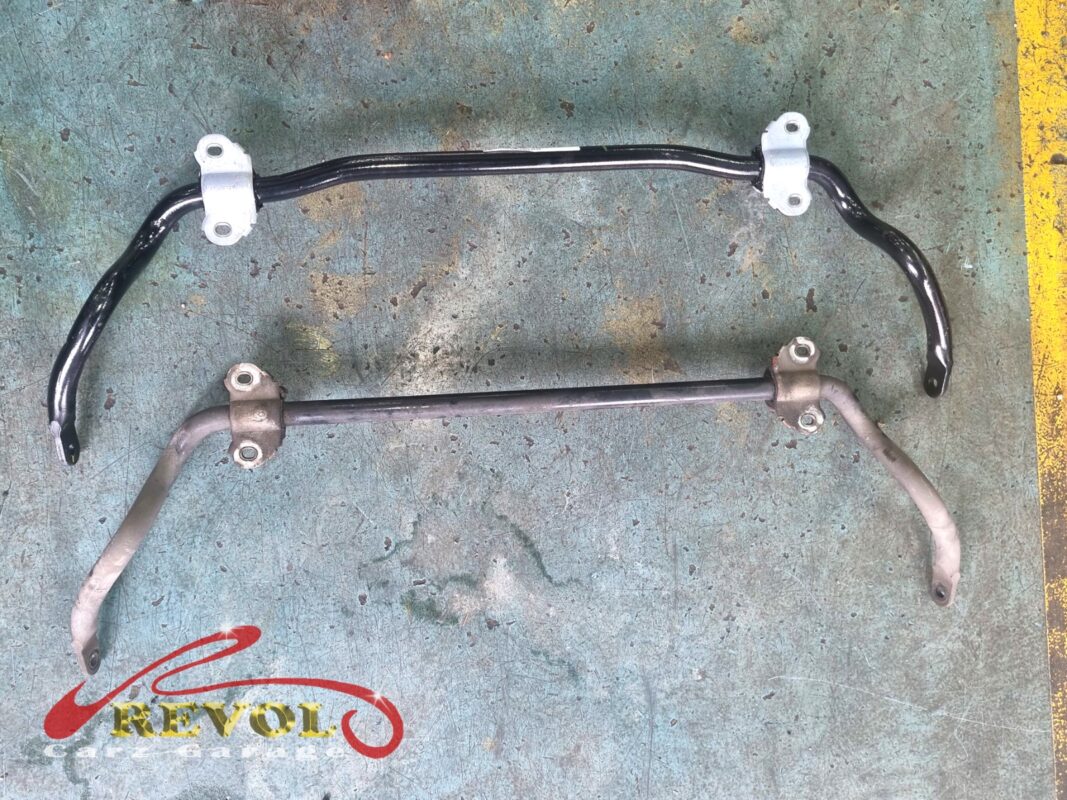
The bar itself was looking corroded and tired, so rather than press fresh bushes onto an old bar we replaced the bar as a complete assembly with new bushes already fitted. That way nothing left behind becomes the next thing to complain. An alignment check went on the list for after the swap.
The work
The old anti-roll bar was released and taken off, and a new Mercedes-spec bar assembly went on, complete with fresh bushes in their brackets. Every fastener, the bracket bolts and the link nuts, was torqued to the figures in the workshop manual.
Then the car was set down, rolled to settle the suspension, and put on the rig for an alignment check to make sure nothing had shifted.
A road test confirmed the clunk was gone and the front felt tied down again through corners and on the straight.
The outcome
The clunk over bumps is gone, the body roll in corners is back to normal, and the steering has tightened up at speed, pointing where you aim it.
The E250 went home with the front suspension working as one piece again. Doing the whole bar and its bushes together, rather than just the rubber, means it's a job that's properly finished.