The brief
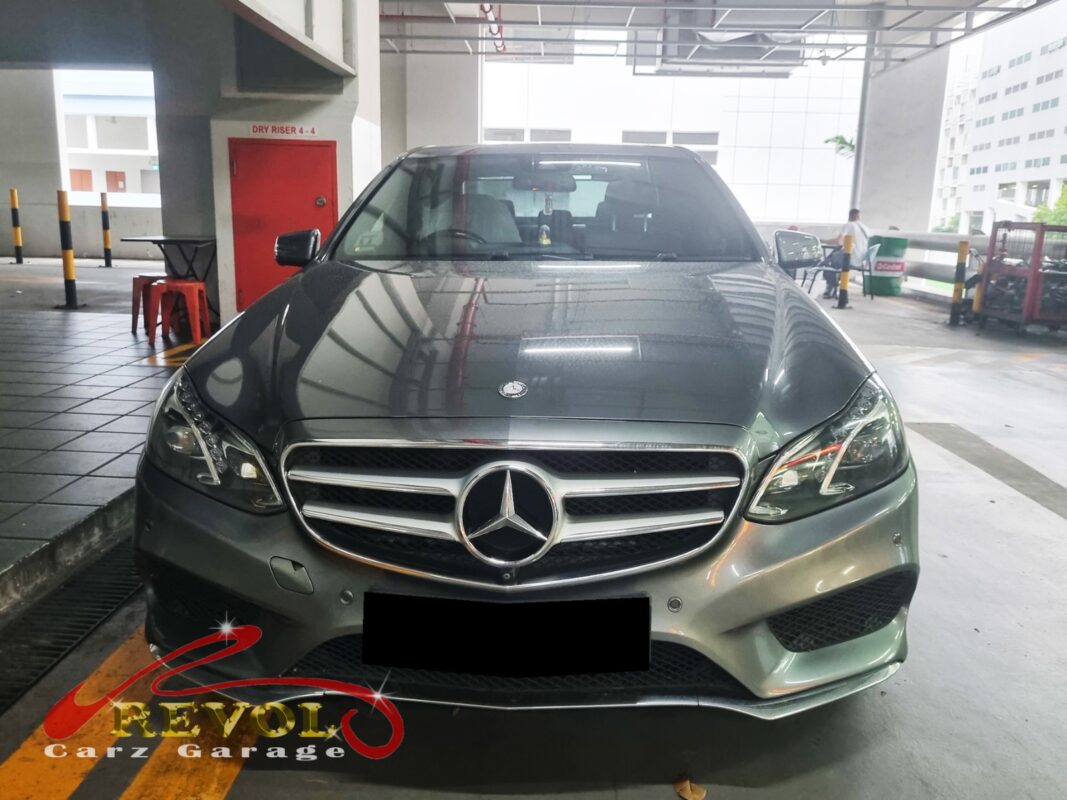
The E200 had been quietly losing coolant. On a bonnet check the owner could see pink coolant tracked down the front of the engine, the expansion tank was dropping over a couple of weeks rather than holding steady, and an intermittent low-coolant warning had started popping up. Three pointers, all aimed at the same area.
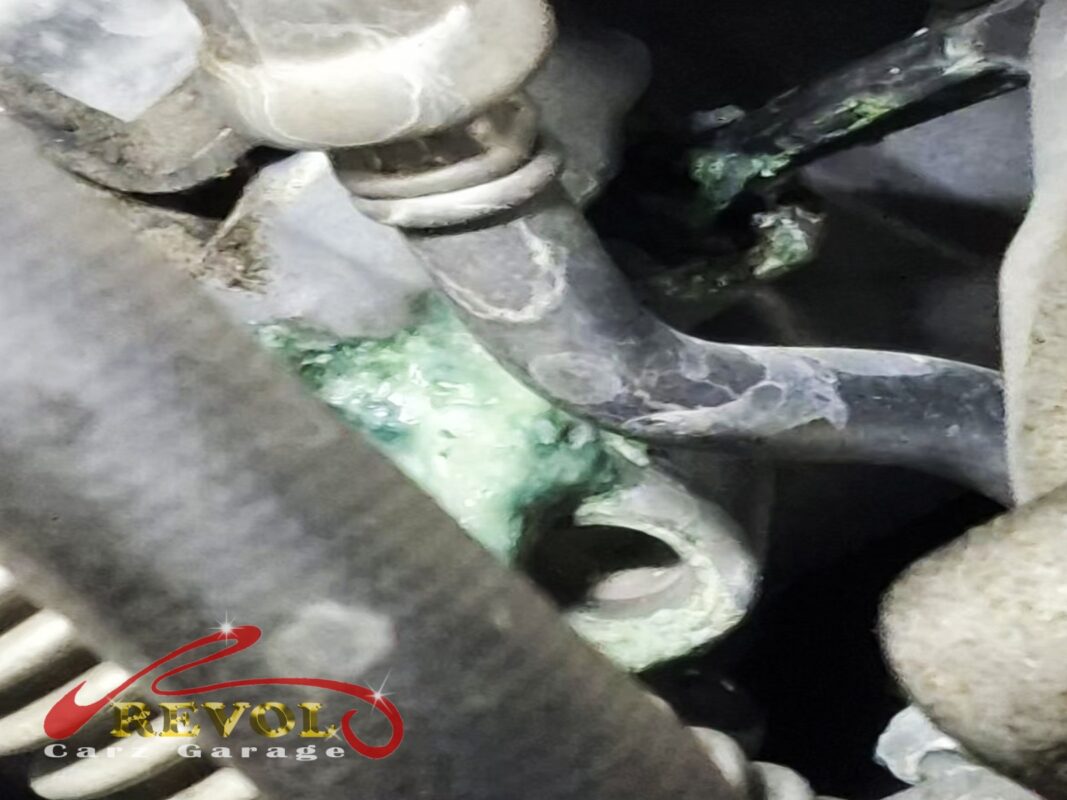
The water pump is what circulates coolant through the engine and radiator. It spins on a shaft, and that shaft runs through a seal. When the seal wears, coolant weeps out past it, usually as a slow drip from the front of the engine that leaves a crusty residue trail. That matched exactly what was on the block.
The diagnosis
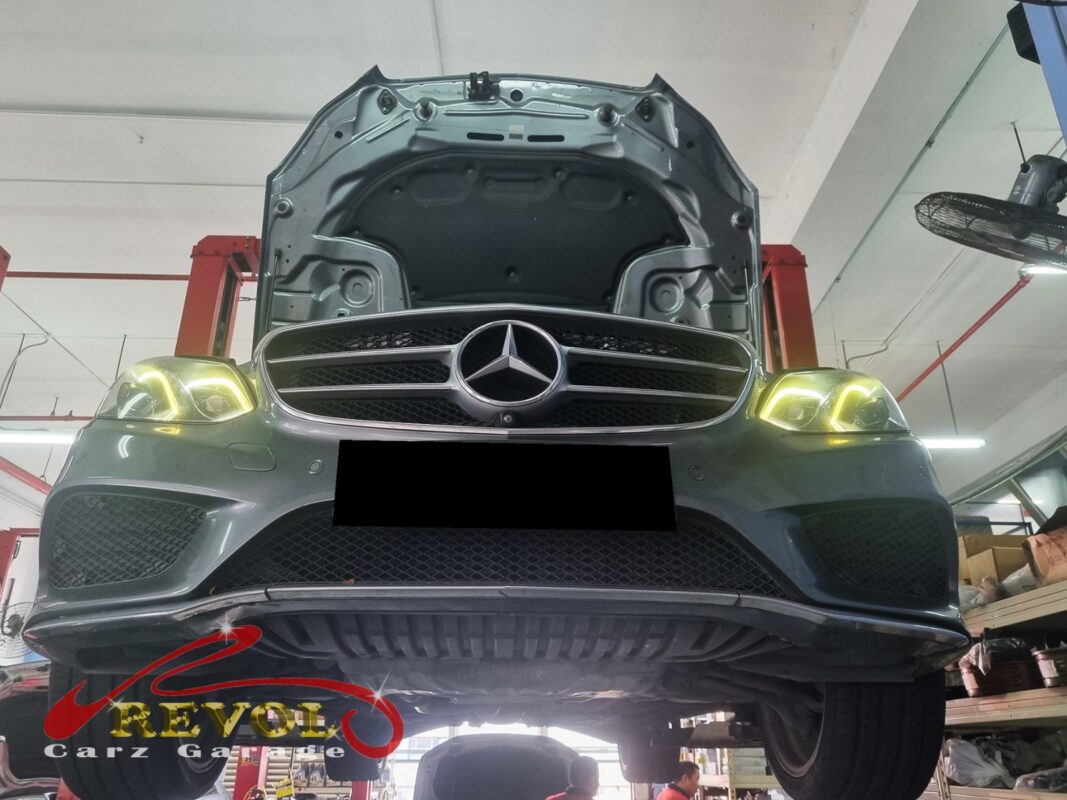
On the lift, with the cooling system pressurised, the leak traced cleanly to the water pump shaft seal, with the crystallised coolant trail running down from it. The hoses, the radiator, the expansion tank and the thermostat housing all held and checked clean.
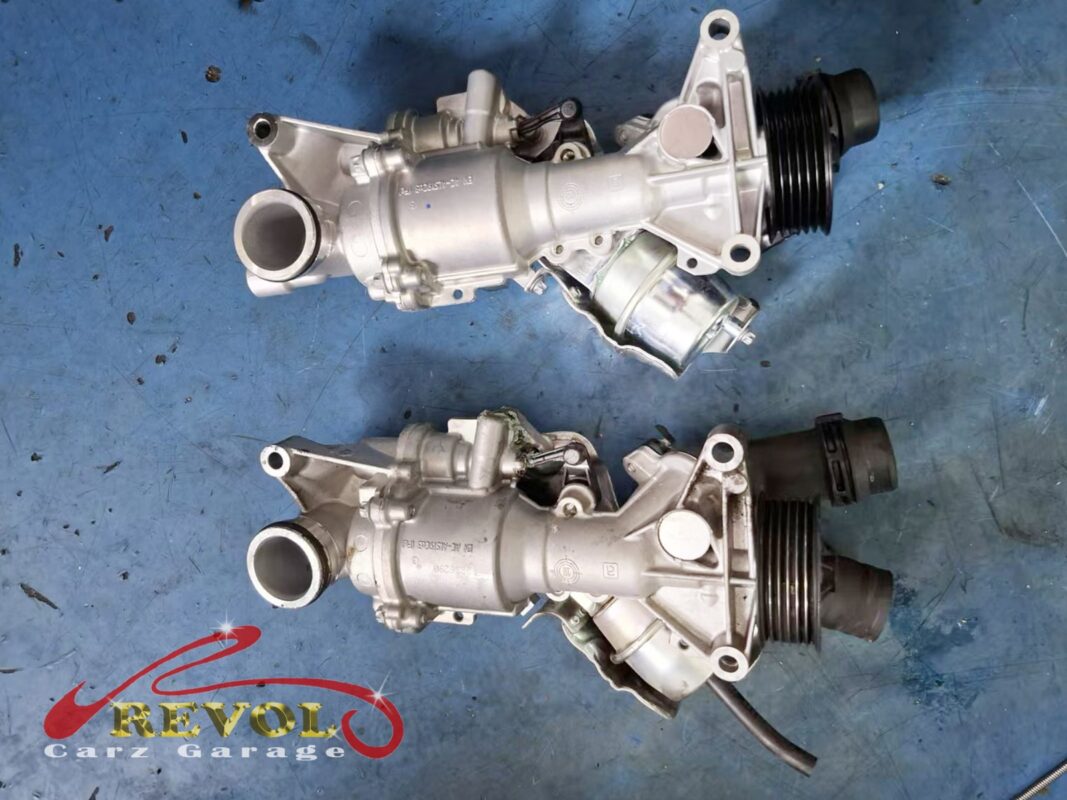
A weeping shaft seal isn't something you reseal in place. On this engine the pump is a single assembly that bolts to the front, with the thermostat housing built in, so the fix is to replace the unit.
The work
The cooling system was drained, the drive belt freed off, and the old water pump assembly came off the front of the engine. A new Mercedes-spec pump went on in its place, the integrated thermostat housing and pulley coming with it, sealed to the block with a fresh gasket.
Then the system was refilled with the correct coolant, bled the proper way so no air was trapped, and held under pressure to confirm the new pump and every joint were sealed.
A run afterwards confirmed the gauge sat steady and there was nothing weeping at the front.
The outcome
No more drips, the coolant level holds where it should, and the low-coolant warning hasn't come back.
The E200 went home with the cooling system back to spec. A weeping water pump caught early is a tidy job. Left to run dry it takes the engine temperature with it, and that's a much bigger conversation.