The brief
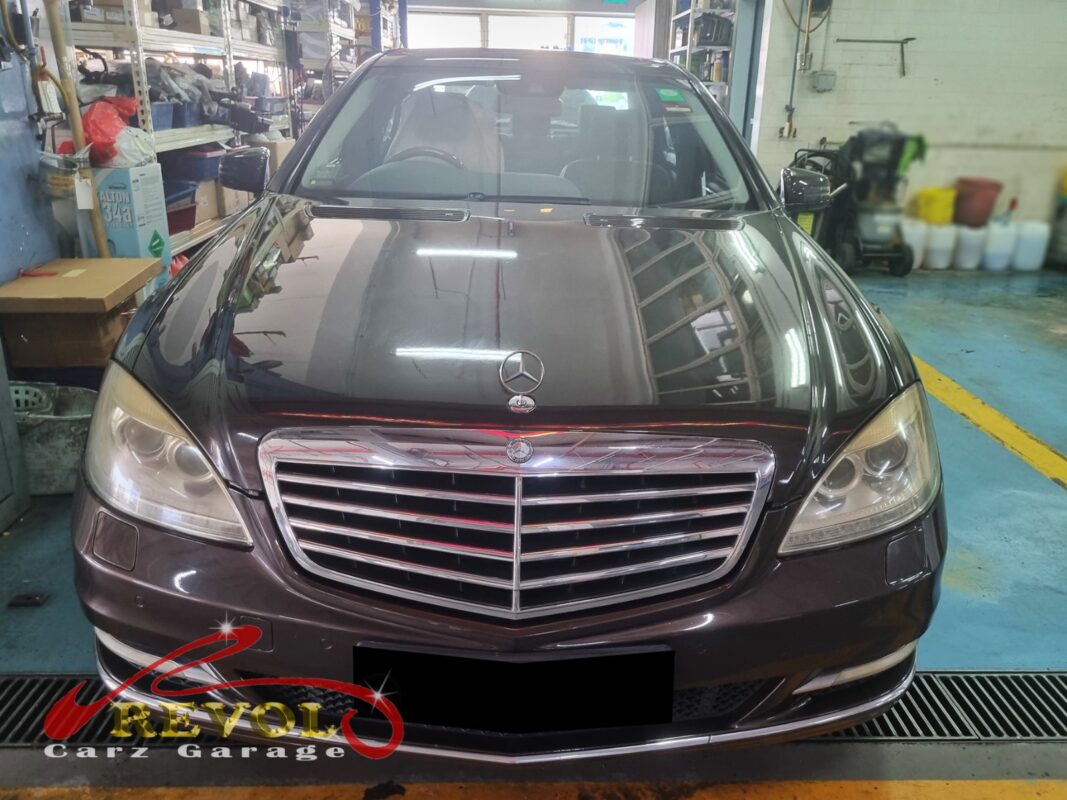
The car came in with steering that had gone loose around the straight-ahead, a clunk through the wheel on turn-in, one of the front tyres wearing on its inside edge, and a slight pull to one side under braking. Four separate complaints, but they all point at one corner of the front suspension giving up.
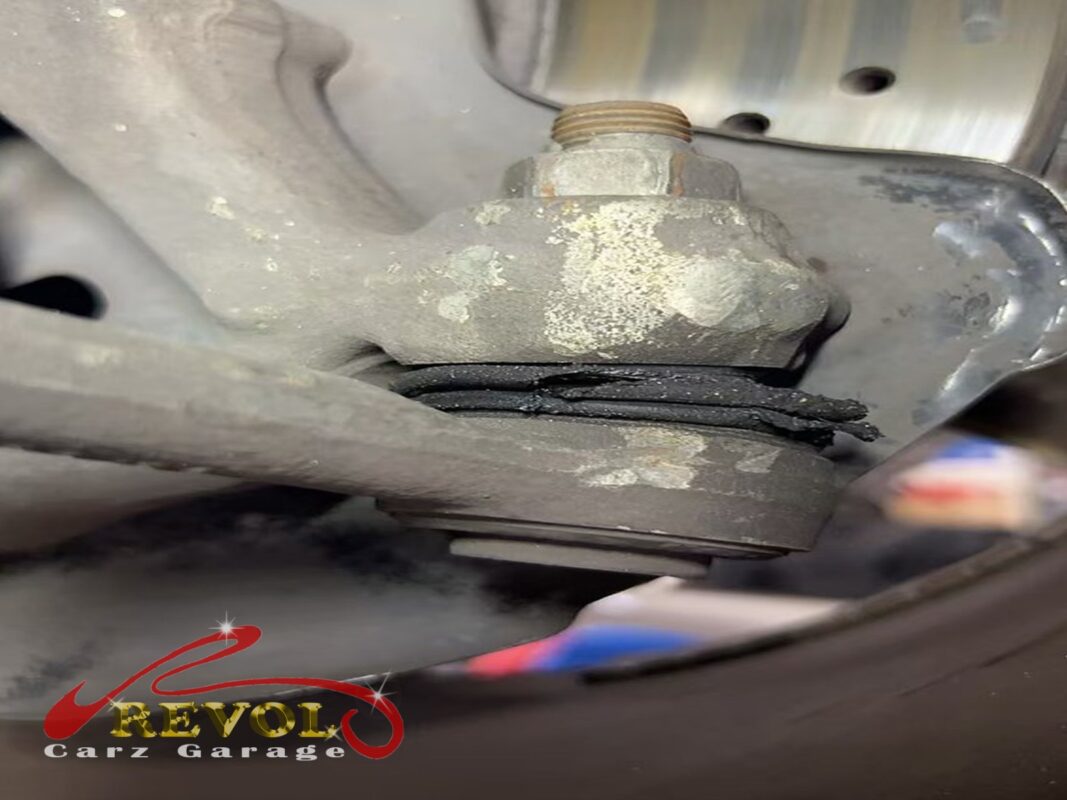
The tie rod is the link between the steering rack and the front wheel, the thing that actually turns the wheel when you turn the wheel. The outer end is a ball joint with a rubber boot keeping the grease in. When that boot splits, grit gets in, the joint wears, and it develops play, so the wheel can move around a little on its own instead of going only where you point it. That's the loose feel and the clunk.
The diagnosis
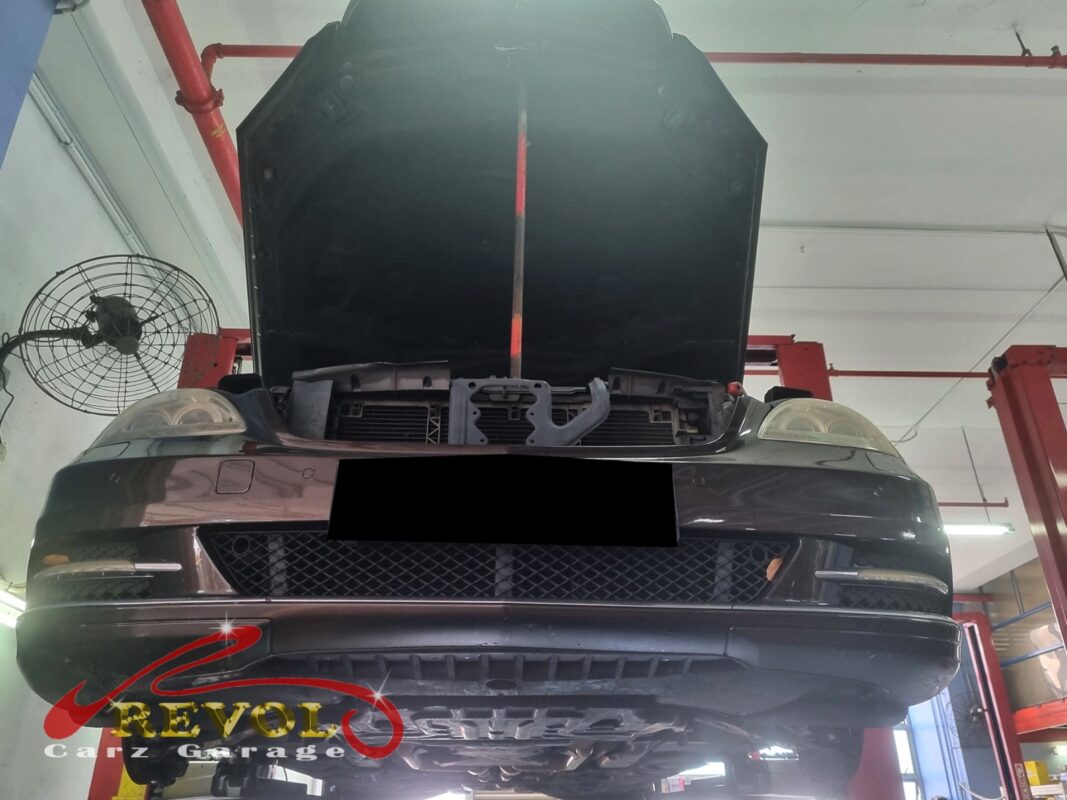
A pry-test on the front tie rods confirmed it. The outer tie rod end on the affected side had loose ball-joint play, the boot split and grease tracking down out of it. The inner tie rod was within tolerance.
We replace outer tie rod ends as a pair rather than one side, since the other one is the same age and a worn one on its own would just leave the steering uneven and bring the car back. So both outers were on the list, with a fresh alignment afterwards because the steering geometry has to be reset once they're disturbed.
The work
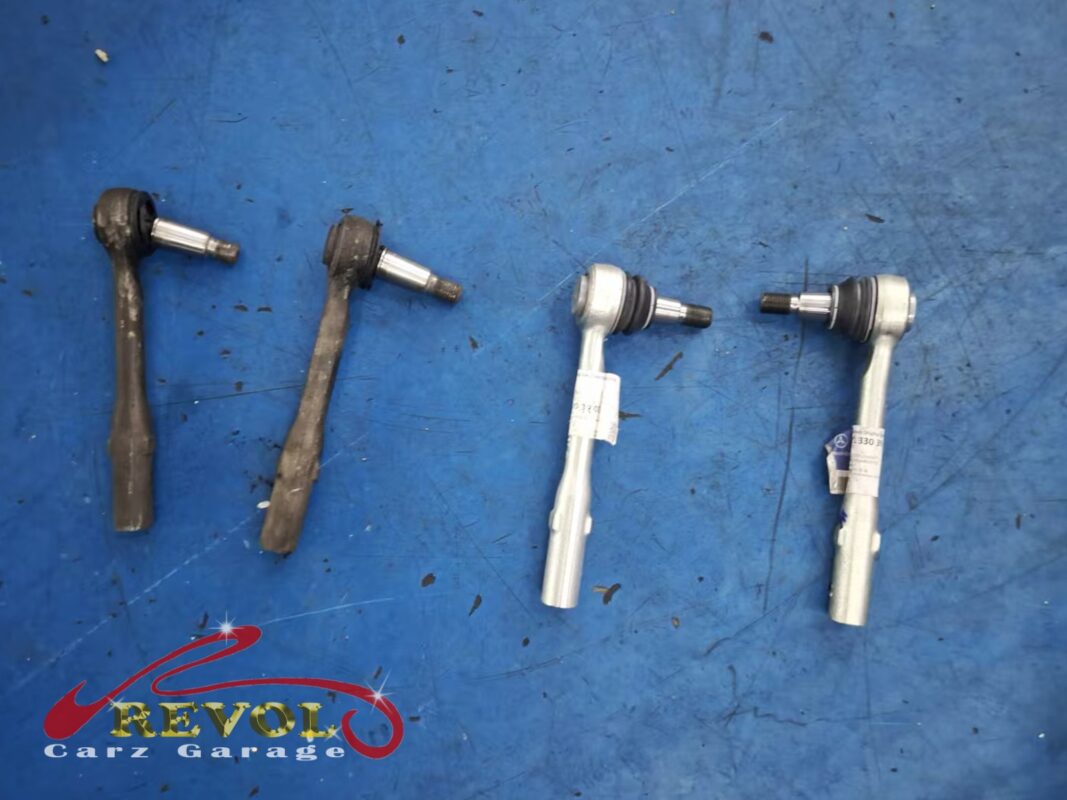
Both old outer tie rod ends came off, and a matched pair of new Mercedes-spec ends went on, each castle nut torqued to spec and a new boot seated.
Then the car went onto the alignment rig and the front toe was set back to Mercedes' figures, which is what stops the tyres scrubbing.
A road test confirmed the steering was tight around centre, no clunk on turn-in, and the car tracked straight under braking.
The outcome
The steering has firmed up around the straight-ahead, the clunk on turn-in is gone, and there's no pull under braking. The alignment readout is back in spec.
With the geometry restored, the front tyres will wear evenly again instead of chewing an edge. The car went home pointing where it's aimed and tracking properly.