The brief
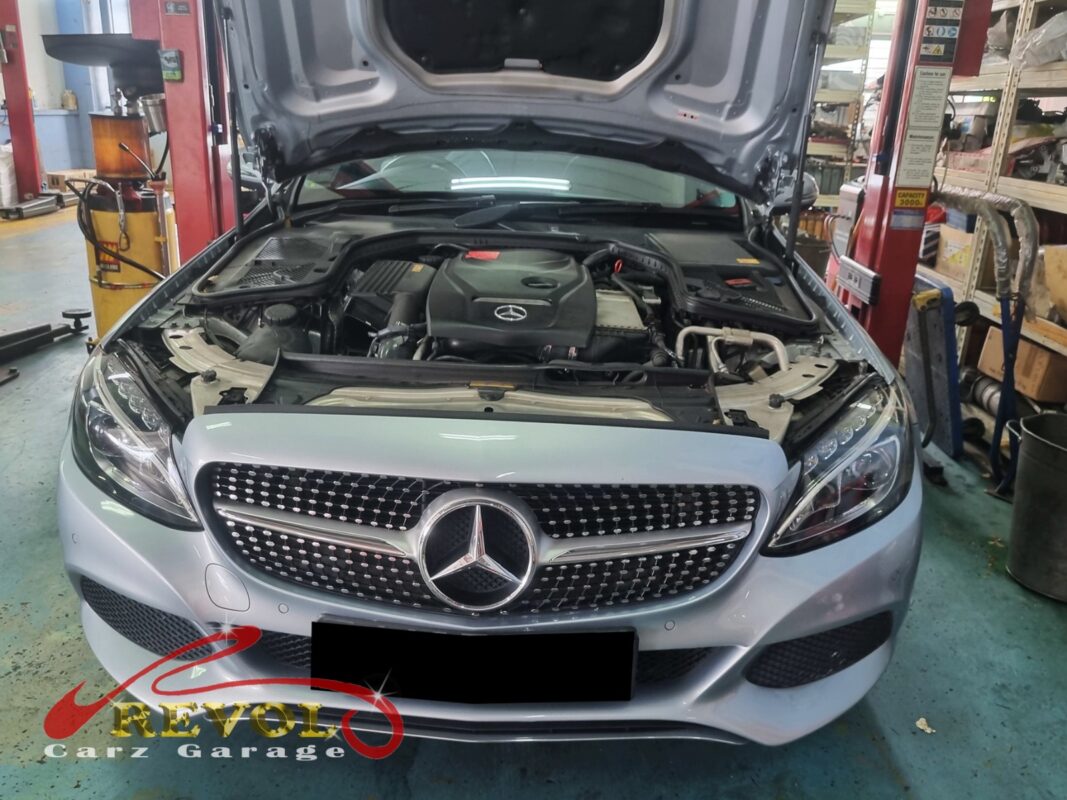
The C180 had become hard to start, the battery warning was lit on the dash, and the front of the engine had picked up a faint squeal that got louder with every cold-crank attempt. Three signs, all pointing at the charging system rather than just a flat battery.
The alternator is what keeps the battery topped up and runs the car's electrics while the engine's running. Inside it there's a voltage regulator that controls the output, and it drives off the accessory belt through a pulley. When the regulator fails the battery slowly drains instead of charging, which is the warning light and the hard starts. And when the pulley wears or seizes, the belt slips over it and squeals, which is the noise at startup.
The diagnosis
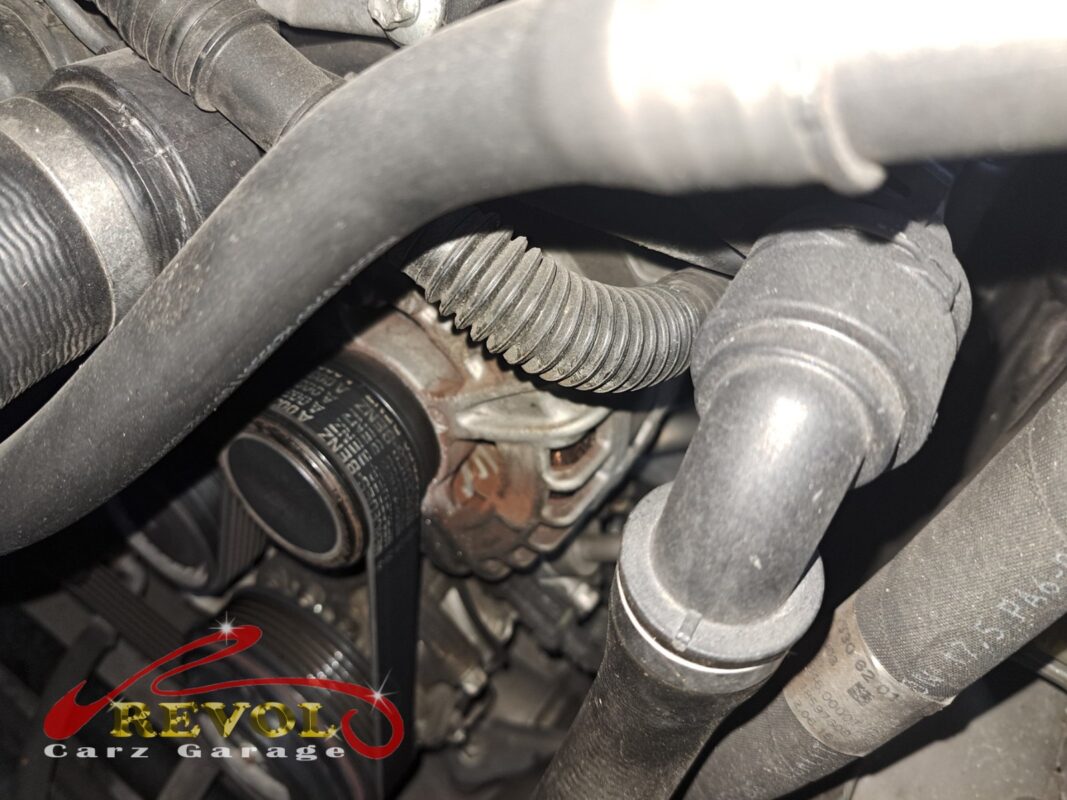
A multimeter on the alternator output told the first half of the story: the voltage was sitting well below where a charging system should be at idle, and it wasn't climbing meaningfully when loads were switched on. The battery was being run down, not charged.
The pulley was the second half. It had sunk and worn, which is what was making the belt squeal on every start. A failed regulator and a failed pulley together isn't a replace-the-pulley job, it's a complete alternator replacement. The belt and tensioner had taken a beating from the slipping too, so those went on the list with it.
The work
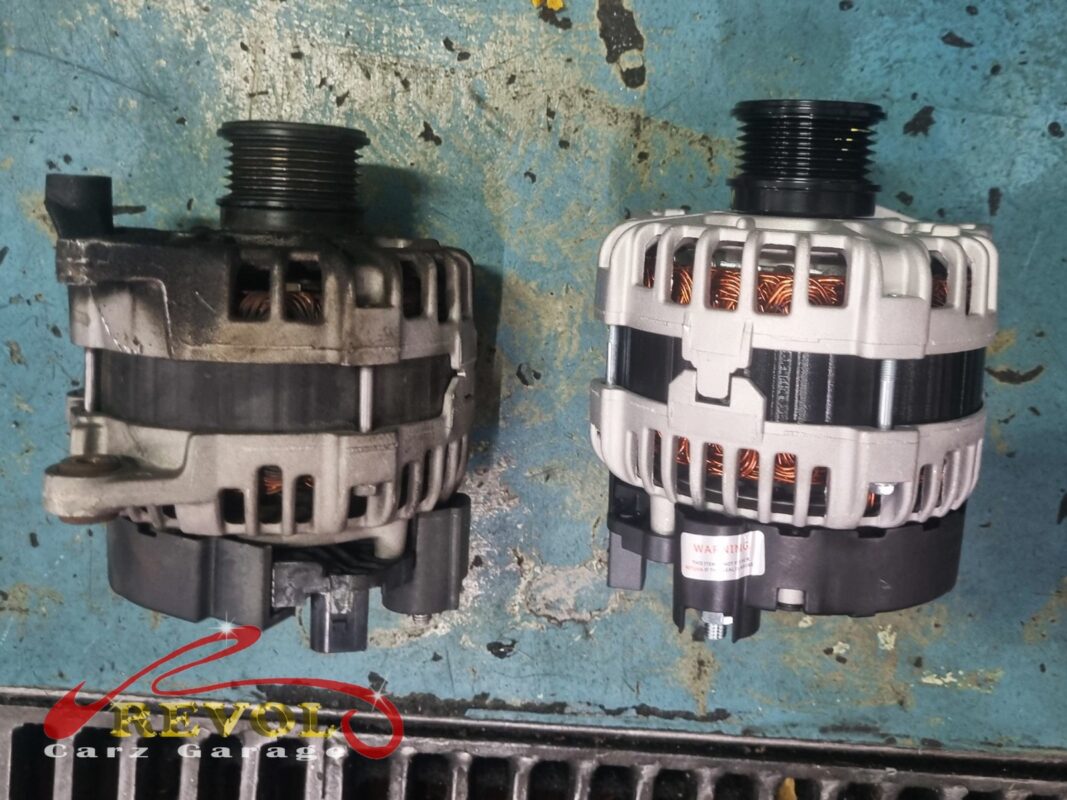
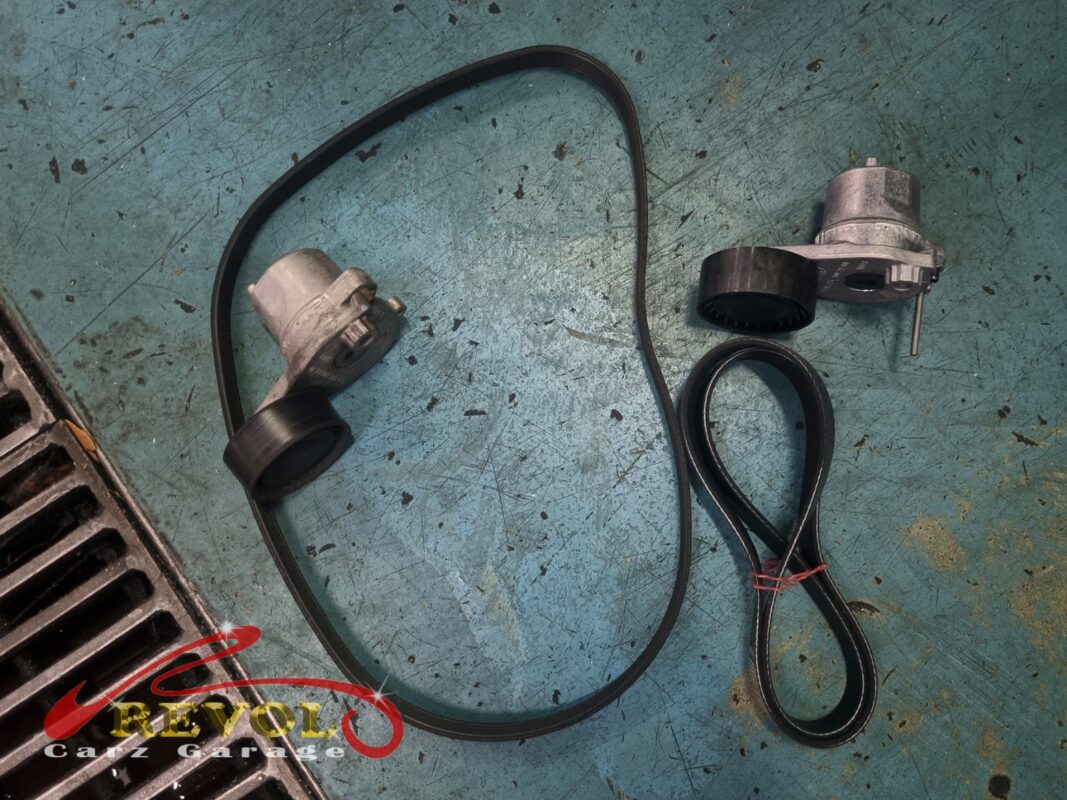
Belt tension was released, the old alternator unbolted and lifted out, and a new Mercedes-spec alternator went in, complete with its overrunning pulley. A new Mercedes-spec serpentine belt and tensioner went on at the same time rather than refitting the worn ones.
Then the belt was re-tensioned to spec, and the new alternator was load-tested with the engine running and the big consumers, headlights, aircon, blower, all switched on, to confirm the output held in the healthy band.
A cold-start check afterwards confirmed normal cranking and no squeal.
The outcome
Charging output is back in the healthy band at idle and at speed, the battery warning is gone, the engine cranks normally, and the squeal from the front is gone with the new belt and pulley.
The C180 went home with the electrical system stable. A failing alternator left long enough strands you with a car that won't start, so catching it on the warning light and the noise meant a planned fix rather than a flatbed.