The brief
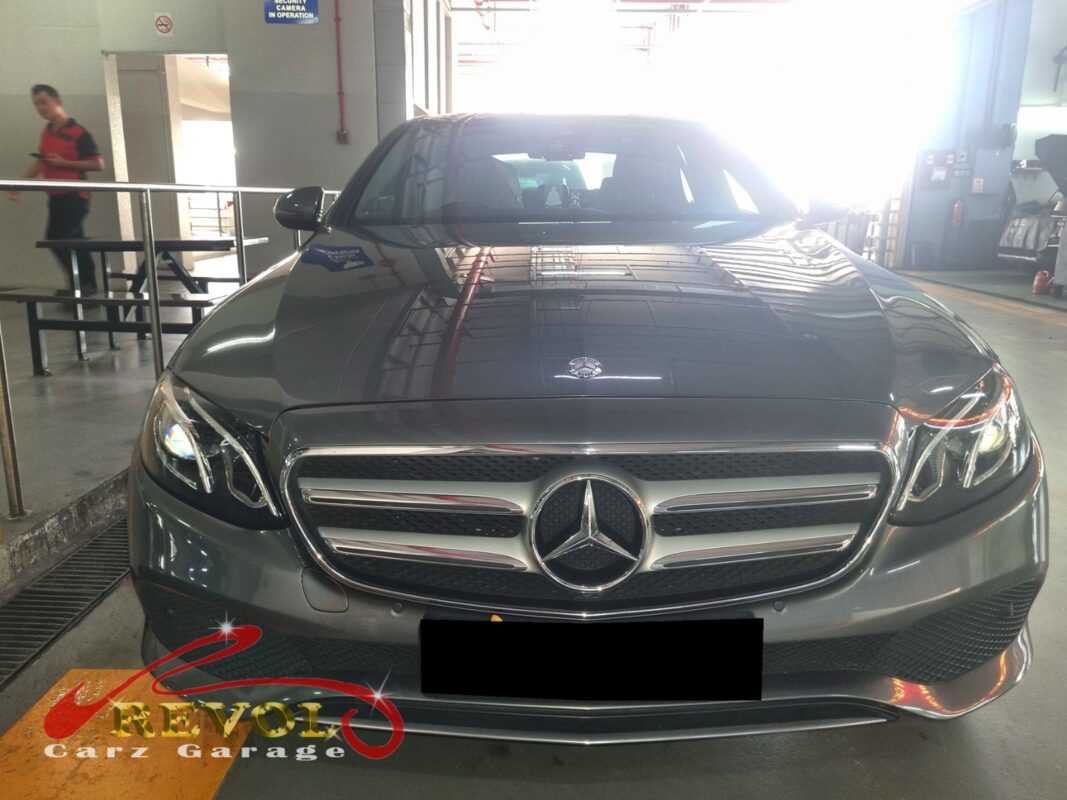
The E200's steering had grown imprecise around the straight-ahead, the car was clunking on turn-in and over speed humps, and there was a fine shimmy that came in at motorway speed. Three complaints, all landing on the front suspension.
The front of this E-class uses a multilink setup, several control arms per corner, each riding on rubber bushes that let the wheel move the way it's meant to and stop it moving the way it isn't. When those bushes age and the rubber starts to crack and break down, the arms move around in their mounts, so the wheel wanders a little, you get knocking over bumps, and the geometry drifts. That's the loose feel, the clunk and the shimmy together.
The diagnosis
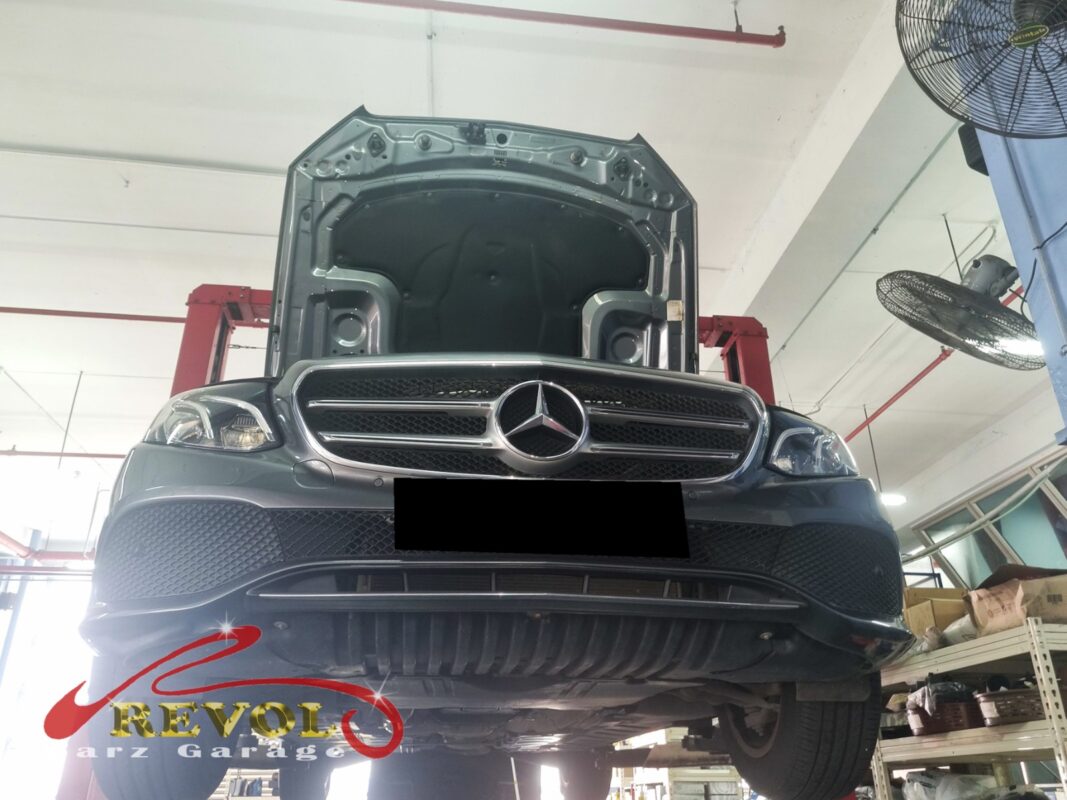
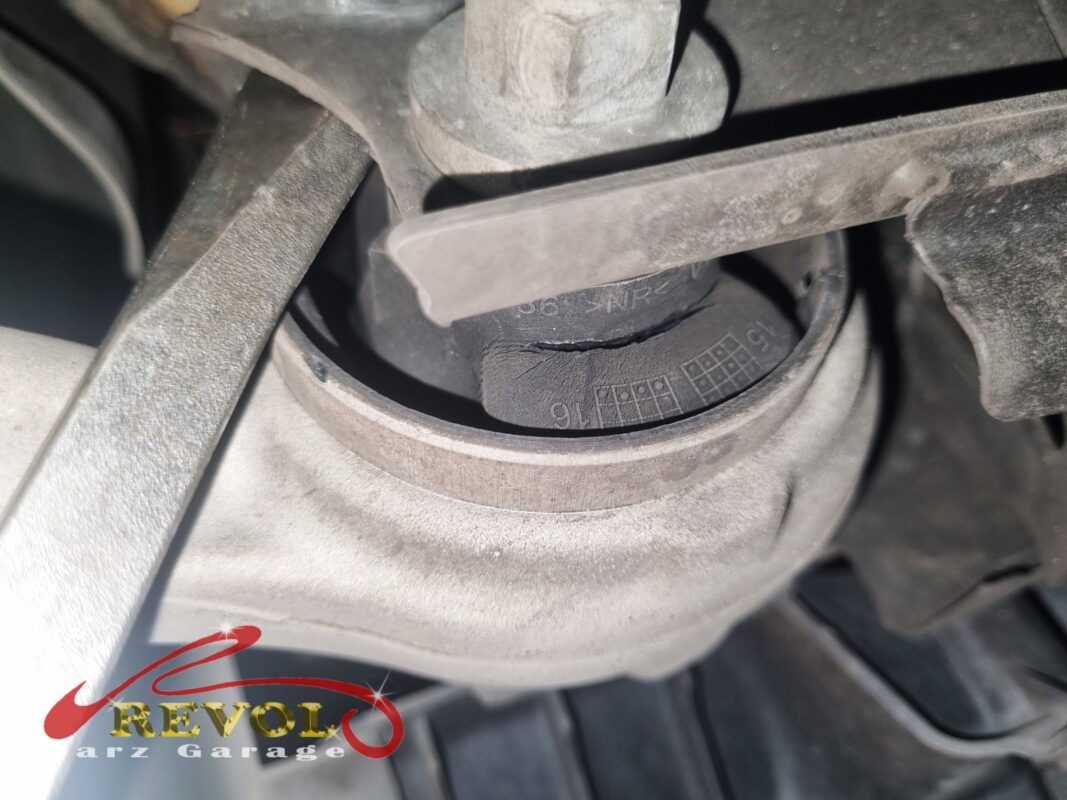
A pry-test on the front lower control arms confirmed it. The bushes had deflected well past the service limit on both sides, the rubber visibly cracked, and on one arm it had started to separate from the inner sleeve. With a date stamp showing the bushes had done their years, they were due.
Doing one side and leaving the other would leave a stiffness mismatch front to front, which you'd feel in the steering. So the scope was the worn front control arms, both sides, replaced as a set, with a four-wheel alignment afterwards because new arms reset the geometry.
The work
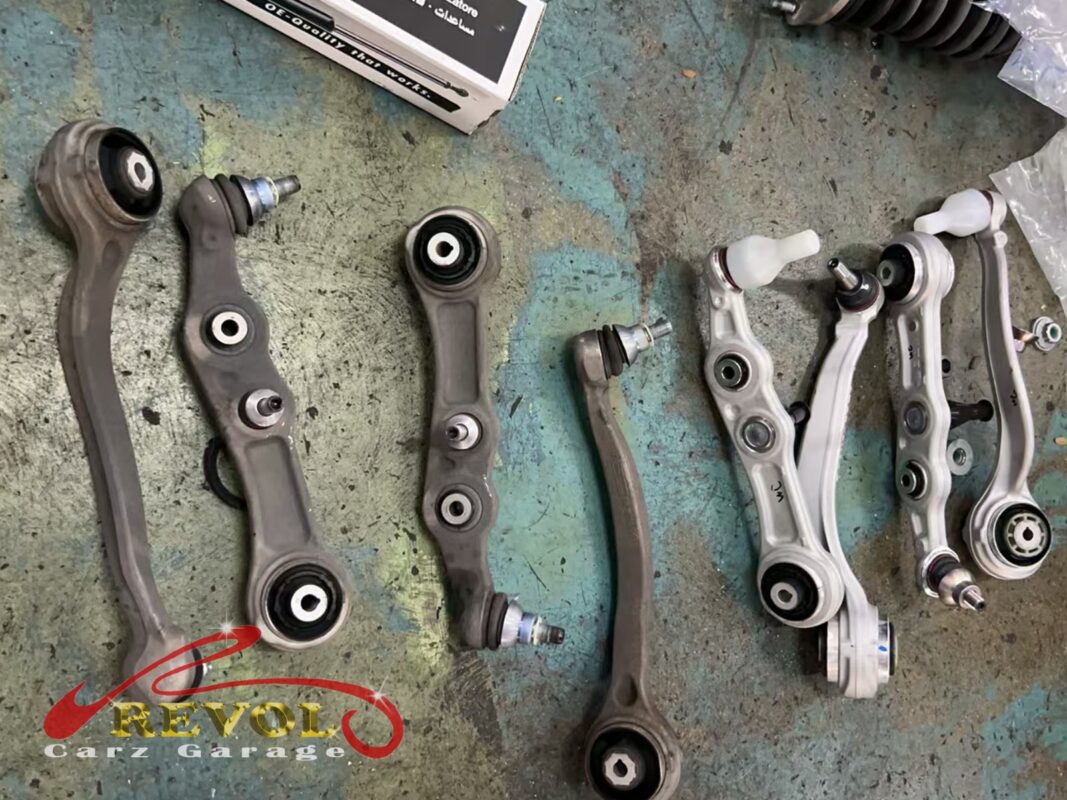
The worn front control arms came off, both sides, and new Mercedes-spec arms went on with fresh bushes and ball joints built in. Every fastener was torqued to the workshop manual figures, since suspension bolts that aren't done to spec work loose.
Then the car went onto the alignment rig for a full four-wheel measurement and adjustment, bringing camber, caster and toe back into Mercedes' window.
A road test confirmed it tracked straight, no clunks, no shimmy, with a tight, settled steering feel.
The outcome
The clunk on turn-in and over bumps is gone, the steering has firmed up around centre, the motorway shimmy is out, and the alignment readout is in spec.
The E200 went home with the front end behaving the way it was designed to. Doing the worn arms as a set, both sides, and aligning it properly means the front tyres will wear evenly again and the car drives like the precise thing it's meant to be.