The brief
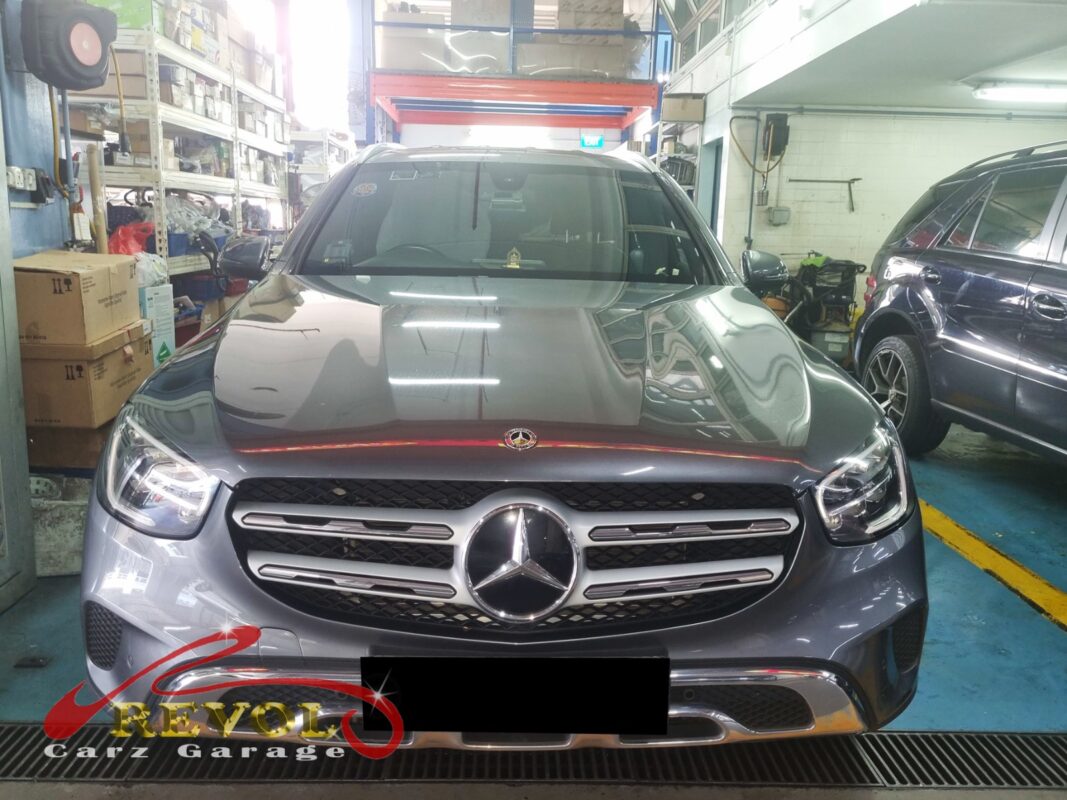
The GLC300's oil pressure warning had been flickering on at idle, and a couple of times on the motorway the gauge had spiked high under load. The owner brought it straight in, because an oil pressure problem is the one warning you don't drive on. Right concern, right move.
The engine's oil pump is supposed to deliver a steady pressure across the whole rev range, and on this engine the pump's output is regulated by a control valve. When that valve stops doing its job, the pressure wanders, low when it should be holding at idle, then over-pressure when the engine's working hard. Either extreme is bad news for the bearings and the timing gear, which run on that oil film. So it's a fix-it-now item, not a wait-and-see one.
The diagnosis
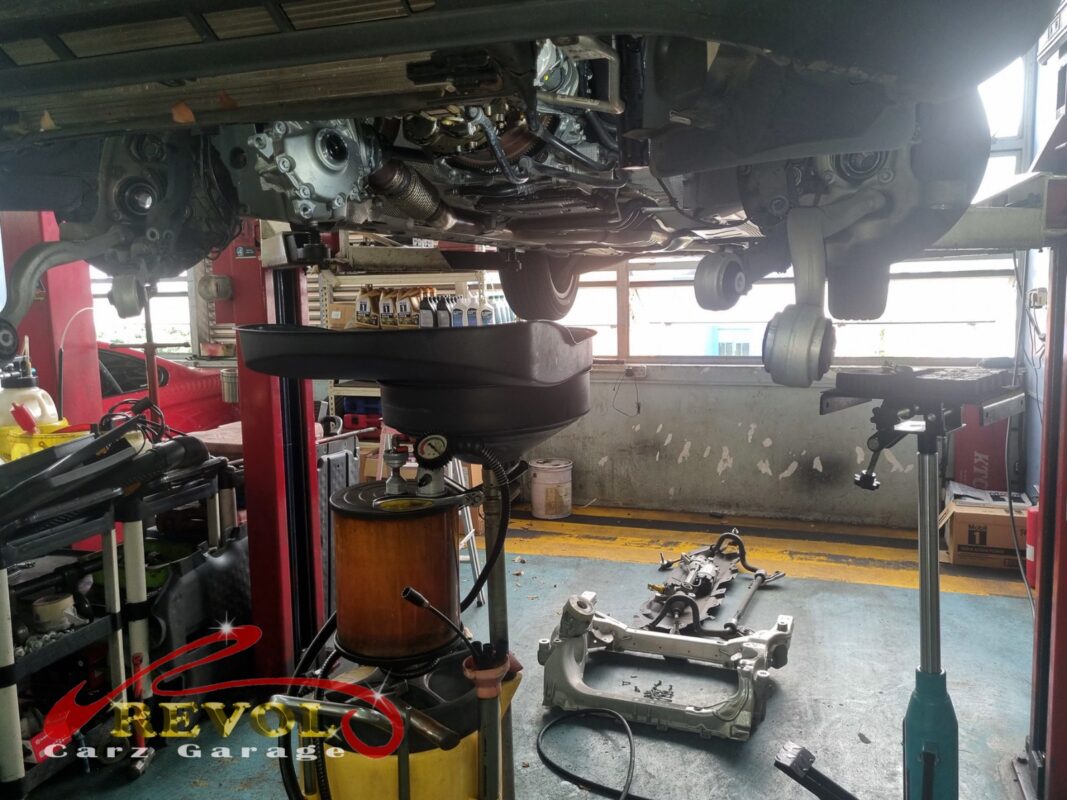
We spliced a mechanical pressure gauge into the engine's pressure port, the only way to see what's actually happening rather than what a dashboard light is guessing. With the engine warm, the oil pressure dropped below spec at hot idle and climbed well above spec under load. Healthy pressure should be flat in the right band across the rev range, and this wasn't, so the control valve had stopped regulating.
That's a part you replace, not an oil flush or a thicker-oil fix. And on this engine, getting to it meant dropping the front subframe and the oil pan, so it's a proper job, not a quick swap.
The work
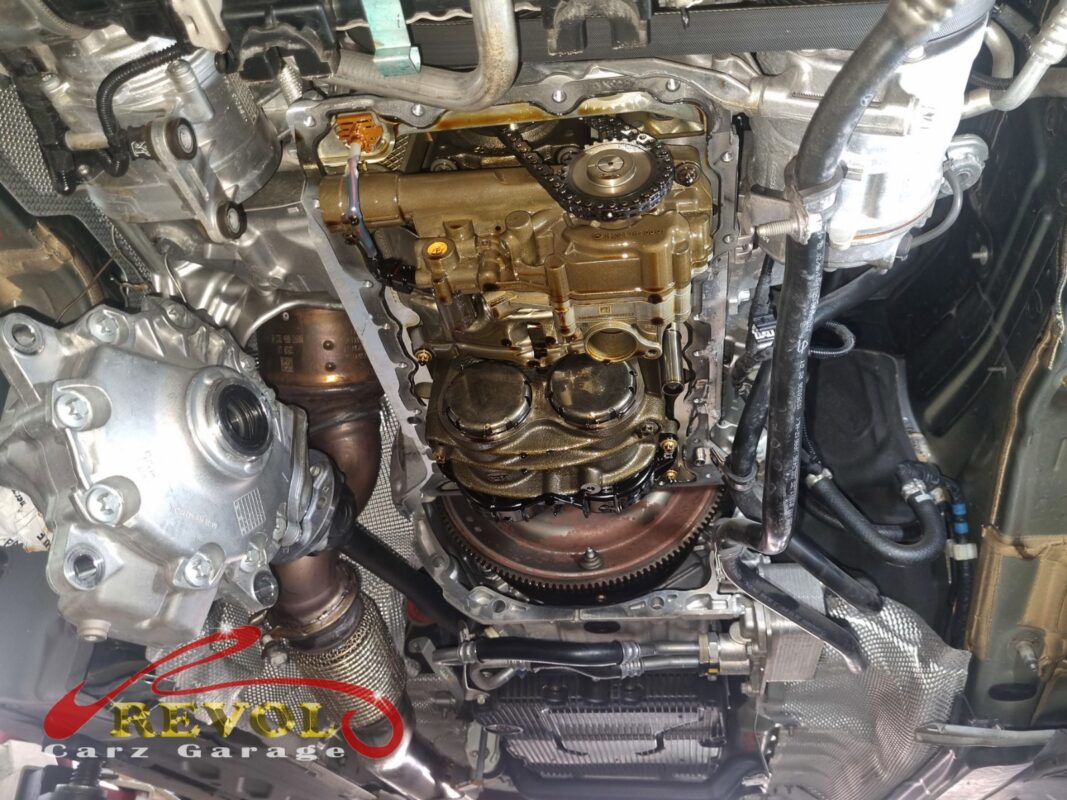
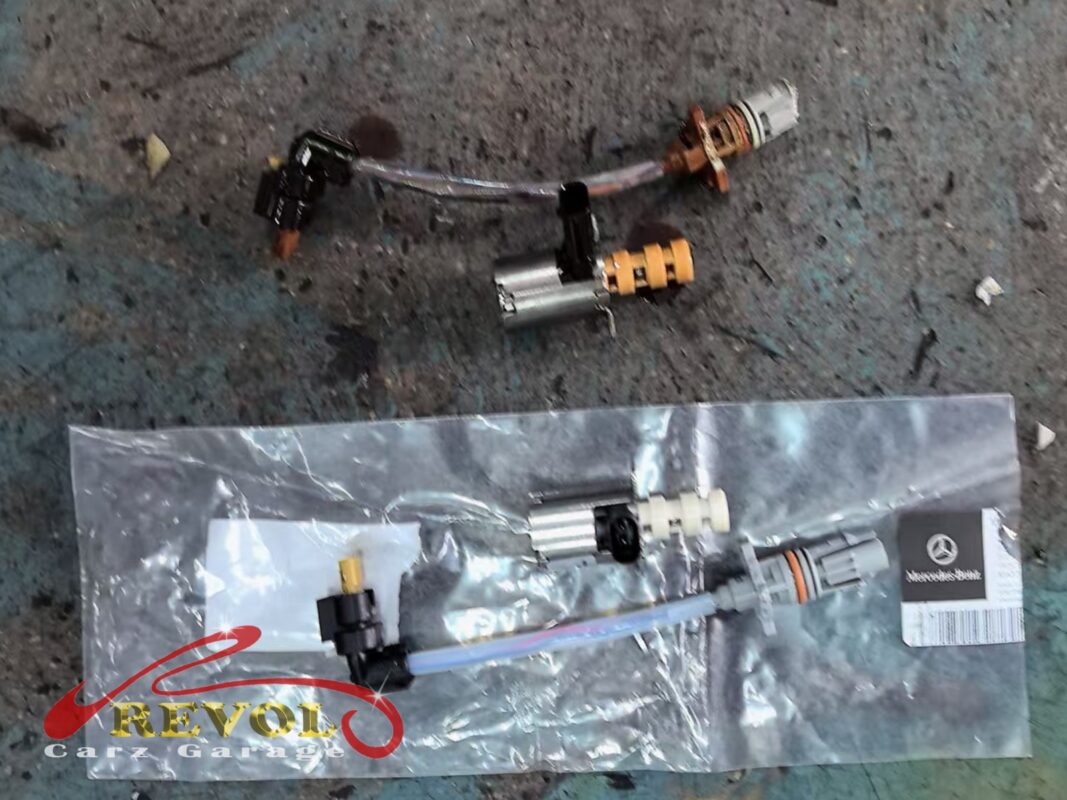
The front subframe came down and the oil pan came off to reach the oil pump. The failed oil pump control valve was removed, a new Mercedes-spec one fitted, and everything reassembled and torqued to spec.
Then the engine was refilled with the correct oil spec and run, with the mechanical gauge still on it, to confirm the pressure was now flat and in the healthy band at hot idle and right up the rev range.
A road test afterwards confirmed no warning flickers and no spikes under load.
The outcome
Oil pressure sits flat in the healthy band at idle and at speed, no warning flickers, no spikes under load.
The GLC300 went home with the lubrication system regulating cleanly and the engine properly protected. An oil pressure fault is the kind you act on the day the light first flickers, because the alternative, running an engine on wandering pressure, is the kind of damage you don't come back from cheaply.